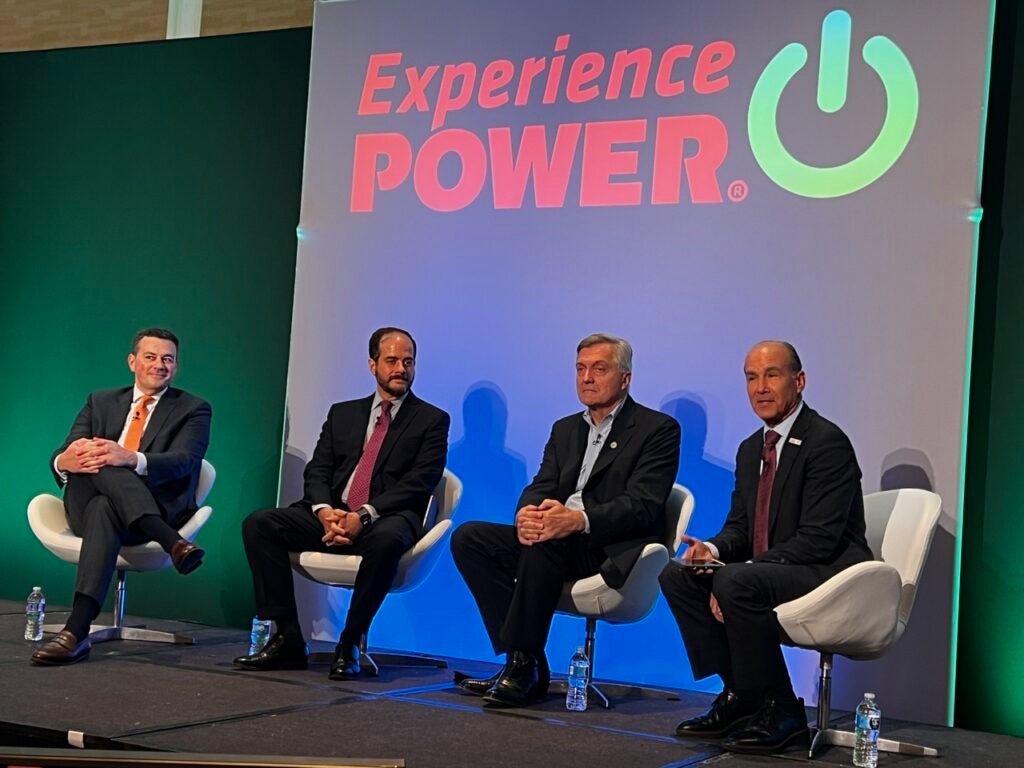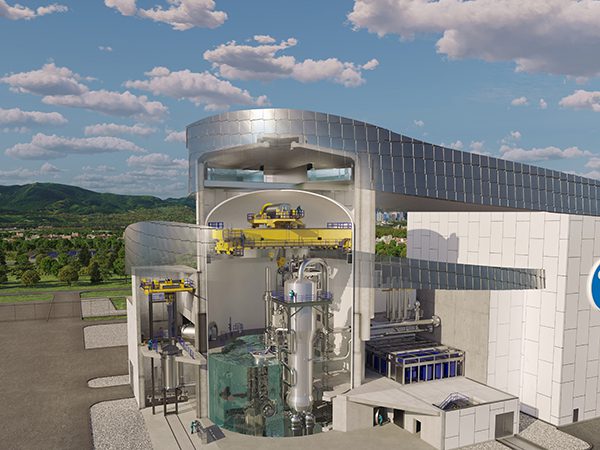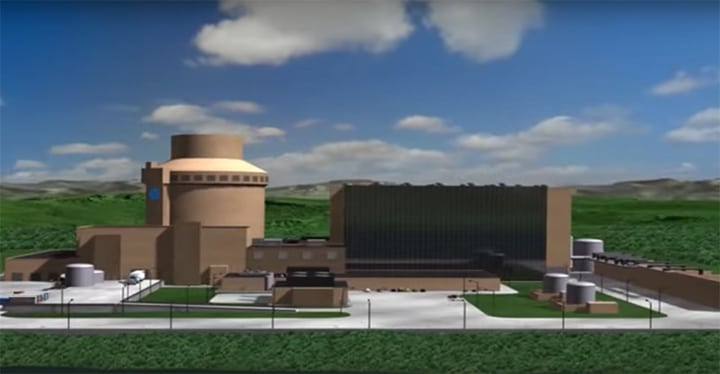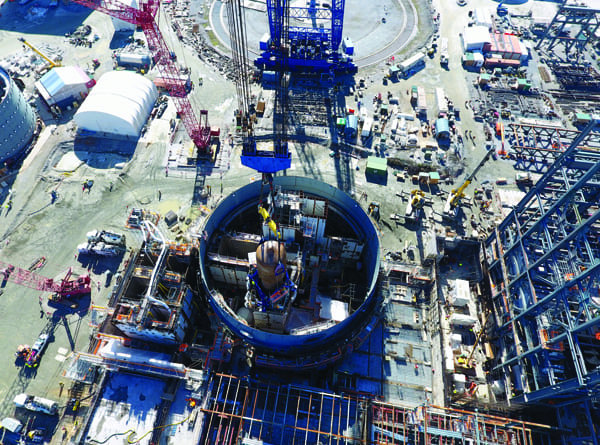
At the inaugural Pennsylvania Energy and Innovation Summit, hosted by Sen. Dave McCormick at Carnegie Mellon University on July 15, 2025, Westinghouse Electric Co. put a live proof of concept on display: an artificial intelligence (AI) system aimed at reducing the cost and schedule risk of building new AP1000 reactors. According to Westinghouse, the demonstration pulls in thousands of construction data points so constructors can adjust project schedules in real time.
The demo was one product of a broader push led by Dr. Lou Martinez Sancho, Westinghouse’s Chief Technology Officer (CTO) and a finalist for POWER’s 2026 Executive Leadership Award. Her case rests on bringing AI into one of the most heavily regulated industries in the world at a speed unusual for nuclear, without loosening safety and compliance requirements.

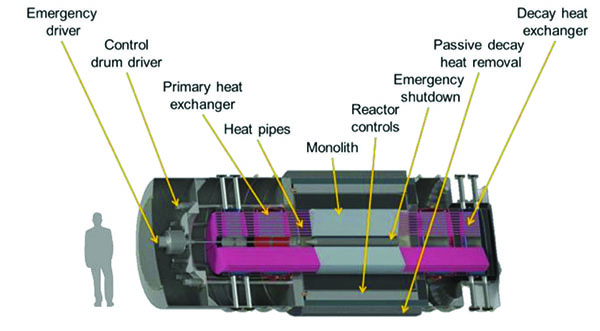
Martinez Sancho leads Westinghouse’s global research and development (R&D) portfolio, including AI, the AP300 small modular reactor, and the eVinci microreactor for space and defense markets. She previously served as executive vice president of strategy and innovation at Kairos Power, Chief Innovation Officer at Spie Batignolles, and vice president of global innovation at Framatome.
Westinghouse demonstrated its nuclear-specific AI, the HiVE system and bertha AI assistant, at the World Nuclear Symposium in London in September 2024. Scott Sidener, the company’s chief engineer of digital, data, and AI, said Martinez Sancho began from the recognition that the team had already built and tested the critical pieces. The company later received Databricks’ 2025 Data & Intelligence Award for Energy and Utilities. A second-generation version of the construction tool, developed with Google Cloud, was demonstrated live at the World Nuclear Exposition in November 2025.
Sidener said the award was never the goal. Recognition from Databricks, he said, was “a side effect of us being in the middle of accomplishing something we never imagined without Lou’s vision and leadership.”
Sidener described Martinez Sancho’s approach to regulation as an opportunity as much as a challenge. The guiding question, he said, has been “how do we make it possible to transform nuclear through AI given that everything we do must be safe, ethical, rigorous, and compliant?” He said Martinez Sancho reiterates in every meeting on AI delivery that safety and compliance are non-negotiable, while also questioning anything inefficient. According to Sidener, she drove the first year of HiVE and bertha development with a focus on safe, compliant AI before the production version was released.
Martinez Sancho’s work extends beyond company walls. According to Westinghouse’s nomination, she sits on the Governing Board (Private Sector) of the Sustainable Nuclear Energy Technology Platform (SNETP) and led memoranda of understanding with France’s National Institute for Applied Sciences of Lyon and the Polish National Center for Nuclear Research. The agreements are intended to develop the European nuclear workforce and share R&D facilities. The nomination also notes that she delivered a Distinguished Lecture at Carnegie Mellon and is a founding partner of Women in Nuclear Finance.
For Sidener, the significance of the AI work goes beyond any single project. Once the team pulled off what seemed impossible the first time, he said, “we realized that we were operating at an entirely new level, and that we could do it again.”
—POWER.