
Legislative
-
 Trends
Data Centers, Gas, and Who Pays: Power Association Leaders Find Common Ground
When the heads of three of the power sector’s biggest trade associations shared a stage at Experience POWER on Sept. 30, the most notable thing was how little they disagreed. Whether the question was data center backlash, grid security, or what to do about gas-plant emissions rules, the answer came back to the same point: […]
-
 Nuclear
Winning the Nuclear Market Before the Reactor Is Sold
For most Americans, electricity is so woven into daily life that we rarely consider what its absence means. Hospitals depend on it to preserve medicines and operate equipment. Schools, factories, farms, and businesses depend on it to function. Reliable electricity is one of the foundations of a modern economy. COMMENTARY Yet 655 million people worldwide […]
-
 Commentary
Nuclear Plant Restarts Show What Government Can Do With a Clear Mandate
On Aug. 30, workers at the Palisades Nuclear Plant in Covert Township, Michigan, began loading 204 fuel assemblies into a reactor vessel that had sat empty since the plant shut down in 2022—the first time in U.S. history that a commercial reactor that had entered decommissioning began reloading fuel. Holtec International Chairman and CEO Dr. […]
-
 Commentary
Energy Dominance Requires Commitments That Last
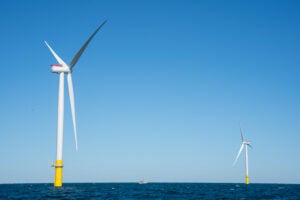
The Trump administration’s decision to unwind offshore wind leases through negotiated buybacks has predictably reignited the debate over renewable energy. Many welcome the move as a correction to policies that heavily favored offshore wind during the previous administration. That debate is perfectly legitimate. However, the recent agreements involving TotalEnergies, Bluepoint Wind, Golden State Wind, Duke, Invenergy, and […]
-
 Energy Security
World’s Largest Energy Lender Steers Federal Financing Toward Baseload, Transmission, and Nuclear
The U.S. Department of Energy’s (DOE’s) Office of Energy Dominance Financing (EDF) closed a loan of up to $3.26 billion to American Electric Power (AEP) Texas on July 8, the office’s third utility
-
 Nuclear
Microsoft’s $60 Million Genesis Mission Commitment Puts Nuclear AI at the Center
Last week, Microsoft announced a $60 million, multiyear commitment to the Department of Energy’s (DOE’s) Genesis Mission, the national initiative to embed artificial intelligence (AI) across the country’s 17 national laboratories. The company’s stated goal, echoing DOE’s own framing, is to help “double the productivity and impact of American research and innovation within a decade.” […]
-
 Commentary
America Needs a Fifth Nuclear Executive Order
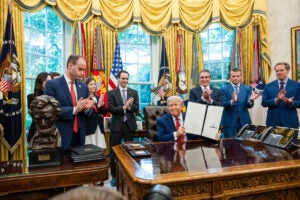
President Trump’s four nuclear executive orders issued on May 23, 2025, represented a historic liftoff for American nuclear energy. COMMENTARY As electricity demand surges, geopolitical energy competition intensifies, and America’s power infrastructure faces mounting strain, the administration acted decisively. It recognized that American energy dominance—and leadership in the digital age—requires a resurgence of nuclear reactor […]
-
 Commentary
The New Large-Load Compact
Why AI Data Centers Can No Longer Be Treated as Passive Customers For decades, even very large electric customers fit inside a familiar planning model. A factory, refinery, industrial campus, hospital complex, hospital system, or manufacturing facility requested service. The utility studied the load, identified required facilities, assigned costs, and folded the demand into its […]
-
 Nuclear
NRC Charts a Disposal Path for Nuclear Waste Stuck at a ‘Dead End’
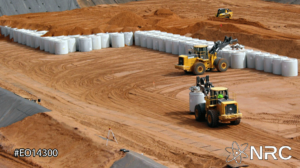
For decades, the most radioactive category of low-level waste in the U.S. has had a disposal plan that exists only on paper: a deep geologic repository that was never built. Late last week, the Nuclear Regulatory Commission (NRC) moved to replace that plan with one that can actually be licensed. The agency proposed a sweeping […]
-
 Legal & Regulatory
Public Power’s Affordability Edge Faces Its Hardest Test in Years
For decades, the pitch for community-owned electric utilities has been simple enough to fit on a bill insert: lower rates, reliable service, and decisions made close to home. The numbers still back that up. What has changed, according to Scott Corwin, president and CEO of the American Public Power Association (APPA), is the difficulty of […]
-
 Coal
CoalA New Coal Plant in the U.S.? Once Unthinkable, Now a Strong Maybe
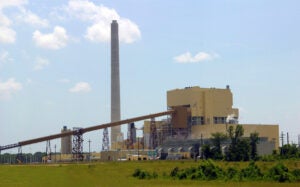
A $350 million Department of Energy (DOE) coal-revival program has put $18.5 million toward the TerraSpark Energy Campus, a 1.6-GW greenfield project in West Virginia pairing Babcock & Wilcox (B&W) supercritical boilers with Mantel Capture’s molten borate carbon capture. In responses to POWER, developer TerraSpark laid out a 2030 startup target, a 95% to 98% […]
-
 Commentary
Wildfire Risk Is Rising. Electric Cooperatives Are Acting—Congress Must Too
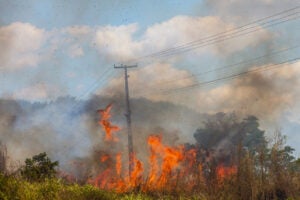
Wildfires are no longer isolated disasters limited to the western United States—they are a growing threat to communities, infrastructure, and electric grid reliability nationwide. For the 42 million Americans served by electric cooperatives, the risk is especially acute. Co-ops power more than half the nation’s landmass, primarily in rural areas where wildfire danger is highest […]
-
 T&D
T&DHow the Power Sector Is Bracing for a More Violent Climate
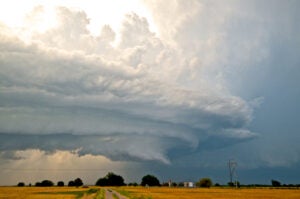
Utilities, federal agencies, and the national labs have finally assembled the tools to harden the grid against an increasingly hostile environment. The question is whether they can put them together fast enough. When a line of storms tore across the Northeast in late April 2025, racing from Ohio into central Pennsylvania, meteorologists recognized the signature […]
-
 Commentary
Contrasting Trump’s Campaign Against Wind Energy With Promotion of Oil and Gas, LNG, and Nuclear Projects
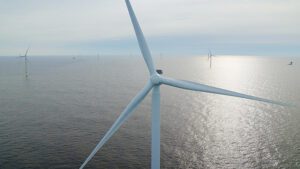
The Trump administration’s unprecedented assault on wind energy development in the U.S. stands in sharp contrast to its promotion of oil and gas, liquefied natural gas (LNG) production, and microreactor nuclear projects. Agencies have blocked 165 wind projects nationwide while simultaneously spending nearly $2 billion in taxpayer funds to convince energy companies to abandon offshore […]
-
Nuclear
How Trump’s EO 14300 Is Reshaping NRC Nuclear Licensing and Regulation
A year after President Trump signed Executive Order (EO) 14300 directing the Nuclear Regulatory Commission (NRC) to cut red tape and speed nuclear deployment, the agency is claiming a string of historic firsts, a backlog of rules in motion at unprecedented scale, and an internal reorganization due to take effect next month. In a news […]
-
 Commentary
Aligning Data Center Growth with Community Acceptance in a Constrained Grid
Grid capacity and the interconnection queue aren’t the only constraints on U.S. data center growth. Community acceptance is becoming the toughest bottleneck to break through, and a hot political topic with the approach of the midterm elections.
-
 Commentary
The Time Is Now: Permitting Reform Is the Foundation of America’s Energy Future
The American Public Power Association welcomes renewed bipartisan negotiations in the Senate on permitting reform. America’s demand for electricity is rising at a pace few anticipated just a few years ago. The North American Electric Reliability Corporation’s (NERC’s) recent Long-Term Reliability Assessment warns that 10-year summer peak demand is projected to grow by 224 GW, […]
-
 Sustainability
How Corporate Energy Buyers Are Reshaping the U.S. Grid: CEBA CEO Rich Powell on Data Centers, Nuclear, and Permitting Reform
Corporate America has become one of the most consequential forces shaping the U.S. electricity system. Speaking as a guest on The POWER Podcast, Rich Powell, CEO of the Corporate Energy Buyers Association (CEBA), explained how the country’s largest energy buyers are responding to unprecedented demand growth, betting on a widening mix of clean technologies, and […]
-
 Commentary
Electric Cooperative Leaders Advocate for Federal Policies Essential to Maintaining Affordable, Reliable Power
Next week, roughly 1,500 electric cooperative leaders will gather in Washington, D.C., to meet with lawmakers and federal agencies at a pivotal moment for the nation’s energy future. They represent not-for-profit utilities that power 42 million Americans—many in rural communities—and they are coming with a clear message: smart energy policies are urgently needed to address […]
-
 Energy Security
Rural Co-ops Navigate a New Era of Load Growth, Rising Costs, and Policy Pressure
After decades of relatively flat electricity demand, the U.S. power sector is suddenly racing to keep up—and rural electric cooperatives, which serve 42 million people across 54% of the nation’s land mass, are feeling the squeeze as acutely as anyone. As a guest on The POWER Podcast, Jim Matheson, CEO of the National Rural Electric […]
-
 Nuclear Recycling
Nuclear Recycling Has Reached a Prime Moment—and the U.S. May Be Running Out of Time
A new think tank assessment argues that economics, proliferation concerns, and waste management barriers have shifted enough to make commercial nuclear fuel recycling viable in the U.S.—but only if Washington acts before the window closes. A think tank has warned the Trump administration that it has a narrow window to make the U.S. the first […]
-
 Commentary
Scaling Advanced Nuclear Power: Picking Winners Now
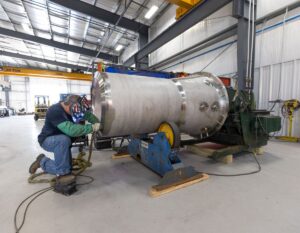
Across the U.S., more than 60 advanced reactor developers are innovating with billions of dollars in public and private capital to meet rapidly growing electricity demand. But innovation alone does not deliver power. If nuclear power is to be an essential source for exploding power demands across the nation, we must make a strategic choice: […]
-
 Electrification
UK Government Will Require Solar Power, Heat Pumps in All New British Homes
Officials in the UK have published a planning document that calls for housing developers to install solar panels and heat pumps in all new homes in England starting in 2028. The government on March 24 also said plug-in solar panels that homeowners can self-install on balconies would be widely available in the coming months.
-
 Commentary
America’s Once-in-a-Generation Energy Opportunity
America has a once-in-a-generation opportunity to rebuild its energy backbone. For the first time in decades, capital investment, technological innovation, and bipartisan political will are aligning to
-
 Commentary
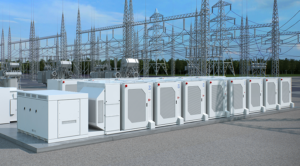
Evolving Technologies, Outdated Regulations Impact Mid-Atlantic Generation Permitting
Energy-generation permitting in the Mid-Atlantic continues to evolve in 2026 not through wholesale deregulation or uniform acceleration, but through procedural and permitting reform and the potential allocation of generation development authority to public utilities. States are enacting these changes to meet the reality of reliability concerns, transmission constraints, large load-growth, and to address frequent obstruction of energy projects by local government.
-
 Trends
Meeting the Moment: Industry Leaders Chart the Course for Power in 2026
From artificial intelligence-driven efficiency to transmission bottlenecks, power industry insiders share their perspectives on the opportunities and obstacles shaping 2026 and beyond. The power generation
-
 Data Centers
Data Centers, the Grid, and the Assumptions That Don’t Hold Up
The power sector is grappling with a fundamental mismatch: hyperscale data centers demand electricity at unprecedented speed and scale, while the infrastructure to serve them operates on timelines measured in years, not months. According to Stephen Empedocles, PhD, founder and CEO of Clark Street Associates (CSA), an advisory firm specializing in government funding for technology […]
-
 Legal & Regulatory
Federal Court Strikes Down Trump’s Wind Energy Moratorium
On Dec. 8, 2025, U.S. District Court Judge Patti B. Saris of the District of Massachusetts granted summary judgment against the Trump administration declaring that the Jan. 20, 2025, executive memorandum directing federal agencies to halt wind energy development (and all related agency actions to implement the memorandum) were unlawful. Wind Energy in the U.S. […]
-
 Coal
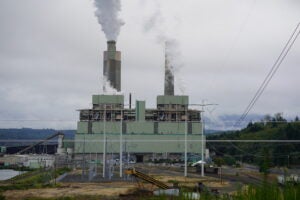
CoalDOE Orders Last Coal-Fired Unit in Washington State to Remain Online
The last coal-fired power generation unit in Washington state, scheduled to close by year-end, is the latest U.S. coal facility ordered to remain in operation by the Trump administration. The U.S. Dept. of Energy (DOE) on December 16 told TransAlta, a Calgary, Canada-based independent power producer (IPP), to keep the 730-MW, coal-fired Centralia Unit 2 […]
-
 Legal & Regulatory
Permitting the AI Boom: A New NEPA Landscape for Energy Infrastructure Projects
In the push for more efficient and streamlined permitting processes, recent changes from Congress, the U.S. Supreme Court, and the executive branch have reshaped the National Environmental Policy Act (NEPA) landscape.