A report from the Solar Energy Industries Association (SEIA) and Benchmark Mineral Intelligence says installed energy storage capacity across the U.S. has topped 200 GWh. The news comes as the two groups, in their “U.S. Energy Storage Market Outlook Q4 2026” released November 17, said 14.3 GWh of new capacity was installed in the third quarter of this year, bringing the total to 48.3 GWh for the first nine months of 2026.
The report was published during the RE+ event in Las Vegas, Nevada. RE+ is the largest annual renewable energy conference in North America and focuses on several forms of clean energy, including energy storage, solar power, and more. POWER is a supporter of the event and publishes a magazine supplement that is distributed at the show, with the articles available on powermag.com.
The groups on Tuesday said the recent midterm elections, which will give Democrats control of Congress in January, showed that American voters sent a clear message that lowering energy costs should be a priority for lawmakers. More than 300 solar and energy storage companies sent a letter to Congressional leaders earlier this month urging passage of the Bipartisan American Affordability and Jobs Act (BAAJA), a bill that would remove some of the barriers to permitting of energy projects, including renewable energy installations.
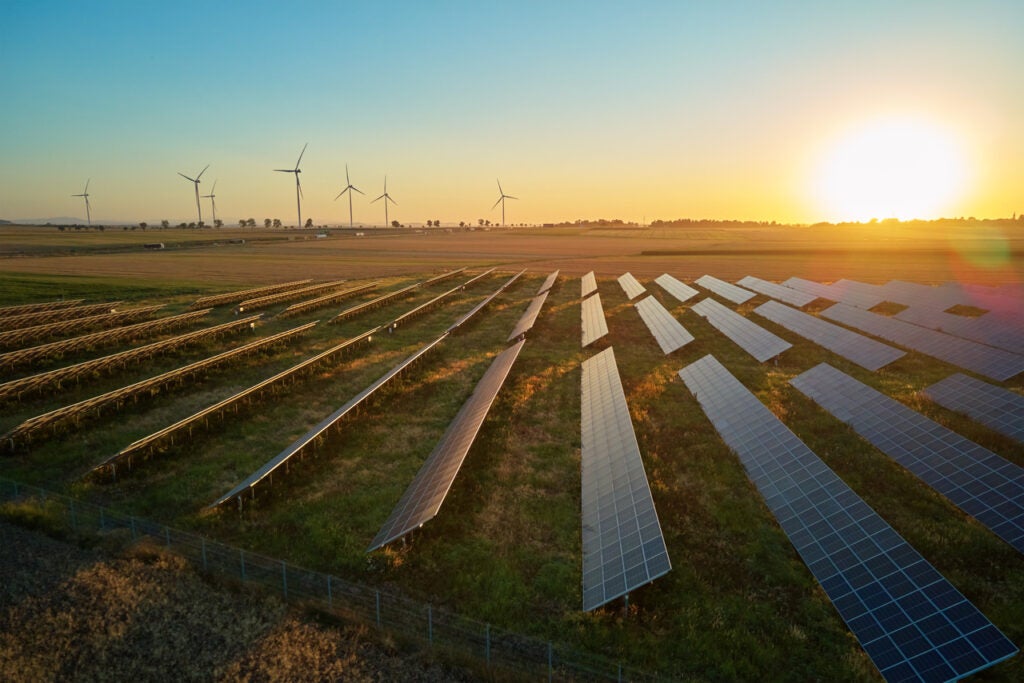
The groups said the legislation would accelerate the deployment of energy storage, which in turn would support the integration of more renewable energy such as solar, wind, and geothermal to the nation’s power grid.
“Voters made it clear that they want lower prices, and the growing deployment of energy storage is helping make that happen. We’re urging Congress to pass BAAJA to build out America’s energy infrastructure and put downward pressure on prices,” said SEIA CEO Tim Pawlenty.
Momentum for Energy Storage
SEIA, a co-producer of RE+ along with the Smart Electric Power Alliance (SEPA), has continually touted energy storage as a way to support the deployment of solar power. The report, in noting that the outlook for energy storage continues to strengthen, said the 2030 cumulative U.S. deployment forecast for storage has increased by 3.7% to 708 GWh across grid and behind-the-meter applications. The reports said the revised forecast reflects sustained industry momentum, with U.S. installations up 20% year-over-year through the first nine months of 2026.
The report said Texas led the nation in utility-scale storage deployment through Q3, adding 12.3 GWh of capacity. Arizona and California followed with 7.7 GWh and 6.8 GWh, respectively. Recent SEIA analysis shows that rapid growth in solar and energy storage helped drive down average wholesale electricity prices by 42% in Texas, and 51% in California, from summer 2021 to summer 2026.
Utility-scale projects accounted for the vast majority of Q3 installations, with 12.2 GWh deployed, followed by 1.3 GWh of commercial and industrial storage, and 746 MWh of residential storage.
Eleven states surpassed their previous annual energy storage installation records in Q3, even with three months remaining in 2026. The states include Colorado, Massachusetts, Utah, Michigan, Georgia, Mississippi, Virginia, Iowa, Montana, Alabama, and Illinois.
“States are moving from targets to centralized procurements,” said Pete Tillotson, senior analyst at Benchmark Minerals. “Across utility mandates and bulk capacity contracts, energy storage pipelines are growing as a result of both investment appetite and flexibility requirements.”
Manufacturing of equipment for energy storage also continues to accelerate across the U.S., as companies work to comply with policies that support domestic production. Recent battery cell manufacturing facility openings in Tennessee and Indiana have brought total U.S. cell manufacturing capacity to 92.4 GWh, according to the report.
—Darrell Proctor is a senior editor for POWER.