
POWER
-
 News
NewsBaghouse Filter Leak Analyzer for EPA-MACT
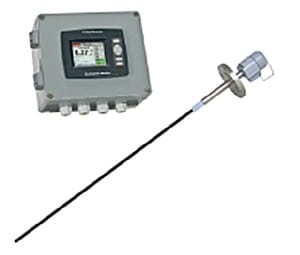
A new continuous particulate emissions monitor and baghouse filter leak analyzer incorporates automatic self-checks (zero and span) to ASTM standards to automate compliance with regulatory requirements for periodic instrument validation. The particulate monitor also features system checks to simplify installation and setup and to improve overall performance. Benefits include stack monitoring, detecting filter leaks, eliminating […]
-
Legal & Regulatory
Climate Change: Avoid Political Thickets
A federal judge recently dismissed a lawsuit in which the plaintiffs alleged that defendants’ production of chemicals and electricity had “added to the ferocity of Hurricane Katrina.” The judge’s reasoning reveals the inherent limitations of courts unilaterally initiating policies to address climate change issues.
-
 News
NewsDifferential Pressure Flowmeter
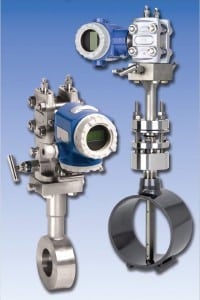
Endress+Hauser announced the Deltatop differential pressure (DP) flowmeter for measuring gas, liquid, and steam in ½-inch to 24-inch pipes. The company said that Deltatop is a complete flow monitoring solution, including an averaging pitot tube, and offers customers the most accurate and reliable DP flow technology in the industry. The flowmeter features precision-machined orifice plate […]
-
 History
China: A World Powerhouse
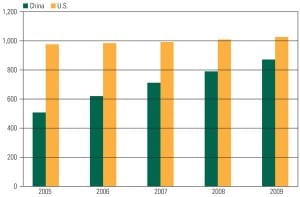
It’s no surprise that China leads the world in recent power capacity additions. What may surprise you is the precise mix of options this vast country is relying upon to meet its ever-growing demand for electricity. As a result, this ancient civilization is fast becoming the test bed and factory for the newest generation and transmission technologies.
-
 News
NewsAir Velocity Sensors
Degree Controls has introduced AccuSense F333 air velocity sensors, a series of low-cost airflow sensors designed for field systems. The AccuSense F333 provides air velocity measurements within the range of 0.2 m/s to 10 m/s (40–2,000 fpm) while maintaining a ±10% accuracy across a temperature range of 15C to 60C with a 2% or better […]
-
 Water
WaterReACT Reduces Emissions and Water Use
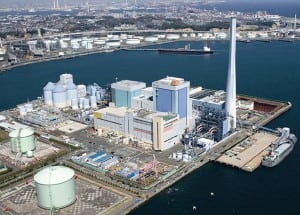
Regenerative activated coke technology (ReACT) is an integrated multipollutant control approach that removes SOx, NOx, and Hg from coal-fired plants by adsorption with activated coke to attain emissions levels found at natural gas–fired plants. One big advantage of this technology is that it uses only a fraction of the water used by conventional wet flue gas desulfurization. A recent license agreement brings this technology to the U.S.
-
Commentary
WTE: Next-Generation Sustainable Energy
It is clear that energy use will expand in the future as our population and society’s standard of living increase. Meanwhile, the push toward a sustainable lifestyle requires that all resources be utilized efficiently and sparingly. The National Academy of Sciences has identified paradigm shifts from current processes to an ideal vision centered on renewable energy and an atom economy—defined as maximum incorporation of starting materials into final products. These seemingly disparate paths converge if one considers energy production from municipal solid waste (MSW).
-
News
Carbon Controls Fail Business Case Study
Cap-and-trade programs are featured in at least two U.S. legislative proposals to reduce carbon emissions, usually by around 80% by 2050 using a 2005 baseline. The benefits that accrue from the immense investment required to reach these goals are nebulous and don’t occur until decades after the investment. Based on my back-of-the-envelope analysis, the cost-benefit ratio of these proposals does not pass a cursory cost-benefit analysis.
-
 Water
WaterCirculating Fluid Bed Scrubbers Bridge the Gap Between Dry and Wet Scrubbers
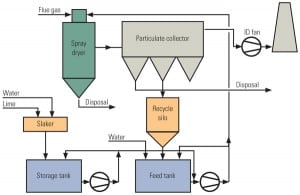
Circulating fluid bed (CFB) dry scrubbing technologies provide distinct advantages over conventional spray dryer absorber scrubbers for removing SO2 from flue gases. The CFB also competes well against wet limestone flue gas desulfurization processes typically favored for large boilers firing high-sulfur coals. With high SO2 removal rates in a dry treatment process, the CFB scrubber appears to be the best of both technologies: a water-stingy scrubber with high SO2 removal rates.
-
 Environmental
Determining AQCS Mercury Removal Co-Benefits
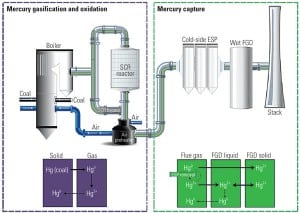
The U.S. Environmental Protection Agency is expected to propose an emissions standard for mercury and other hazardous air pollutants emitted by coal- and oil-fired electric generating units in March of 2011. The anticipated rule would require emission control to meet the various standards using maximum achievable control technology, as determined by the prescriptive requirements of the Clean Air Act. In response to the expected rule-making, utilities will be required to make technology decisions in order to ensure compliance. One cost-effective approach to compliance may be the use of “co-benefits” from air quality control systems (AQCSs) already in service that are designed to remove other pollutants.
-
 O&M
O&MNew Coating System Extends Life of Cooling Tower
American Electric Power’s (AEP’s) Cardinal Power Plant Unit 3 cooling tower in Brilliant, Ohio, was coated and lined in the spring of 2008 by a team of coatings professionals that included the plant’s project and coatings engineering staff, Sherwin-Williams (coatings supplier), Cannon Sline Industrial (contractor), and OTB Technologies (third-party inspector). The team completed the project in just 11 weeks through damp springtime conditions in the Ohio River Valley.
-
 Coal
CoalDrax Offers Model for Cofiring Biomass
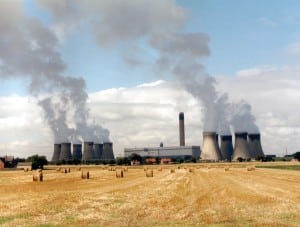
When it is completed, later this summer, the UK’s Drax Power Station biomass facility will become the largest dedicated cofiring project of its kind in the world. As U.S. coal-fired generators come under increasing pressure to cut emissions and take advantage of incentives to promote power generation from renewables, Drax offers an example of what is possible.
-
 O&M
O&MNew Process Transforms Waste into Product for Controlling Emissions
In April, Solvay Chemicals Inc. commissioned a new facility that uses an innovative process to recover and transform sodium carbonate waste streams into a market-grade sodium bicarbonate used in air emissions control.
-
 O&M
O&MUse Dry Fog to Control Coal Dust Hazards
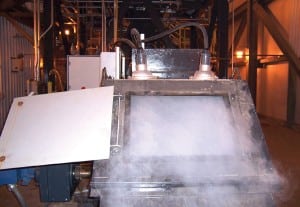
Fogging systems have been successfully used in the material-handling industry for more than 30 years to control explosive dust at transfer points. Today, fogging systems are an EPA Best Demonstrated Technology for subbituminous coal preparation plants.
-
 News
NewsShoring System Uses First Built-In Ladder Supports
Safety is the imperative for any construction project, and Duke Energy’s 630-MW Edwardsport integrated gasification combined-cycle station in Knox Country, Ind., is no exception.
-
Environmental
Regulations and Economics Drive Wet FGD Upgrades
Today’s coal-fired power plants face the twin challenges of improving their wet flue gas desulfurization (FGD) systems’ emission control capabilities in order to comply with environmental regulations while at the same time cutting their operational and maintenance costs. Smart strategies for retrofitting existing FGD systems can help plant personnel meet both of these objectives.
-
 Solar
SolarAbengoa Solar Begins Operation of 50-MW Parabolic Trough Plant
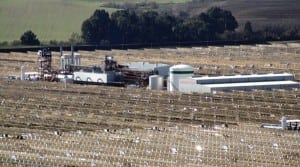
Abengoa Solar in early May began commercial operation of Solnova 1, the company’s first 50-MW parabolic trough plant. Covering 980,000 square feet with mirrors requiring an area totaling 280 acres (Figure 2), it is one of five planned concentrating solar power (CSP) plants to be built at the Solúcar Platform in Spain. All will use a technology developed by Abengoa with experience gained from a trough pilot built in 2007. Solnova 1 will also be equipped to burn natural gas if sunlight is weak.
-
 Coal
CoalIndustry Pivots on Natural Gas, Hails Cap and Trade
At the opening ELECTRIC POWER 2010 plenary session, both the keynote speaker’s address and discussion among the Power Industry Executive Roundtable participants pointed to the renewed appeal of natural gas and proposed cap-and-trade legislation as being potential game-changers for the U.S. power industry.
-
 Hydro
HydroAustralia Gets Hydropower from Wastewater
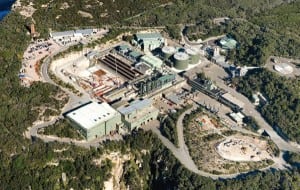
An Australian sewage plant this April began using treated wastewater falling down a 60-meter (m) shaft to produce its own power.
-
 Nuclear
A Slow Slog Ahead for U.S. Nukes
There is a certain tentativeness about new nuclear power in the U.S. these days, a low-grade anxiety, as demonstrated by the comments made by electric utility representatives at May’s ELECTRIC POWER Conference in Baltimore.
-
Coal
CORRECTED: New York Coal Plant to Get 20-MW Energy Storage System
New York regulators in April approved construction of a 20-MW energy storage system at the site of an operating coal-fired power station near Union, Broome County. When operational, the $22.3 million project, owned by AES ES Westover LLC—an AES Corp. subsidiary—will use the technology to participate in New York’s growing day-ahead market for ancillary services and regulation.
-
 O&M
O&MImproving SCR Performance on Simple-Cycle Combustion Turbines
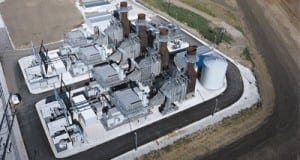
Austin Energy replaced the selective catalytic reduction (SCR) catalyst twice over five years for its four peaker turbines. The duct modifications and injection grid redesign, combined with new catalyst, are producing high NOx reduction and low ammonia slip, and the catalyst is now expected to last at least five years.
-
 Wind
WindOffshore Wind Takes Off Around the World
After more than a decade of debate, in April, U.S. Interior Secretary Ken Salazar approved Cape Wind, a proposed 130-turbine offshore wind farm for Nantucket Sound in Massachusetts. It would be the first wind facility in U.S. waters. Despite remaining hurdles, the approval marks a shift in political winds for the nation’s fledgling industry, and it could spur further development of projects proposed for relatively shallow waters along the East Coast and in the Great Lakes.
-
 O&M
O&MReal-Time Monitoring of Natural Gas Fuel Cleanliness
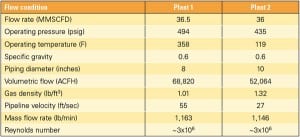
Gas turbines require clean gas to operate efficiently. Particulate contamination fouls fuel nozzles, causes increases in flue stack emissions, and occasionally causes unplanned plant outages. Now a new real-time natural gas cleanliness monitoring and web-based alarm system is providing valuable protection for natural gas–fired power plants. The adaptation of laser light–scattering technology for the purpose of contaminant measurement in high-pressure gaseous pipelines provides a method of monitoring liquid and solid contamination levels.
-
 Wind
WindCompetition for Offshore Turbine Market Heats Up
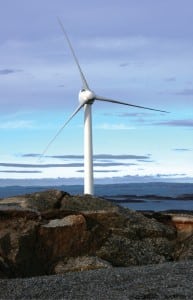
One indication that the world’s offshore wind sector is poised to soar is the escalating competition between turbine makers. This April, General Electric (GE)—the world’s second-largest manufacturer of wind turbines—announced it would introduce a 4-MW gearless wind turbine (a design requiring no gearbox between turbine and generator) in 2012. The move directly challenges market leader Siemens Energy, of Germany, and its head-to-head competitor, Denmark’s Vestas Wind Systems.
-
 Business
A Proposed Definition of CHP Efficiency
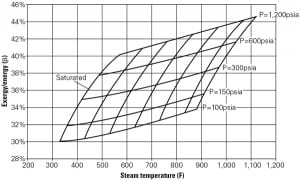
Many alternative approaches for determining a useful definition of combined heat and power fossil power plant efficiency have been proposed, although most fail to produce a universal definition. This follow-up report to our February story on plant efficiency shows how an exergy analysis supplies the elusive solution.
-
 Nuclear
Finnish Government OKs Two Nuclear Plant Proposals
Finland’s government in April approved two of three proposals for the construction of new nuclear reactors in an effort to rid the country of its dependency on electricity imports from other countries—especially Russia—as well as to decrease carbon emissions.
-
 News
NewsIn-Line Vibration Transmitter
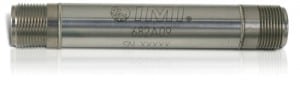
IMI Sensors released model 682A09 ICP In-Line 4-20 mA Vibration Transmitter, a device that installs with any industrial accelerometer and converts the vibration signal to a 4-20 mA velocity output that can be trended with today’s PLC, DCS, or SCADA control room systems. Its sleek design installs right into the cable run. No DIN rails, […]
-
 Hydro
HydroHoover Dam Contracts for Low-Water Hydroelectric Turbine
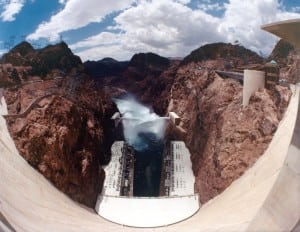
Growing water demand and reduced runoff due to drought has depleted waters feeding many hydroelectric power plants around the world—sometimes causing severe power shortages, such as in Brazil and New Zealand. The 2,080-MW Hoover Dam (Figure 4), a facility that generates power for more than a million people in Arizona, Nevada, and Southern California, is not immune to this phenomenon. According to a recent study by the Scripps Institution of Oceanography, the Colorado River system, which includes Lake Powell and Lake Mead (both manmade reservoirs), is suffering a net deficit of nearly one million acre-feet of water per year.
-
 News
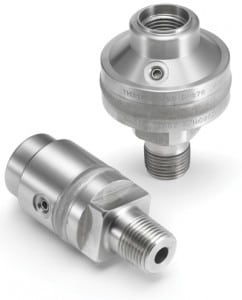
NewsCaustic Media–Shielding Seals
Types 510 and 511 diaphragm seals are the newest addition to Ashcroft’s line of instrument media isolators. These economical, all-welded seals protect pressure gauges, transmitters, switches, and other instruments against the potentially harmful effects of caustic media. The seals are available for use with ranges from vacuum through 5,000 psi, and they can be threaded […]