
POWER
-
 Gas
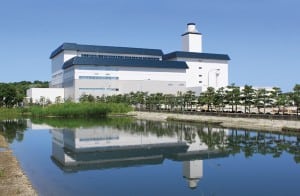
GasSendai Plant Boosts Efficiency and Cuts Emissions
Located on the scenic Japanese coastline, Tohoku Electric Power Co., Inc.’s new 446-MW Sendai Thermal Power Station Unit 4 is a combined-cycle plant that replaces three 175-MW coal-fired units that had been in operation for more than 50 years. The new plant features the first application of MHI’s 50-Hz M701F4 gas turbine, which provides a thermal efficiency boost from the old plant’s 43% to more than 58%. This change substantially reduces CO2 emissions.
-
 Solar
SolarEnergy Storage Enables Just-in-Time Generation
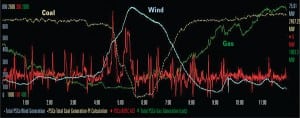
One of the main criticisms of renewable energy facilities is that they are unable to dispatch electricity when it’s needed. The great game-changer is low-cost energy storage, which would enable renewable energy production to be stored and rapidly released when needed. Here are seven promising distributed energy storage technologies that could be commercialized in the near future.
-
 Wind
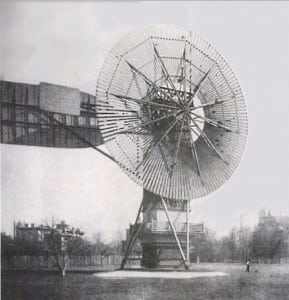
WindChanging Winds: The Evolving Wind Turbine
As early as the first century A.D., wind energy was harnessed for practical purposes. Since then, turbine designs have come a long way from the archetypal post-mounted four-bladed devices. Today’s ubiquitous three-bladed designs will soon be evolving in many unexpected directions.
-
 Solar
SolarThe Smart Grid and Distributed Generation: Better Together
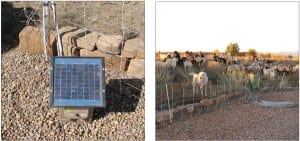
Electricity grids are slowly getting smarter. Simultaneously, the use of distributed generation is increasing. Though smart grid advocates tout the ability of a smarter grid to enable greater deployment of distributed resources, the benefits could flow in both directions.
-
 Coal
CoalBiomass Cofiring: A Promising New Generation Option
Biomass cofiring has the potential to cut emissions from coal-fueled generation without substantially increasing costs or infrastructure investments. Research shows that when implemented at relatively low biomass-to-coal ratios, energy consumption, solid waste generation, and emissions are all reduced. However, mixing biomass and coal does create some challenges that must be addressed.
-
Wind
Horizontal or Vertical? The Question for Wind Turbine Axis Orientation
This web supplement to "Changing Winds: The Evolving Wind Turbine" examines the debate over the merits of the two most common wind turbine axis orientations.
-
 O&M
O&MFire Protection Options for Air-Cooled Hydroelectric Generators
Fire protection systems for air-cooled hydroelectric generators have several special requirements due to these generators’ unique geometries. This survey of options will help plant owners and operators make the best equipment selections for their plants and thereby avoid unexpected surprises.
-
News
Spanish Wind, Revisited
Two years ago, Spain’s fixation on renewables and “green jobs” was praised by President Obama as a success story worthy of our emulation. How is Spain doing today?
-
 Nuclear
Nuclear Fever Breaks
Excitement over an expected nuclear renaissance reached fever pitch over the past decade. Today, the original volume of announced projects has been sifted, leaving just a few serious ones that may match well with the level of loan guarantees recently announced as part of the president’s budget proposal. The pace of progress is slow, yet progress is almost certainly unavoidable.
-
 Nuclear
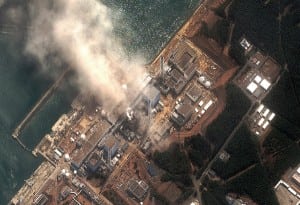
The Battle to Control Quake-Stricken Japanese Reactors
As POWER closes this issue (March 15), 6,000 people have been confirmed dead and 10,000 others are still missing as a result of the magnitude 9.0 earthquake and ensuing tsunami that destroyed Japan’s eastern shore on March 11. At this writing, the country is battling a third cataclysm—the potential meltdown of several reactors at Tokyo Electric Power Co. (TEPCO’s) Daiichi nuclear power plant in Fukushima Prefecture.
-
 Coal
CoalBenchmarking Fossil Plant Performance Measures, Part II: Fleet-Level Metrics
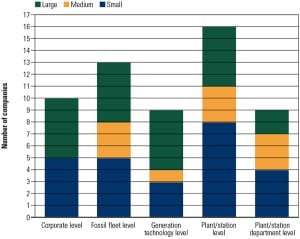
Part II of this three-part series moves up the typical utility organization to consider important fleet-level fossil plant operating metrics. This portion of the EUCG-sponsored benchmarking survey found that utilities favor fleet-level metrics that are similar to plant-level metrics but assign them different priority. Utilities generally agreed on what were important metrics in the eight categories examined, although none were favored by a majority of the surveyed utilities.
-
 Nuclear
Nuclear Monitor: News from France, Japan, U.S., Belgium, Germany
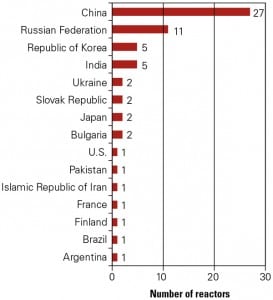
Five new nuclear reactors were connected to the grid while construction of 14 others began in 2010, the International Atomic Energy Agency (IAEA) reported in early March. Around the world, a total 65 reactors with a net power capacity of 62.9 GW were in various stages of construction—almost half of them in China.
-
 News
NewsLinear Heat-Detection System
Tendeka’s advanced monitoring solutions arm, Sensornet, introduced its FireLaser linear heat-detection system, which has been specifically designed for fire hazard detection applications. The FireLaser connects to a fiber-optic cable and determines temperature and distance data at thousands of points along its length. The fiber-optic cable is installed within the asset to be protected, acting as the […]
-
 Geothermal
Geologists Tap Magma for Energy Production
Geologists drilling an exploratory well in Iceland’s Krafla volcano in search of supercritical geothermal resources in 2009 unexpectedly uncovered a new way to harness energy from deep within Earth’s crust. It involves accessing shallow bodies of molten rock, which the geologists say could likely be found elsewhere in Iceland and around the world, wherever young volcanic rocks occur.
-
 News
NewsDrill-Through Tool to Ensure Deep Casing
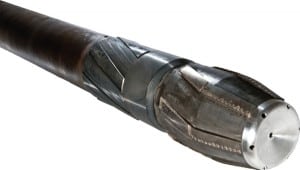
Aberdeen, UK–based casing and completion technology specialist Deep Casing Tools launched the Turbocaser Express, what it calls the “first ever drill-through tool to ensure casing to target depth, allowing wells to be drilled as planned and enhancing integrity.” After reaming a casing to target depth, the Turbocaser Express has a unique, patented internal design that […]
-
 Coal
CoalTurning Flue Gas Carbon into a Raw Material for Manufacturing
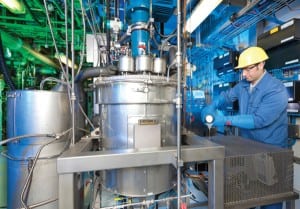
Bayer in February brought online a pilot plant at Chempark Leverkusen, Germany, to recycle carbon dioxide (CO2) scrubbed from the flue gas of a 1,000-MW RWE lignite-fired unit and convert it into a raw material and petroleum substitute for plastic manufacturing. The Bayer facility (Figure 4) essentially produces a chemical precursor into which CO2 is incorporated and then processed into polyurethanes that are used for many everyday items.
-
 News
NewsNew Digital Pressure Gauges and Calibration Pumps
Palmer Wahl Instruments Inc. has introduced a new line of digital pressure test gauges that includes the Palmer 3PC Auto Ranging Digital Pressure Test Gauge (shown here), which spans a pressure range of vacuum to 3,000 psi. Featuring an accuracy of 0.1%, and with the capacity to read nine different units of measure, the 3PC […]
-
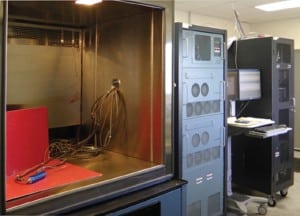 Business
KEMA Opens Lab to Test Energy Storage Performance
Dutch energy consulting firm KEMA in February opened a new laboratory in Chalfont, Pa., to test and verify emerging utility-scale energy storage systems.
-
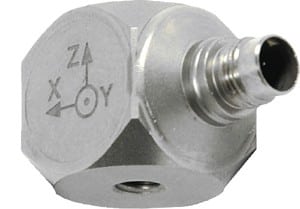 News
NewsMiniature Triaxial Accelerometer
Kistler announced the North American market introduction of the Type 8763B, a miniature IEPE triaxial accelerometer with voltage output. The accelerometer offers simultaneous shock and vibration measurements on three mutually perpendicular axes with optional TEDS capabilities (per IEEE 1451.4) to meet high-performance requirements. Available in six unique models with measurement ranges from ±50 g to […]
-
Business
POWER Digest (April 2011)
China Inaugurates 660-kV DC Line. The China Power Grid Co. on Feb. 28 began transmitting power through a 660-kV direct current power transmission link that runs from northwest China’s Ningxia Hui Autonomous Region. Part of China’s west-east power transmission program, the 10.4 billion yuan (US$1.58 billion) project runs 1,333 kilometers through five provinces and regions […]
-
 News
NewsHigh-Level Construction Glove
Ergodyne has launched the ProFlex 750 At-Heights Construction Glove. The glove delivers the comfort, durability, and protection required for climbing as well as the fit and dexterity needed to get the job done right in the world’s highest work zones, the company claims. Designed to reduce fatigue and discomfort while climbing, the 750 At-Heights Construction […]
-
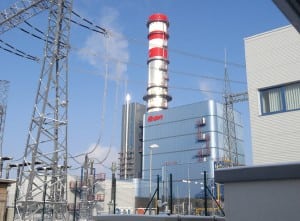 Gas
GasE.ON Starts 417-MW Cogeneration Plant in Slovakia
At the beginning of 2011, German firm E.ON began operation of its new 417-MW Malzenice gas and steam turbine power station in Slovakia’s Trnava region, near the country’s capital, Bratislava (Figure 5). The facility, which is expected to generate more than 300 billion kWh annually, boasts an efficiency of 58%—which E.ON claims is among the “highest in Europe.”
-
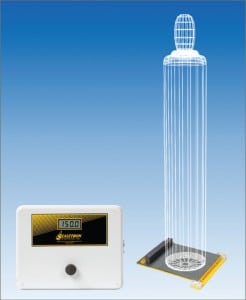 News
NewsGas-Weighing Scale for Water Treatment Applications
Scale-manufacturer Scaletron Industries added the Model 2305 Digital Single Cylinder Eco-Scale to its product lineup. Designed to provide a more versatile solution for weighing ammonia, carbon dioxide, hydrogen chloride, liquefied chlorine, sulfur dioxide, and other liquid gases used in water and wastewater treatment applications, the scale can weigh cylinders of up 10.5 inches in diameter and […]
-
 Gas
GasUsing Flue Gas to Mitigate Ocean Acidification
Lab-scale experiments have shown that seawater and calcium could effectively remove most of the carbon dioxide (CO2) from a natural gas power plant’s flue gas stream. A large fraction of the captured gas could then be converted into dissolved calcium bicarbonate—which, pumped into the sea, could be beneficial to the ocean’s marine life, says a researcher representing both the Lawrence Livermore National Laboratory’s (LLNL’s) Carbon Management Program and the University of California, Santa Cruz.
-
 News
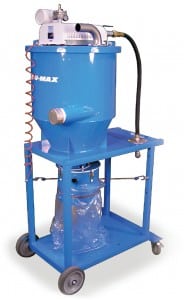
NewsIndustrial Vacuum for Combustible Dusts
The new VAC-U-MAX Model 860/02 is suited for operators who want to eliminate drum handling and who need to collect and discharge powders in a safe, dust-free, and convenient way. The Model 860/02 uses the field-proven VAC-U-MAX Air-Powered Vacuum cover with manual pulse-jet filter cleaning and nonstick filtration that captures 99.9% of particles as small […]
-
Business
POWER Digest (March 2011)
GDF SUEZ, RWE, and Iberdrola Pull out of Cernavoda Nuclear Expansion. French power company GDF SUEZ, Germany’s RWE, and Spain’s Iberdrola on Jan. 20 said they would no longer participate in a project to build Units 3 and 4 of the Cernavoda nuclear project in Romania. The companies cited “economic and market uncertainties surrounding the […]
-
 News
NewsMultiparameter Transmitter for Water Purity Monitoring
Mettler-Toledo Process Analytics Division introduced the Thornton model M800 multiparameter transmitter for monitoring water purity. Multiparameter measurement is ideally suited for facilities where precise measurement of conductivity/resistivity, pH, dissolved oxygen, dissolved ozone, flow, and temperature of ultrapure water is critical. As displayed on the device’s full-color, high-resolution touch screen, the M800’s exclusive integral predictive maintenance […]
-
 News
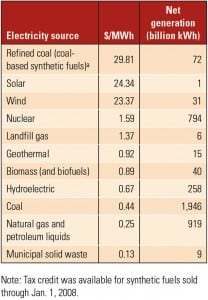
NewsBusting Myths
The popular television show Mythbusters uses pseudo-scientific means to examine and often expose as fiction familiar urban myths. After made-for-television lab tests, the myth is then classified as either a fabrication (“busted”), entirely possible (“confirmed”), or somewhere in between (“plausible”).
-
 News
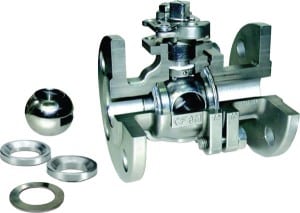
NewsMetal Seat Ball Valves for High-Temperature, Abrasive Surfaces
The new M-series metal seat ball valves from A-T Controls are engineered with specially coated matched balls and seats to stand up to high temperatures, high pressures, and abrasive materials encountered in the power generation industry. Valves in the M-series have a temperature range of –20F to 661F and a pressure rating up to ANSI […]
-
 O&M
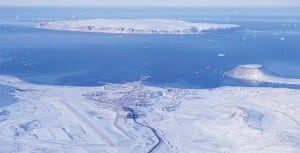
O&MThe Heat Is On at Arctic Air Base
Thule (“Two Lee”) Air Base is a 254–square mile base located in a coastal valley in the northwestern corner of Greenland, within the Arctic Circle. The base, the U.S.’s northernmost military installation, is nestled between mountains and surrounded by icebergs and glaciers as far as the eye can see.