
POWER
-
 Coal
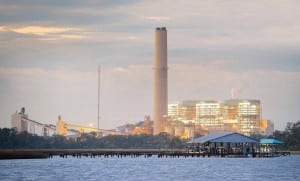
CoalTop Plant: St. Johns River Power Park, Jacksonville, Florida
A recent NOx reduction project added selective catalytic reduction equipment to each of the two 640-MW, mixed coal–fired units at the St. Johns River Power Park. The selection of precisely the right catalyst required extensive long-term testing with “mini” reactors. Once the right catalyst formula was identified, the actual retrofit project was completed in a mere 23 months, an aggressive project schedule that required overcoming many design and construction challenges.
-
 Nuclear
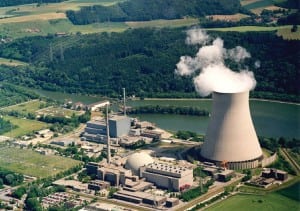
Germany’s Nuclear Phase-Out Has Widespread Implications
The German government in July finalized a package of bills that will phase out nuclear’s 23% contribution to the country’s power supply by 2022 and increase renewable generation from the current 17% to 35%. In August, the Federal Network Agency ( Bundesnetzagentur) said it wouldn’t rely on power from seven of the nation’s oldest reactors […]
-
 Coal
CoalCWA 316(b) Update: Fish Guidance and Protection
The U.S. Environmental Protection Agency (EPA) has proposed new Clean Water Act section 316(b) regulations for once-through cooling water intake structures. Comments on the proposed rules closed in August, and a final rule is expected mid-2012. The EPA estimates that at least half of the power plants using once-through cooling will be required to implement a best technology available solution in coming years. That typically means barriers and screens, but you may want to consider other options.
-
 Nuclear
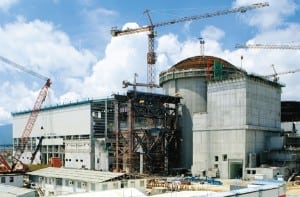
Ling Ao 4 Starts Up While Sanmen Gets First AP1000 Reactor Vessel
In China this August, as Ling Ao Unit 4—the second unit of the Ling Ao Phase II nuclear plant—started commercial operation, Westinghouse and its consortium partners marked the milestone of receiving the reactor vessel for the Sanmen nuclear power plant—the world’s first AP1000—in China’s Zhejiang province. The start-up of Ling Ao Unit 4 in Guangdong […]
-
 Coal
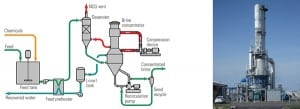
CoalFundamentals of Zero Liquid Discharge System Design
Power plants often produce wastewaters that contain salts, such as those from wet gas scrubbing, coal pile run-off, and leachate from gypsum stacks. Evaporation of those liquid wastes in a modern zero liquid discharge system produces clean water that is recycled into the plant plus a solid product suitable for landfill disposal. Here are the options to consider.
-
 Gas
GasNew Peaking Plant to Balance California’s Renewables
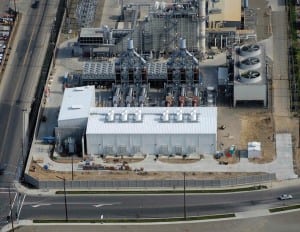
As utilities in California are scrambling to meet the state’s 33% renewable mandate by 2020, a 49.6-MW peaking plant in Modesto, Calif., built by Finnish firm Wärtsilä for the Modesto Irrigation District, has been commissioned to provide flexible, fast-start peaking generation to balance the state’s increase in intermittent renewable generation (Figure 4). 4. Flexible peaking. […]
-
Legal & Regulatory
New EPA Rule Calls for Flexibility
Quin Shea, vice president, environment for the Edison Electric Institute, comments on the Utility MACT rule that is expected to be finalized in November.
-
 Hydro
HydroChart a New Course
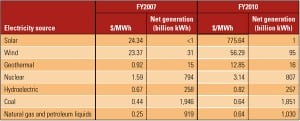
I examined the magnitude of electricity subsidies for renewables compared with conventional generation technologies in my May 2011 editorial, based on data from a 2008 report prepared by the U.S. Energy Information Administration (EIA). An updated EIA report released in July determined that federal government subsidies have risen substantially during the past three years. In fact, overall renewable energy subsidies have almost tripled, increasing from $5.1 billion to $14.7 billion. In my opinion, we aren’t getting value for the money spent.
-
 Gas
GasTop Plant: Irsching 4 Combined Cycle Power Plant, Irsching, Bavaria, Germany
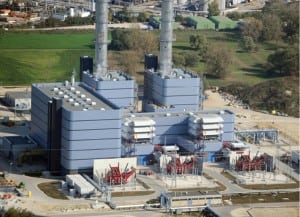
The Irsching 4 Combined Cycle Power Plant has set a new world record in power plant efficiency with its new SGT5-8000H gas turbine. With an output of more than 578 MW and efficiency of 60.75% (net) achieved at a world record test run in May 2011, the plant demonstrates that climate protection, low-cost power generation, and flexible operation using fossil fuels can be attained simultaneously through technical advances. Due to its high efficiency, the gas-fired plant uses significantly less fuel and produces lower carbon dioxide emissions than traditional combined cycle plants.
-
 Coal
CoalTHE BIG PICTURE: Lights Out
Heat waves, droughts, and other weather and climate phenomena; economic woes; aging or inadequate infrastructure; fuel shortages. These are some of the most obvious causes that have led to record peaks in power demand or sudden drops in available capacity. The results have been sometimes debilitating load-shedding, brownouts, and blackouts around the globe this summer (and, in some cases, for much longer). Here’s an overview of which countries are affected by which difficulties. For a more detailed look at the extent of shortages and what’s causing them, visit Web Exclusives at https://www.powermag.com
-
 Gas
GasTop Plant: Montoir-de-Bretagne Combined Cycle Plant, Montoir-de-Bretagne, France
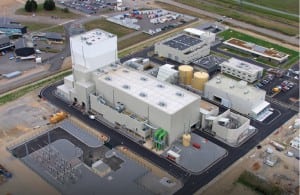
The 435-MW Montoir-de-Bretagne gas-fired power plant is ramping up Gallic generation in the Loire-Atlantique region of western France. The plant’s innovative natural gas combined cycle technology offers high efficiency and low emissions.
-
 Nuclear
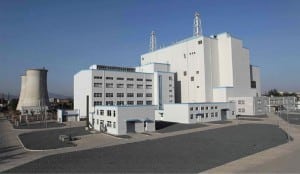
China Begins Operation of Experimental Fast Reactor
China in July flicked on its experimental fast reactor—the first built in the nation, and the first of many more to come. The China Experimental Fast Reactor (CEFR), whose development began in 1995, is a pool-type sodium-cooled reactor with a thermal output of 65 MW and an electrical output of 20 MW. The reactor is housed in a 44,000-square-meter (473,610-square-foot) building.
-
 Gas
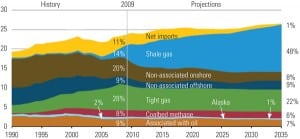
GasGlobal Gas Glut
Marcellus Shale gas has increased recoverable natural gas reserves in the U.S. by about a third over estimates prepared a few years ago. Europe is also exploring shale gas as an alternative to problematic Russian gas supplies and low proven natural gas reserves. POWER contributors in the U.S. and UK examine the comparative economic value, public acceptance, and political implications of these massive shale gas reserves.
-
Coal
Explosion Devastates Major Cypriot Power Plant
A brush fire that spread and detonated explosives stored at the Evangelos Florakis naval base in Mari on the southern coast of Cyprus on July 11 killed 13 people, injured 62 others, and severely damaged the Vassilikos Power Station—an oil- and gas-fired plant that supplied almost 60% of the island nation’s power. Cyprus, which was once considered an “economic miracle,” has been battling crippling power shortages that have beleaguered its financial and tourism sectors since the blast and left it on the verge of economic collapse.
-
 O&M
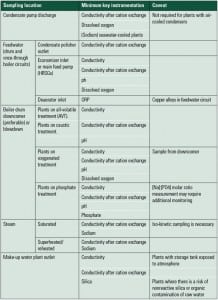
O&MThe New Water Lab
Recent advances in water laboratory instrumentation—from improved sample conditioning to advanced online instruments—have reached the market. Here’s a look at the equipment you’ll find in the best-equipped power plant laboratory this year.
-
 Nuclear
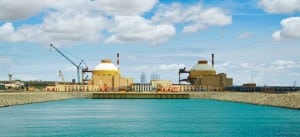
India’s Indigenous Nuclear Program Advances While U.S.-India Trade Stalls
Since a landmark 2008 deal that lifted global sanctions and allowed countries to conduct nuclear trade with India, the nation struggling to keep up with domestic power demand has signed deals with the U.S., France, Russia, Canada, Mongolia, Kazakhstan, Argentina, Namibia, and, in August, South Korea, for construction of large nuclear power plants (in technical collaboration with foreign vendors) or for nuclear fuel.
-
 Coal
CoalBest Practices for Natural Gas Line Cleaning
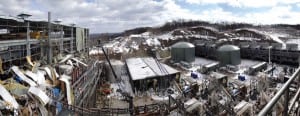
As barriers to new coal-fired generation expand and enthusiasm for nuclear plants wanes, the commissioning of natural gas–fired plants promises to increase. However, gas plants pose hazards, too. An explosion last year that was caused by unsafe use of natural gas to blow residue from a gas pipeline during commissioning of a gas-fired power plant has focused regulator and industry attention on finding safer alternatives for this task. Fluor shares its gas pipeline cleaning best practices.
-
 Solar
SolarSpanish Power Tower Supplies 24 Hours of Electricity
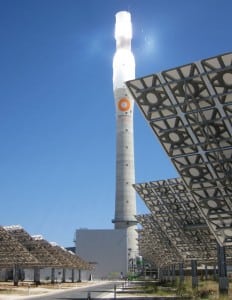
In Spain this June, a new 19.9-MW concentrated solar power (CSP) tower in Fuentes de Andalucía, Seville, reached the unprecedented milestone of storing thermal energy to its fullest capacity and supply power for an uninterrupted 24-hour period.
-
 Gas
GasWho Pays for Firming Up Variable Energy Resources?
The major economic hurdle for renewable power generation technologies continues to be substantial installation costs. But another cost is associated with continuous load-balancing, made possible by backstopping that variable generation with dispatchable generators that typically consume expensive fossil fuels. Bottom line: Who pays for the capacity firming or backstopping resources?
-
 Hydro
HydroCommercial Oscillating Water Column Marine Power Plant Commissioned
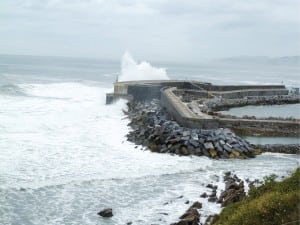
One of the world’s first breakwater wave power stations was commissioned this July by Ente Vasco de Energia (EVE), an energy agency in the northern Basque region of Spain. The €2.3 million ($3.3 million) project in Mutriku uses oscillating water column technology developed by Voith Hydro’s Wavegen, based in Inverness, Scotland. The technology is integrated into a concrete power station built on a breakwater or coastal protection project.
-
 News
NewsClose-Coupled Pumps for Low-Flow Applications
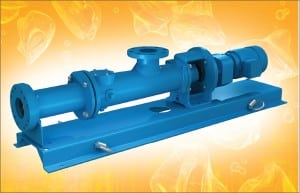
Moyno introduced the Moyno 2000 WA and WB close-coupled pumps designed for lower-pressure, lower-flow applications that do not require the full features and benefits of the Moyno 2000 GI pump. The Moyno 2000 WA (shown here) and WB models are ideal for municipal and industrial applications that require the transfer of highly viscous fluids and […]
-
 News
NewsNovel Nanotube Applications for Power Generation
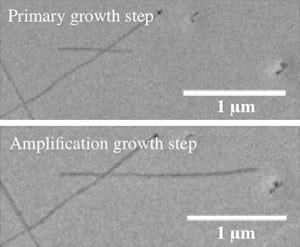
As it does for sectors such as global defense and transportation, nanotube technology holds great promise for the energy sector—and, in particular, for power generation. This July, researchers from the Massachusetts Institute of Technology (MIT) said carbon nanotubes showed potential as an innovative approach to storing solar energy, and Rice University scientists claimed they were closer to developing a unique wire that could transmit power with few losses.
-
 News
NewsGlycol Pumps for Gas Dehydration
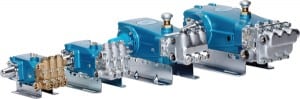
Cat Pumps launched a new series of glycol pumps developed to supply triethylene glycol for natural gas dehydration systems. System reliability, especially of the pump, is essential to minimize production interruptions and costly equipment failures. The TEG triglycol pumps have been field-proven in the most rigorous dehydration systems, Cat Pumps says. The electric engine–driven TEG […]
-
Coal
POWER Digest (September 2011)
Australia Pursues Carbon Tax. Australia’s Prime Minister Julia Gillard on July 10 laid out an ambitious plan to cut national greenhouse gas emissions by 5% of 2000 levels by 2020 by imposing a A$23 (US$23.4) per metric ton carbon tax, starting next year. If parliament approves the plan before year-end, the carbon tax will increase […]
-
 News
NewsEquipment Line for Industrial Gas Applications
Air Liquide America Specialty Gases equipment group recently announced the introduction of a comprehensive line of “industrial grade” equipment for use with gases commonly used in welding, cutting, and other industrial applications, as well as with liquid cryogenics. The equipment is ideally suited for use with Air Liquide brands of industrial gases such as ALIGAL, […]
-
O&M
Advanced Coatings Protect Plant FGD Systems
Now that many flue gas desulfurization (FGD) systems are reaching middle age, corrosion repairs of structural and process vessels are becoming more common. Corrosion is caused by condensates of acids formed during the FGD process, which accelerate pitting and crevice corrosion, particularly in scrubbers where high sulfate solutions are present. Scrubbers lined with 2205 duplex stainless steel are among the most vulnerable to pit or crevice corrosion, from both chlorides and fluorides.
-
Commentary
Advancing America’s Nuclear Infrastructure
It is fair to say that 2011 is bringing some uncertainty into the nuclear energy industry. The tsunami and subsequent events at Fukushima present Japan and our industry with new challenges but also serve as a catalyst for continuous improvement. In the U.S., we are learning from these events and improving our operations, designs, and emergency response approaches to make our plants safer, more efficient, and more environmentally friendly.
-
Instrumentation & Controls
NERC CIPS Update: The Advantages of an Integrated Factory Acceptance Test
When adding, modifying, or upgrading a system, many critical infrastructures conduct a factory acceptance test (FAT). A FAT includes a customized testing procedure for systems and is completed before the final installation at the critical facility. Because it is difficult to predict the correct operation of the safety instrumented system or consequences due to failures in some parts of the system, a FAT provides a valuable check of these safety issues. Similarly, because cyber security can also impact the safety of critical systems if a system is compromised, it makes sense to integrate cyber security with the FAT.
-
O&M
BIG PICTURE: Lights Out (Web Supplement)
A web supplement to the September issue with details of global power shortages.
-
Legal & Regulatory
Critics Get Crossways with New Cross-State Air Rule
From the East Coast to the Lone Star State, a number of elected officials and power industry representatives are bashing the new aggressive regulation aimed at controlling specific power plant emissions. Complying with a federal court mandate, the U.S. Environmental Protection Agency (EPA) finalized the Cross-State Air Pollution Rule (CSAPR) on July 6. The new […]