
Focus on O&M
-
O&M
Widespread Voltage Collapse Demonstrates the Importance of Generator Acceptance Testing
A September 2005 power outage that affected two million people in the California Southland was initiated when workers cut live electrical wires after consulting erroneous design drawings, but it was exacerbated by a number of extant problems with local generation and protection configurations.
-
O&M
Replacing an HP/IP Rotor
Today’s power plant owners face many challenges, including the aging and degradation of equipment. Steam turbines at times may be condemned due to operating inefficiency or rising vibration levels. In such cases the options may be few because the turbine may require a full or partial rotor section replacement. The good news is that a rotor section replacement can be performed in a relatively short time, depending upon the original rotor configuration. Here’s one example.
-
O&M
Sealing Transformer Oil and SF6 Leaks Quickly and Effectively
Transformers, which are prone to leaking, are an excellent example of where using the right materials and techniques can quickly reduce cleanup costs and potential environmental damage from a fluid leak. Transformer leaks are most commonly caused by degrading cork gaskets or holes in the radiator fins or the steel tank. Often these leaks are slow drips, but occasionally a catastrophic leak will occur, spilling hundreds of gallons of mineral oil into the environment and causing the transformer to short-circuit, causing further health and safety concerns. These dangers, coupled with transformers’ isolated locations, make inspection, repair, and maintenance a major challenge.
-
O&M
When to Use an Oil Skimmer
Oil skimmers are very effective in removing oil from wastewater before discharge but are also perhaps the most efficient and economical approach.
-
O&M
Rebuilding Feedwater Heaters While a Plant Is Online
Rebuilding aged feedwater heaters can make better economic sense than buying new ones, because rebuilding reduces capital cost and plant outage expenses. At one Texas generating station, rebuilding saved one-third the cost of a new feedwater heater while improving the plant’s heat rate.
-
O&M
Halar-Lined Chimney Remains Maintenance-Free
A fiberglass-reinforced plastic (FRP) Halar stack liner was installed at Vattenfall’s 300-MW Unit 2 at the Nordjylland Power Station in 1995. The 112-meter-high (367-ft) stack, protected from corrosion by the ECTFE liner, is still in excellent condition and has not required any repairs during more than 13 years of service. (ECTFE is short for ethylene chlorotrifluoroethlyene polymer, marketed under the brand name Halar ECTFE [Halar] by Solvay Solexis.)
-
 O&M
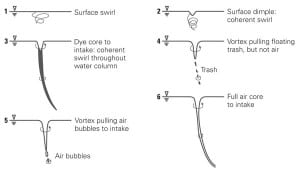
O&MScale Model Testing Confirms Adequate Refueling Water Storage Tank Vortex Allowance
Recent Nuclear Regulatory Commission (NRC) Component Design Bases Inspection activities have scrutinized empirical approaches used to determine vortex allowances for emergency core cooling system (ECCS) suction sources.
-
 O&M
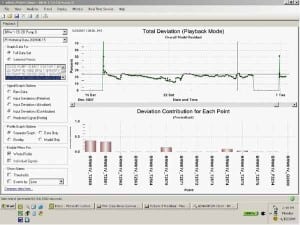
O&MCatching Faults with Centralized Condition Monitoring
In 2007, Exelon Corp. began the Centralized Performance Monitoring (CPM) pilot program. The goal was to reduce downtime costs and lost revenue associated with the 25% of unplanned forced losses across its fleet of 17 nuclear power units without additionally taxing existing personnel or adding new personnel.
-
 O&M
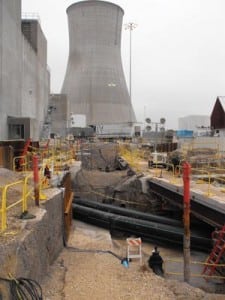
O&MHDPE Replaces Carbon Steel in Safety-Related Pipe System
Corrosion of steel water pipes in the safety-related piping systems of aging U.S. nuclear power plants is fast becoming a safety concern and a significant operational cost, not to mention an indication of potential future liability for nuclear utilities currently constructing new plants or retrofitting existing sites.
-
 O&M
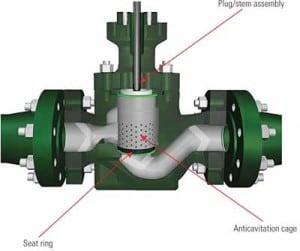
O&MEnsure Your Valve Replacement Parts Meet OEM Specs
When high-temperature boiler feedwater passes through a control valve, the pressure drop can exceed several thousand pounds per square inch, placing extreme stress on the valve body and internal parts. If those parts are not engineered and manufactured to the highest industry standards, there is a very real possibility of the severe conditions damaging or destroying the valve.
-
 O&M
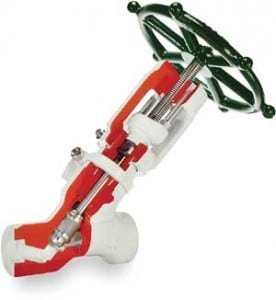
O&MProper Valve Selection Reduces Downtime, Increases Process Efficiency
Many customer quotation requests provide only the line size, pressure class rating, and valve type. A typical request might read: size 4, Class 900 globe valve. Though this may be enough information to produce a valve quote, it rarely is enough information to size the best valve from both a performance and cost perspective.
-
 O&M
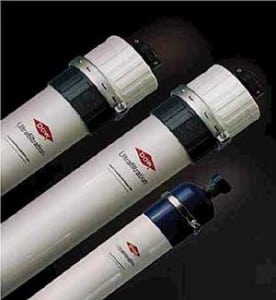
O&MAvoid These 10 Mistakes When Selecting Your New Water Treatment System
There are a number of reasons why your plant might be looking at new water pretreatment equipment in the near future. One common reason is the addition of new generating capacity. Regardless of the type of new generation, you can be sure that it will require additional high-purity water for processes ranging from direct steam generation to power augmentation, NOx control, and washing the blades of the combustion turbines.
-
 O&M
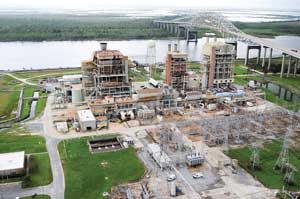
O&MAccurate Online Silica Analyzers Ensure Boiler Performance, Add Boiler Life
One key area at the 800-MW Michoud power station where O&M excellence is evident is in maintaining plant water quality.
-
 O&M
O&MThe 7,000-Foot Challenge
The Springerville Generating Station in Springerville, Ariz. (Unit 3 was POWER’s 2006 Plant of the Year), uses two lined ponds to hold water collected from its cooling towers. With the construction of Unit 4, the plant’s owner, Salt River Project (SRP), one of Arizona’s largest utilities, wanted to increase the capacity of pumps used to move effluent from one pond to another to avoid the possibility of overflow. SRP engineers wondered if using a vertical turbine pump on a floating barge would improve managing the water levels in the two ponds.
-
 O&M
O&MManaging Minimum Load
Reducing the minimum load at which a steam turbine can reliably operate is one way to increase revenue for marginal base-loaded units during periods of low electrical demand. For this reason, it is not unusual to see merchant plants operating at "super minimum" load levels that are well below the typical 25% rated full-load limits. However, such units are operating well outside the original equipment manufacturer (OEM) design basis, and owners may experience undesirable damage to their turbines for a number of reasons. That’s why it is important for owners to understand the trade-offs and risks that come with such operation.
-
 O&M
O&MPolymeric Solution for Pump Cavitation
Cavitation is defined as the phenomenon of forming and imploding vapor bubbles in a region where the pressure of the liquid falls below its vapor pressure. Cavitation and the resultant damage can occur in any fluid-handling equipment, especially in pumps. Technological advances in industrial protective coatings and composite repair materials have made it possible to repair pumps operating in a cavitating environment rather than simply replacing them after damage occurs. Cavitation-resistant (CR) elastomers have the ability to retain adhesion under long-term immersion, dissipate energy created under high-intensity cavitation, and provide outstanding resistance to corrosion and other forms of erosion.
-
 O&M
O&MExtreme Oil Changes
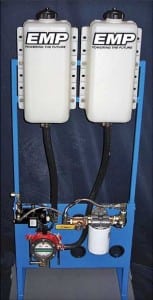
Performing regular oil changes on remote generators is far from simple or cost-effective. Here’s how one firm harnessed technology to extend oil change intervals from one week to two months.
-
Business
How Company Size Affects NERC Compliance
In the world of North American Electric Reliability Corp. (NERC) Reliability Standards, each company (entity) that must comply with the standards determines for itself the scope and size of its compliance program, based on the scope and size of its operations.
-
 O&M
O&MOptimize Gas Turbine Performance Using Acoustic Simulation Software
Increasingly fierce competition driven by deregulation and privatization is putting downward pressure on power plant operations and maintenance (O&M) budgets. Recently, lower natural gas prices have pushed natural gas – fired combined-cycle plants higher up in many utilities’ dispatch order in some regions, a welcome change from the twice-a-day cycling experienced by some plants during the past few years. However, with more operating hours comes more interest in plant operating availability, and that means increased emphasis on reliable gas turbine operation.
-
 O&M
O&MNuclear: Realistic Simulation Assists in Nuclear Power Plant Certification
From the onset of the civilian nuclear era (marked by President Dwight Eisenhower’s "Atoms for Peace" speech to the United Nations in 1953), there has been a strong awareness of the importance of safety within the nuclear energy industry. Western experts have devoted much time and effort to ensuring the integrity of reactor cores and […]
-
 O&M
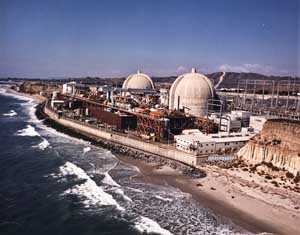
O&MSteam Turbines: San Onofre Nuclear Generating Station Gets Upgraded Generator Rotors
Southern California Edison’s (SCE) 2,250-MWe San Onofre Nuclear Generating Station (SONGS) recently took receipt of a new and upgraded generator rotor for one of its two Alstom steam turbine generator units (Figure 1). Following the successful installation and flawless start-up of this new rotor in the Unit 2 generator, the former Unit 2 rotor was […]
-
 Coal
CoalNew Federal Rules for Coal Ash Storage on the Horizon
By the end of this year, U.S. power plants with coal ash surface impoundments could face new federal regulations related to the management of coal ash at their facilities. Currently, there are no federal requirements governing coal ash management because in 2000 the U.S. Environmental Protection Agency (EPA) determined it to be a nonhazardous waste under the federal Resource Conservation and Recovery Act.
-
 O&M
O&MMaking the Most of Thermal Imaging Data
This article discusses planning, operation, and documentation procedures designed to effectively use the thermal imaging camera as a critical element in an effective reliability program.
-
 O&M
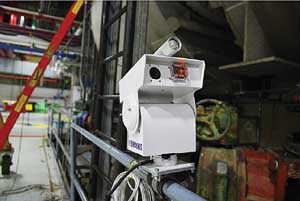
O&MReducing Millirem Exposure
Radioactive materials are clinging to the inside walls of reactor system components because of a noble metals injection process error some years ago at Cooper Nuclear Station (CNS). CNS has launched an aggressive, long-term program to remove the materials, but until the work is successfully completed, the station is also taking extensive measures to protect employees and reduce higher source term dose.
-
 O&M
O&MBest Management Practices for Coal Ash Ponds
The unfortunate coal ash spill at the Tennessee Valley Authority’s (TVA’s) Kingston Fossil Plant that occurred on December 22 has heightened national awareness of the problems associated with utilities’ coal ash surface impoundments if they are not properly maintained.
-
 O&M
O&MReduce Costs with Wireless Instrumentation
New wireless technologies for power plant instrumentation offer significant cost savings when compared to traditional wired networks. The value of this cost savings is especially relevant in the highly competitive power industry, where aging facilities are common and upgrades are an expensive necessity. Modern wireless networks offer a reliable upgrade path that even provides some unexpected benefits when compared to traditional copper networks.
-
 O&M
O&MFERC Focuses on Internal Compliance Programs
By now, most electric industry participants are aware of the mandatory reliability standards required by the Energy Policy Act of 2005 and managed by the North American Electric Reliability Corp. (NERC). Bulk-power system users, owners, and operators (known as NERC registered entities) are responsible for complying with the set of standards that are applicable to their operations in their specific region. Compliance is monitored by the NERC regions (Texas Regional Entity, Western Electric Coordinating Council, Reliability First Corp., Midwest Reliability Organization, SERC Reliability Corp., Florida Reliability Coordinating Council, Northeast Power Coordinating Council, and Southwest Power Pool) through spot checks, self-certifications, audits, and investigations.
-
 O&M
O&MPreventing Boiler Code Violations Creates a Safer Work Environment
Nearly 10% of boilers and pressure vessels inspected in the second quarter of 2008 were slapped with violations, which means that the violations put workers and equipment in danger, according to a quarterly report released by the National Board of Boiler and Pressure Vessel Inspectors.
-
 O&M
O&MConverting a Pump to Use Mechanical Seals
Wear and leakage are common maintenance problems that result in pump discharge pressure dropping below optimum levels and reduced pump efficiency. Converting pumps to mechanical seals eliminates fretting or grooving of the shaft and provides for easier pump maintenance. By converting to mechanical seals, a plant also avoids incurring expenses associated with the replacement of sleeves and shafts.
-
 O&M
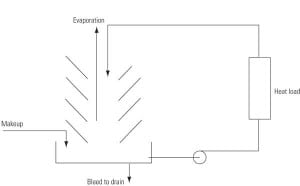
O&MConserve Water by Improving Cooling Tower Efficiency
Though an abundant supply of freshwater has been taken for granted in many parts of the world, its availability is becoming less certain, even in North America. Water is a valuable resource and commodity that needs to be efficiently managed to minimize waste, reduce energy consumption, and control cost, especially for power generation. The industry must respond by seeking out more efficient ways to use water, such as by implementing water recycling and reuse strategies, especially for critical equipment like cooling towers.