For decades, the pitch for community-owned electric utilities has been simple enough to fit on a bill insert: lower rates, reliable service, and decisions made close to home. The numbers still back that up. What has changed, according to Scott Corwin, president and CEO of the American Public Power Association (APPA), is the difficulty of holding that ground.
“The thing that’s really changed over the last couple years,” Corwin said, speaking as a guest on The POWER Podcast, “is this increased focus nationally on resource adequacy, potential impacts to reliability, combined with affordability.” He pointed to demand growth in some regions, generation coming offline in others, and the siting, permitting, and construction of new generation and transmission failing to keep pace with the demand curve. That concern, he noted, was once confined to certain areas. Now it stretches across nearly all of APPA’s membership footprint.
That membership is large and remarkably varied. APPA represents roughly 2,000 community-owned systems operating in every state except Hawaii, along with the five U.S. territories, ranging from big-city utilities to small rural districts. The 2026 Public Power Statistical Report, APPA’s annual data supplement, counts 1,998 public power utilities serving more than 55 million Americans. Read alongside Corwin’s interview, the report functions less as a victory lap than as a baseline—a measure of where the sector stands as the pressures he describes begin to take hold.
Affordability, and the Tools to Defend It
Affordability is where public power’s case is strongest in the data, and where Corwin spent much of the conversation. He framed cost control as partly a matter of conventional discipline—planning, watching expenses, automation, and modernization—and partly a function of financing tools unique to not-for-profit utilities.
Chief among them is tax-exempt financing, which Corwin called “critical” and a perennial advocacy priority for APPA. He also pointed to Elective Pay Tax Credits, which extended certain tax incentives to not-for-profit utilities that previously could not use them. That provision became law a couple of years ago but was “scaled back a little bit recently,” he said, and APPA continues to press for Treasury rules that would make both tools more useful on longer deals. Beyond financing, Corwin argued, local control itself disciplines spending: when customers can show up at a council meeting, the pressure to balance reliability against rates is immediate and personal.
The report puts figures behind the claim. In 2024, residential customers of public power utilities paid an average monthly bill of $123.78, compared with $139.42 for customers of investor-owned utilities (IOUs) and $149.18 for customers of cooperatives—bills roughly 13% and 21% lower, respectively. Setting aside customer charges and other fees, the report calculates that public power residential customers paid $16 less per month than IOU customers and $25 less than cooperative customers, which it tallies at $188 to $305 less over a year. In 35 of the 45 states with comparable rate data, public power utilities posted the lowest average residential rate.
The affordability gap has also been widening in public power’s favor. According to the APPA report, residential rates rose 25.7% nationally between 2020 and 2024, but the increase was driven largely by IOUs, whose residential rates climbed 27.2% over that span, against 11.7% for public power. One caveat is worth stating plainly, and APPA states it: because the Energy Information Administration (EIA) excludes utilities with less than 200,000 MWh in annual sales from detailed customer-class reporting, nearly three-quarters of public power utilities file a short form. APPA contends that fuller reporting “would only further favor public power,” based on historical patterns—an assertion from the association rather than an established fact, though the reporting gap it describes is real.
A Reliability Record That Predates the Pressure
If affordability is the headline, reliability is the quieter strength, and Corwin returned to it repeatedly as the thing utilities exist to deliver. The data supports the emphasis. Excluding major events such as hurricanes, public power customers experienced an average of 1.2 hours of outage duration in 2024, against 2.3 hours for IOU customers and 4.0 hours for cooperative customers, per the report’s reading of EIA’s System Average Interruption Duration Index (SAIDI) figures. Over the 2013–2024 period, public power customers averaged 72 minutes less outage time per year than IOU customers and 114 minutes less than cooperative customers, again outside major events.
That track record is a useful asset precisely because the period ahead may test it. Corwin’s concern about resource adequacy is, at bottom, a concern about reliability—about whether enough dispatchable capacity can be built and connected fast enough to keep the lights on as load grows and older plants retire.
Generation: ‘Any of the Above’
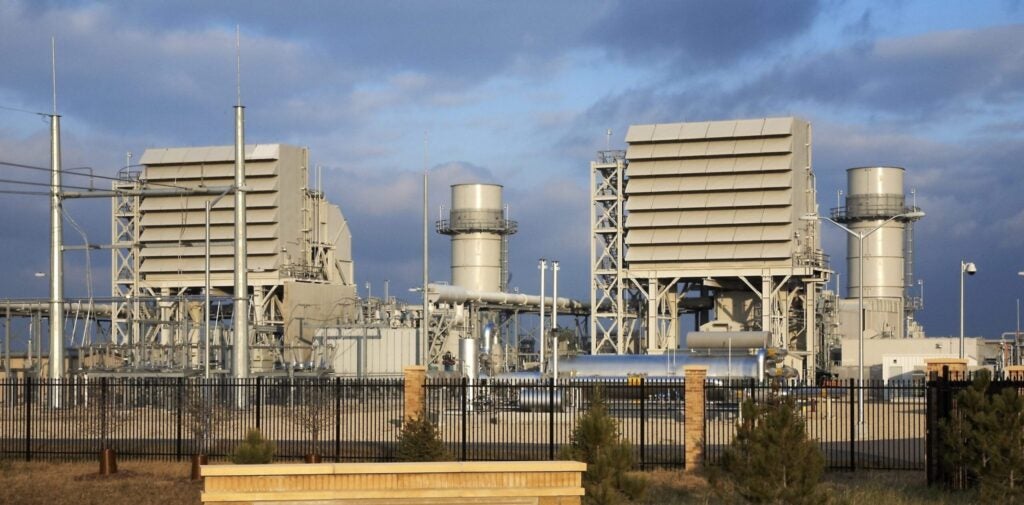
Asked whether public power had coalesced around an “all-of-the-above” generation strategy, Corwin offered a sharper formulation. “It’s probably better to describe it as kind of an any of the above,” he said, citing the geographic, political, and regulatory diversity across the states where public power operates. Not every resource works, is available, or is economic in every area, he noted, and many members have adopted their own resource goals or operate under state policies calling for particular resources. Public power systems are pursuing newer options, including small modular nuclear, alongside a long history with renewables, but, Corwin emphasized, they have to keep firm capacity on hand to manage the system. For now, he said, much of the development activity is in natural gas.
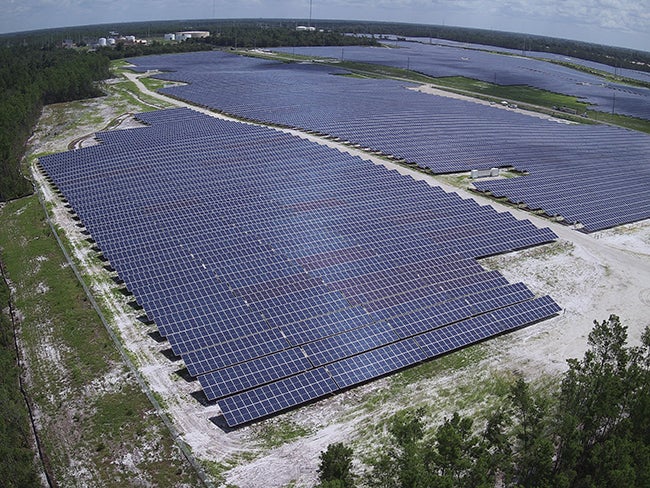
The report’s capacity figures track with that description. Natural gas accounts for 44.7% of public power’s owned nameplate capacity, followed by coal at 19.4% and hydro at 19.1%. Public power utilities added 1,916 MW of owned capacity between 2023 and 2024; the largest absolute addition came in natural gas, while wind and solar grew fastest in percentage terms, up 11% and 10%, respectively, though from very small bases—owned wind and solar together make up only about 1% of public power nameplate capacity.
Despite owning little wind and solar capacity, public power utilities deliver a substantial share of carbon-free energy. Roughly 41% of the electricity generated by public power facilities in 2024 came from non-carbon-emitting sources, on par with the national average—though that figure reflects owned generation, which is dominated by nuclear and hydro, rather than total supply delivered to customers. The report says public power utilities “procure most of their renewable energy through power purchase agreements, usually with non-utility generators, and from the Power Marketing Administrations, rather than through direct ownership.” The report does not quantify how much contracted renewable energy that amounts to, leaving the sector’s full carbon-free share larger than the owned-generation figure alone suggests.
The New Stress Test: Data Centers
No subject has moved faster up the agenda than data centers, and Corwin treated the historic load growth they promise as both opportunity and risk. Some public power members have worked with data centers for years, he said, but requests are now landing in areas that had never seen them. His framing was cautious and conditional. “It starts with whether there is community support for entertaining and even going down the road of analyzing the requests and looking at what the real benefits are to the community and what the impacts are to the community,” Corwin said.
From there, he ran through the practical questions a small or mid-size utility has to answer—contractual provisions, rate design, interconnection rules, upfront payment, credit review, and power supply. APPA has built toolkits and training to help members that lack in-house expertise pair up with peers who have negotiated these deals before. The recurring theme was protecting ratepayers against the possibility that a massive interconnection request does not turn into a built, paying load. Corwin characterized the work as case by case, shaped by the specifics of each project and each community.
Structural Headwinds
Beneath the marquee issues, Corwin sketched a set of slower-grinding constraints that shape what public power can build and how fast.
Permitting topped the list. He was measured about the odds of reform—“optimistic might be a little strong,” Corwin said—but argued the stakes are high and the politics, unusually, bipartisan. He cited hydropower as a case in point. Relicensing an existing facility can take more than a decade, he said, keeping a flexible, load-following resource from being optimized. The fixes he has in mind touch the National Environmental Policy Act, the Clean Water Act, and the National Historic Preservation Act, and while the House has moved related bills, Corwin noted that much of the timeline problem is statutory at both the federal and state levels, meaning even federal action would leave state hurdles in place. He framed the current Congress as “a window of opportunity.”
Workforce pressures are a second constant. Retirements have not slowed as the workforce ages, Corwin said, and the need to recruit, train, and retain new talent has only intensified amid modernization and growth. APPA works with the Center for Energy Workforce Development, runs a jobs board, and stages a national lineworker rodeo with a deliberately family-oriented bent to draw younger workers into the field.
Supply chain strain rounds out the picture. Corwin pointed to large power transformers—a shortage that traces to the pandemic and that persists, now compounded by a global demand surge—as an area where APPA surveys members, works federal policy and tariff questions, and acts as a clearinghouse in emergencies.
Cybersecurity is where APPA’s convening role is most developed, and Corwin detailed it at length. The association often serves as the grant applicant to the U.S. Department of Energy (DOE) for cybersecurity funding, then distributes support to members, a particular help for smaller utilities without the staff to navigate the process. APPA runs training sessions and exercises, including one this year that combined physical and cyber threat scenarios; participates in cross-industry information sharing through the Electric Sector Coordinating Council; encourages members to engage with the Electricity Information Sharing and Analysis Center (E-ISAC) operated out of the North American Electric Reliability Corporation (NERC); and has launched a Cybersecurity Accelerator Program (CAP) offering a peer-reviewed cyber excellence certification. He called partnership with DOE, especially on cyber, an area of strong federal support.
Corwin closed with two issues outside the power-supply conversation that nonetheless matter to community systems. One is communications policy: local control of poles, wires, and pole attachments, and protection of the spectrum utilities rely on to communicate during emergencies rather than seeing it auctioned for other uses. The other is reform of the Federal Emergency Management Agency (FEMA), which he described—like permitting—as a slow legislative grind that matters acutely to communities repeatedly hit by disasters.
One Voice, Many Communities
Asked what he most wants policymakers and the public to understand, Corwin came back to the structure of the sector itself. Many policymakers rise through state and local government, and already grasp the role utilities play in their communities; those who do not, he said, tend to come around when mayors and council members describe the local connection directly. The point he wanted to land was about leverage. With 2,000 communities spanning every variety of geography, size, and politics, APPA’s value is in speaking for them together—unified, as he put it, behind affordability and reliability for the end-use customer.
That unity is being asked to carry more than usual. The 2026 data shows a sector that, by the measures it can document, still delivers on the promise. Whether it keeps delivering through a period of surging demand, retiring plants, and stubborn permitting timelines is the question Corwin’s members are now living inside, and, by his account, the one APPA intends to answer with a single voice.
To hear the full interview with Corwin, listen to The POWER Podcast. Click on the SoundCloud player below to listen in your browser now or use the following links to reach the show page on your favorite podcast platform:
For more power podcasts, visit The POWER Podcast archives.
—Aaron Larson is POWER’s executive editor (@AaronL_Power, @POWERmagazine).