Articles By

-
 Coal
CoalCoal Plant O&M: Retrofit Flyash-Handling System Pays Dividends
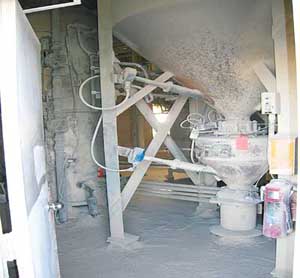
Like many older coal-fired plants, Westar Energy’s Jeffrey Energy Center (JEC) was built with traditional, pneumatic flyash-handling and removal systems. Such systems collect flyash in hoppers attached to the bottom of a unit’s electrostatic precipitator (ESP) and/or baghouse. Periodically, the hoppers are emptied into tanks and the flyash is conveyed away for disposal or beneficiation. […]
-
 Coal
CoalSafety: Detecting Fires on PRB Coal Conveyors
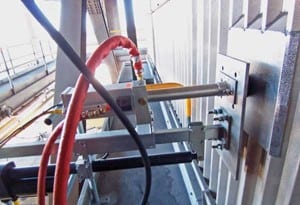
All conveyor systems are at risk of fire caused by the ignition of transported materials or equipment failure. But the propensity of Powder River Basin (PRB) coal to self-ignite introduces an exceptional hazard requiring special fire prevention and automatic detection and suppression efforts. To that end, this article discusses the technologies of linear heat detection […]
-
Coal
Speaking of Coal Power: Polar Bear Politics
During his June 2007 speech to the National Press Club, presidential candidate and former U.S. Senator John Edwards called America’s 37 million residents living below the poverty line "the great moral issue of our time." He proposed setting a national goal of ending poverty in 30 years. The Heritage Foundation, a conservative think tank, disputed […]
-
 O&M
O&MTech Notes: Intelligent Sootblowing Needed to Keep Uprated Units Clean
The National Coal Council estimates that 40,000 MW of additional generating capacity is available to existing U.S. coal-fired plants simply by making efficiency improvements. Because decreases in production costs go straight to a plant’s bottom line, efficiency projects usually have short payback periods, especially if implemented in concert with mandatory environmental upgrades. One often-overlooked consequence […]
-
 Coal
CoalPleasant Prairie Power Plant Air Quality Control Upgrade Project, Pleasant Prairie, Wisconsin
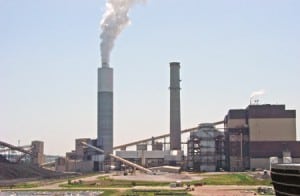
We Energies’ Pleasant Prairie Power Plant is a good example of how existing plants retrofitted with NOx and SO2 removal systems benefit from early planning and action. P4, as everyone calls it, recently completed a multiyear project to add a selective catalytic reduction system to one of its two units and a scrubber to both. The unique design and contracting aspects of the project make Pleasant Prairie one of POWER’s top coal-fired plants of 2007.
-
 Coal
CoalPolk Power Station Unit 1, Mulberry, Florida
Ten years ago, POWER selected Tampa Electric’s 250-MW Polk Power Station and its revolutionary integrated gasification combined-cycle demonstration project as the magazine’s 1997 Plant of the Year. Although no new commercial IGCC projects have been built since then, interest in deploying the coal-gasification technology is getting traction in some parts of the U.S. In 2007, POWER recognizes Polk Unit 1 as a Top Plant for developing trailblazing O&M practices and technical improvements that enable it to operate today as reliably as a modern pulverized coal plant, with lower pollutant emissions.
-
 Coal
CoalR.E. Burger Plant, Shadyside, Ohio
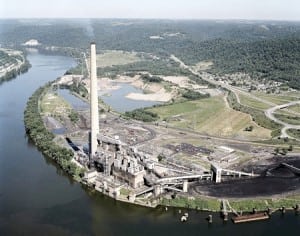
FirstEnergy’s R.E. Burger Plant has hosted a number of R&D projects over the years, but none as large as the demonstration of Powerspan’s 50-MW Electro-Catalytic Oxidation (ECO) multipollutant removal process a few years ago. Credit Powerspan for scaling up the demo unit and for adding CO2 as a target of a new pilot process called ECO2. And don’t forget the behind-the-scenes support of Burger’s plant staff and their willingness to incubate R&D projects while producing power. That’s what makes R.E. Burger a Top Plant in our book.
-
 Coal
CoalManaging air to improve combustion efficiency
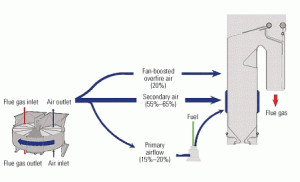
The average pulverized coal–fired coal plant is more than 30 years old and has a heat rate in the neighborhood of 10,300 Btu/kWh operating with an "off-design" coal. Add a high load factor (or increased cycling service), squeezed maintenance budgets, reduced plant staff, and increased time between overhauls to meet the plant’s pro forma, and you’ve got major stress. Fortunately, there is a way to come in under your NOx budget and lower the stress. Breathe deeply and read carefully.
-
 Coal
CoalHarness detonation waves to clean boiler tubes
Air and steam sootblowers have been the power industry’s solution to the slagging and fouling of boiler convective passes caused by flyash and combustion products. Manual cleaning systems have been superseded by computers and neural nets, but the basic cleaning apparatus remained unchanged—until now. Say hello to detonation waves. They can knock those deposits loose while markedly improving boiler heat transfer efficiency.
-
 Instrumentation & Controls
Making the grade with stainless steel tubing
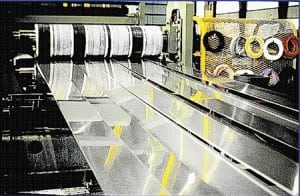
Tubing manufacturers have many alternatives for manufacturing and testing stainless steel tubing for feedwater heater and condenser applications. ASTM specifications are fairly generic in nature and only specify the minimum tube design and testing requirements—which may not be sufficient to provide the appropriate quality for a critical power plant application. To make the right material selections, it’s helpful to understand how welded stainless steel tubing is manufactured and its quality is checked.
-
 Gas
GasThis month in POWER (OCTOBER)
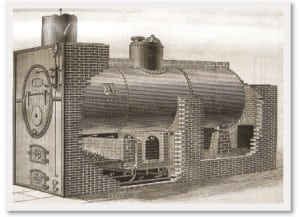
October 1886 In the late 19th century, efficient combustion of solid fuels was achieved more by trial and error than by a fundamental understanding of stoichiometry and staged combustion. Boiler manufacturers took many different approaches to the challenge. Some made sense; others didn’t. In which category does the design described below fall? In 1886 the […]
-
 Commentary
Competition policy: The best path
Winston Churchill once said, "Democracy is the worst form of government—except for all the others." The same could be said for competition policy in wholesale power markets. Competition policy has its flaws. It is not perfect, but it is better than the alternatives. One alternative is to rely completely on vertical integration and […]
-
 News
NewsEnergy industry needs a Sputnik
The 1940s and 50s are considered the golden age of science fiction literature. After my kids saw the movie, I, Robot, a few years ago, they were surprised to learn that Isaac Asimov—a giant of the genre with more than 500 books to his credit—had written a series of nine short stories with the same […]
-
 Coal
CoalGlobal Monitor (October 2007)
Siemens ships first blade from U.S. plant; GE’s frames hit 1,000; Battery problems hit hybrid EV programs; Solar thermal rebounds in California;Peabody’s Illinois coal plant gets green light;EPA could sink 278-MW CFB unit; Longest-serving NRC commissioner dies at 58; POWER digest; Readers talk back; corrections
-
 O&M
O&MFocus on O&M (October 2007)
Why bypass desuperheaters fail; DSSP, CAD, and fast casting salvage nearly totaled pump; Seals of approval; Making gas turbine plants quieter
-
 Commentary
What is resource adequacy?
Under its Resource Adequacy (RA) program, the California Public Utilities Commission (CPUC) requires load-serving entities—both independently owned utilities and electric service providers—to demonstrate in both monthly and annual filings that they have purchased capacity commitments of no less than 115% of their peak loads. These purchase requirements are intended to secure sufficient commitments from […]
-
 Coal
CoalIGCC demonstration plant at Nakoso Power Station, Iwaki City, Japan
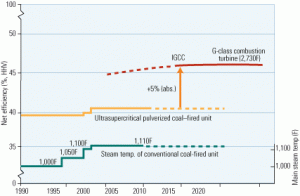
Integrated gasification combined-cycle (IGCC) power plants are not yet standard designs. Although they use mature coal gasification processes and combustion turbines, disparate technologies and equipment still require custom, laborious interfacing at each site. Every major gas turbine vendor now can point to one or more power-producing IGCC projects based on its prime mover, but none yet offers a "reference" plant that has standardized the interfacing enough to justify confidence in two key metrics: $/kW and availability. With an air-blown demonstration plant based on one of its 130-MW turbines, Mitsubishi Heavy Industries is looking to change the rules of this game.
-
 Gas
GasPort Arthur II Integrated Hydrogen/Cogeneration Facility, Port Arthur, Texas
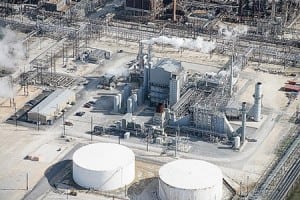
The rationale for a typical cogeneration plant is clear: Supply some power, and maybe some steam, to an industrial host and save energy dollars on both sides of the fence. But integrating a cogen plant that also produces hydrogen with a major refinery that operates 24/7 is a job best left to a company with diverse and proven technology skills. The Air Products Port Arthur II project proves that such a job can be done right. Accordingly, it is one of POWER’s natural gas–fired Top Plants of 2007.
-
 Gas
GasPort Westward Generating Plant, Clatskanie, Oregon
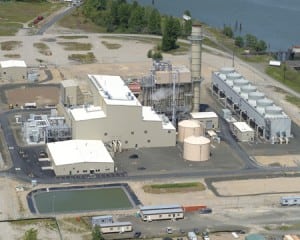
Since going commercial this June, Port Westward Generating Plant has taken its rightful place as one of America’s most efficient power stations. It is now helping to satisfy Portland General Electric’s summer demand reliably and cost-effectively. What differentiates Port Westward is its pioneering use in the U.S. of Mitsubishi Heavy Industries’ G1 class combined-cycle combustion turbine.
-
 Gas
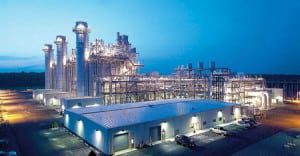
GasTenaska Virginia Generating Station, Scottsville, Virginia
Not every facility that POWER singles out as a Top Plant has a unique design. Some, like this one, may be recognized for an excellent operations record and being a good corporate citizen. At Tenaska Virginia Generating Station, a formal program to make O&M personnel aware of best industry practices—and apply them on the job—has shortened the plant’s start-up time and elevated its availability, making it much more dispatchable and profitable.
-
 Water
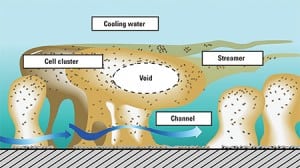
WaterBiofouling control options for cooling systems
The infrequent or improper introduction of biocides into a plant cooling system may make fouling within it worse, by creating thick biofilms that can foster corrosion, reduce heat transfer, and increase water pumps’ operating costs. At the other end of the spectrum, overuse of biocides can waste expensive chemicals. Optimizing the quantity, frequency, and type of dosage can improve both the health of a cooling system and its plant’s bottom line.
-
Instrumentation & Controls
Integrated software platform eludes many owner/operators
Ongoing research into experience with plant- and fleet-level software reveals that these applications work side by side but do not necessarily function as an integrated “knowledge management” system. On the supplier side, the industry continues to be fragmented, with individual programs governing a narrow part of the overall plant.
-
 News
NewsThis month in POWER . . .
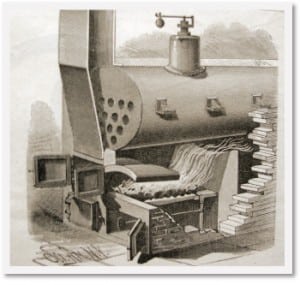
September 1886 Four years after this magazine was launched, the editors reviewed the latest improvements to industrial boilers, beginning with the Backus furnace (Figure 1). 1. The Backus furnace. “This furnace is provided with a brick arch placed just back of the fire-doors, that is intended to deflect the currents of air that are admitted […]
-
 Commentary
It’s time to rebalance America’s electricity strategy
Not long ago, most utility investors considered California’s electricity policies too iconoclastic to support. Driven by far-left environmentalists and overzealous regulators, those policies have made it nearly impossible to build new power plants in the state, despite the urgent need for them. Now, however, with growing proof that global warming is real and with Americans […]
-
 Nuclear
Nuclear plants: Something old, something new
The recent restart of Tennessee Valley Authority’s (TVA’s) Brown’s Ferry Unit 1 following a five-year renovation brings to 104 the number of nuclear plants operating in the U.S. Their 100 gigawatts of capacity represent about 20% of the nation’s electricity supply. If American electricity demand doubles by 2030 (as the U.S. Energy Information Administration predicts), […]
-
 Coal
CoalGlobal Monitor (September 2007)
Constellation files partial COL / IAEA scrutinizes shaken Japanese nuke / Wave energy of the future? / New GE plant reigns in Spain / Solar house competition heats up / Oxygen-blown IGCC, at micro-scale / Turning corncobs into ethanol / Court blocks gas attack on coal project / New advanced energy initiatives / POWER digest
-
 O&M
O&MFocus on O&M (September 2007)
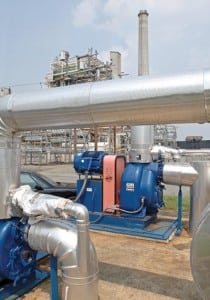
Replace pumps, cut repair bills / New bolts show their stress level / Up a certain creek, without a filter / Hang up those cables and hoses
-
 Legal & Regulatory
Carbon-neutral status shouldn’t be for sale
While elected officials in Washington debate the politics of climate change, state legislators and regulators have been busy putting in place programs to reduce greenhouse gas emissions. For the most part, the goals of the programs reflect desired changes to power supply and consumption: increasing the efficiency of electricity generation and delivery, using less fossil […]