Solar has spent decades proving it can generate clean power quickly and at scale. Now, with the first real wave of end-of-life (EOL) panels arriving through repowering and decommissioning, solar has to prove its circularity, at scale. And for solar to prove its sustainability, the method of recovery of used equipment is what counts.
Up to this point, a decent volume of panels has hit end-of-life, but that volume has been low enough for the industry to go mostly unchecked. You cannot recycle a module through marketing. The reality is what matters. By 2030, the United States will have retired up to a million tons of PV. With tens of millions of panels hitting the stream now, and hundreds of millions imminent, the time is now to prove true recycling at scale, mitigating the risk of major asset owners and strengthening the clean power story of the solar industry as a whole.
Not All Solar Recycling Is Created Equal
Recycling in the solar industry has a problem worth discussing. Too often, low-technology or no-technology recyclers, only recover the high-value aluminum frame, all under the guise of recycling, while the other 90% of the panel is wasted, stockpiled, or exported. That is incomplete recycling, and it is more common than most asset owners realize.
True recycling recovers all, or nearly all, of a module’s materials, one by one, so they can re-enter manufacturing supply chains as feedstock. Glass as clean glass cullet, aluminum as clean aluminum, silicon and silver as silicon and silver. Solar panels are inherently built to be encapsulated and durable enough to withstand the elements, which is exactly why the investment and technology required to recover each commodity cleanly, versus shredding an entire panel into smaller, layered, still encapsulated-commingled pieces, is paramount. Air, mechanical force, thermal, density, and electrostatic processes are some of the key, and necessarily diverse, technologies needed to accomplish this. Contaminated output cannot be consumed into manufacturing. Contaminated output is waste.
 |
|
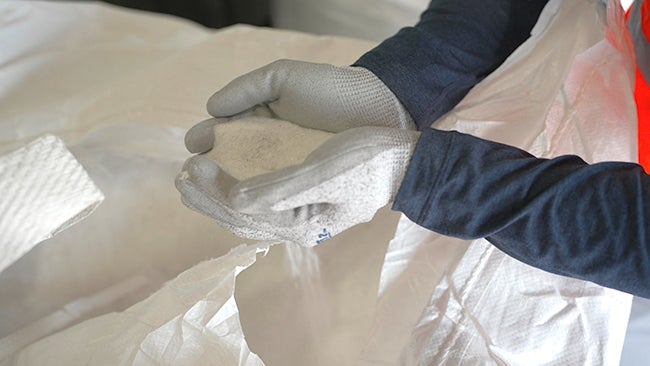
1. Clean, solar glass cullet recovered from end-of-life solar panels can be processed and repurposed into new materials. Source: SPR |
Want Circularity? You Can’t Skip Glass
Glass makes up 65% to 80% of a panel’s weight. It is the single largest component, and you cannot have true recycling, mitigated generator risk, or real recycling rates without cleanly recovering and processing it. Full stop.
Too many companies claim recycling but skip glass recovery altogether, harvesting the frame and dumping the rest. Others shred the entire panel together, producing contaminated glass with silicon, plastics, and other metals present in the cullet. That cullet either cannot be consumed at all, or gets run through a furnace to recover the incredibly small fraction of a panel by mass: the silver; while the main component, glass, is wasted.
That is exactly why clean glass recovery is the litmus test for whether true recycling is actually happening. Processed correctly, solar glass can go into a myriad of industrial products. In our own work, we have seen glass recovery rates up to 99%, and we believe 100% is around the corner with upcoming technology advances.
Solar recyclers exist domestically that invest in true recovery technology, as well as owned and operated facilities to process modules in-house. These recyclers are where scalability, risk mitigation, and the future exist for hundreds of millions of modules.
Ahead of Regulation, a Much-Needed Certification Needs to Carry the Weight
States, some more than others, are starting to develop end-of-life solar regulations or advance the ones already on the books. Even so, regulation is still lacking altogether in much of the country or falls short of what the current and imminent volume of modules demands. During this gap, an industry-specific solar recycling certification is badly needed. Today, there is no certification available that can truly mitigate all, or as much as possible, of the risk to asset owners. Generator risk is real, and it lives with an asset owner well after a module leaves their site.
A meaningful certification requires two things. Most importantly, the certified recycler should have to conduct glass recovery in-house. Glass is by far the largest commodity in a module by mass, and it is where corners are cut most, whether through low recovery or outright waste dumping. Some recycling certifications allow a certified recycler to simply collect material, then outsource the actual recycling elsewhere. History has shown, time and time again across recycling industries, that the more a product is outsourced and passes hands before it is truthfully processed, the harder it is to audit, the harder it is to mitigate the asset owner’s short- and long-term risk, and bad actors enter the space. Stockpiling, dumping domestically and abroad, or abandoning the product altogether for someone else to clean up under the Federal Superfund Act (CERCLA) is more prevalent with the ability to earn a certification but outsource the processing. Certificates on the wall, materials in the landfill.
The second requirement is verifiable downstream consumers of the commodities, for what they are. Glass is consumed into manufacturing as glass cullet, aluminum as aluminum, and so on. Without the largest component, glass, being cleanly recovered and then consumed, generator risk still applies to the asset owner. From there, a complete certification rounds off with the usual requirements: EH&S management, typically through ISO, mass balance sheets, closure plans, and insurance.
As one of the nation’s first solar recyclers handling volume at scale, and the first SEIA National Recycling Partners to be audited onsite by the association, we work to advance a stringent recycling standard created because we have seen what happens without it.
 |
|
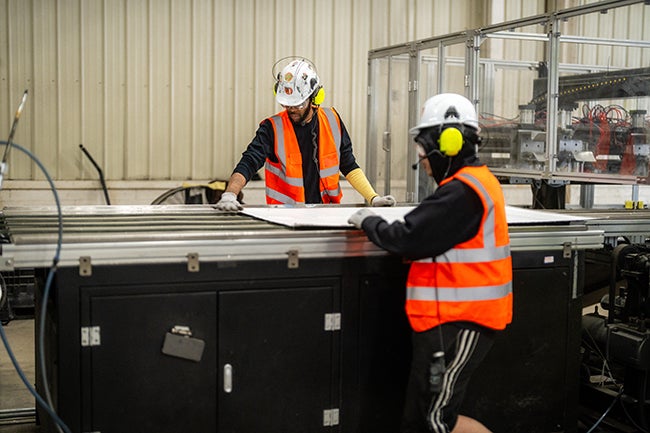
2. SPR employees oversee the solar panel recycling process, where end-of-life panels are processed to recover valuable materials and minimize waste. Source: |
The Reuse Reality
Most weeks at SPR, our team receives dozens of new inquiries from individuals, companies, and unverified non-profits across the Global South, mostly Southeast Asia and West Africa, asking about “re-use” panels for their projects.
Here is the reality. They are not asking about testing standards or for documented testing reports. They are not asking about manufacturer-grade packing to protect panels on a long ocean journey. Panel wattage, make, and model, not relevant to them. They are offering a low buy price that only pencils out one way: low-paid or unpaid labor strips the aluminum for value, and the other 90% of the panel by composition gets dumped as waste.
This is not hypothetical. It is already happening: panels dumped in Nigeria, illegal grid-tied installations in South Africa, aluminum harvesting and waste piles in Southeast Asia, all coming to light through videos, photos, and new articles from around the world.
Electronics recycling watched this exact scheme play out with cathode ray tubes (CRT) for decades. Companies flipped a negative-value item that costs money to properly recycle into a positive-valued, return on asset, under the guise of re-use. A few dollars of copper recovered, the leaded glass and the rest of the CRT monitors dumped thousands of miles away, across the world.
To be fair, there are genuine off-grid, DIY, and non-profit re-use opportunities both domestic and abroad, but they represent an extremely low percentage of the modules hitting the end-of-life stream. For asset owners with volume, the hurdles to tap into this market at any meaningful scale are steep: bankability, regulatory approval, insurability, warranty, UL listing, availability of discontinued supporting equipment, slower decommissioning timelines, testing, proper packing costs, and chain of custody issues. Together they make re-use at scale nearly impossible. Risk mitigation at scale is what this industry desperately needs to grow into. There are indeed true refurbishing companies today that have invested in renovating and testing equipment, with standards to vet that panels are consumed back into real, engineered projects, but again, this will not move the needle on the true volume coming soon: hundreds of millions of end-of-life panels.
For both re-use and recycling, ask where your modules are actually being processed. If your U.S.-based modules are going for recycling, they should be recycled in the U.S., and at an absolute minimum the glass, the main component of the panel, should be recovered directly in-house by your recycler. Aluminum, copper, and other commodities should be recovered and stay domestic first, whenever possible.
If your U.S. modules are going for re-use, you should be asking:
• Where are they shipping?
• How do we know they will be safely and legally re-used?
• Has the fire risk been mitigated? Who is engineering and constructing the project?
• Are the panels fully tested and properly packed?
• Is the discontinued supporting equipment even available to power these panels?
• What happens to panels that break in transit or install? What happens to all of them if the project never comes online? Are my modules being dumped as waste halfway across the world?
While tens of millions of panels are hitting the recycling stream, and hundreds of millions are imminent, make sure your module is not being wasted or dumped overseas.
Closing the Loop Means Thinking Beyond Solar
Closing the loop does not mean every recovered material has to go back into a new panel. Some can. Our foundry-grade recovered aluminum, for instance, can go straight back into new module mounts and frames.
But many recovered materials find their use outside solar, which is much needed to scale the recycling industry. One partnership, for example, is with Zafa Glass. One hundred percent of the glass recovered at our Georgia facility goes into eco-friendly products that have nothing to do with solar power. The material never sees a landfill, and it does not travel far since the offtaker shares our Georgia facility. That simultaneously cuts transportation emissions and costs. The glass cullet out of our Texas plant goes to different industries and consumers rather than being sent hundreds of miles over to Georgia.
Economics matter here too. Silver is roughly 0.015% of a panel’s weight but accounts for nearly half of its recycling value, according to a 2026 study in Science Bulletin, and it easily finds a second life across multiple industries. Recovered silver can, and many times will, go back into a new panel. But it is important to move commodities into multiple industries, letting the highest-value materials find their strongest markets and subsidizing overall recycling costs down for asset owners.
Going Local: Removing Carbon and Cost from the Equation
Regional infrastructure allows asset owners to realize lower recycling costs. The closer a true recycling facility is to the solar site, the lower the transportation cost from site to recycler. Transportation is the industry’s single biggest cost, and it carries Scope 3 emissions with it. Both decrease greatly with a large network of solar recycling facilities.
Finding regional consumers of our glass, the largest recovered output, also keeps SPR’s transportation costs for glass cullet to our consumers lower. The same way our asset owners benefit from shorter transport to our many regional recycling plants. Our recycling fees to asset owners have come down almost 42% since 2018, driven by a combination of cleaner separation technology and smarter geography. Sustainability and affordability can go hand in hand.
The end-of-life wave is gathering strength, driven by both repowering and decommissioning. For instance, our team is underway on a singular repowering project to recycle a million plus panels, with more of these larger projects entering planning phases.
Handling that kind of volume responsibly takes advanced processes that recover materials cleanly and route them back into the supply chain through accountable offtakers and manufacturers. As we have seen, it can be done in a way that is economically sensible, aligned with current policy, welcomed by communities, and championed by industry leadership.
Solar earned its reputation by delivering clean energy. It will keep that reputation by proving it can close its own loop, cleanly, verifiably, and at scale. That is why true recycling is the key to solar’s circularity success. Ask questions, visit your recycler’s plant, and demand the recycling industry to build up solar as clean energy, not cut it down.
—Brett Henderson is CEO and co-founder of SPR (SolarPanelRecycling.com).