
POWER
-
 News
NewsWind Power Converters
Independent designer, manufacturer, and service provider of energy control and optimization solutions Woodward Governor Co. recently started production of its CONCYCLE wind power converters in the U.S. The electric power convertor units are designed for use with wind turbines with a power range of 1 MW to 10 MW for onshore and offshore applications. Woodward […]
-
 Environmental
Techniques for Determining Limestone Composition and Reactivity
Limestone composition and reactivity are critical factors that determine the performance of limestone-based wet flue gas desulfurization systems. Limestone quality affects sulfur dioxide (SO2) removal, reaction tank sizing, limestone consumption rate, and composition of the gypsum product and waste streams. Reactivity is a direct measure of how readily a limestone will provide alkalinity to neutralize the acid resulting from SO2 dissolution in water. In this article we review your limestone analytic measurement options and discuss their relative accuracy and limitations.
-
 News
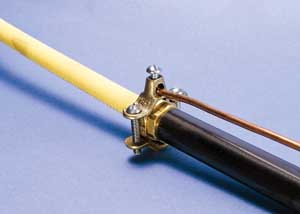
NewsCWP Grounding Clamps
ERICO has developed a range of CWP grounding clamps that are ideal for use in applications including lightning protection, fault current ground, signal reference grid, and static ground. The clamps help minimize the possibility of damage from a lightening strike or other transient voltage by reducing the electrical potential between metallic objects and building systems. […]
-
 O&M
O&MUpdate: Benchmarking Boiler Tube Failures
Boiler tube failures continue to be the leading cause of downtime for steam power plants. Is your boiler tube failure reduction program showing improvement when compared to programs at peer plants? The EUCG’s recent update of its boiler tube failure study can help you answer that question. The full study is available only to members, but this POWER exclusive presents many of the key results, which could help you improve the operation of your plant.
-
 Coal
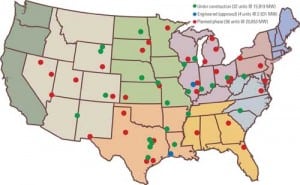
CoalCoal-Fired Generators Worried About Getting Burned
The expected renaissance for U.S. coal-fired generation has been more evolutionary than revolutionary: Less than half of the announced plants will likely progress to construction. However, the percentages for coal-fired plants aren’t significantly different from those for combined-cycle plants a decade ago, when dozens were ultimately canceled, leaving developers with warehouses full of unused gas turbines. The difference this time: The threat of carbon control legislation has moved many projects to the “wait and see” category.
-
 O&M
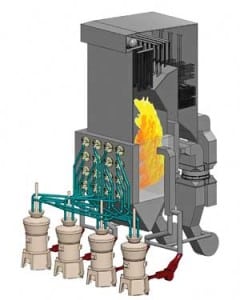
O&MMeasuring Coal Pipe Flow
Once pulverized coal flows have been measured, they can be balanced and optimized. Until then, tuning is simply guesswork. The right way to balance furnace fuel flows is to establish solid baseline performance by proper measurement of fuel flow, fineness, and velocity. Only then can all the coal pipes be accurately balanced and followed by a tune-up of the boiler controls.
-
 News
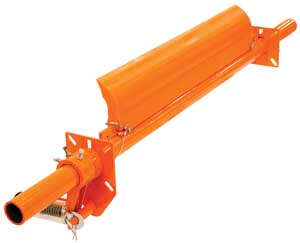
NewsRugged Belt Cleaner
Martin Engineering’s Performance Duty QC#1 Belt Cleaner (PDQC#1) is the latest addition to the company’s line of "Quick Change" belt cleaners. The PDQC #1 Cleaner features a more rugged steel mainframe, a low-maintenance spring tensioner, and a high-volume urethane blade that extends life while maintaining cleaning performance. It also uses a one-piece urethane blade featuring […]
-
News
The Big Two
In this column last month I quoted Indian Environmental Minister Jairam Ramesh to represent India’s intention to not agree to any legally binding emissions targets at the Copenhagen Climate Change Conference in December. That conference will start formal negotiations of a follow-on agreement to the Kyoto Protocol. A number of readers wrote to say that they believe India and China, despite their protestations to the contrary, will cave to international pressure and at the end of the day agree to some binding carbon emissions limits. I disagree.
-
Commentary
Climate Change Litigation: Ripe for Growth?
For some time, the U.S. energy industry has feared the prospect of large-scale climate change litigation (CCL) that seeks to link emissions of greenhouse gases (GHG) to global warming. Thus far though, only a handful of such suits have been filed, and none has yielded any judgments against the energy industry. This begs the question of whether the energy industry can now stop worrying about CCL.
-
 News
NewsAdvanced Diagnostic Field Communicator
Emerson’s new 475 Field Communicator extends beyond device configuration functionality to provide advanced device diagnostic and troubleshooting capabilities in the field and on the bench so users can work more efficiently. Quick boot-up and fast operating time mean that jobs can be performed quickly and easily, while longer battery life ensures days — not hours […]
-
Environmental
Dead Man’s Hand
The stage is being set for negotiating a successor agreement to the Kyoto Protocol. The U.S. is trying to exert some leadership in the international climate change debate by attempting to build consensus for binding carbon emission reductions prior to the upcoming Copenhagen meeting. Meanwhile, carbon legislation is, thankfully, stalled in the Senate, and developing countries are rejecting our entreaties. You can’t win if other countries don’t want to play.
-
Commentary
To Modernize the Grid, Think Smaller
The consumer, societal, and business benefits of grid moderniaztion are unclear, because the vast majority of grid-related stimulus funding appears destined to primarily expand, not cure, the ailing system we have today.
-
 Coal
CoalOperation of World’s First Supercritical CFB Steam Generator Begins in Poland
The world’s first supercritical circulating fluidized-bed (CFB) steam generator began successful operation at the Lagisza power plant in Poland early this July, according to power equipment and engineering firm Foster Wheeler. The new CFB — believed to be the world’s largest — replaced 1960s-era pulverized coal units at the power plant owned by Polish utility […]
-
 News
NewsEnergy Efficient Refrigerant Dryers
Industrial productivity solutions provider Atlas Copco Compressors introduced a new generation of integrated refrigerant dryers for use with the company’s GA, GA+, and GA variable-speed drive 50 to 125 hp oil-injected screw compressors. Compared to conventional dryers with similar cooling capacity, the new R410A refrigerant dryers (ID 95-285) reduce direct power consumption by up to […]
-
 O&M
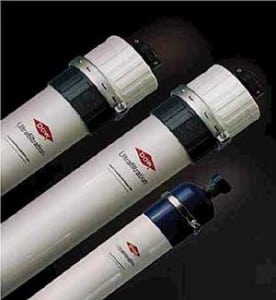
O&MAvoid These 10 Mistakes When Selecting Your New Water Treatment System
There are a number of reasons why your plant might be looking at new water pretreatment equipment in the near future. One common reason is the addition of new generating capacity. Regardless of the type of new generation, you can be sure that it will require additional high-purity water for processes ranging from direct steam generation to power augmentation, NOx control, and washing the blades of the combustion turbines.
-
 News
NewsOxygen and Combustibles Transmitter for Coal-Fired Applications
Emerson Process Management has enhanced its Rosemount Analytical OCX8800 oxygen and combustibles transmitter for advanced functionality and reliability in coal-fired applications, helping to improve burner efficiency and reduce nitrogen oxide emissions. The device, which features oxygen and combustibles measurement capabilities in a single design, now includes an improved sensor technology that reduces drift. Adaptable to […]
-
Legal & Regulatory
SWEPCO’s Construction Conundrum
"If you build it, they will come" — the litigants, that is. The lawsuit involving the construction of Southwestern Electric Power Co.’s (SWEPCO) John W. Turk Jr. ultrasupercritical coal-fired power plant in Arkansas gives new meaning to that popular quote from the movie Field of Dreams.
-
 News
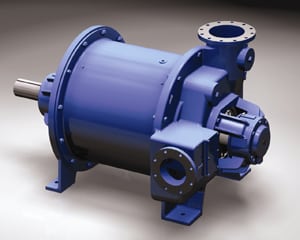
NewsLiquid Ring Vacuum Pump and Compressor
Gardner Denver Nash launched the NASH Vectra XL 750 as part of its liquid ring pump and compressor series. The NASH Vectra XL 750 offers vacuum pump operation of up to 28.5 in. HgA and compressor operation to 30 psig. It features O-ring sealing and ductile iron construction plus single-point inlet and discharge connections, which […]
-
 Gas
GasTop Plants: Edward W. Clark Generating Station, Clark County, Nevada
The Edward W. Clark Generating Station, which has supplied electricity to the Las Vegas Strip for more than half a century, has learned the secret of life in the desert: adaptability. The plant’s early years featured conventional steam plants operated around the clock. By mid-life, Clark had been upgraded with two combustion turbine combined-cycle power blocks operated as intermediate-load resource. Today, the old steam plants have been replaced with fast-start peaking gas turbines.
-
 News
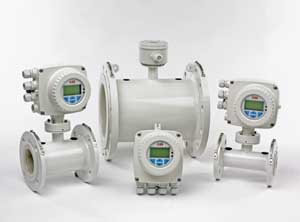
NewsElectromagnetic Flowmeter for Water/Wastewater Markets
ABB Instrumentation launched the WaterMaster series, a new range of electromagnetic flowmeters that is specifically targeted at water and wastewater markets. Part of the FlowMaster portfolio, the series includes the WaterMaster magmeter, which is available in sizes 1.5 to 84 inches. For sizes up to 8 inches, the new unit incorporates an innovative octagonal sensor […]
-
 Gas
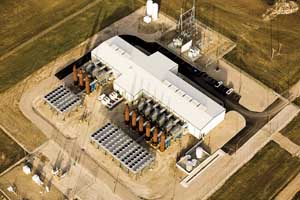
GasTop Plants: Goodman Energy Center, Hays, Kansas
Midwest Energy has a history of thinking and acting independently, especially since breaking away from the Rural Utilities Service almost 15 years ago. Two years ago, when its board of directors grappled with finding a balance between purchasing and generating electricity, it decided to construct its first power plant in 37 years. A matched set of nine 8.4-MW gas engines at Goodman Energy Center now provides efficient peaking electricity, improved overall system reliability, and backstop capacity for a 325-MW electrical system that features 16% wind power generation.
-
 News
NewsD/P Gauge for High-Static Pressure Applications
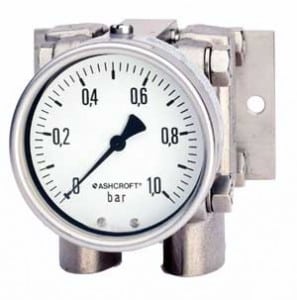
The new Ashcroft Type 5503 differential pressure (D/P) gauge provides reliable low – differential pressure measurement in high-static, wet-wet pressure applications. Equipped with wetted materials of 316SS, Monel, or Hastelloy C, the rugged Type 5503 D/P pressure gauge is specifically designed to monitor a wide variety of caustic liquids and gases. Four-inch and 6-inch dial […]
-
 Gas
GasTop Plants: Livorno Ferraris Power Plant, Vercelli Province, Italy
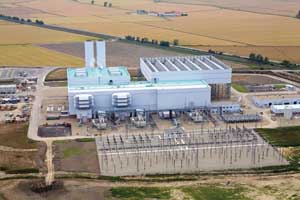
Northern Italians are enjoying la dolce vita (the sweet life) even more today than they have historically, thanks to the additional electrical capacity provided by the new Livorno Ferraris power plant. Well-received by locals due to its environmentally progressive operations and low-profile appearance, the 800-MW plant is powered by combined-cycle units that burn natural gas. The plant, which generates more than 5 million kWh per year, is part of a comprehensive renewal of the Italian energy sector and will make an important contribution toward ensuring that the country’s power supply is more secure.
-
 Coal
CoalReport: Costs for First-Generation Carbon Capture Plants Will Soar
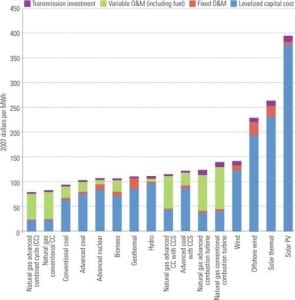
Carbon capture and storage (CCS) has of late gained steam as the best way to mitigate emissions of the greenhouse gas carbon dioxide (CO2) from fossil fuel power plants, despite evidence that the approach would require much energy and increase the fuel needs of a coal-fired plant by more than 25%. A new study from […]
-
 O&M
O&MTop Plants: Portlands Energy Centre, Ontario, Canada
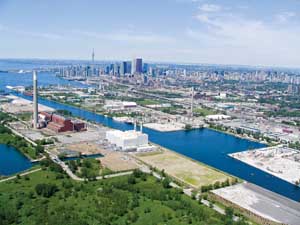
Construction of the Portlands Energy Centre was a logistical dream: A mothballed power plant next door had an active switchyard, natural gas pipeline, and cooling water structure. The new facility put peak power into the Ontario Power Authority’s grid from its two combustion turbines only two years after collecting the necessary permits. The entire plant entered commercial service on April 23, 2009 — six weeks early.
-
 Nuclear
Nuclear Developments in Europe
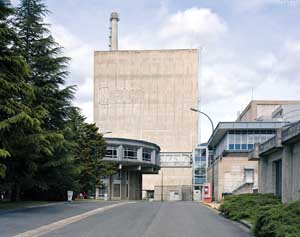
Recent months brought several developments in Europe’s much-touted "nuclear renaissance." Spain Extends Life of Nation’s Oldest Reactor Spain’s government on July 2 granted a four-year extension to the operating permit of the 466-MW Santa María de Garoña nuclear power plant (Figure 3). The decision follows a nonbinding recommendation by Spain’s nuclear regulator in June to […]
-
 Coal
CoalTop Plants: Riverside Repowering Project, Minneapolis, Minnesota
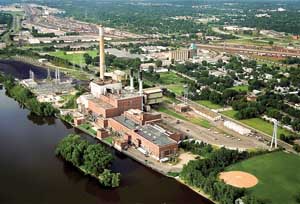
Xcel Energy has completed the third and final project required by its 2003 Metropolitan Emissions Reduction Project agreement: repowering the Riverside Plant with a gas-fired 2 x 1 combined-cycle plant and tearing down the old coal-fired plant. Saved from demolition was the Unit 7 steam turbine system that now serves the new plant. Xcel staff expertly managed the project to an on-time start-up and accepted many important construction tasks, harkening back to the days when utilities took a more active role in the design and construction of projects.
-
 Solar
SolarSwiss Solar Plane Prototype Designed to Fly Day and Night
The first aircraft designed to fly day and night propelled solely by solar energy was unveiled at Dübendorf airfield, Switzerland, in late June. The Solar Impulse has the wingspan of a Boeing 747-400 and the weight of an average family car (1,600 kg) (Figure 4). More than 12,000 solar cells mounted onto the wings will […]
-
 O&M
O&MTop Plants: Royal Pride Holland Commercial Greenhouse Cogeneration Plant, Middenmeer, North Holland Province, Netherlands
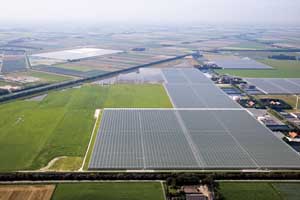
At Royal Pride Holland’s commercial tomato greenhouse, green thumbs and green energy go hand in hand. With a total energy utilization of 95% in this application, GE’s new Jenbacher J624 natural gas – fired engines offer the innovative greenhouse an economical supply of on-site electrical and thermal power, as well as CO2 fertilization, to support its operations.
-
 Hydro
HydroScotland Officially Opens 100-MW Glendoe Hydro Plant
In late June, Scotland officially opened the Glendoe Hydro Scheme, a 100-MW project whose construction near Loch Ness in the Scottish Highlands was the region’s biggest civil engineering project in recent times. Planning for the project began in 2001, and it took three years to build. Today, the project has the highest head — the […]