
Global Monitor
-
 O&M
O&MVenezuela’s Power System on Brink of Collapse
Venezuela, a country that relies on hydropower for almost three-quarters of its electricity, has been battling a deepening electricity crisis since a drought in 2009 and a sudden 7% surge in demand brought the country’s power system to the brink of collapse.
-
News
POWER Digest (March 2010)
Masdar, BP Hydrogen Power Plant to Be Completed in 2014. The $2.2 billion Hydrogen Power project — a joint venture between the United Arab Emirates’ renewable energy initiative Masdar (60%) and oil company BP (40%) — should be completed in 2014, the companies said on Jan. 18. The 420-MW plant, located in Abu Dhabi, would […]
-
 Nuclear
China Nuclear Plant Construction Gets Boost—With Technology Transfer
China’s nuclear power plant building spree got a little more frenzied this January, as the country kicked off its 21st project at Ningde 3.
-
 Gas
GasBrazil Beings Operation of Ethanol Power Plant
Brazil’s state-owned oil producer, Petrobras, on Dec. 31, 2009, said it had inaugurated the world’s first power plant to run exclusively on ethanol.
-
 Coal
CoalNETL, We Energies Successfully Complete TOXECON Demonstration
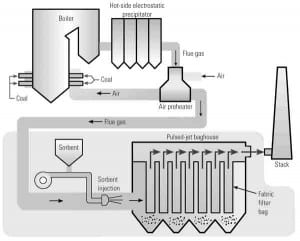
A three-year demonstration of the TOXECON process, a technology to reduce mercury emissions while increasing the collection efficiency of particulate matter (PM), was last year successfully completed at a Michigan coal power plant, the U.S. Department of Energy’s National Energy Technology Laboratory (NETL) reported in January.
-
 Hydro
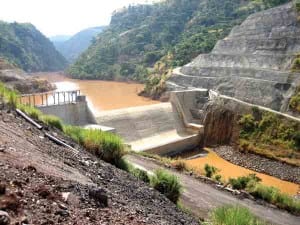
HydroEthiopia’s New Hydro Plant Boosts Region’s Generating Capacity
Ethiopia in mid-January officially inaugurated the 420-MW Gilgel Gibe II hydropower project, the second hydropower plant to be opened since November 2009, when the 300-MW Tekezé project began operations.
-
 News
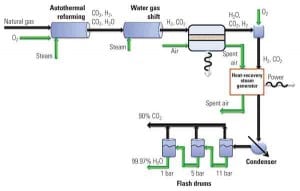
NewsMIT Researchers Propose Solid Oxide Fuel Cells for Natural Gas Power
A new power generation system that uses solid oxide fuel cells in conjunction with natural gas and promises lower carbon emissions would not use any new technology, according to researchers at the Massachusetts Institute of Technology (MIT), but rather would combine existing components in a novel configuration.
-
 News
NewsOf Floating Power Barges and Ships
More than 60 floating power stations are in operation around the world, deploying some 4 GW at continental shores where electricity is most needed. Though these feature a variety of power sources (including nuclear, gas, and heavy fuels), most are power barges — they do not have their own propulsion systems and would have to be towed to desired locations.
-
 News
NewsThe Age of the 800-kV HVDC
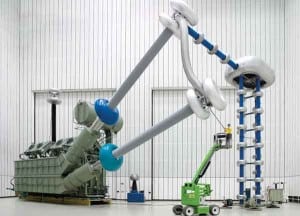
High-voltage direct current transmission (HVDC) has come a long way since 1882 when the first of its type carried power from Miesbach in Bavaria to an electricity exhibition in Munich, 57 kilometers (km) away, at a mere 1,400 V. Last December, just before the world ushered in the new decade, Siemens Energy and grid operator China Southern Power Grid put into operation the first pole of a transmission link between the southern Chinese provinces of Yunnan and Guangdong, a 1,418-km ultra-high-voltage direct current (UHVDC) system. That line has a transmission capacity of 5 GW, and it operates at a voltage of 800 kilovolts (kV) — a world record.
-
-
News
California Releases Preliminary GHG Cap- and-Trade Rules
California’s Air Resources Board (ARB) in late November issued the nation’s first blueprint for a broad-based cap-and-trade program to control greenhouse gases (GHG). If they take effect in 2012 as proposed, the regulations in ARB’s preliminary draft will apply to 605 of the state’s largest stationary GHG emitters, including power plants and industries, as well as electricity imports. Starting in 2015, the regulations will also apply to fuel suppliers and smaller stationary GHG emitters such as homes and commercial businesses.
-
 News
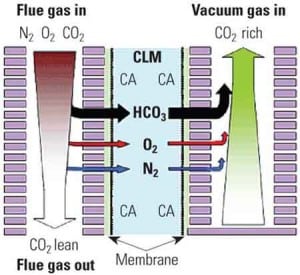
NewsCarbon Capture Technology Based on a Blood Enzyme
The way our lungs separate and capture carbon dioxide from blood could be key to isolating emissions of the greenhouse gas in order to store them safely underground.
-
News
New Polymers Could Mop Up Radioactive Isotopes
Scientists from Germany and India say they have developed a new polymer that reduces the amount of radioactive waste produced during routine operation of nuclear reactors. The approach uses small beads of the material to "fish" out radioactivity from water pumped through the reactor’s core.
-
 News
NewsNorway Inaugurates Osmotic Power Plant
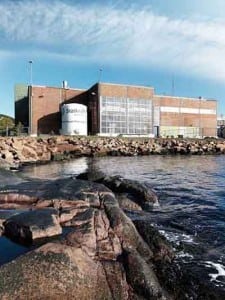
One of the world’s first osmotic power plants started operation at Tofte on the Oslo fjord in Norway last November, producing 2 kW to 4 kW after more than a decade of collaborative research and development by the Norwegian University of Science and Technology and Norwegian state-owned utility Statkraft (Figure 1).
-
 News
NewsAREVA Makes Debut in Renewables with German Offshore Turbines
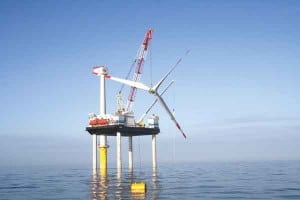
The first six of a dozen high-capacity turbines were commissioned in mid-December at the 60-MW Alpha Ventus project in the North Sea, Germany’s first offshore wind park. All 12 turbines of the €250 million project are already standing, put up in just seven months by a consortium of EWE, E.ON, and Vattenfall — formally known as Deutsche Offshore Testfeld und Infrastruktur (DOTI).
-
 Coal
CoalThe Resurrection of Underground Coal Gasification
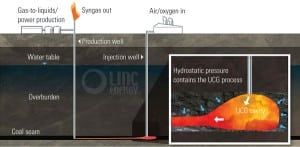
News this past November that Australian company Cougar Energy had begun developing a pilot project to generate power from coal still underground has reignited interest in the 100-year-old alternative energy technology. The company’s planned A$8 million program — expected to be started in the first quarter of 2010 — will be conducted 10 kilometers south of Kingaroy, in southern Queensland. If it is successful, it could lead to the establishment of a 400-MW baseload power station, Cougar Energy officials say.
-
 Nuclear
Japan Launches Commercial Operation of MOX-Fueled Reactor
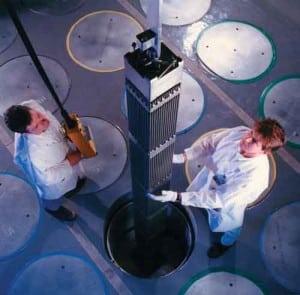
Japan began operating a nuclear power reactor using plutonium-uranium mixed oxide (MOX) as fuel for the first time last October. About 16 MOX-containing fuel assemblies were loaded during a scheduled outage to replace a portion of the 193 fuel assemblies at the No. 3 reactor at Kyushu Electric Power Co.’s Genkai nuclear power plant. The utility eventually plans to triple the number of fuel assemblies at the 1,180-MW reactor in Saga Prefecture to 48. The Ministry of Economy, Trade and Industry conducted its final inspection of the reactor and issued its certification on Dec. 2.
-
 Solar
SolarChina’s Largest PV Maker to Set Up in Arizona
China’s largest solar panel maker, Suntech Power, in mid-November announced plans to open a photovoltaic (PV) manufacturing facility in Phoenix, Ariz., in the third quarter of 2010. Roger Efrid, Suntech’s managing director, was widely quoted as saying that the company — which holds 12% of U.S. market share and is looking to reach 20% by 2010 — chose to establish a plant nearer to customers. This was smart business, even though panels would be made from solar cells imported from China, because solar panels are heavy, he told The New York Times: "As the price of solar panels has reduced dramatically in the last 12 months, the shipping costs have become a larger and larger portion of the overall cost of getting these projects to market."
-
 Coal
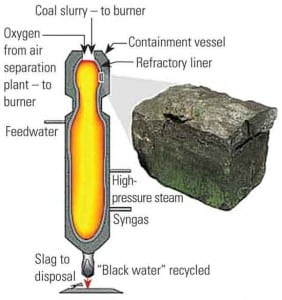
CoalAdvanced Refractory Lining Improves Gasifier Reliability
Successful testing of a new refractory lining material developed by the Office of Fossil Energy’s National Energy Technology Laboratory (NETL) could lead to higher reliability and improved economics of gasification technology.
-
 Nuclear
High-Temperature Gas-Cooled Reactor Concept Moves Forward
Researchers from the Idaho National Laboratory (INL) say they have developed a new type of nuclear fuel for use in next-generation high-temperature gas reactors that produces less waste — a major step forward for the Next Generation Nuclear Plant (NGNP).
-
News
Predicting Hurricane-Related Outages
Researchers from John Hopkins and Texas A&M universities say that they have found a way to accurately predict power outages in advance of a hurricane. Computer models developed using data from Hurricane Katrina and four other destructive storms could save utilities substantial amounts of money and help facilitate rapid restoration of power after a storm, they say.
-
-
 News
NewsLargest Wind Turbine to Be Built in the UK
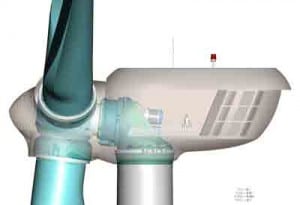
A £4.4 million grant by the UK’s Department of Energy and Climate Change (DECC) this September to Clipper Windpower’s Britannia project kicked up a whirlwind of interest in the supersized wind turbine—and others being developed around the world.
-
News
Coal Seam Gas Poised to Explode in Australia
Anglo Coal, one of Australia’s coal mining companies this September opened a 45.6-MW power plant at its Moranbah North mine in northeast Queensland that captures methane-rich coal mine gas and uses it as a fuel to generate power instead of venting it into the air.
-
 News
NewsOcean Power Prototypes Coast Ahead in the UK
Marine energy prototypes in the UK are sailing ahead of entries from the rest of the world, propelled by government backing and public support.
-
 Nuclear
NRC Concerns About AP1000 Structural Strength Could Delay Projects
Concerns raised by the U.S. Nuclear Regulatory Commission (NRC) about the structural strength of Westinghouse Electric Co.’s AP1000 reactor could cause delays for several nuclear plants that planned to use the design in the U.S. — and it raises questions for new builds started or proposed in China and the UK.
-
 Gas
GasNew-Generation Gas Turbines Steam Ahead
This September, as Siemens Energy wrapped up testing of its H-class SGT5-8000H gas turbine at E.ON’s Irsching 4 gas power plant in Bavaria, Germany, the company raved about what it is calling "the world’s most powerful gas turbine."
-
-
News
Belgium, Germany Edge Toward Nuclear Future
A host of European countries have recently made concessions on long-standing nuclear policies. In February this year, for example, Sweden proposed to lift a nearly 30-year-old ban on nuclear power and annulled its nuclear phase-out. And in May 2008, Italy announced it would resume building nuclear plants—two decades after public referendum banned nuclear power and the nation deactivated all of its reactors.
-
News
Argentina to Begin Commercial Operation of New Nuke by 2010
Argentina has set out to complete Atucha II, a nuclear reactor it started building in 1981 and abandoned when it was 81% complete, owing to financial problems. If all goes according to plan, the country’s third reactor could go online by 2011—some 25 years behind schedule.