
Global Monitor
-
 Coal
CoalWorld Energy Outlook Forecasts Great Renewables Growth
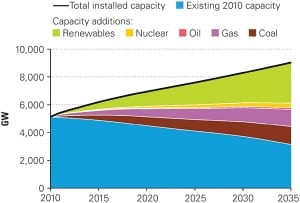
Driven by policies to limit carbon emissions, as well as government subsidies, the share of worldwide nonhydro renewable power is set to grow from just 3% in 2009 to 15% in 2035, the International Energy Agency (IEA) forecasts in its recently released World Energy Outlook 2011. Under the same scenario—which assumes that carbon pricing, explicit […]
-
Coal
Australia Levies Landmark Carbon Tax
After more than a decade debating whether to pass a carbon-limiting law, Australia’s Senate in November voted in a landmark bill that will impose a price on carbon emissions. The country, which accounts for just 1.5% of global carbon emissions, but which is the world’s highest emitter per capita because 80% of its power comes […]
-
 Nuclear
NRC to Implement Lessons Learned from Fukushima
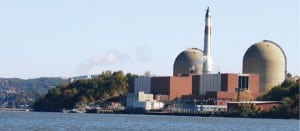
The U.S. Nuclear Regulatory Commission (NRC) in October directed staff to begin implementing seven safety recommendations put forth by the federal body’s Near-Term Task Force on lessons learned from the nuclear accident at Tokyo Electric Power Co.’s Daiichi power plant in Japan’s Fukushima prefecture last March. The recommendations affecting all 104 nuclear reactors (Figure 1) […]
-
 Gas
GasGE Uses Steel Mill Gases to Power Turbine
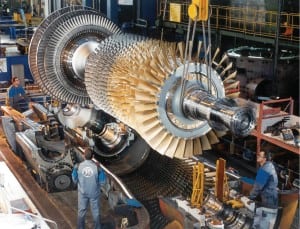
The world’s steel industry is power-hungry. Using energy both to supply heat and power for plant operations and as a raw material for the production of blast furnace coke, the sector uses a major fraction of the world’s total energy consumption. China’s steel and iron sectors have been mushrooming on the back of skyrocketing demand, […]
-
 Business
PJM Completes Unique Dual-Primary Control Centers
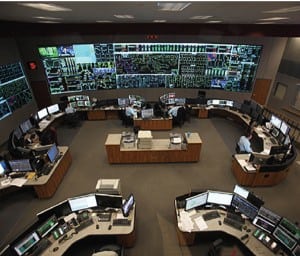
Swift technology developments in the power sector and increasingly sophisticated security threats have prompted regional transmission organization PJM Interconnection to switch from its aging centrally dispatched legacy system to two “state-of-the-art” primary control centers as part of its $200 million Advanced Control Center (AC2) program. The grid operator that serves parts of the Eastern Interconnection […]
-
Business
POWER Digest (January 2012)
South Korea, China Poised to Make Colossal Investments in Wind Power. South Korea, a nation that recently announced it would spend 1 trillion won ($884 million) on feed-in tariffs for wind and solar projects, on Nov. 10 said it planned to invest 10.2 trillion won ($9 billion) in a 2.5-GW offshore wind farm that could […]
-
 Solar
SolarU.S.-China Solar Trade Dispute Gets Thornier
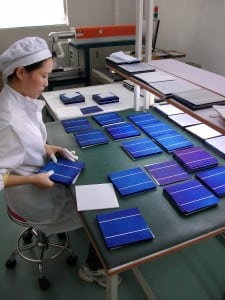
A trade row between the Chinese government and solar panel makers around the world intensified in December. As China’s Ministry of Commerce refuted allegations that the Chinese government uses illegal subsidies, discounts for raw materials, preferential loans, tax incentives, and currency manipulation to drive down prices and amplify exports of Chinese solar photovoltaic (PV) panels, the U.S. International Trade Commission (ITC) affirmed the U.S. solar industry is “materially injured” by imports, at “less than fair value,” of Chinese crystalline silicon PV cells and modules.
-
Coal
Gas Taxes: Carbon Taxes Around The World
A supplement to “The Big Picture: Gas Taxes” in our January 2012 issue.
-
 Coal
CoalUK Pulls Funding for Flagship Longannet CCS Demonstration
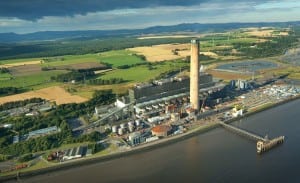
Ditching the only project remaining in its £1 billion ($1.60 billion) carbon capture and storage (CCS) competition, the UK government declined to back the much-watched CCS project at the Longannet power station in Fife, Scotland, in October. The decision balances the UK’s low-carbon ambition with the need to ensure that taxpayer money is invested in “the most effective way,” the nation’s Department of Energy and Climate Change said. The funds are now expected be used to “pursue other projects” in both Scotland and England.
-
 Hydro
HydroBurma Halts Massive Chinese-Developed Hydropower Dam
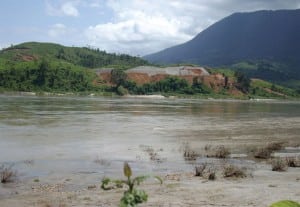
China’s efforts to build the Myitsone Dam—a $3.6 billion hydropower project planned at the confluence of the Mali and N’Mai Rivers at the source of the Irrawaddy River in Burma’s Kachin State—were thwarted in late September after Burma’s President Thein Sein suspended construction “to respect the will of the people.”
-
 Nuclear
Airtight Cover Completed for Daiichi 1
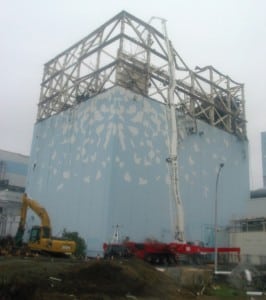
Tokyo Electric Power Co.’s (TEPCO’s) Fukushima Daiichi 1 reactor—a unit that suffered a core melt and hydrogen gas explosion after the March 11 earthquake in Japan and subsequent tsunami devastated the six-reactor facility—was fully encased in an “airtight” cover in October.
-
 Waste to Energy
Does Cow Power Pay Off?
Since a 2008 University of Texas-Austin study showed that converting farm animal droppings into renewable power could generate enough power to meet up to 3% of North America’s consumption, interest in cow power has been piling up.
-
Business
POWER Digest (December 2011)
Fluor Enters Small Modular Reactor Market, Backs NuScale. Fluor Corp. on Oct. 13 announced it planned to invest more than $30 million in NuScale Power, an Oregon-based small modular reactor (SMR) technology company. As part of its investment, Fluor has purchased the company’s shares that had previously been in U.S. Securities & Exchange Commission receivership […]
-
 Waste to Energy
The Big Picture: Big Biomass
The world’s biomass power facilities, not counting those in the pulp and paper industry, average just 18 MWe to 20 MWe. In the U.S., passage of the Public Utility Regulatory Policies Act of 1978 ignited development of many existing biomass plants. Greenhouse gas rules and renewable policies around the world have kindled a new generation of much larger biomass facilities. New announcements routinely are for plants 50 MW or larger, presumably to leverage economies of scale.
-
 Gas
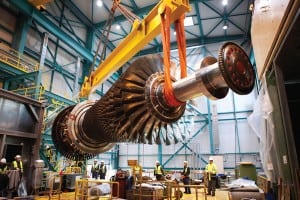
GasGas Turbine Makers Gear to Flexibility Needs with New Models
Competition among gas turbine makers heated up this September as Alstom unveiled its upgraded GT24 gas turbine and corresponding 60 Hz KA24 combined cycle power plant, while Mitsubishi Heavy Industries (MHI) introduced the M701F5 gas turbine—a 50 Hz F-class gas turbine upgrade. An Upgraded GT24 Alstom’s upgraded product launches came on the heels of its […]
-
 Gas
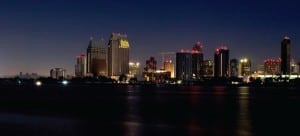
GasBlackout Leaves Southwest in the Dark
A large swath of Southern California, parts of Arizona, and Northern Baja Mexico was blacked out on Sept. 8—leaving seven million people in the dark—after an Arizona utility worker fixing faulty equipment near Yuma reportedly tripped the 500-kV North Gila–Imperial Valley transmission line, causing the outage. The blackout prompted two units at the San Onofre Nuclear Generating Station to go offline, stranded many people in elevators and trains, shut down airports, cut air conditioning on a day well above 90F, and caused damages of $97 million to $118 million, according to early estimates from the National University System’s Institute for Policy Research.
-
 Wind
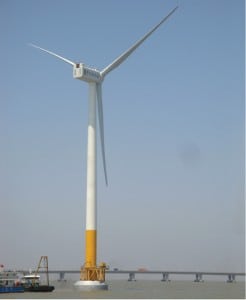
WindAMSC Former Employee Convicted in Sinovel Intellectual Property Case
An intellectual property battle between Massachusetts-based American Superconductor Corp. (AMSC) and China’s giant wind turbine maker Sinovel in late September culminated with an Austrian court conviction of a former AMSC employee, who was arrested in Austria and who pled guilty to corporate espionage charges. The court charged Dejan Karabasevic, a 38-year-old Serbian engineer, with stealing AMSC’s software, modifying it, and secretly selling it to Sinovel.
-
 Nuclear
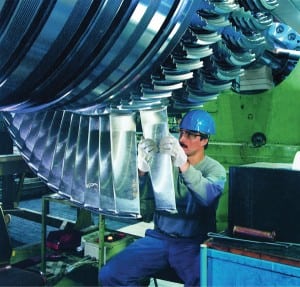
Siemens Joins Trend to Quit Nuclear
The number of companies pulling out of the nuclear business continues to grow. Just weeks after Louisiana-based engineering firm The Shaw Group announced it would sell its 20% stake in the nuclear company Westinghouse back to partner Toshiba, German engineering conglomerate Siemens said that, prompted by the German government’s decision to phase out nuclear power by 2022, it would quit the nuclear business.
-
Nuclear
German Court Questions Legality of Nuclear Tax
A German finance court in September questioned the constitutionality of a controversial tax on fuel used in nuclear power plants, a decision that could influence rulings in various finance courts around the country that are reviewing complaints by nuclear operators regarding the levy.
-
 Nuclear
ITER Gets New Life
The International Thermonuclear Experimental Reactor (ITER) in southern France, the world’s biggest nuclear fusion research project, is seeing a revival. After a budget shortfall last year and cost projections that continue to escalate, in September, the project got the European Parliament’s (EP’s) backing for an autonomous budget that seeks to guarantee transparent and reliable financing while limiting cost overruns. Japan also announced that it would increase its budget for ITER by 50% (the current ITER director-general is Japanese). Also in September, scientists announced that after an 18-month shutdown to upgrade the Joint European Torus (JET)—the world’s largest magnetic fusion device—the machine is ready to test materials to be used inside ITER (Figure 5).
-
Business
POWER Digest (November 2011)
Wärtsilä to Provide Rwanda with Engines for Lake Methane Power. Wärtsilä on Sept. 30 said it was awarded a contract by KivuWatt, a subsidiary of the New York–based international power company ContourGlobal, to supply a power plant to the Republic of Rwanda. The turnkey project is of particular significance because the power plant will utilize […]
-
Nuclear
THE BIG PICTURE: Reactors Under Construction
For seven years in a row, the number of new nuclear construction starts increased markedly. Then the accident at Japan’s Fukushima Daiichi plant occurred, prompting shutdowns of existing plants and a rethinking of future plans in many countries. Nevertheless, the International Atomic Energy Agency (IAEA) expects “continuous and significant growth” in the use of nuclear […]
-
 Nuclear
Germany’s Nuclear Phase-Out Has Widespread Implications
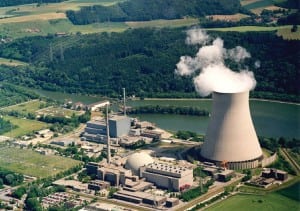
The German government in July finalized a package of bills that will phase out nuclear’s 23% contribution to the country’s power supply by 2022 and increase renewable generation from the current 17% to 35%. In August, the Federal Network Agency ( Bundesnetzagentur) said it wouldn’t rely on power from seven of the nation’s oldest reactors […]
-
 Nuclear
Ling Ao 4 Starts Up While Sanmen Gets First AP1000 Reactor Vessel
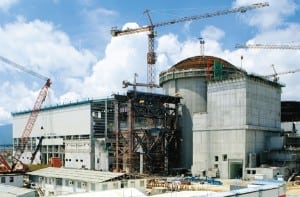
In China this August, as Ling Ao Unit 4—the second unit of the Ling Ao Phase II nuclear plant—started commercial operation, Westinghouse and its consortium partners marked the milestone of receiving the reactor vessel for the Sanmen nuclear power plant—the world’s first AP1000—in China’s Zhejiang province. The start-up of Ling Ao Unit 4 in Guangdong […]
-
 Gas
GasNew Peaking Plant to Balance California’s Renewables
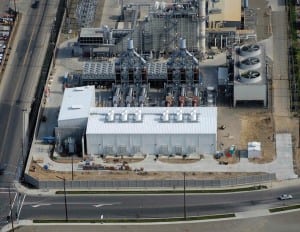
As utilities in California are scrambling to meet the state’s 33% renewable mandate by 2020, a 49.6-MW peaking plant in Modesto, Calif., built by Finnish firm Wärtsilä for the Modesto Irrigation District, has been commissioned to provide flexible, fast-start peaking generation to balance the state’s increase in intermittent renewable generation (Figure 4). 4. Flexible peaking. […]
-
 Gas
GasKuwait Starts First Turbines of 2,000-MW Gas Plant
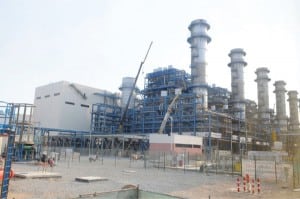
Kuwait put online the first 1,400 MW of its massive 2,000-MW combined cycle gas turbine Sabiya facility in June to mitigate looming power shortages it faces each summer. The plant—Kuwait’s largest power plant and one of the largest in the Gulf region—is now operating six GE 9FA gas turbines; the remaining 600 MW are expected […]
-
 Hydro
HydroHydro Reservoir GHG Emissions Lower Than Estimated
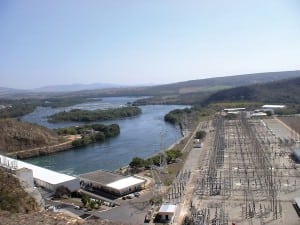
A new analysis of 85 hydroelectric reservoirs distributed around the world suggests that these systems emit about 48 million metric tons of carbon annually. That figure is much lower than earlier estimates of 64 million metric tons that were based on studies relying on more limited data and which cautioned that reservoirs of all types […]
-
News
POWER Digest
Siemens Gets $1 Billion Order to Build Gas Power Plants in Thailand. Siemens on Aug. 17 said it received two orders worth $1 billion from Thailand for the engineering, procurement, and construction (EPC) of combined cycle power plants. The firm will build Chana Block 2 in the province of Songkhla and Wang Noi Block 4 […]
-
 Solar
SolarTHE BIG PICTURE: A Solar Switch
The plummeting cost of photovoltaic (PV) panels—resulting from lower costs for high-grade silicon and advancements in thin-film technology, solar storage, and electronic control technologies—has a slew of firms rethinking concentrating solar power (CSP) projects. Although there is a CSP project pipeline (including both CSP and concentrating PV) of more than 9 GW in the U.S., […]
-
 Coal
CoalTHE BIG PICTURE: Lights Out
Heat waves, droughts, and other weather and climate phenomena; economic woes; aging or inadequate infrastructure; fuel shortages. These are some of the most obvious causes that have led to record peaks in power demand or sudden drops in available capacity. The results have been sometimes debilitating load-shedding, brownouts, and blackouts around the globe this summer (and, in some cases, for much longer). Here’s an overview of which countries are affected by which difficulties. For a more detailed look at the extent of shortages and what’s causing them, visit Web Exclusives at https://www.powermag.com