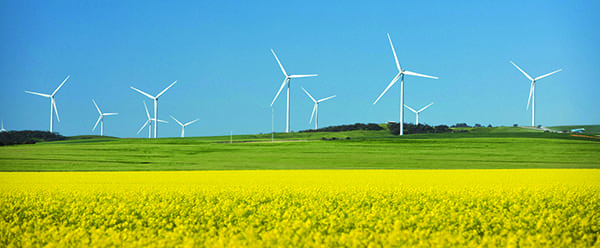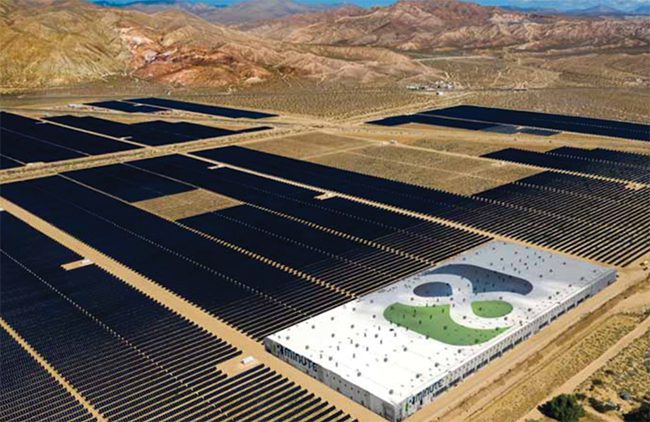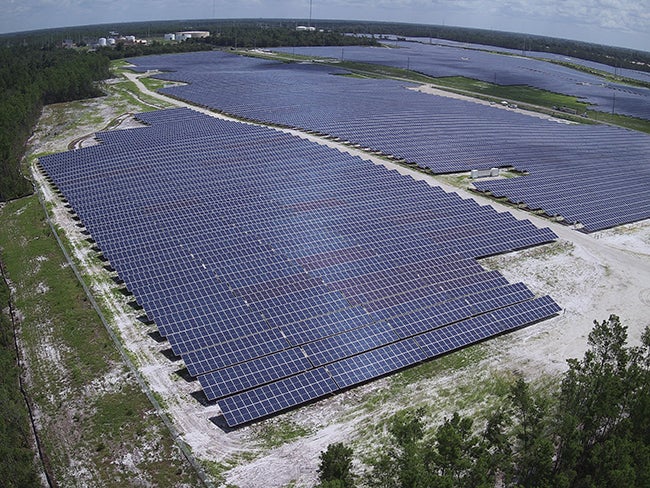
Groups Begin Construction of Solar-Plus-Storage Project in Australia. Octopus Australia in March broke ground on the $900 million Blind Creek Solar Farm and Battery project. Local officials said the installation is a major milestone for regional infrastructure and energy security in New South Wales (NSW). Blind Creek combines a 300-MW solar farm with a 243-MW/486-MWh battery. The facility will capture and store energy during daylight hours, and dispatch it at night during periods of higher demand for electricity. The project, sited in Bungendore, NSW, will connect to the grid via a new substation between Sydney and Canberra. “This is the kind of project New South Wales needs as we replace aging energy infrastructure. We need to keep the lights on, keep costs as low as possible, and to keep regional communities with us along the way,” said NSW Premier Chris Minns. The project has investment from Australian superannuation funds Hostplus and REST, the Clean Energy Finance Corp., Westpac Private Bank, and Dutch pension company APG. Officials said Blind Creek was designed in partnership with local sheep farmers who want to integrate agriculture with energy production as a means to future-proof their property. The solar farm has specifically been designed to allow animal production to continue on the land, which has been farmed for more than 150 years. Construction is being led by GRS, with Wärtsilä Energy Storage supplying the battery energy storage system. The project is expected to be fully operational in 2028.
Luxembourg Company Advances Space-Based Solar Power. Space technology startup TerraSpark in late March said it had raised $6.2 million in a pre-seed funding round aimed at advancing the company’s space-based solar power technology. The company said its technology is designed to deliver continuous, weather-independent renewable energy from orbit. The Luxembourg-based group, founded in 2025, said its technology captures solar energy in space, and then transmits it wirelessly to Earth using radio frequency. The company said the power would be available at all times regardless of weather conditions. The group said its initial step would be commercialization of radio frequency–based wireless energy transmission for industrial applications on Earth, in order to prove the technology before putting its system into space. Jasper Deprez, founder and CEO of TerraSpark, said, “Space-based solar power has long been considered something for the distant future. Across Europe, energy resilience is now a practical concern, not an abstract one. With our step-by-step approach and starting with commercially viable systems on Earth, we are convinced that space-based solar power can become real infrastructure within a realistic timeframe.” TerraSpark said it plans pilot applications this year, along with an orbital technology demonstrator by 2027. Officials said the company is targeting 2028 for development of its first space-to-Earth power transmission system.
Sweden Receives First SMR Application Under New Law. Kärnfull Next said recently the company has submitted Sweden’s first application under the country’s new Act on Government Approval of Nuclear Facilities, marking a key milestone for new nuclear development. The application covers a planned small modular reactor (SMR) campus in Valdemarsvik in southern Sweden. The application has been formally submitted to Johan Britz, Sweden’s minister for Employment and acting minister for Climate and the Environment. The new law introduces an early-stage government approval process and is designed to improve predictability and accelerate the deployment of new nuclear capacity. “This is a clear step from concept to formal permitting,” said Christian Sjölander, CEO of Kärnfull Next. “Sweden needs new dispatchable, fossil-free power—particularly in the South—and this application shows that real projects are now moving forward.” The application was submitted by project company ReFirm Målma AB. It represents the first stage in a broader licensing process that includes environmental and nuclear regulatory approvals. The Valdemarsvik project is part of Kärnfull Next’s ReFirm South program, a portfolio of sites being developed for SMR deployment across southern Sweden. The company plans to submit additional applications for other ReFirm sites later this year, as projects reach the same level of maturity.
GWEC, JWPA Sign MOU to Promote Japanese Offshore Wind. The Japan Wind Power Association (JWPA) announced it has signed a memorandum of understanding (MOU) with the Global Wind Energy Council (GWEC), the international trade association for the wind power industry, to strengthen cooperation and accelerate offshore wind development in Japan. The MOU establishes a framework for collaboration between JWPA and GWEC aimed at promoting knowledge exchange, enhancing industry and supply chain networks, and supporting the sustainable growth of Japan’s offshore wind sector, according to the groups. The organizations want to leverage global expertise and best practices to reinforce the international competitiveness of Japan’s offshore wind industry.
Peak Energy Acquires Solar Power in Singapore. Peak Energy has acquired a nearly 10-MW portfolio in Singapore from Maiora Renewable Energy Pte. Ltd. The deal supports Singapore’s upgraded 2030 solar target, and strengthens Peak Energy’s position as one of the leading commercial and industrial rooftop solar platforms in the region. Singapore wants to expand its use of renewable energy to lessen dependence and exposure to global fuel markets, particularly as costs for fossil fuels continue to rise. Officials said the transaction reflects the growing interest from corporations and energy developers in locally generated renewable energy that would provide greater electricity cost visibility. Adding more renewable energy to the grid also supports Singapore’s decarbonization goals. Officials have said smaller projects that involve distributed generation are key to Singapore’s energy strategy because land constraints limit any utility-scale renewable energy development. Peak Energy, which is headquartered in Singapore, said the acquisition increases the volume of operating domestic rooftop capacity that the company can aggregate for Singapore-based corporate and industrial buyers. Peak Energy officials have said the company is in advanced discussions with commercial and industrial groups in Singapore on long-term virtual power purchase agreements for locally sourced renewable energy. The company has more that 300 MW of operating assets across the Asia-Pacific region, along with about 1 GW of projects in development in the region. ■
—Darrell Proctor is a senior editor for POWER.