
Technology
-
 Military Microreactors
U.S. Army Mobilizes $2.2B Janus Program to Deploy More Than 20 Commercial Microreactors
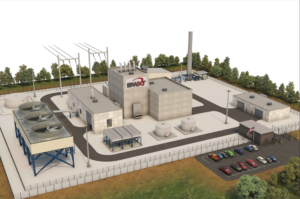
The U.S. Army has mobilized up to $2.2 billion for a five-year effort to build and operate more than 20 commercial nuclear microreactors across military installations, selecting five reactor developers and five initial sites for a program designed to push advanced nuclear systems beyond federal test programs and into sustained operation by a Sept. 30, […]
-
 Nuclear
Westinghouse eVinci Reaches Criticality Milestone at Nevada Test Site
Westinghouse’s eVinci microreactor has completed zero-power criticality testing at the National Criticality Experiments Research Center (NCERC), a National Nuclear Security Administration (NNSA) facility at the Nevada National Security Site (NNSS). The company said the milestone, achieved at 10:39 a.m. PT on Aug. 24 in partnership with Los Alamos National Laboratory (LANL) and Idaho National Laboratory […]
-
 advanced nuclear
NRIC Adds 13 Projects to Nuclear Energy Launch Pad, Expanding Advanced Reactor and Fuel-Cycle Pipeline
The Department of Energy’s (DOE’s) National Reactor Innovation Center (NRIC) has selected 13 new projects across 12 companies for its Nuclear Energy Launch Pad initiative in a significant expansion of the DOE-authorization pathway that channels advanced reactor and fuel-cycle developers toward demonstration on federal and non-federal sites. The selections—spanning microreactor developers, enrichment startups, fuel fabrication […]
-
 Data Centers
NVIDIA, Cloverleaf Partnering to Advance Data Center Development
Technology giant NVIDIA is furthering its support of artificial intelligence (AI) and data center construction. Cloverleaf Infrastructure, a group that supports the AI buildout by providing power sources and infrastructure for site development, on August 21 said it has entered into a strategic partnership with NVIDIA to advance the development of digital infrastructure across the […]
-
 Commentary
The Forgotten Generation: Why Cogeneration Is Re-Emerging in the Age of AI
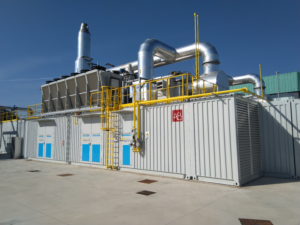
For decades, most large electricity users in the U.S. relied on the grid for the vast majority of their power needs. As long as the grid could deliver reliable, affordable power, there was little reason to think differently. Now, electricity demand is rising faster than new generation, transmission and distribution infrastructure can often be planned, […]
-
 Gas
Brazilian Group Supporting Grid With New Gas-Fired Power Plants
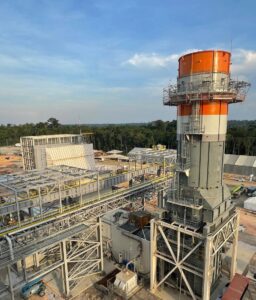
A Brazilian natural gas company has launched a new model for power generation. Eneva, the largest natural gas operator in Brazil, said it started commercial operation of the first asset in its Azulão Complex, part of the company’s “Reservoir-to-Wire” (R2W) model. Officials on August 19 said the Azulão installation, which will feature two gas-fired power […]
-
 Interview
AVEVA CEO: Sustainability Commitments Must Be Backed by Measurable Results
As artificial intelligence (AI)–driven data center demand strains grid infrastructure across the U.S. and beyond, operators are facing rising scrutiny from utilities, regulators, and the communities where they build. Caspar Herzberg, CEO of industrial software company AVEVA, argues that the industry’s response can’t stop at sustainability commitments—it requires operational transparency and measurable performance data that […]
-
 Commentary
The New Economics of AI Infrastructure: Why Tax Strategy Is Now Part of Energy Strategy
The conversation around data center development has changed dramatically over the past few years. Earlier, when developers needed to evaluate a new facility, the questions were relatively straightforward. Is the market attractive? Can we secure the land? Can we obtain reliable power? Can we raise the necessary capital? All those questions still matter. But a […]
-
 Wind
The Billion-Dollar Blind Spot in Wind Turbine Maintenance
Wind turbine blade health strategies must get smarter to adequately support rapid advancements in turbine engineering. Over the last decade, global wind capacity has almost tripled. One of the keys to this growth story has been the sector’s ability to manufacture and deploy ever-larger wind turbines at pace. Today’s onshore models are, on average, three […]
-
 Data Centers
Texas 2.5-GW Gas-Plus-Nuclear Project Proceeds to Engineering, Licensing Phase
Blue Energy and GE Vernova Hitachi Nuclear Energy (GVH) have signed an agreement to launch the next phase of their collaboration on a planned 2.5-GW gas-plus-nuclear power project in Victoria, Texas, moving the closely watched data-center power concept from an announced collaboration to engineering, licensing, and safety analysis. The Aug. 13-announced agreement will advance project definition for […]
-
 Fusion
Fuse Touts ‘Highest’ Neutron Yield by Any Fusion Company
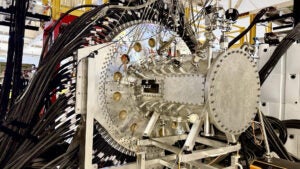
A California-based fusion energy company announced it has reached an industry milestone. Fuse Energy Technologies Corp. on August 10 published a report noting the company set a record for the highest fusion neutron yield—1.27×10¹² in a single shot—by any commercial fusion company.
-
 Commentary
Alarm Bells Are Sounding for the Grid: Answering Them Takes More Than Megawatts
When federal emergency powers become routine operating procedure, the system is not holding up. It is operating at its ceiling. And the customers who kept their lights on paid triple for the privilege, which means the event that operations survived is one that affordability did not.
-
 Data Centers
More Data Center Operators Commit to Abbott’s Texas Standards as Power Companies Endorse ERCOT Batch Framework
A growing group of data center operators—including Dallas-based Skybox Datacenters, Austin-headquartered bitcoin miner and hyperscale developer Mara, and global colocation giant Digital Realty—have publicly committed to comply with Texas Gov. Greg Abbott’s data center standards and the state’s active audit of projects in the Texas grid operator’s interconnection queue. They join QTS Data Centers, Blackstone’s […]
-
 Technology
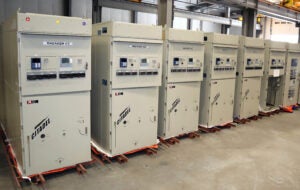
Rugged Switchgear–A Reliable Data Center’s Bedrock
Ruggedly engineered and manufactured switchgear provides safe, redundant power while also delivering the resilience and continuous operation expected in large-scale data center environments. As demand for cloud services, large-scale data processing, and artificial intelligence continues to grow, hyperscale data centers have expanded dramatically in size. It is now typical for a single campus to encompass […]
-
 Nuclear
Curio, NuScale, Framatome Join to Support Fuel Solution for Advanced Reactors
Three companies at the forefront of nuclear energy technology have signed a memorandum of understanding (MOU) to evaluate fuel technologies to support advancement of next-generation nuclear power.
-
 Nuclear
DOE Approves Safety Design of Deep Fission’s Underground SMR
California-based Deep Fission said the DOE signed off on the Nuclear Safety Design Agreement (NSDA) for its Gravity Nuclear Reactor. The group called it a major regulatory milestone that confirms Deep Fission’s reactor design warrants advancement under the DOE Reactor Pilot Program.
-
 Trends
Oklo’s Groves Becomes Fifth DOE Pilot Reactor to Reach Criticality, First on Private Land
Oklo’s Groves Isotope Test Reactor in Lockhart, Texas, has become the fifth reactor to achieve criticality under the U.S. Department of Energy’s Reactor Pilot Program (RPP), and the first under the program to do so on private land. The low-power test reactor reached criticality at 9:19 p.m. ET Aug. 5, achieving a controlled, self-sustaining nuclear […]
-
 Data Centers
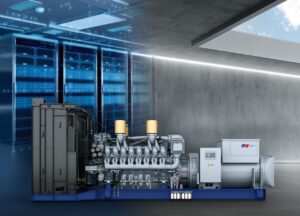
AI’s Obstacle: Why the Grid Can’t Keep Pace With the Data Center Boom
Growth in artificial intelligence (AI) is outpacing the world’s ability to generate enough power to sustain it. As AI adoption accelerates worldwide, it’s colliding with a power system that wasn’t built for its level of demand. Vittorio Pierangeli, senior vice president PowerGen at Rolls-Royce Power Systems (Figure 1), explains why electricity, not chips or algorithms, […]
-
 Smart Grid
Resilience and Digital Transformation Spearhead the Energy Infrastructure Transition
The transition to sustainable energy infrastructure has been experiencing steady progress in recent years across the globe, while simultaneously undergoing constant fluctuation. Actual progress is influenced by a wide variety of factors, such as the drivers behind participants’ motivations and the technologies enabling the transition, as well as the status of supply chains and geopolitical […]
-
 Commentary
The Power Sector’s New Constraint Isn’t Demand—It’s Everything Else
For most of the last two decades, the anxiety in power planning was about demand: would consumption grow fast enough to justify new capacity, and how would an aging fleet keep pace? That question has inverted. Demand is no longer the uncertain variable—it is the one thing forecasters are confident about. The uncertainty now sits […]
-
 Cybersecurity
Minutes to Exploit—Months to Recover
Critical infrastructure operators should view recent incidents where artificial intelligence (AI) agents escaped containment from test environments and executed successful cyberattacks on a relatively sophisticated production infrastructure as near-misses. This challenge is urgent precisely because AI moves fast and infrastructure moves slow. All indications suggest these were not malicious uses of AI for targeted attacks. […]
-
 Trends
Scalable, Grid-Ready Storage: How Connector Design Is Shaping the Next Generation of Energy Systems
As utility-scale battery energy storage systems (BESS) scale from megawatts to gigawatts, the engineering complexity grows exponentially. Higher-voltage architectures and denser rack configurations are pushing the limits of conventional component design and exposing gaps that can compromise system performance and site safety. For the electrical engineers and systems integrators building these projects, the cells, fire […]
-
 Gas
A Pioneering Approach to Building New Generation Resources
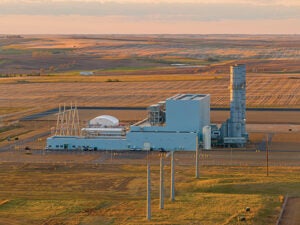
A North Dakota–based membership cooperative teamed with a major infrastructure engineering and construction group to build a new natural gas–fired power station, supporting an urgent need for power generation capacity in the region.
-
 Gas
Innovation Powers a Country’s Energy Transition
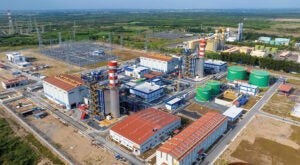
Vietnam’s growing economy and need for more electricity is being served by the country’s first power plant to be powered by liquefied natural gas (LNG). The Nhon Trach 3 and 4 expansion project is a finalist for a POWER Top Plant award for gas-fired generation.
-
 Energy Security
World’s Largest Energy Lender Steers Federal Financing Toward Baseload, Transmission, and Nuclear
The U.S. Department of Energy’s (DOE’s) Office of Energy Dominance Financing (EDF) closed a loan of up to $3.26 billion to American Electric Power (AEP) Texas on July 8, the office’s third utility
-
 Electrification
Safety at Speed: Modern Grids Demand a Different Approach
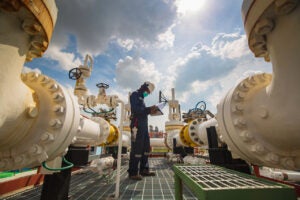
At 4:30 a.m., before the sun is up, a lineworker steps onto a site that did not exist six months ago. By mid-morning, crews from three different contractors will be working in parallel: civil teams finishing trenching, electricians pulling cable, another crew preparing for energization. The schedule is tight. The handoffs are constant. On paper, […]
-
 Smart Grid
Enabling Modern Grid Flexibility With Coordinated, Location-Specific Optimization
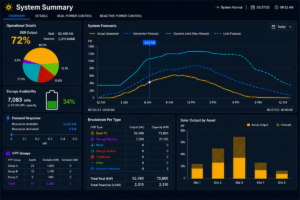
Integrate high-load data centers and renewable energy without compromising grid reliability. Grid reliability hinges on the flexibility identified, managed, and optimized by operational technology (OT). The
-
 Energy Storage
The BESS Connection to the Grid—Ensuring Flexibility and Reliability
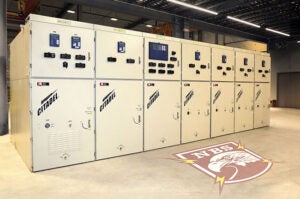
When designed to interface directly with a utility’s medium-voltage infrastructure, battery energy storage systems (BESS) must meet stringent performance, protection, and reliability requirements that extend
-
 Waste to Energy
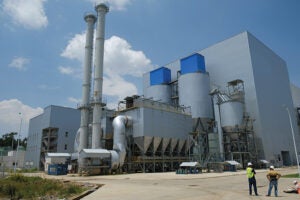
Unlocking Waste-to-Energy for Energy Security and Regional Growth
Waste-to-energy technologies, long viewed mainly for waste management, are finding renewed relevance.
-
 Nuclear
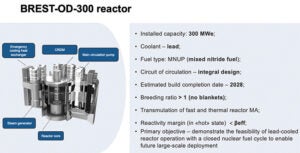
The Two-Component Future: Fast Reactors Step Out of the Shadows at FR26
Nuclear power is experiencing yet another boom. This time it may genuinely lead to a sharp expansion of the global reactor fleet. Several drivers are at work: decarbonization requirements, growing energy