
Texas data center developer TIDAL PWR, which says it has seven projects totaling 9.87 GW in its artificial intelligence (AI) campus development pipeline and designs its campuses to combine utility service and behind-the-meter generation, is collaborating with quantum technology company BTQ Technologies to determine how power and data center infrastructure could eventually accommodate quantum computing systems alongside conventional AI and high-performance computing (HPC) infrastructure.
The companies, which unveiled the collaboration on July 20, told POWER in August that they expect an initial 90-day workstream to produce a planning blueprint for data center developers, facilities and power engineers, security teams, and procurement teams. While the effort remains pre-customer and pre-deployment, the blueprint is intended to help developers account for quantum computing in the long-lead decisions that determine where large computing campuses can be built, how they will be powered, and whether planned infrastructure can accommodate future generations of computing equipment.
Pioneering a ‘Trusted Quantum Data Center Architecture’
Conventional data centers typically run AI and HPC workloads on classical computing systems structured around central processing units, graphics processing units, memory, storage, and high-speed networking. These systems process information as bits and support workloads ranging from AI model training and inference to large-scale simulation and data analysis. An emerging, and increasingly plausible, next layer is quantum computing, which processes information using quantum bits, or qubits, and is being developed for specialized calculations that can complement classical computing.
Quantum computing is already moving beyond laboratory research, though large-scale, fault-tolerant systems capable of sustained commercial workloads remain several years away. IBM, for example, is targeting 2029 for its first large-scale fault-tolerant quantum computer. Meanwhile, industry efforts are increasingly focused on integrating quantum processors with conventional HPC systems and determining how those systems could operate together in production data center environments. NVIDIA’s NVQLink platform, for example, is being marketed as a real-time interconnect between quantum processors and accelerated computing.
But even as quantum computing advances toward commercial maturity, underlying questions about the infrastructure that will power it have begun to surface. Large data centers and the power systems that will serve them are typically planned years before commissioning, while quantum technologies continue to develop across several competing physical designs. Developers seeking to accommodate future quantum workloads may therefore need to decide on electrical capacity, cooling, building layout, control systems, security, and procurement before the final equipment configuration is known.
Working from opposite sides of the infrastructure stack, TIDAL PWR and BTQ have proposed a “trusted quantum data center reference architecture” intended to cover both the physical requirements of future quantum systems and the security and procurement framework surrounding them. The initial scope outlined in July includes quantum data center design principles, trusted supply chain requirements, vendor and device procurement standards, post-quantum cryptographic security considerations, and a repeatable deployment model for integrating quantum systems into AI, HPC, and enterprise data center environments.
BTQ is developing a full-stack neutral-atom quantum computing platform and post-quantum security technologies, while TIDAL PWR develops large-scale AI campuses built around land, grid interconnection, dispatchable generation, fiber, water, and data center infrastructure. The collaboration seeks to combine BTQ’s quantum systems and security expertise with TIDAL PWR’s power and campus-development experience to define the requirements operators must address before installing quantum equipment in a commercial data center, the companies told POWER.
“In simple terms, it is a design guide and planning blueprint for data centers that may eventually host quantum systems. It is not a certification standard. The goal is to define what operators should consider around facility design, security, procurement, vendors, and integration with existing AI and HPC infrastructure before selecting or installing a quantum system,” BTQ and TIDAL PWR said in written responses to POWER.
Quantum’s Infrastructure Requirements
The first phase of the collaboration is expected to run for 90 days from the start of the initial workstream and produce a written report containing a preliminary reference architecture, recommended priorities, and a roadmap for the next phase, the companies said. “It is intended for data center developers and operators, facilities and power engineers, security teams, and procurement teams. The agreement does not require the full architecture to be published publicly, so any external release or update would be determined by BTQ and TIDAL PWR,” they said.
Still, the companies emphasized flexibility as they develop the blueprint. A crucial complication is that quantum computers do not share a common physical design. “Quantum computers have different infrastructure needs than traditional AI servers. Some systems require extremely cold operating temperatures, while others have specialized cooling and environmental requirements,” they said.
Superconducting systems, for example, require extremely low operating temperatures and large cryogenic systems, plus specialized vibration and electromagnetic controls, while neutral-atom systems use vacuum chambers, lasers, and precision optics. Neutral-atom machines avoid the large dilution refrigerators used by superconducting systems but still require environmental stability, vibration control, and specialized optical infrastructure.
Trapped-ion systems also rely on vacuum equipment, lasers, and highly controlled operating environments, while photonic systems use light, optical components, and fiber. Some photonic designs can operate largely at room temperature, although components such as photon detectors may still require cooling. The disparate power demand, physical footprint, cooling, and other facility requirements would therefore depend on the system ultimately selected.
“Our approach is to design flexible campuses that can support both traditional AI workloads and future quantum systems. Rather than mixing everything together, quantum equipment would be housed in dedicated areas designed for its specific cooling, power, and environmental needs while remaining connected to the larger AI campus,” the companies said. “The campus power, cooling, networking, and building infrastructure are being designed with enough flexibility to support new computing technologies as they mature.”
Ultimately, the goal is to ready the data center power infrastructure landscape for emerging needs. “We believe the future of computing will combine AI, HPC, and quantum technologies, and our goal is to build campuses that are ready to support all three,” they said.
Post-Quantum Cryptography and Crypto-Agile Procurement
Significantly, the proposed architecture would also address security and procurement requirements that could apply before a quantum computer is installed. Those include post-quantum cryptography (PQC), a “new generation of encryption and digital-signature technology designed to remain secure against future quantum computers while still running on today’s conventional computers,” the companies said.
The work will also build on standards the National Institute of Standards and Technology (NIST) finalized in August 2024. Those include ML-KEM for establishing shared encryption keys and ML-DSA and SLH-DSA for digital signatures. “NIST defines the cryptography. This collaboration is focused on the practical infrastructure layer around it—how those standards translate into procurement requirements, vendor evaluation, security architecture, and deployment inside a data center,” the companies said.
For AI and hyperscale operators, “the issue is that data centers being built today will operate for many years and protect valuable data, AI models, customer workloads, identities, and critical systems over that period,” they said. “Crypto-agile design simply means making sure equipment and security systems can change or upgrade their cryptography as standards evolve, rather than requiring hardware to be replaced every time an algorithm changes.”
From Architecture to Deployment
For now, however, the collaboration remains firmly at the planning stage. “At this stage, the BTQ-TIDAL PWR collaboration is pre-customer and pre-deployment. There are no named hyperscale, enterprise, or managed service provider customers, signed customer LOIs, or pilot deployments being announced as part of this collaboration today. The initial work is focused on building the reference architecture and identifying potential pilot sites and commercial deployment opportunities. Any actual deployment would require a separate definitive project agreement,” the companies told POWER.
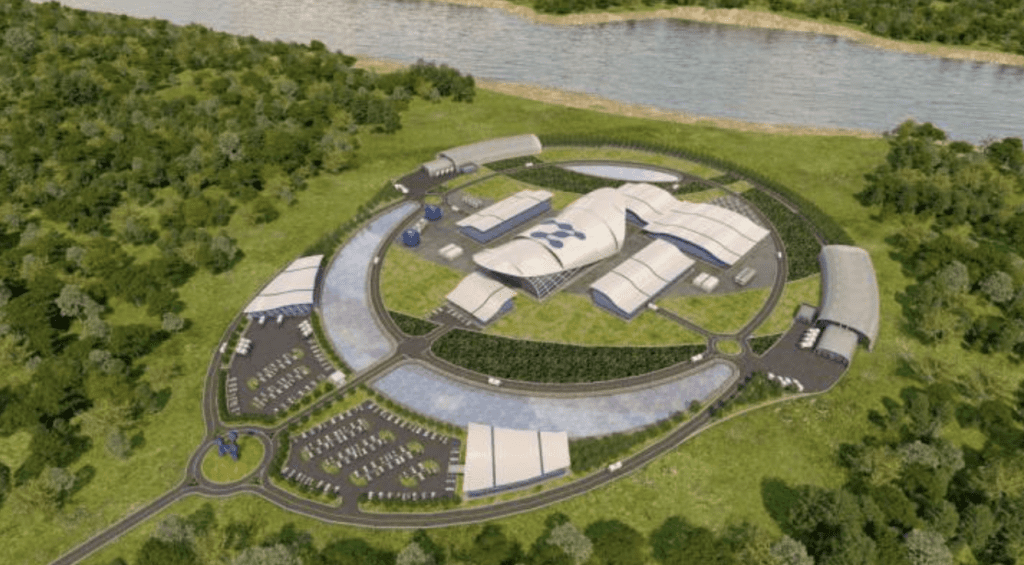
For TIDAL PWR, the effort extends a business model already centered on securing power and infrastructure ahead of hyperscale development. Headquartered in Austin, the company describes its business as bringing together land, grid access, dispatchable generation, fiber, water, and data center infrastructure for large AI campuses. Its disclosed Texas development pipeline spans seven sites totaling 9.87 GW, including 4.8 GW of grid capacity and 5.07 GW of behind-the-meter generation.
“TIDAL PWR is building power and data center infrastructure for the next wave of AI demand, and we see quantum as a natural extension of where advanced computing is going,” Chad Swensen, TIDAL PWR’s co-founder and CEO, said when the collaboration was announced. “BTQ brings a practical framework for trusted quantum deployment, from security and procurement to architecture and vendor alignment. We believe this collaboration can help position TIDAL PWR among the first infrastructure developers planning for the quantum requirements of future data centers.”
BTQ approaches the collaboration from the other end of that development chain. The Nasdaq- and Cboe Canada-listed company is developing quantum computing and post-quantum security technologies and, in July, completed its acquisition of Strasbourg-based QPerfect, adding a neutral-atom quantum computing platform to its portfolio. BTQ has said its role in the TIDAL PWR effort will center on solutions architecture, post-quantum security guidance, procurement frameworks, and mapping vendors across the emerging quantum infrastructure stack.
“Building trusted quantum infrastructure is not just about the technology itself. It is about giving operators a clear path to deploy it,” BTQ CEO Olivier Roussy Newton said in July. “TIDAL PWR is focused on one of the most important constraints in AI infrastructure: reliable power and data center buildout. By combining that focus with BTQ’s work across post-quantum security, quantum systems architecture, and trusted deployment models, we believe there is an opportunity to help define what a quantum data center should look like before the market standard is set.”
The initial 90-day workstream is expected to determine whether that planning exercise advances toward a more concrete project. The parties said in July that the relationship could expand into “deeper technical, commercial, and project-specific opportunities.”
—Sonal C. Patel is a POWER senior editor (@sonalcpatel, @POWERmagazine).