From green hydrogen and coal wastewater, to data center cooling and steam cycle chemistry, reliable measurement helps power producers moderate water use, protect critical equipment, and comply with regulations.
Water ranks among the most heavily used resources in the power generation industry. Thermal plants draw it in enormous volumes as a working fluid (steam) or for cooling (deionized, or mixed with anti-freeze); hydropower converts its motion into electricity; and electrolyzers electrochemically split it into hydrogen.
For decades, water was viewed as a low-cost utility, loosely metered and rarely scrutinized. However, this mindset no longer holds true, because as freshwater supplies tighten and regulators sharpen their focus, power producers are increasingly required to view water as a topic of efficiency, reliability, and compliance, rather than a necessary utility like compressed air.
This article explores key water applications across the power industry, showing how continuous, in-situ measurement helps producers optimize consumption, protect valuable equipment, and document regulatory compliance.
Water for Cooling
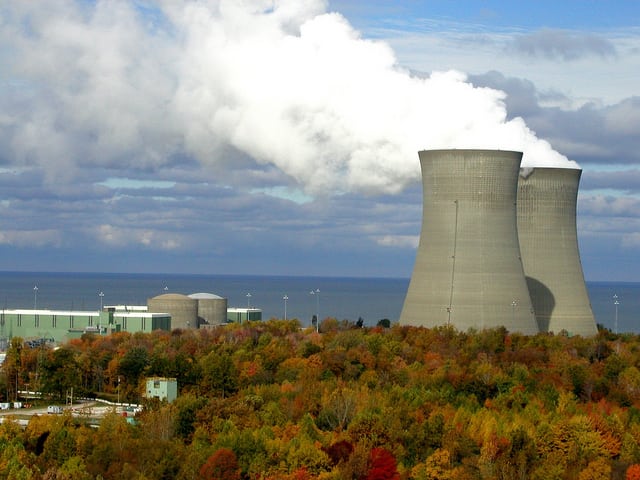
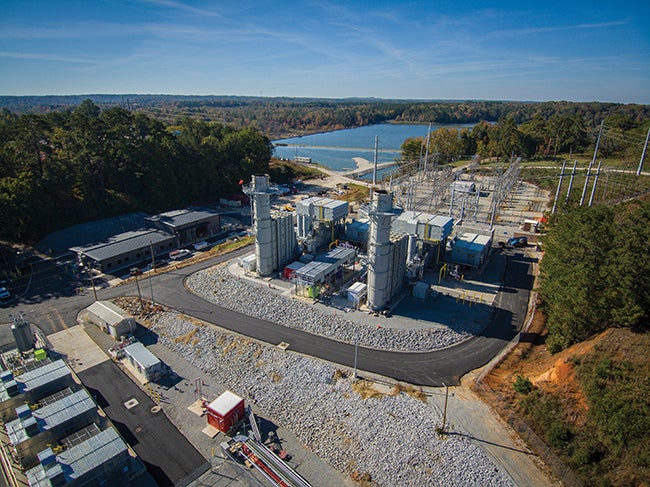
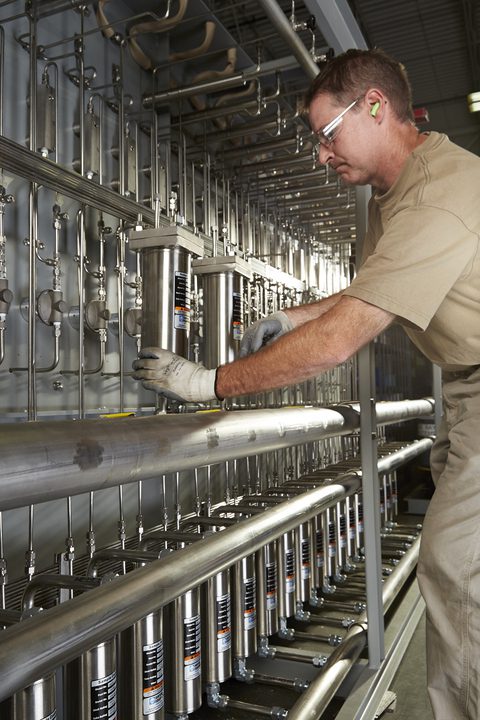
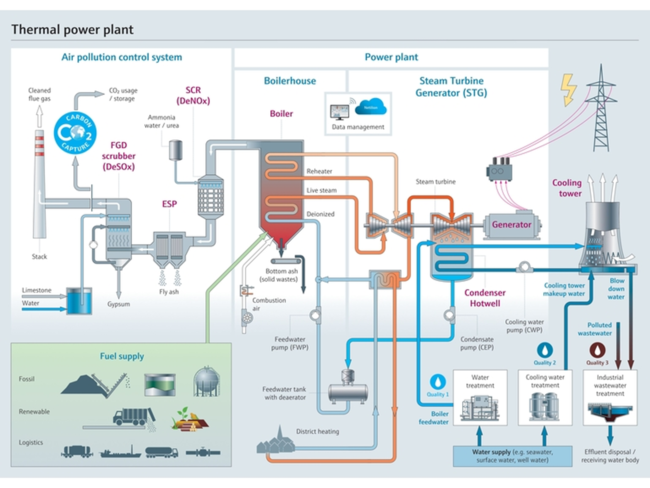
Cooling is water’s foundational role in the power sector, where it serves as the primary heat-transfer fluid in thermal and steam cycles (Figure 1).

In This Issue
Full issueThere are two broad use cases, which differ mainly in what becomes of the water once it has carried heat away from the process. A once-through system draws water from an environmental source—such as a river, lake, or ocean—passes it across the condenser, and returns it to the source, whereas a recirculating design routes water through cooling systems and reuses it many times over, albeit with some small losses.
Different as they are, both depend on a steady supply of makeup water, and both require careful chemistry control to minimize corrosion, scaling, and biofouling, which are the three primary pitfalls of a cooling loop. Continuously monitoring conductivity, pH, and related parameters is critical for keeping circulating water within its target quality windows, and this monitoring and control has three main benefits. First, it extends the service life of heat exchangers, condensers, pumps, and other cooling loop equipment; second, it reduces the volume of treatment chemicals and makeup water that a power producer purchases and consumes; and third, it increases cooling system efficiency.
Often in colder climates, or increasingly as an environmental hedge in warmer climates that experience cold snaps, water is mixed with anti-freeze (typically 10% to 30% glycol) to prevent shutdowns associated with sub-freezing operating conditions. In these applications, conductivity measurement is used to monitor the glycol content, which requires routine replenishment as it decreases over time.
In recirculating towers, conductivity measurement also helps determine when to concentrate dissolved solids to conserve water, and when to blow them down to prevent scale, so that operators can increase water reuse.
Closed-Loop Liquid Cooling in Data Centers
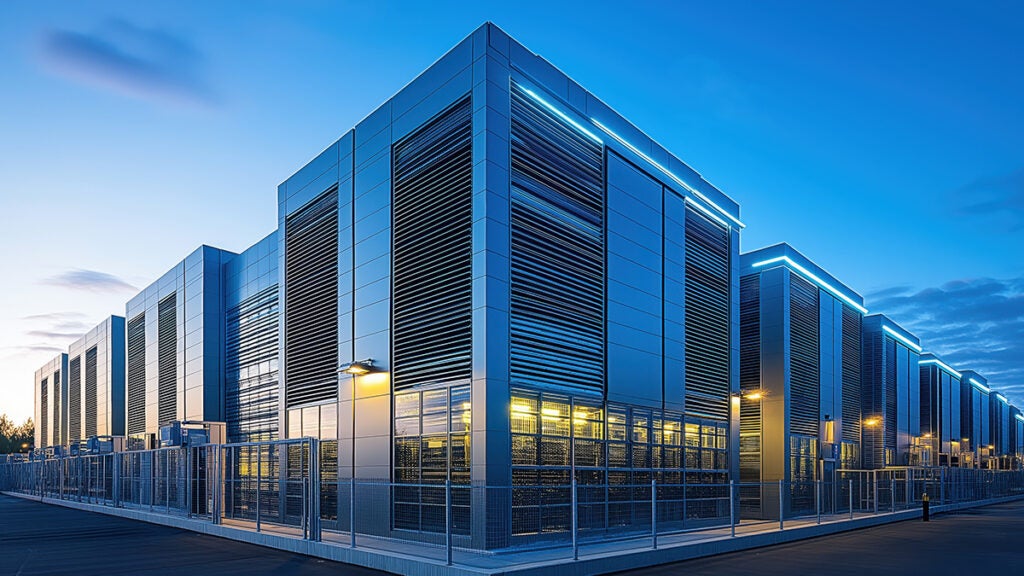
Data centers consume significant amounts of power, and cooling accounts for the largest share of that draw. Cooling system design and efficiency are therefore top priorities to minimize power consumption and operating costs.
Closed-loop systems recirculate the same water—rejecting heat through dry coolers and chillers—with minimal draw on the local water table, since that water is not consumed at a meaningful rate. Typically, only a small polishing loop is needed to top up minor losses from evaporation and leakage. In some extreme cases, however, bacteria growth can trigger system flushing, requiring a new fill. To prevent this worst-case scenario, data centers must monitor water quality to a low parts per million (ppm) level to detect bacteria and shock it before it reaches a critical mass.
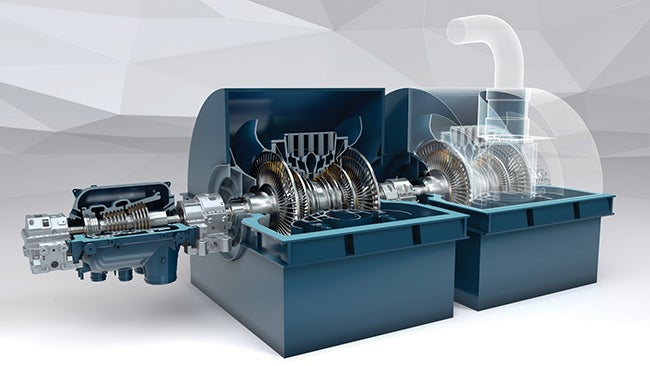
An evaporative system, on the other hand, exposes water to the atmosphere so that evaporation carries heat away, requiring continuous water replenishment (Figure 2).
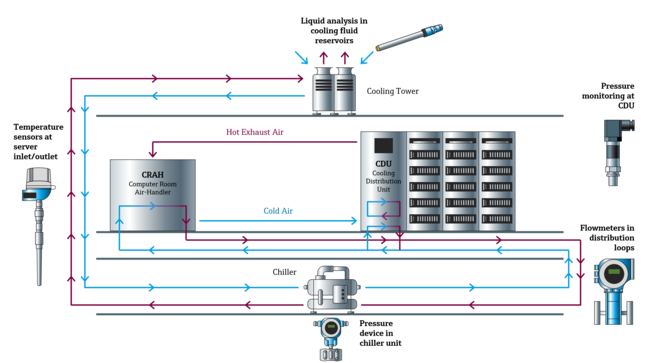
Evaporative cooling has contributed to concerns about data center water consumption, but the issue is more nuanced. Because most large facilities rely heavily on recirculation, per-site water use is often lower than estimates suggest. Even so, aggregate demand from always-on artificial intelligence (AI) workloads can place pressure on local water resources regardless of loop type, especially in drier regions.
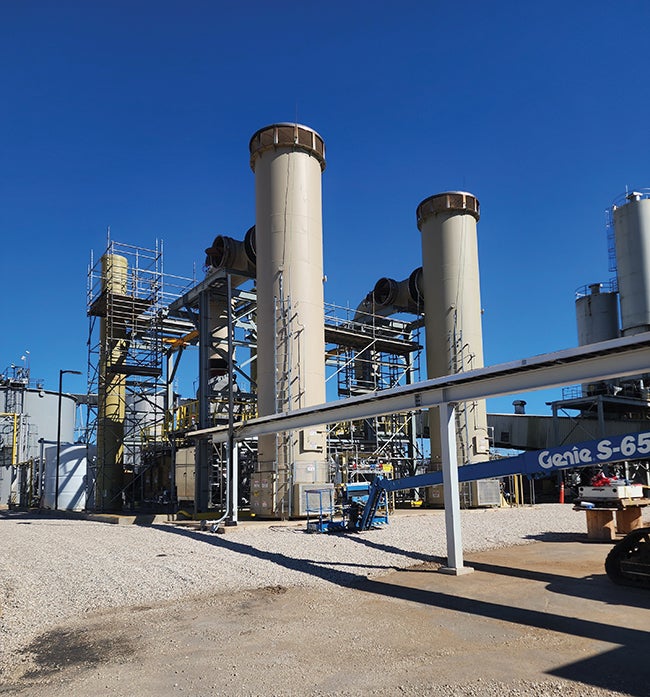
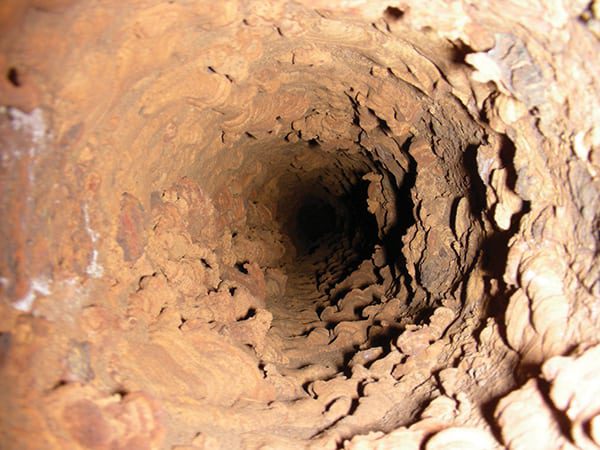
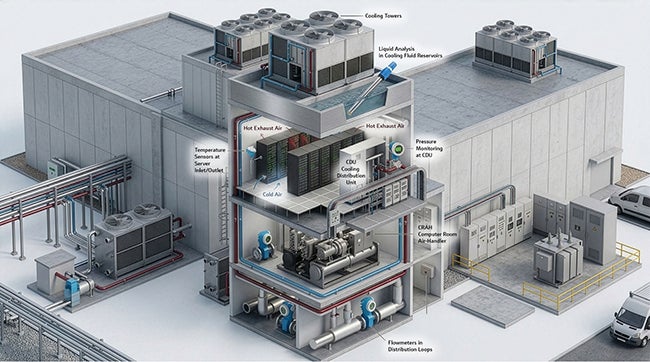
Continuous water-quality monitoring helps keep these loops healthy, guarding against corrosion, scaling, and fouling, while advancing water use efficiency (WUE) metrics that facilities are required to report. Because cleaner loops also transfer heat more effectively, the practice trims the electrical energy consumed by the cooling system as well (Figure 3).
Additionally, leading instrumentation suppliers offer polymerase chain reaction (PCR)–based systems for advanced lab analysis of samples from data center cooling loops, especially for low ppm concentrations of dangerous bacteria such as Cupriavidus gilardii.
Water as a Feedstock for Green Hydrogen
In electrolysis, water is not a coolant, but the raw material, with electricity analogous to fuel. In this process, electricity is applied to split ultrapure water or an electrolyte (water and potassium hydroxide) into hydrogen and oxygen, consuming roughly 9 kilograms of ultrapure water for every kilogram of hydrogen produced. At that ratio, purity directly governs both the efficiency of the electrolyzer stack and how long it will last before performance begins to degrade.
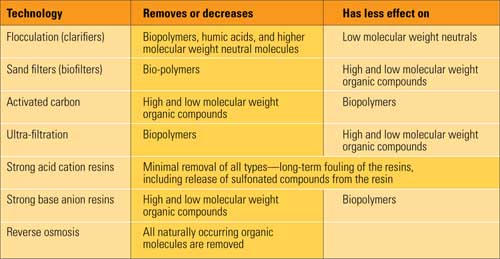
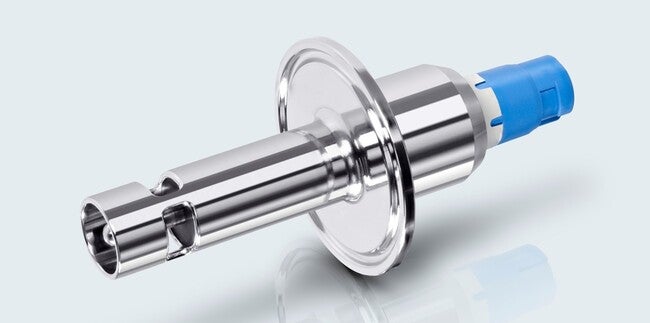
Operators typically watch conductivity most closely because dissolved ions are a telltale sign of contamination that fouls membranes and electrodes. Alkaline electrolyzers typically require feedwater below 1 microsiemens per centimeter (µS/cm), while proton-exchange-membrane (PEM) systems are stricter still, demanding less than 0.1µS/cm (Figure 4).
Because feedwater quality tends to degrade gradually as membranes age and resins exhaust, a continuous conductivity signal reveals far more than periodic laboratory checks. Additionally, monitoring reverse-osmosis (RO) feedwater upstream can provide an early warning to trigger cleaning and membrane regeneration before purity drifts out of specification.
Treating High-Volume Wastewater
Coal-fired power generation uses water as both a working and cooling fluid, but wastewater treatment at the effluent end is one of the most heavily instrumented processes. The combination of large volumes and complex chemistry requires a broad complement of instrumentation to reliably monitor and effectively treat the wastewater to keep discharge within regulatory limits.
The purge from a flue gas desulfurization (FGD) wet scrubber, for example, poses a particular challenge because it is acidic and heavily loaded with total dissolved solids (TDS) and suspended solids (TSS), chlorides, and heavy metals—such as selenium, arsenic, and mercury. Because releasing this sort of stream is tightly governed, there is little margin for error. In the U.S., the Environmental Protection Agency’s (EPA’s) Effluent Limitations Guidelines set the boundaries for discharge, requiring accurate measurement of pH, conductivity, turbidity, and flow at multiple points in the treatment train.
Continuous inline analyzers provide data and assurance that periodic grab samples cannot match because scrubber chemistry can shift quickly, and a single undetected excursion is enough to breach a discharge permit. These continuous measurements steer treatment processes in real time, while generating traceable records that prove compliance when permits come up for review and renewal.
Protecting Steam Cycle Turbines and Boilers
Nowhere in a power plant is water chemistry less forgiving than in a steam cycle—a process common to coal, biomass, waste incineration, nuclear, and combined cycle generation. Feedwater, condensate, and steam are sampled continuously for pH and conductivity monitoring, and more demanding installations add cation (acid) and degassed conductivity, dissolved oxygen, silica, sodium, and more. Maintaining these parameters within tight limits protects turbines, boilers, and heat exchangers from corrosion and deposits that quietly erode efficiency over time and, if left unchecked, can eventually trigger unplanned outages—sometimes catastrophically.
Beyond this protective role, reliable monitoring also supports predictive maintenance efforts, flagging contamination and other undesirable conditions—such as a condenser leak—before the effects propagate throughout the process. The stakes are commercial, in addition to operational and mechanical, because turbine and boiler original equipment manufacturers (OEMs) routinely specify strict water chemistry limits and documented proof to retain coverage under equipment warranties.
To accomplish this and other tasks, producers regularly install a steam and water analysis system (SWAS) with purpose-built panels to condition samples from a process and measure several water quality parameters—including pH, oxidation-reduction potential (ORP), dissolved oxygen, conductivity, turbidity, total organic carbon (TOC), and more. The SWAS parameters are consolidated into an enclosure, often called the wet lab, for continuous steam cycle and quality measurements.
Newer designs have steadily chipped away at traditional maintenance burdens. For example, modern electro-deionization (EDI) cation exchangers eliminate the routine resin replacement required by legacy systems, while a compact panel format shrinks the footprint and simplifies installation. Digital sensors simplify day-to-day monitoring, enabling a single operator to manage an entire system with confidence.
Case Study: Biomass Combined Heat and Power Plant
A recently commissioned biomass combined heat and power (CHP) plant illustrates the SWAS payoff. Its turbine supplier specified a maximum conductivity of 0.2µS/cm to maintain warranty coverage, which left the owner no liberty for approximate measurement. In response, the team commissioned a turnkey SWAS solution that measured conductivity and pH using Endress+Hauser Memosens digital sensors, in addition to silica levels with a Liquiline System CA80SI analyzer, to guard the turbine against deposits (Figure 5).
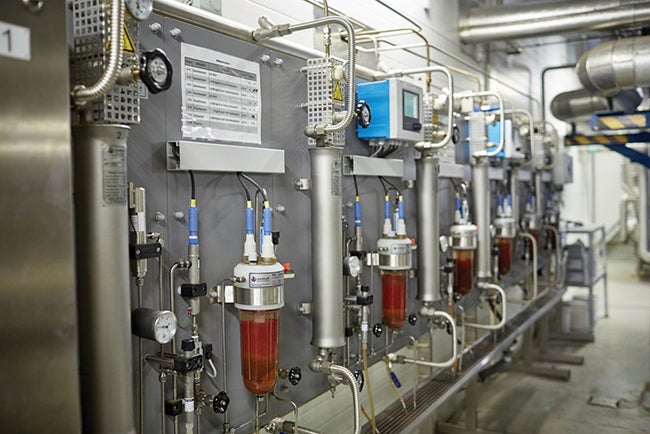
Commissioning took just three days, and the system provided dependable operation with minimal maintenance requirements, along with continuous data logging to document regulatory compliance and preserve the turbine warranty.
Measure to Manage
Across the power value chain—encompassing cooling towers, data center loops, electrolyzers, coal wastewater trains, and steam cycles—water is a strategic input under increasing pressure from scarcity and regulation. The right instrumentation helps plants maximize WUE, reduce power consumption required for cooling, minimize chemical use, curtail costly corrosion and downtime that erode both reliability and operating margins, and generate the records needed to prove performance and compliance.
Backed by proven liquid-analysis technology and expertise from a leading instrumentation supplier, power producers can specify and implement reliable water system solutions to meet the demands of every application.
—Cory Marcon is the national power and energy industry marketing manager for Endress+Hauser USA.