Triveni Turbine validated a complete 60-MW turbine-generator train—not just the turbine—inside its own factory, using a dynamometer to simulate real load conditions before the package ever reached its Middle East site.
Every industrial steam turbine is expected to deliver reliable performance from the moment it enters service. The foundation for reliability is laid during design, engineering analysis, and factory validation. By the time a turbine reaches a power plant, refinery, petrochemical complex, or oil and gas processing facility, engineers must already have confidence that the complete rotating system will perform as intended under demanding operating conditions. Once the machine is commissioned, there is little scope to investigate unexpected dynamic behavior without affecting schedules, production, and operating costs.
This is why factory validation has evolved from being a routine manufacturing milestone into one of the most important stages of turbomachinery engineering. The objective today is not merely to confirm that individual equipment has been manufactured correctly. It is to establish, with measurable engineering evidence, that the complete machine train will operate safely, efficiently, and reliably throughout its intended operating envelope.
Why Full-Train Validation Has Become an Engineering Imperative
The expectations placed on rotating equipment have become considerably more demanding as industrial projects continue to increase in scale. Modern steam turbines operate as part of integrated machine trains comprising the turbine, gearbox, generator, couplings, lubrication systems, and auxiliary equipment. The behavior of one component inevitably influences the performance of the others, making isolated equipment testing insufficient for understanding how the complete system will respond under actual operating conditions.
 |
|
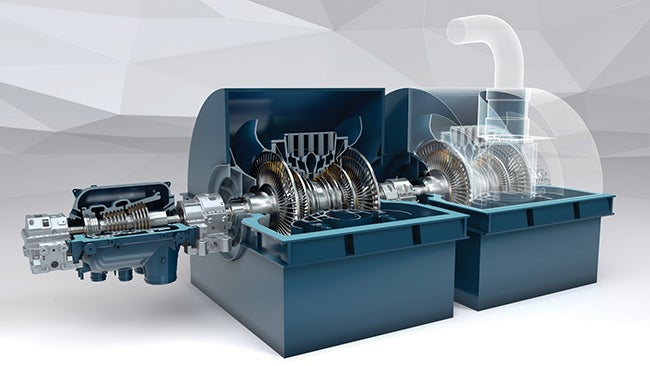
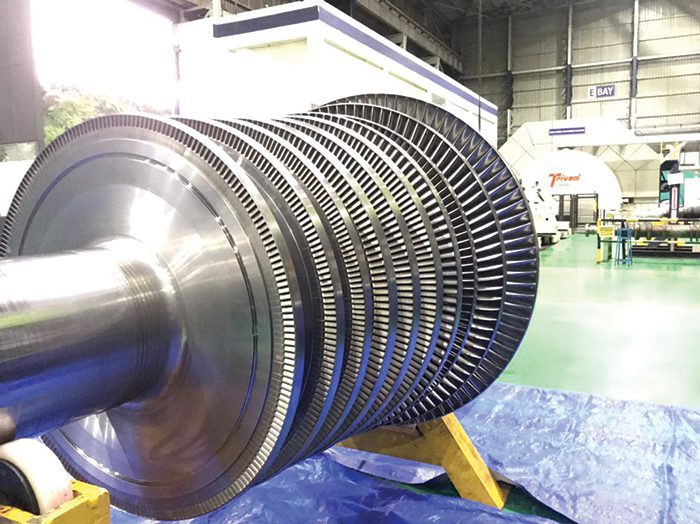
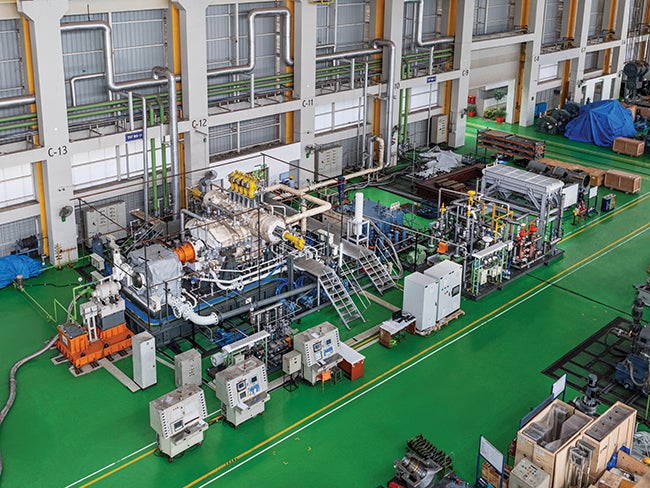
1. Steam turbine assembly and testing facility at Triveni Turbine’s state-of-the-art manufacturing plant. Courtesy: Triveni Turbine Ltd. |
Consequently, the industry is placing greater emphasis on validating the complete rotating train before installation (Figure 1). International standards such as American Petroleum Institute (API) 612 require rigorous evaluation of vibration behavior, mechanical integrity, and rotor dynamics for special-purpose steam turbines used in petroleum, petrochemical, and gas industry services. For projects executed against customer specifications, demonstrating compliance also means providing confidence that the complete machine train has been engineered and validated for dependable field operation.

In This Issue
Full issueIt was against this backdrop that Triveni Turbine Limited undertook the design, manufacture, and shop testing of a 60-MW backpressure steam turbine generator package for a major Middle East oil and gas project. While the turbine rating itself represented a significant engineering undertaking, what distinguished the project was the decision to perform complete train validation within the factory. Instead of testing individual equipment separately, the validation program integrated the steam turbine, gearbox, generator, and dynamometer, enabling engineers to evaluate the behavior of the complete rotating system under conditions closely resembling those expected after site installation. This approach significantly reduced project risk while enhancing customer confidence well before commissioning commenced.
Engineering the Complete Machine Train
Executing a project of this nature required engineers to move beyond conventional equipment design and adopt a systems-level approach to validation. The engineering program therefore began with a comprehensive full-train rotordynamic analysis covering the turbine rotor, gearbox, pinion assembly, and generator. Rather than assessing these components independently, advanced analytical techniques were used to study the behavior of the complete rotating train, evaluating system stability, critical speeds, and dynamic response in accordance with API 612 requirements.
Complementing this work was a detailed torsional rotordynamic assessment, recognizing that the transmission of torque through the integrated shaft train is equally critical to long-term machine reliability. The analytical findings were subsequently validated through part-load testing, providing assurance that the complete turbine-generator package would continue to operate safely and reliably under varying operating conditions rather than only at its rated design point. These analytical studies established the engineering basis upon which the subsequent shop testing program was built.
Solving Complex Engineering Challenges Through Integrated Validation
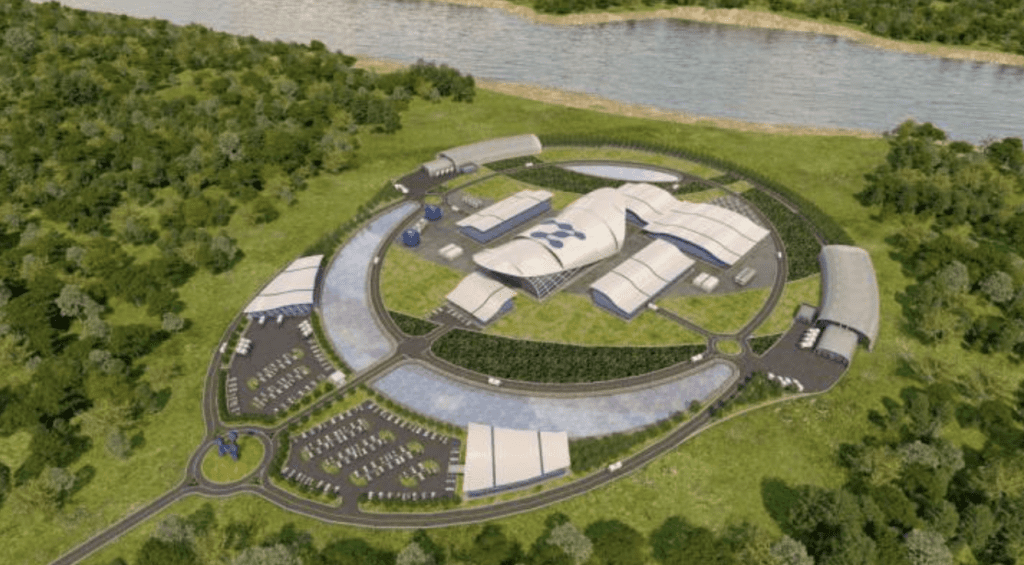
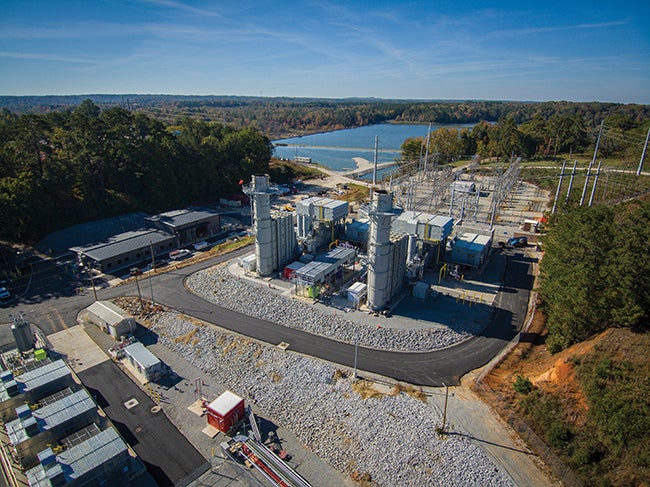
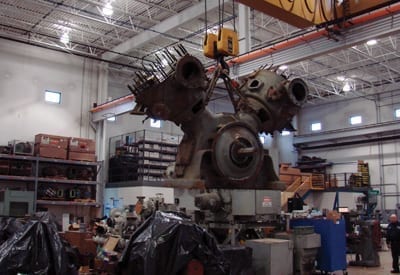
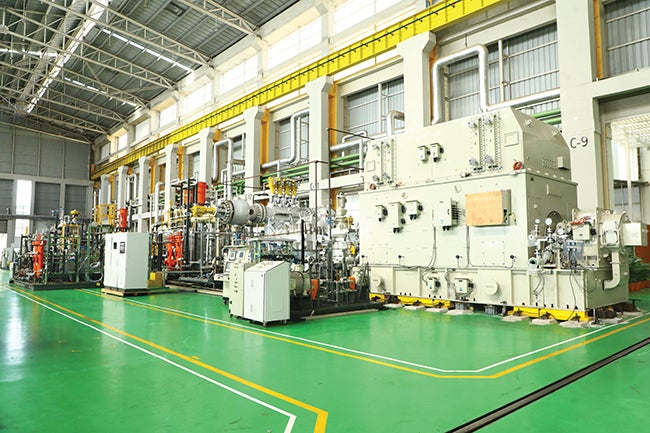
Translating analytical confidence into physical validation required an engineering solution as sophisticated as the machine itself (Figure 2). Unlike conventional shop testing, which typically evaluates standalone equipment, this project demanded an integrated test environment capable of validating the complete rotating train under representative operating conditions—accommodating the large physical footprint of the 60-MW turbine, handling its high volumetric flow requirements, and allowing the steam turbine, gearbox, generator, and dynamometer to function as a single machine train.
 |
|
2. Triveni Turbine’s manufacturing and refurbishment facility at Sompura in Bengaluru, India. Courtesy: Triveni Turbine Ltd. |
This integrated approach turned factory testing into a comprehensive validation exercise. Rather than verifying individual machines in isolation, engineers could observe how the complete rotating system behaved, compare measured performance against analytical predictions, and build confidence in the machine train before it left the shop—reducing technical uncertainty ahead of commissioning.
Maintaining precision alignment across the complete turbine-gearbox-generator train was another critical requirement, since stable alignment underpins acceptable shaft loading, bearing performance, and vibration characteristics. That effort paid off: shaft vibration levels came in below 20 microns, comfortably inside the API 612 acceptance limit—a result of integrating rotor balancing, manufacturing precision, and meticulous assembly practices with the underlying analytical studies.
Supporting the validation program also required dedicated auxiliary systems: a customized lubrication oil system suited to full-train testing, a heavy-duty test foundation built to withstand the dynamic loads generated during testing, and advanced instrumentation for continuous, real-time measurement—allowing the engineering team to compare actual machine behavior against analytical predictions throughout the program.
A dynamometer-based loading arrangement was central to the program, enabling part-load testing of the complete machine train rather than limiting evaluation to no-load conditions. This provided practical verification of the earlier torsional and rotordynamic assessments, and strengthened confidence that the integrated system would perform reliably once commissioned in the field.
From Engineering Validation to Operational Confidence
The comprehensive testing program culminated in the successful completion of the Full-Speed No-Load Mechanical Run Test (MRT) in accordance with API 612 and client requirements. This was followed by successful part-load validation of the complete turbine-generator train using the dynamometer, confirmation of the torsional and rotordynamic performance of the entire rotating system, stable operation under high volumetric flow conditions, and vibration performance maintained within stringent API limits. Collectively, these outcomes confirmed that the engineering objectives established during design had been successfully translated into measurable operating performance.
The significance of these results extends beyond the successful execution of a single project. They demonstrate how advanced engineering analysis, integrated testing methodologies, and comprehensive validation practices can substantially reduce technical uncertainty before equipment reaches site. For project owners, this translates into greater confidence during commissioning, reduced operational risk, and improved assurance that critical rotating equipment will perform as intended from the outset.
The successful execution of this 60-MW backpressure steam turbine-generator package illustrates how full-train shop testing can bridge the gap between analytical design and real-world operation, bringing together rotordynamic analysis, torsional assessment, specialized test infrastructure, and dynamometer-based validation within a single engineering framework, in full compliance with API 612 and client requirements. As industrial facilities continue to demand larger and more complex turbomachinery, this engineering emphasis—validating complete rotating systems rather than individual equipment—is becoming a defining requirement for reliable field performance and reduced commissioning risk.
—S. N. Prasad is Chief Executive Officer of Triveni Turbine Ltd.