Commonwealth Fusion Systems (CFS) announced the company has published five peer-reviewed physics basis papers detailing its work on the group’s ARC fusion power plant. The papers, published in a special edition of the Journal of Plasma Physics, were written collaboratively by a team of world-class physicists, the company said on June 4. CFS said the writings “offer an in-depth examination of the scientific foundations of the ARC power plant and confirm the key physics that’ll enable ARC to continuously deliver 400 megawatts (MW) of net electricity to the grid.”
Alex Creely, chief engineer for ARC Conceptual Design at CFS, and author of a guest editorial in the special issue, said, “In publishing these papers, CFS and our partners have shown that if we build the ARC tokamak and power plant as we intend, it’ll work. We have demonstrated that the design of the ARC fusion power plant has a solid foundation in proven physics; we point out where we will still learn from SPARC; and we show how there is a robust path to deliver 400 MW of clean, firm, baseload power to the grid.”
Massachusetts-based CFS in April became the first U.S. fusion energy company to apply to join a major power grid operator. The company on April 28 said it submitted an application to connect its ARC power plant to PJM Interconnection, the nation’s largest wholesale electricity market.
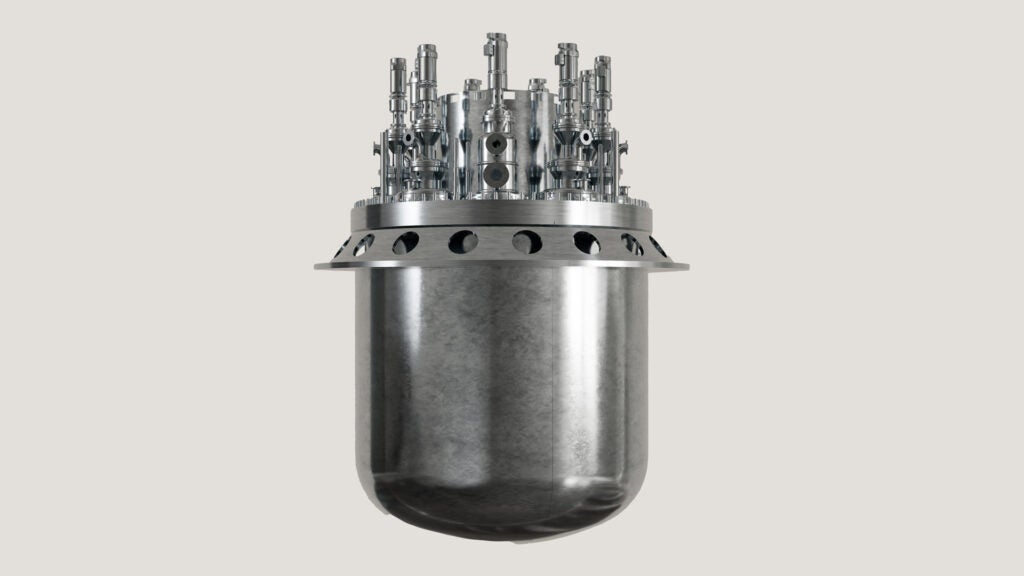
CFS has made several milestone announcements in the past few years. The company in January said it would develop a digital twin of its SPARC fusion machine along with chipmaker NVIDIA and energy technology group Siemens. The group in October of last year reached a milestone with delivery of the first half of the vacuum vessel at the heart of SPARC (derived from “soon as possible ARC”), the group’s tokamak machine, to the company’s facility in Devens, Massachusetts.
The Devens’ campus is home to both the SPARC facility and the company’s magnet factory, where CFS builds the superconducting magnets that are key to the SPARC fusion machine.
CFS earlier this year said it is on track to deliver electricity from fusion energy to the grid in the early 2030s. The power would be generated from the company’s planned 400-MW Fall Line Fusion Power Station (Figures 1 and 2) in Chesterfield County, Virginia.


MIT, Columbia Scientists Among Co-Authors
The papers published in the Journal of Plasma Physics were co-authored by 58 scientists. Most of those are from universities, including the Massachusetts Institute of Technology (MIT), Columbia University, University of California San Diego, KTH Royal Institute of Technology, and Chalmers University of Technology. The papers also include content from the Germany-based Max Planck Institute for Plasma Physics, a global research institute.
CFS on Thursday said these topics are covered in the most recent papers:
- Overview of the physics basis for the ARC fusion power plant.
- Power and particle exhaust for the ARC fusion power plant.
- ARC Disruption Physics and Strategy.
- Performance and Transport in the ARC Tokamak.
- ARC physics basis—magnetohydrodynamics.
The overview describes the overall attributes of the tokamak. It also summarizes the other four papers’ key takeaways in areas such as fusion power production and plasma stability. The company said the accompanying papers look into specific physics topics of the ARC plant (Figure 3), including details on the behavior of the plasma itself, along with the strategy for handling plasma disruptions. It also contains information about how fusion heat will be exhausted through the plasma.
The ARC physics basis papers build on the original seven papers that CFS published on SPARC in 2020. The overview paper describing SPARC from that set is still the Journal of Plasma Physics’ most-read research paper.
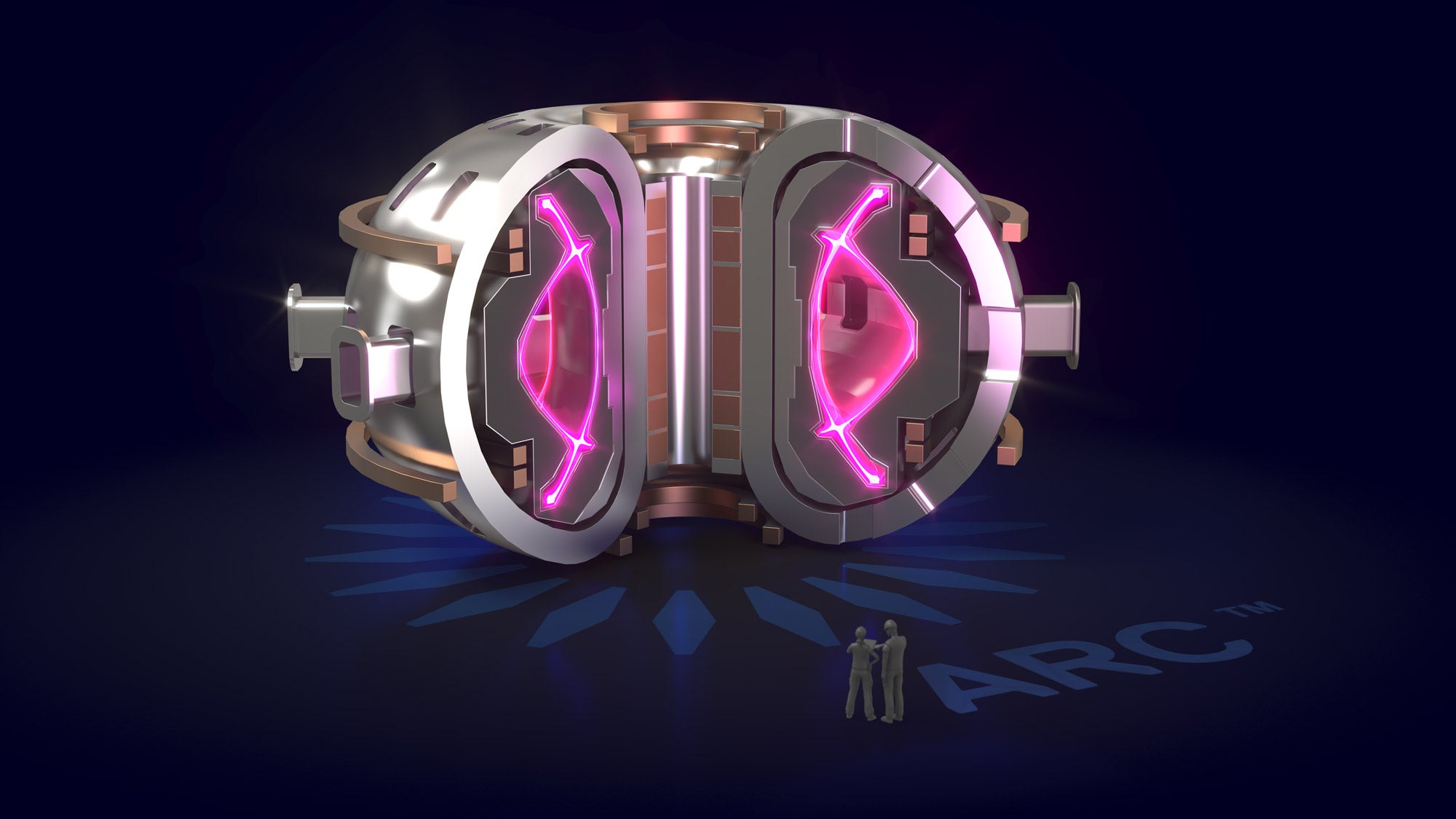
The company on Thursday wrote that its team “used advanced computational tools to combine decades of empirical research conducted on tokamaks worldwide in a physics simulation framework with engineering and commercial priorities. From these simulations, the team determined that the ARC plant will be able to produce about 1.1 gigawatts (GW) of fusion power that will then be converted into 400 MW of continuous net electricity.”
“The papers validate and de-risk the approach to commercial fusion we’ve taken, and increase our confidence that there is a scientifically robust path to putting electricity on the grid in the early 2030s,” said Bob Mumgaard, CEO and co-founder of CFS. Mumgaard was the subject of a POWER Interview in 2020. “Peer-reviewed research sets the standard for where and how to invest valuable resources in fusion. The ARC physics basis papers represent a step forward in the depth and breadth of tokamak power plant analysis. They take the challenges seriously, identify where the risks are, and show us how to use SPARC to finalize the ARC plant’s design.” Mumgaard also was a guest on the POWER Podcast in October 2020.
Public-Private Partnerships
CFS wrote that the company’s work is “supported by a growing set of public-private partnerships and programs, including the U.S. Department of Energy’s Milestone-Based Fusion Development Program. Publishing these peer-reviewed papers demonstrates how the ARC power plant agrees with known physics and how CFS and its partners have developed the tools to further refine its design.”
“We’re excited to start running SPARC so we can put the finishing touches on the ARC design, taking advantage of SPARC’s operational similarity to the power plant,” said Brandon Sorbom, co-founder and chief science officer of CFS.
CFS, spun out of the Massachusetts Institute of Technology in 2018, is among several companies featured in POWER’s “Groundbreakers” Special Report published in February, which included information about groups active in the fusion sector. Technology giant Google last year signed a power purchase agreement with CFS to buy power from the planned fusion power plant in Virginia.
—Darrell Proctor is a senior editor for POWER.