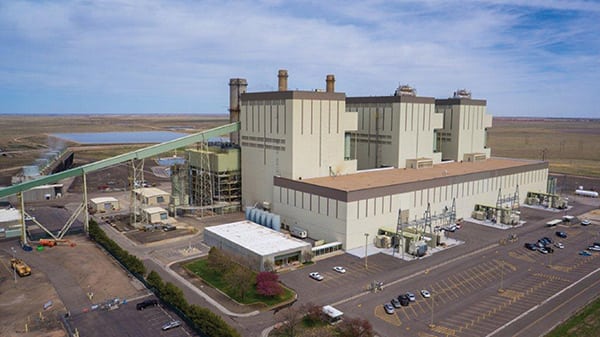
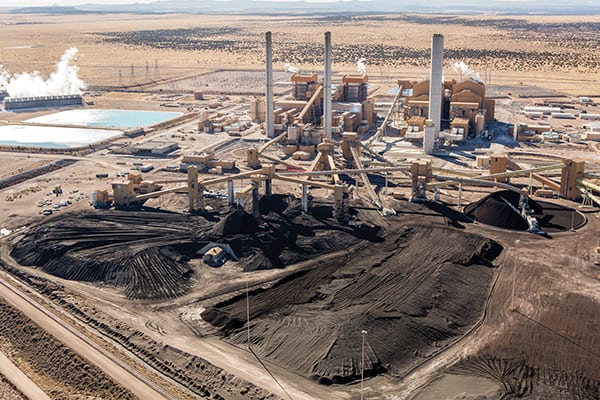
I have a confession to make. When I heard that Big Brown had been selected as the PRB Coal Users’ Group (PRBCUG) 2008 Plant of the Year, my first thoughts were of the horse, said to be named in honor of the package shipping company UPS, that was favored to become the first Triple Crown winner in 30 years–rather than the well-known Luminant steam generating station with the same name. This year, though Big Brown the horse finished last at Belmont, Luminant’s Big Brown Plant and its staff are the big winners, as evidenced by their industry leadership in Powder River Basin (PRB) coal combustion and their enviable performance and safety record.
Formal presentation of the PRBCUG Plant of the Year award to the staff of Big Brown Plant was made during the Power Plant Awards Banquet the night before the official start of this year’s ELECTRIC POWER Conference & Exhibition in Baltimore, Md. Bob Taylor, PRBCUG chairman, made the presentation to Big Brown Director of Generation Freeman Jarrell and Lignite Superintendent Alan Riddle. “This award is for all of Big Brown’s talented and committed employees,” Jarrell said. “We have worked extremely hard and diligently over the years to continually find ways to do our work better, but we have done so safely and efficiently, as well.”
Second time’s a charm
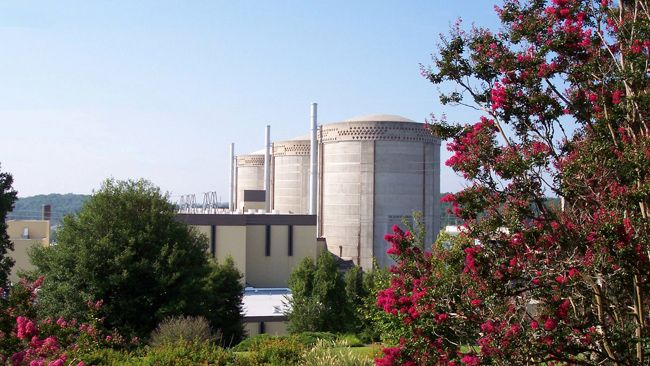
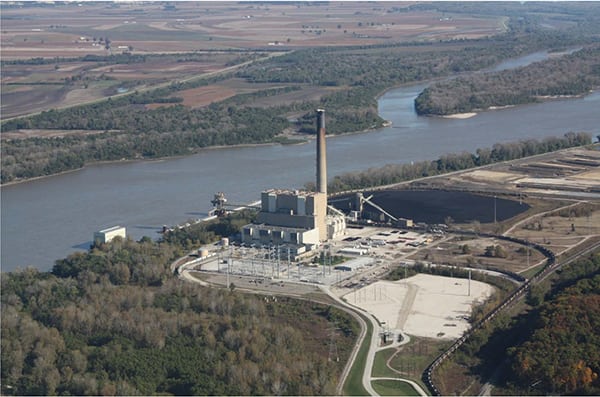
Located 90 miles south of Dallas, Big Brown the power plant gets its moniker from Luminant’s practice of naming plants after local natural features, in this case Big Brown Creek. Big Brown was the first large-scale, lignite-fueled power plant for Luminant and the state of Texas (Figure 1). It has two supercritical units with a total capacity of 1,190 MW (net). Units 1 and 2 are identically rated at 595 MW, powered by a Combustion Engineering (now Alstom Power) boiler and a Westinghouse turbine-generator. Unit 1 began commercial service in 1971; Unit 2 followed a year later. Approximately 145 employees work at the site.
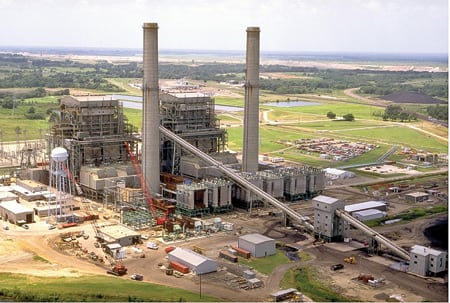
1. Thoroughbred. Luminant’s Big Brown Plant currently burns a mix of 42% PRB coal and 58% lignite. The PRB portion is slated to grow to 60% in the coming years. Courtesy: Luminant
Achieving such high peer recognition for a plant and its staff required a mix of tenacity and some salesmanship by Riddle, who was charged with preparing the self-evaluation study that is part of the award vetting process. Big Brown’s first nomination, submitted in 2006, made it to the final cut but fell short of first place. The PRBCUG awards committee provided constructive feedback by suggesting specific improvements in areas such as the plant’s dust-handling and PRB coal-handling practices that would improve its chances of future selection. Big Brown’s staff took ownership of these recommendations and began planning how to implement another round of plant improvements.
A year later, the plant submitted a second application that added many more successes to an already long list of accomplishments. Big Brown’s staff highlighted the considerable improvements made in the past year, noting that many of the upgrades were based on suggestions made by the inspection team the year before. The evaluation team agreed that these improvements demonstrated that Big Brown was as serious about continuous improvement to its facilities as it was devoted to personnel safety. Committee members tell me the plant’s improvements over the past year made selection of Big Brown an easy decision.
According to Jarrell, “Safety is our number one priority at Big Brown,” and the numbers confirm his claim. The plant has not experienced a lost-time accident in over eight years, covering more than 2.6 million man-hours. In fact, only two injuries in 2006 and only three in 2007 required first aid. I suspect most of us had more cuts and bruises from mowing the yard and doing routine house maintenance than Big Brown’s entire staff experienced.
Big Brown’s operating stats also helped seal the deal with the PRBCUG committee. Lignite is a tough fuel to burn and typically results in much more boiler and auxiliary system maintenance than is required in plants burning hard, Eastern coals. In spite of this challenge, Big Brown sets a high standard with a remarkable operating record over the past several years. From 2005 to 2007 the plant had an average equivalent forced outage rate (EFOR) of 3.7%, an equivalent availability factor (EAF) of 92.9%, and a capacity factor of 83.4%. I know many managers of gas-fired combined-cycle plants who would eagerly swap stats with Big Brown.
Improving fuel quality
PRB coal was introduced to the Big Brown fuel mix to help even out and improve overall fuel quality. The plant had burned locally mined lignite exclusively for its first 28 years of operation (see table). But production was decreasing as the mine was fast approaching the end of its projected life span. In preparation for the end of its local supply, Luminant elected to begin blending PRB coal with lignite in 2000 by investing in upgraded railroad tracks and fuel-handling facilities to handle the PRB coal.

Big Brown’s fuel properties. Mixing PRB coal with lignite has improved the overall fuel mix properties. Source: Luminant
PRB usage slowly increased through 2005, when its use spiked to where it is today: 42%. That represents 2.23 million tons of PRB coal burned in 2007. The plant expects PRB coal usage to peak at around 60% by about 2012.
Prior to blending PRB coal with lignite, Big Brown’s two units were capacity limited because of the lower lignite quality. The ability to regain lost capacity and reduce emissions was sufficient to justify the additional cost and complexity of handling two fuels on-site.
What is unique at Big Brown is how PRB coal is used. Normally, PRB coal causes an increase in boiler slagging and fouling due to high levels of ash. However, a mixture of PRB coal and lignite actually reduces the fuel ash content, results in more volatile matter, lowers sulfur content, and increases the higher heating value when compared to firing lignite alone. At plants that have switched from an Eastern bituminous coal to PRB coal, the change has usually been a step down in fuel quality, but at Big Brown, adding PRB coal to the mix stepped up the quality of fuel fed to the boiler.
The firebox size and convection surface tube spacing of a boiler designed to burn lignite are much larger than for a boiler designed for an Eastern bituminous coal. This fact enabled Big Brown to avoid significant boiler tube changes to accommodate increased percentages of PRB coal in its fuel mix.
Slagging decreased significantly when Alstom Power’s separated overfire air, low-NOx burners were installed in both boilers in 2001. Also, the frequency of operating wall blowers and long retracts increased as more PRB coal was being burned. During the spring 2007 Unit 1 outage, an intelligent sootblowing system was installed in order to optimize the sequencing of operating wall blowers and long retracts. A similar system is under consideration for installation on Unit 2 next year.
Risk and rewards
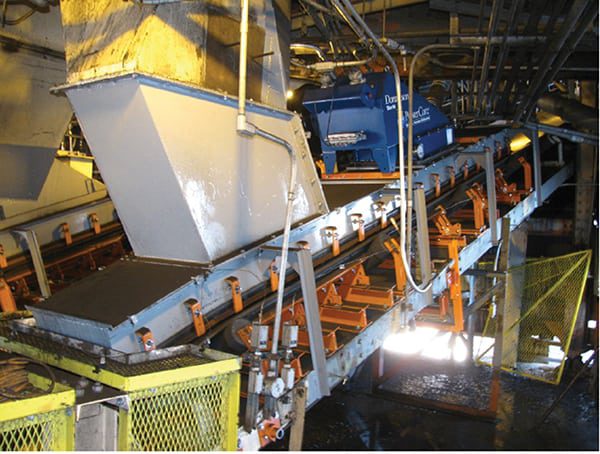
Blending fuels does have its downside. In Big Brown’s case, the fuel yard was not designed to handle and mix two completely different fuels. It was designed to receive Texas lignite from draglines and bottom-dump haulers moving the coal directly from the mine, to a truck hopper, through secondary crushers, and then to a transfer tower above a surge bin. Adding PRB coal to the mix meant constructing a rail spur and unloading facilities at a remote unloading facility, moving the fuel to the plant with haulers, and then dumping it into a truck hopper and forwarding it to the same surge bin via a stacker, stackout tube, and reclaimer (Figure 2). This approach allows for blending of the fuels by alternating deliveries of lignite and PRB coal and permitting the fuels to mix at stackout piles and surge bins before being loaded into the storage silos.
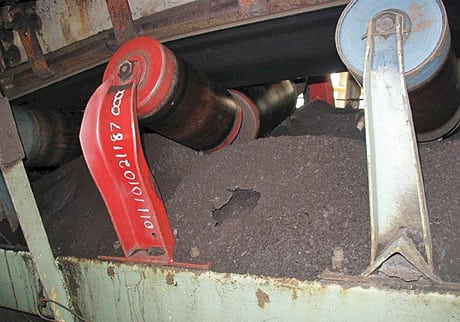
2. Dangerous dust. Prior to the fuel system upgrades described in this article, fuel leakage around the conveyor skirts at the transfer point between two main conveyors that fill the silos was evident. This photo was taken during a plant audit in 2005. Courtesy: Luminant
A comprehensive audit of the entire facility in 2005 resulted in a prioritized “to-do” list that passed muster with Luminant’s capital budget committee and was quickly implemented by plant staff. Larger projects, like the fuel-handling system upgrades, were turned over to Luminant’s engineering department to manage. An updated safety training program on PRB coal readiness and hazard recognition was also completed by plant staff in late 2006. The improvement projects completed since 2005, organized by function, include those that follow.
Fuel-handling upgrades. Many specific hardware upgrades were made since 2005 to improve the safety of handling PRB coal by containing the fuel on belts and in chutes. For example, one of the problem areas identified was at the transfer points of several conveyors, where fuel leaks were a potential hazard. One of the worst-offending locations was the transfer point where cross-conveyors from the common transfer tower fed onto the conveyor for the tripper cars, which fill the boiler silos. The staff teamed with Benetech to install InteliFlo chutes (a high-efficiency loading system) at the north and south tripper houses on Unit 1. It was Benetech’s first installation of its InteliFlo technology on a lignite-fired plant (Figure 3).
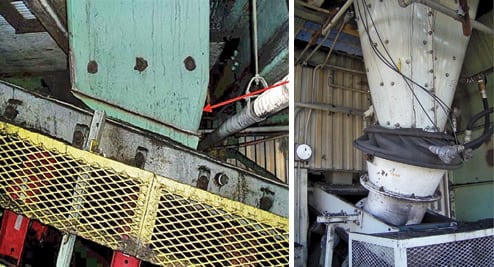
3. Tripper hazard. One problem area identified was the transfer point where plant cross-conveyors fed the conveyors for the tripper cars, filling the silos with fuel. During the spring 2007 outage, a high-efficiency loading system was installed on Unit 1 at this transfer point (red arrow) to eliminate the problem. Before (left) and after (right) photos show the modification at the head box where conveyor 7 feeds the InteliFlo chute that directs fuel onto conveyor 8. Courtesy: Luminant
Post-installation pluggage problems were experienced when attempting to run with the wet fuel, but the problems were quickly solved by adding larger access doors and installing compressed air injection nozzles to fight fuel buildup. Since these improvements, the systems have been very effective and have reduced spillage in these areas (Figure 4).

4. Blow your plugs. After the new transfer chute was installed (Figure 3), plugging by wet fuel at the top of the transfer point (red arrow) was a problem (left). The solution was adding larger access doors and installing compressed air injection nozzles to eliminate fuel buildup (right). The system has been very effective since the upgrade was installed. Courtesy: Luminant
Dust control upgrades. Perhaps the biggest challenge presented by the increased use of PRB coal was an increase in fines, dusting, and volatile matter. Keeping a tight rein on the fines was an expensive, but necessary, proposition. As an example, one of the first upgrades to the fuel-handling system when PRB coal was initially delivered was to add a telescopic chute in the fuel yard to minimize dusting when stacking coal (Figure 5).
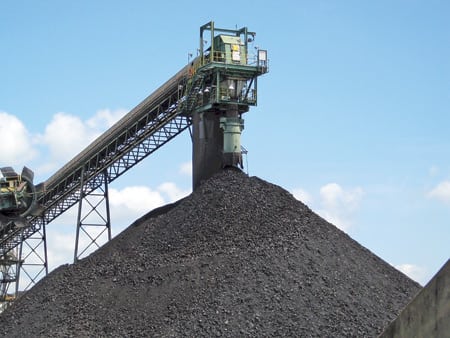
5. Capture fugitive dust. An enclosed lowering tube was added to the fuel yard’s stackout system to reduce airborne dust. A sensor on the end of the chute adjusts the chute length based on the height of the coal pile to reduce fugitive dust emissions. Courtesy: Luminant
Another recognized opportunity was the importance of keeping dust collectors in service with the dustier PRB coal, especially in the tripper houses. The existing equipment was outdated and very maintenance-intensive. In spring 2007, plant staff replaced both Unit 1 tripper dust collectors with new-technology collectors, which improved the collection efficiency in the tripper houses as well as the silo venting process (Figure 6). American Air Filter RotoClone collectors mix the dust with water and drain it to the lignite discharge pond. Other dust collectors on this unit send the dust back to the belt or surge bin in the system.

6. High-maintenance house. Existing dust collectors in the tripper houses were outdated and maintenance-intensive (left). An improved dust collection system was installed in the south tripper house on Unit 1 (right). Courtesy: Luminant
Containment upgrades. Big Brown also improved coal containment in its fuel-handling systems. New access doors were installed at all transfer points and feeder locations, which reduced spillage problems. In addition, numerous impact roller beds and skirting systems were replaced. New skirting that rolls under the belt was added at transfer points. The key objective was to update the systems to ensure that fuel and dust stay contained within the fuel-transfer and -handling enclosures rather than covering the floor or equipment, where it is a safety hazard (Figure 7).
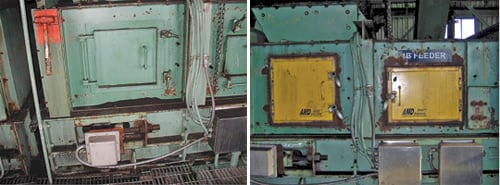
7. Close the door. New access doors at all feeder locations in the fuel-handling system were installed to reduce spillage and improve housekeeping. As an example, these photos show coal spillage before (left) and after (right) at the 4B feeder, which feeds 2B secondary crusher. Courtesy: Luminant
Dust suppression. Dust suppression systems go hand-in-glove with the plant’s dust collection systems. A foam suppression system was employed in multiple critical locations, starting at the point where the mine haulers dump coal into the primary crushers (Figure 8).
A series of compressed air nozzles designed to provide short bursts of air in order to break up fuel and dust in these transfer points was also added to reduce fuel buildup at critical transfer points in the system. They have proven to be very effective in reducing plugging.
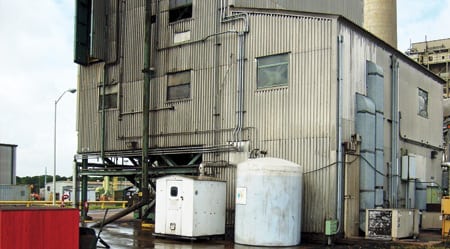
8. Positive dust protection. A foam dust suppression system is employed in multiple locations in the fuel-handling system to limit fugitive dust problems at feeders, crushers, and transfer points. This is one example of several similar installations around the plant. Courtesy: Luminant
Another dust suppression method used by Big Brown is injecting dust suppression chemicals beginning at the primary crushers, where all stacked-out fuel is processed, before fuel is sent to the plant. Moreover, foam dust suppression systems are used at various points in the system downstream. Dust collectors are used in the transfer tower buildings, secondary crusher house, and tripper houses.
Inevitably, folks ask how much chemical is used. In 2006 the plant burned a total of 6,431,000 tons of coal (lignite and PRB) that required 31,459 gallons of Benetech BT-105 dust suppression chemicals. This equals approximately 0.005 gallon/ton—the same rate as was required in 2005.
Inspect fire sources
Big Brown is inspected twice per year by Luminant risk management staff for fire hazards. Findings are documented by photos and a comprehensive management report and are followed by employee briefings of the results at monthly safety meetings. An effective training approach has been to report not only the violations (typically documented in a photograph) but also what the plant staff is doing right. Any deficiency is deemed a safety problem and is treated with high priority.
The Big Brown fire brigade is trained and equipped to be first responders to any fire-fighting or rescue situation. There are currently 40 members in the brigade. The plant has a fire truck equipped with proper equipment needed for response. The brigade trains quarterly and occasionally teams with the city of Fairfield fire department during its training efforts.
Housekeeping is everyone’s responsibility
Big Brown began an initiative in 2006 to increase the accountability of production crews for housekeeping chores. Each area of the fuel yard and power block was assigned to one of the four production crews. That crew is responsible for identifying fuel leaks, making sure all tools and hoses are in their proper locations, and ensuring that any unnecessary items are removed from the area. Quarterly audits are conducted by plant management and crew members to assess the effectiveness of housekeeping efforts. Big Brown calls these the 5S audits: sort, straighten, sanitize, standardize, sustain.
Often the best ideas for how to be more productive will originate from plant staff suggestions. One of these ideas, conceived and implemented by the production staff, uses a water cannon to clean an area where washdown is a regular job assignment. This idea has reduced the time required to clean up the area by more than half (Figure 9).
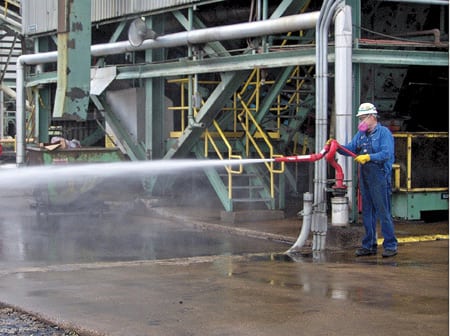
9. Target practice. A water cannon is used in an area that collects coal dust to provide cleaning in half the time that was previously required. Courtesy: Luminant
Congratulations from the editorial staff of POWER to the management and staff of Luminant’s Big Brown Plant for being chosen as the 2008 PRBCUG Plant of the Year! For further information on Big Brown or the plant improvement projects outlined in this article, please contact Brett Amheiser, production manager (brett.amheiser@luminant.com or 903-389-6050). Additional information on the PRB Coal Users’ Group and its awards program is available at www.prbcoals.com.