
James Thurber once said that it is "easier to ask some of the questions than to come up with all the answers." As a magazine editor, I get to ask lots of questions and make plenty of suggestions. Not everyone likes my suggestions, but I trust the readers of POWER to make their own studied decisions on the energy issues facing our country.
That’s my approach when I’m offered the opportunity to speak at various power industry events. Last month alone, I was honored to give the keynote address at the ELECTRIC POWER Conference & Exhibition and another keynote the next week at a controls supplier’s annual meeting. Then, I put on my "industry expert" hat and debated a Sierra Club representative on CNBC one afternoon. Each was a unique experience, where I learned perhaps as much as the listeners. The cowardly (e-mailed) death threat that the TV interview generated must mean that I’ve made it to the big time. (Hi, mom.)
Calculate the slope
The point of each presentation was to challenge listeners to critically consider how the industry should respond to America’s growth in electricity demand, projected at about 2% a year over the next 15 years. Do the math, and you’ll find that 2% growth will require about 20,000 MW of net new capacity annually just to keep the lights on. The current build rate, estimated by the EIA at about 14,500 MW for 2006, means we are literally behind the power curve. Falling behind is already taking its toll: Last summer, all independent system operators and regional transmission organizations experienced new peak system demand, and reserve margins are spiraling lower every year.
I asked each of my audiences to consider which technologies will be available to fill the 20,000 MW/year gap. The options:
- Build another generation of nuclear plants (an option now acceptable to some former opponents). Existing nukes now meet 20% of U.S. power needs. But new nukes aren’t expected to come on-line until 2015 at the earliest. Nuclear capacity will need to grow at 4,000 MW a year just to maintain its 20% share. So, in the short run, the new nuclear build rate must accelerate just to maintain its position.
- Rethink our reliance on natural gas–fired capacity for peaking needs. Gas also has a 20% share of the U.S. supply mix, which it should maintain over the next few years. But gas reserves are dropping, well decline rates are steeper than ever, and pipeline capacity is fully committed. Canada, our largest foreign supplier, will export 1 billion cubic feet (Bcf) less gas this year than last year. Shortages of gas, including that of imported liquefied natural gas (LNG), will limit long-term growth of gas-fired plants within a few years.
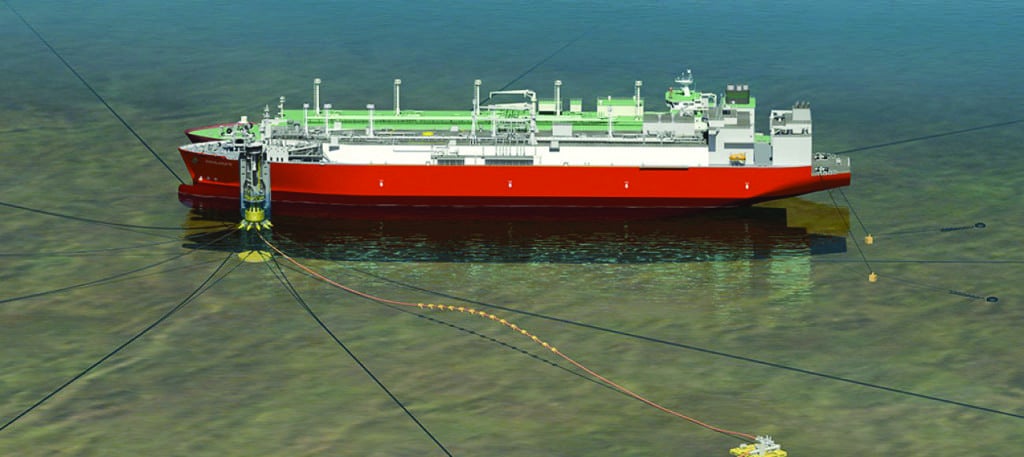
- Stop counting LNG as a bird in the hand. Many pundits are praising the current 2.25 Bcf per year of LNG imports. But Governor Schwarzenegger terminated a new offshore terminal 20 miles from Oxnard, and Senator Ted Kennedy and his cronies have introduced a bill to halt development of a FERC-approved LNG terminal in Fall River, Mass. The U.S. Energy Information Administration estimates that imported LNG could account for 21% of our total natural gas supply by 2025—that is, assuming some new terminals don’t succumb to NIMBY syndrome.
- Realize the limitations of wind capacity. I know it’s growing by 2,500 MW a year and will continue to do so if turbine makers ramp up production and Congress renews the federal production tax credit. Wind is good for intermittent megawatt-hours, but you can’t rely on it during peak demand periods.
Find the remainder
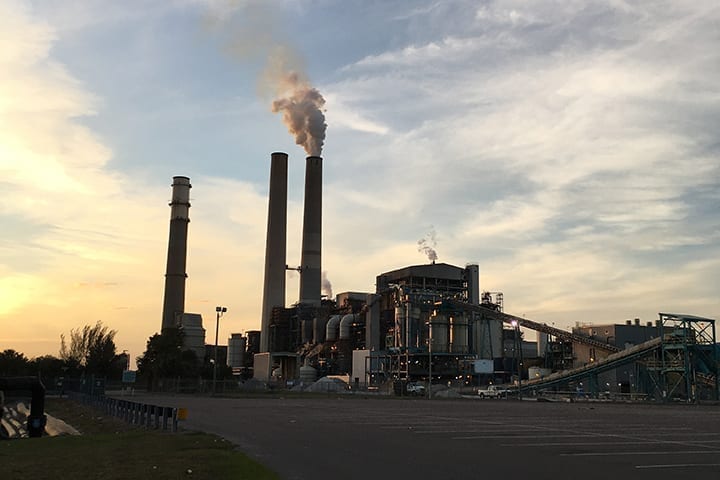
So, what’s left? The short answer is that domestic coal will continue to fuel 50% of U.S. electricity production for many years to come. There are 200 years of coal reserves in the ground, and technologies exist for burning it cleanly. Some say that because climate change legislation is just around the corner we need to slow coal plant development. I say just the opposite: Now is the time to accelerate it, with demand patterns clear.
The issue isn’t whether, but how much more coal we’ll be burning. Time isn’t on our side. It took a decade for Congress to debate and draft the 1990 Clean Air Act Amendments. Because carbon control rules will affect all segments of the economy, they’ll be an order of magnitude more challenging. I don’t expect a well-thought-out legislative proposal that won’t strangle our economic growth for some years. Waiting for Congress to act is just not an option for utility executives charged with making electricity reliable and affordable.
Imaginary numbers
My debate partner on CNBC promoted efficiency improvements and energy conservation as ways to curb our electricity consumption. He is partially right but completely wrong, if that makes any sense. Last year, I replaced my heat pump with the least costly of the available 14 SEER units. Higher-efficiency options did not have a reasonable payback. However, for most, the initial cost will continue to be the biggest driver of consumers’ energy behavior, despite minor rebates and tax incentives.
As for energy conservation, I consider it a euphemism for "going without," something no one wants to do. Energy, in all its forms, is still a bargain, and its price isn’t high enough to change consumption patterns engrained over several generations.
California has rebate programs that encourage the purchase of new, high-efficiency refrigerators, freezers, and other major appliances to help reduce electricity demand. Thousands have responded to the rebates, but many of them just wheeled that old refrigerator into the garage and use it to keep an extra six-pack cold. Who even thinks about energy consumption when buying a new flat-screen TV? Changing human nature will be the biggest challenge faced by preachers of conservation.
I’m done. Now where did I leave my remote control?
—Dr. Robert Peltier, PE Editor-in-Chief