
POWER
-
 Wind
WindTop Plants: Hywind Floating Wind Turbine, North Sea, Norway
In June, the 2.3-MW Hywind facility, the world’s first large-scale floating wind turbine, was towed to a North Sea location with a water depth of about 220 meters (722 feet) and began operation. Over the next two years this turbine will be subjected to strong wind and waves in a harsh ocean environment in an effort to thoroughly test the innovative technology.
-
 Waste to Energy
Top Plants: Rio Bravo Rocklin Power Station, Lincoln, California
By 2008, the 19-year-old wood-fired Rio Bravo Rocklin Power Station’s operating performance had been significantly degraded by boiler erosion and corrosion caused by (among many other problems) poor fuel. After much consideration, the plant owners elected to invest in a comprehensive upgrade to restore the plant to its as-built performance. Today, the plant operates very reliably. A newly implemented predictive maintenance program should continue to drive down operating costs and further reduce the number of forced outages.
-
Geothermal
The Future of Geothermal
(Web supplement to "Assessing the Earthquake Risk of Enhanced Geothermal Systems.") The future of geothermal energy will be driven by six primary technologies, but each will pose its own challenges.
-
-
News
Argentina to Begin Commercial Operation of New Nuke by 2010
Argentina has set out to complete Atucha II, a nuclear reactor it started building in 1981 and abandoned when it was 81% complete, owing to financial problems. If all goes according to plan, the country’s third reactor could go online by 2011—some 25 years behind schedule.
-
 Solar
SolarThe Power of Light: U.S. Solar Energy Trends
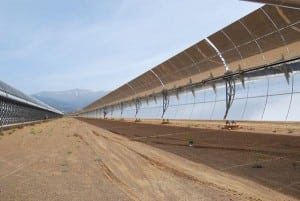
For decades, the solar energy industry has struggled to become cost-competitive with other sources of power generation. Recent technology innovations and creative ways of installing solar generation are beginning to enable solar power to increase its share of the electricity market.
-
 News
NewsLargest Wind Turbine to Be Built in the UK
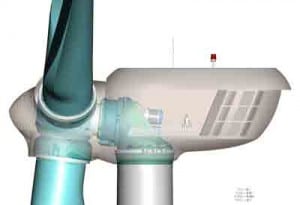
A £4.4 million grant by the UK’s Department of Energy and Climate Change (DECC) this September to Clipper Windpower’s Britannia project kicked up a whirlwind of interest in the supersized wind turbine—and others being developed around the world.
-
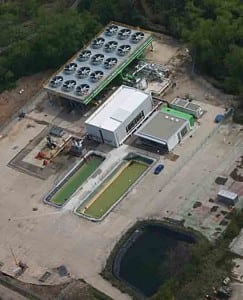 Geothermal
Assessing the Earthquake Risk of Enhanced Geothermal Systems
Enhanced geothermal systems (EGS) deliberately induce seismicity — earthquakes — in order to access hot, subsurface rocks for use in geothermal power generation. Recent quakes around the world have frightened those living near EGS sites and sparked controversy over the technique. We asked experts to provide EGS technical details and to evaluate the seismic risk the process poses.
-
News
Coal Seam Gas Poised to Explode in Australia
Anglo Coal, one of Australia’s coal mining companies this September opened a 45.6-MW power plant at its Moranbah North mine in northeast Queensland that captures methane-rich coal mine gas and uses it as a fuel to generate power instead of venting it into the air.
-
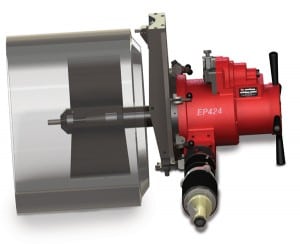 News
NewsEnd-Prep Machine Tool
The new Wachs EP 424 with the new Speed Prep feed system is a precision I.D.-mount end-prep machine tool designed to bevel, compound-bevel, J-prep, face, and counterbore pipe, fittings, and valves. The system uses a new Wachs mechanism that feeds simultaneously in the axial and radial planes. Wachs claims that the system is able to […]
-
 News
NewsOcean Power Prototypes Coast Ahead in the UK
Marine energy prototypes in the UK are sailing ahead of entries from the rest of the world, propelled by government backing and public support.
-
Commentary
Power Politics: Enron Lives!
As director of public policy analysis in my last seven years at Enron, I participated in many legislative and regulatory debates involving electricity, although the public policy thrust of the company was the opposite of what I believed. While I favored free markets, the business model of Ken Lay (a PhD economist with years of Washington regulatory experience) centered on special government favor. Enron, for example, had seven profit centers geared to government pricing/rationing of carbon dioxide (CO2) emissions. And in the 1990s, the company was squarely behind a Btu tax. Today, Enron would be pushing cap and trade.
-
Business
Despite Economic Downturn, Renewable Energy Development Expected to Move Forward
While the overall economy is down, the effort to add renewable energy resources in the U.S. continues to push project development forward.
-
 Gas
GasNew-Generation Gas Turbines Steam Ahead
This September, as Siemens Energy wrapped up testing of its H-class SGT5-8000H gas turbine at E.ON’s Irsching 4 gas power plant in Bavaria, Germany, the company raved about what it is calling "the world’s most powerful gas turbine."
-
-
Environmental
New Pressurized CCS System Could Cut Energy Penalty
Researchers at the Massachusetts Institute of Technology (MIT) looking into new power generation cycles have designed an innovative oxyfuel system that uses a pressurized coal combustor to capture and concentrate carbon dioxide emissions for direct injection into deep geological formations.
-
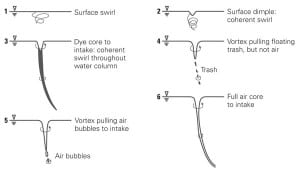 O&M
O&MScale Model Testing Confirms Adequate Refueling Water Storage Tank Vortex Allowance
Recent Nuclear Regulatory Commission (NRC) Component Design Bases Inspection activities have scrutinized empirical approaches used to determine vortex allowances for emergency core cooling system (ECCS) suction sources.
-
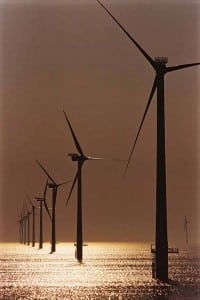 Wind
WindEurope’s Offshore Wind Race
Denmark in September inaugurated a 209-MW offshore wind park — the world’s largest to date — off the west coast of Jutland, in the North Sea.
-
Legal & Regulatory
Conn. v. AEP: Call for Congressional Action
In September, the Second Circuit Court of Appeals reversed the district court ruling in Connecticut v. American Electric Power ("Decision"), a lawsuit initiated by eight states, New York City, and environmental organizations against six power-generating utilities. The plaintiffs allege that carbon dioxide emissions from the defendants’ fossil fuel – fired power plants in 20 states are contributing to a public nuisance — climate change and global warming.
-
 O&M
O&MCatching Faults with Centralized Condition Monitoring
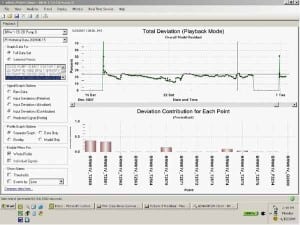
In 2007, Exelon Corp. began the Centralized Performance Monitoring (CPM) pilot program. The goal was to reduce downtime costs and lost revenue associated with the 25% of unplanned forced losses across its fleet of 17 nuclear power units without additionally taxing existing personnel or adding new personnel.
-
 Nuclear
Top Plants: Diablo Canyon Power Plant San Luis Obispo County, California
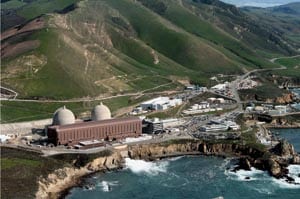
Diablo Canyon Power Plant, which is situated in a postcard-perfect location on the central California coastline, generates electricity for more than three million households in central and northern California. In 2009 the project team at the dual-unit Westinghouse pressurized water reactor facility replaced four steam generators at Unit 1 in just 58 days. Through meticulous planning and excellent project execution, performance on this Unit 1 project was an improvement on the earlier Unit 2 steam generator replacement project.
-
 O&M
O&MHDPE Replaces Carbon Steel in Safety-Related Pipe System
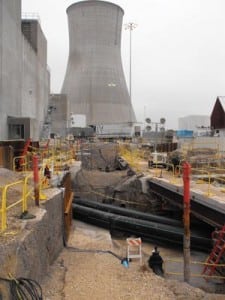
Corrosion of steel water pipes in the safety-related piping systems of aging U.S. nuclear power plants is fast becoming a safety concern and a significant operational cost, not to mention an indication of potential future liability for nuclear utilities currently constructing new plants or retrofitting existing sites.
-
 Nuclear
Top Plants: Oconee Nuclear Station Oconee County, South Carolina
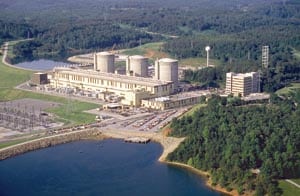
Duke Energy’s nuclear fleet provides electricity to approximately half of the utility’s customers in the Carolinas. The 2,538-MW Oconee Nuclear Station is part of that fleet and has been a pacesetter among U.S. nuclear plants since it began operation in 1973. In order to maintain the plant’s productivity and reliability, its staff implemented a comprehensive controls modernization project that spanned a decade. With its new state-of-the-art upgrades, the facility has become a leader in applying digital electronic technology in the nuclear power industry.
-
 News
NewsEthernet-Accessible Power Meter
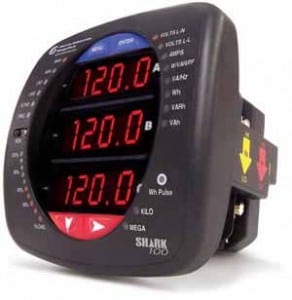
Electro Industries designed the Shark100 meter in response to requests within the industry for low-cost Ethernet-accessible power meters. Featuring 100BaseT Ethernet capability utilizing Modbus TCP as its standard protocol, the device offers a highly economical solution to provide multifunction metering. In addition to Ethernet TCP/IP, the Shark100 meter is a highly accurate 0.2% power and […]
-
 News
NewsMap of Nuclear Power Plants in North America
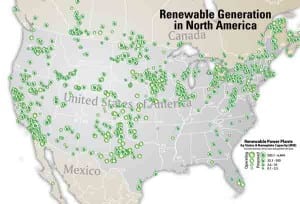
For a larger version of this or other Platts maps appearing in POWER, please contact the Platts Store.
-
 News
NewsFlex-Neck Torches Offer Better Joint Access
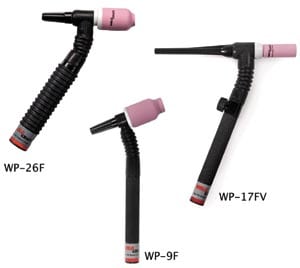
To help provide better joint access, Weldcraft offers several TIG (tungsten inert gas) torches with flex-neck designs. The company’s popular WP-9, WP-17, and WP-26 Series of air-cooled TIG torches all feature an optional F (flex-neck) model for welding applications featuring limited joint access and/or difficult joint angles. Weldcraft also offers valved versions of each of […]
-
 Business
Chile Plans for Growth with "All the Options" Energy Mix
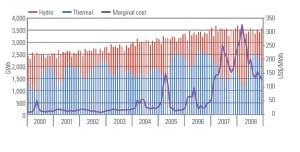
Chile was considered a world leader for reforming and liberalizing its power sector as early as the 1980s. However, 25 years later, Chile is at a crossroads in terms of developing future capacity. With an estimated GDP growth rate of 2% to 3% during the current global financial crisis, a highly competitive economy, an established democracy, and a stable macroeconomic environment, Chile is considered a premium destination for foreign investment.
-
 News
NewsUpgraded Retaining Heads for MIG Welding Guns
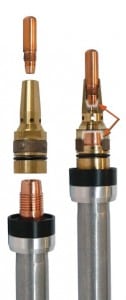
Tregaskiss has upgraded the design of its TOUGH LOCK retaining heads so that they now feature the company’s Dual Taper technology — a second rear taper between the gooseneck and the contact tip. This design improves electrical conductivity and heat dissipation to provide consistent welding performance and extend the life of the TOUGH LOCK consumables. […]
-
 O&M
O&MBenchmarking Nuclear Plant Operating Costs
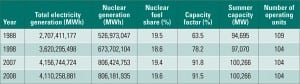
In an exclusive agreement with the EUCG Nuclear Committee, POWER was provided access to some key, high-level performance and operational data from the group’s nuclear industry benchmarking database. All U.S., and many international, nuclear power plants are members of the committee and have contributed to its database for many years. This month we introduce you to the EUCG Nuclear Committee and share sample nuclear operating costs. Look for future reports on other key performance benchmarking metrics during 2010.
-
 News
NewsConventional and Self-Aligning Rollerbeds
ESAB Welding & Cutting Products announced the addition of conventional and self-aligning rollerbeds to its line of automated handling equipment products. The durable rollerbeds are grit-blasted with a polyurethane finish coating to endure abrasive environments. They also feature solid-state inverter technology for precise speed control to ensure welding accuracy. The rollerbeds are available in a […]