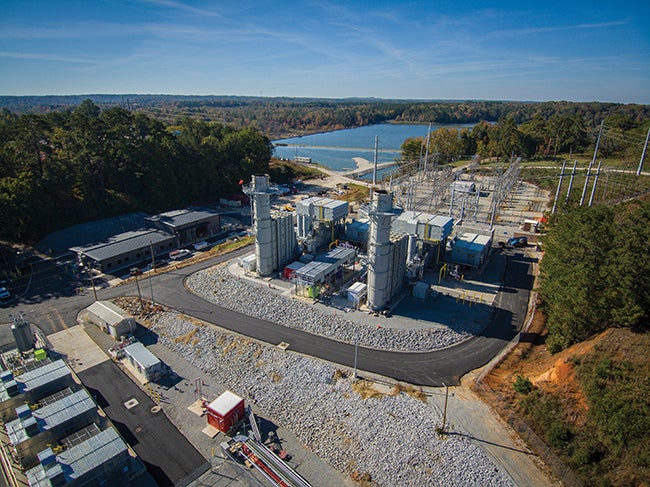
Inconsistent fuel quality puts constant strain on aging waste-to-energy boiler systems. Modernizing startup burners, combustion controls, and flame detection can restore reliability and keep plants code-compliant—without the cost of a full replacement.
Waste-to-energy (WTE) infrastructure turns municipal garbage into usable power. In theory, the process is efficient, reliable, and sustainable. Unfortunately, the reality isn’t as simple.
Municipal waste is incredibly inconsistent in moisture content, heating value, composition, and more. Even volume is variable from day-to-day. Keeping plants running dependably and efficiently requires systems to work seamlessly together, including the boiler system.
Two important components of the boiler system are the burner and control systems. These are the systems that ignite the boiler’s main fuel (refuse) and stabilize combustion when the main fuel is wet or variable. In older WTE plants, the reliability of the startup burners and their associated control systems is critical to maintaining safe and efficient operation. These burners must be designed for rugged, continuous-duty service, as WTE facilities typically operate around the clock with minimal downtime.
 |
|
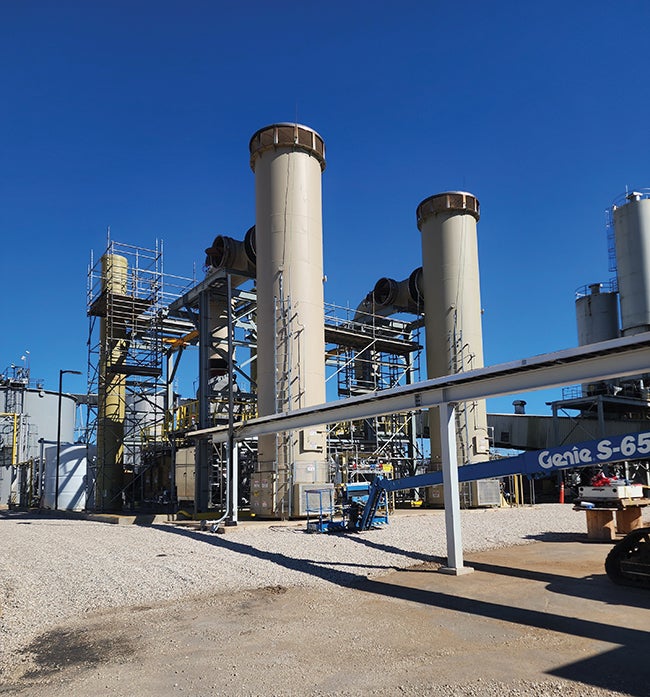
1. A Preferred Utilities Spec Com burner delivering reliable performance at a waste-to-energy (WTE) facility in the southeastern U.S. Courtesy: Preferred Utilities Manufacturing Corp. |
As these plants age, retrofitting the startup burners (Figure 1), combustion controls, forced draft (FD) fans, and fuel trains is increasingly important. Modernization not only improves reliability and combustion performance but also ensures compliance with current safety codes and standards, including National Fire Protection Association (NFPA) requirements. That’s where retrofits can make a substantial impact.

In This Issue
Full issueThe Challenge of Maintaining Reliable Steam Production
Making consistent, high-quality steam in a WTE plant is more challenging than it sounds. Retrofit burner solutions can play an important role in addressing these challenges.
Startup. Cold starts are too risky with such a variable energy source. Without consistent ignition and ramp-up, the entire system is vulnerable. Startup burners bring the boiler system up to operating conditions in a controlled and repeatable way.
Overcoming Variable or Poor-Quality Fuel. Once the plant is online, the startup burners become load burners, which can help to overcome the variability of waste content, humidity, and volume. Sized from 20 MMBtu/hr to 180 MMBtu/hr depending on the boiler, they can automatically step in to generate the heat input needed for additional steam capacity when the main fuel is unable to maintain the required steam load. This helps to protect the system’s reliability and overall turbine performance, keeping the turbines running at a steady load.
The Value of Integrated Burners and Controls
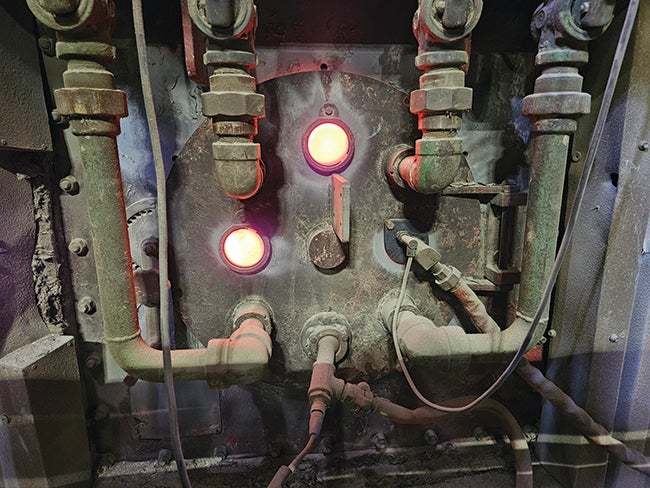
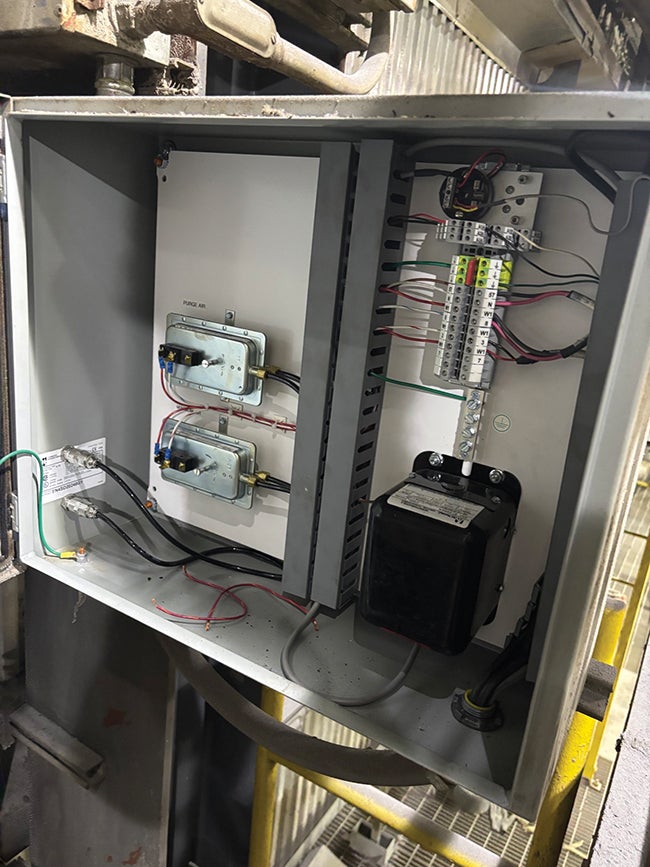
WTE plants are most efficient and reliable when the burners and controls (Figure 2) are integrated as part of a coordinated system. In many plants, burner controls only manage the burner itself. Modern facilities must be able to pull inputs from their system operations and use those boiler/furnace parameters to recommend burner adjustments for better, more efficient firing.
 |
|
2. Preferred Utilities controls—managing combustion output and improving efficiency. Courtesy: Preferred Utilities Manufacturing Corp. |
Integrated systems provide smarter and more adaptive combustion while reducing failure points across the entire operation. They allow operators to control the burners from a main control room while still supporting local operation at the burner level when needed. They enable coordination across the entire boiler system, providing operators with the most complete firing recommendations to maintain a stable operating environment. And they reduce manual intervention, leading to fewer failure points and higher efficiency.
Retrofits in a Severe Environment
The burner environment is extremely harsh in WTE facilities. The burner area and associated control panels are classified as a Class I, Division 2, Groups C or D hazardous location, which means that any retrofitted instrumentation must be selected based on hazardous-location requirements. Also, the control panel must be designed with a suitable purge system.
The instability of the main fuel makes the environment particularly unforgiving. It can, occasionally, create unpredictable combustion at the boiler’s grate level. This upset condition raises furnace temperature and increases debris loading. The debris can then enter the burner’s internals at high temperature (~700F), potentially deforming the carbon steel internals. The burner’s combustion air system is designed with a cooling air provision that maintains positive pressure in the burner/windbox when the burners are not in operation. This prevents exposing the burner to debris and high furnace temperatures.
Retrofit startup/load burners in the WTE environment should also offer the ability to clean the nozzles with proper isolation. This prevents grate debris from clogging the burner nozzle openings and helps maintain reliable ignition and stable firing.
Keeping an Eye on the Flame Scanner
In WTE boilers, scanners must operate within elevated ambient temperatures while distinguishing the auxiliary burner flame from the larger furnace fire. The flame scanners are critical to prove the burner flame. The scanner must be properly located and aimed at the burner fire to prevent the scanner sensor from picking up a neighboring burner or a burner across the furnace. This is a common challenge in WTE boiler designs.
Proper selection and position of the flame scanners are critical for reliable operations. Consistent flame detection helps prevent nuisance trips, supports safe startup and shutdown sequences, and allows the burner management system to make decisions based on accurate combustion feedback.
Case Study: Modernizing Auxiliary Burner Systems for Reliability and Compliance
A Virginia waste-to-energy facility had aging auxiliary burner systems. The facility relied heavily on these systems for critical functions such as boiler warm-up and carbon monoxide (CO) mitigation when waste fuel conditions were variable.
The facility had three on-site boilers, each equipped with dual auxiliary burners. However, the equipment on two of the boilers had reached the end of their lifecycle, impacting operational reliability. They had obsolete components that were difficult to maintain and no longer aligned with current code requirements. In addition, fluctuating waste fuel composition was causing particularly high CO conditions, placing increased stress on burner performance and control precision.
The plant needed a solution that would improve reliability without requiring a full burner replacement while also providing more precise control. It also had to be compliant with current safety codes (including NFPA 85).
The Solution. The facility implemented a targeted upgrade strategy focusing on both controls and key mechanical components while preserving the existing burner infrastructure. Key upgrades included:
- ■ A programmable logic controller (PLC)–based burner management system (BMS) and combustion controls system (CCS) with integrated burner controls and flame scanners.
- ■ New Fisher gas flow control valves for improved fuel modulation and to achieve the required burner turn-down.
- ■ Replacement of pneumatic actuators with electric actuators, enabling precise 4–20 milliampere proportional control.
- ■ Installation of high-capacity igniters and upgraded pilot gas trains for more reliable ignition.
- ■ New instrument combustion air system, including inline flow monitoring and pressure safety switches.
- ■ New louver damper and actuator for improved temperature control in the burner chamber.
A key enhancement unique to this project was an improved, more robust, thermocouple used in the existing temperature monitoring system, integrated into a control loop with the cooling air fan and damper. This allows operators to actively manage burner zone temperatures, protecting equipment integrity by preventing overheating in critical areas.
The Results. By focusing on high-impact component retrofit upgrades, the facility achieved a significant improvement in system reliability and operational control without the cost of full burner replacement. The upgraded system delivered:
- ■ Improved combustion stability, particularly with high CO conditions.
- ■ Increased longevity of equipment through better temperature management.
- ■ Simplified maintenance thanks to modern, accessible components that replaced obsolete hardware.
- ■ Full compliance with Class I Division 2 and NFPA 85 standards.
WTE Updates With Modern Retrofits Are the Way to Move Forward
WTE facilities operate in one of the most demanding combustion environments. Main fuel (refuse or garbage) quality changes constantly, while heat inputs and steam quality must remain steady. Many plants are working with older boiler systems that require constant maintenance. Equipment retrofits give WTE facilities a practical path forward to improving reliability without the cost and disruption of replacing a full system.
 |
|
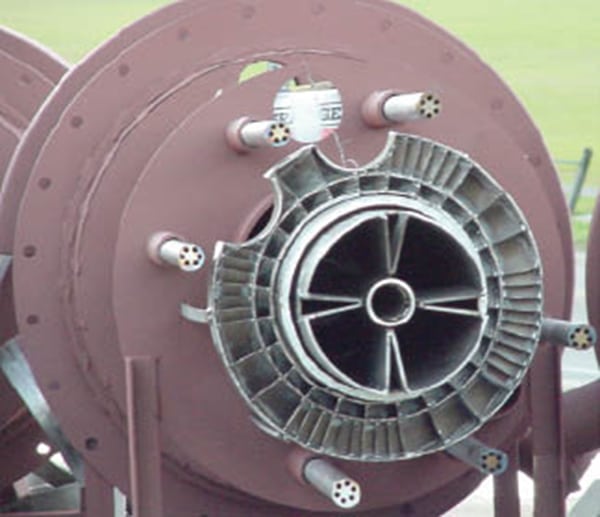
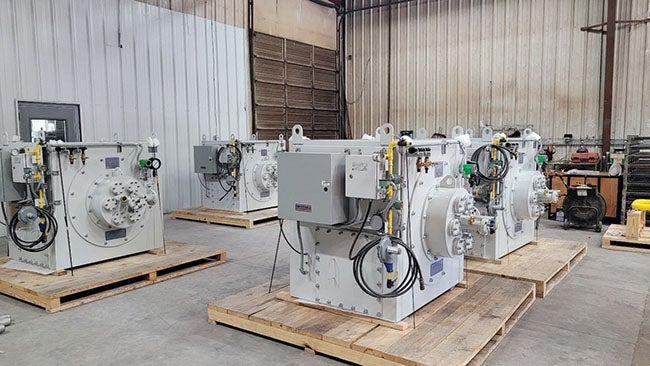
3. Four Preferred Utilities Spec Com burners/windboxes for a WTE plant. Courtesy: Preferred Utilities Manufacturing Corp. |
Preferred Utilities helps WTE facilities modernize aging boiler systems through targeted burner (Figure 3) and control retrofits. Preferred can support the full range of upgrades discussed in this article, creating integrated systems and installing targeted upgrades to burners and burner management systems, flame detection, airflow control, and much more. ■
—Dennis Garcia is director of Sales and Business Development with Preferred Utilities Manufacturing Corp.