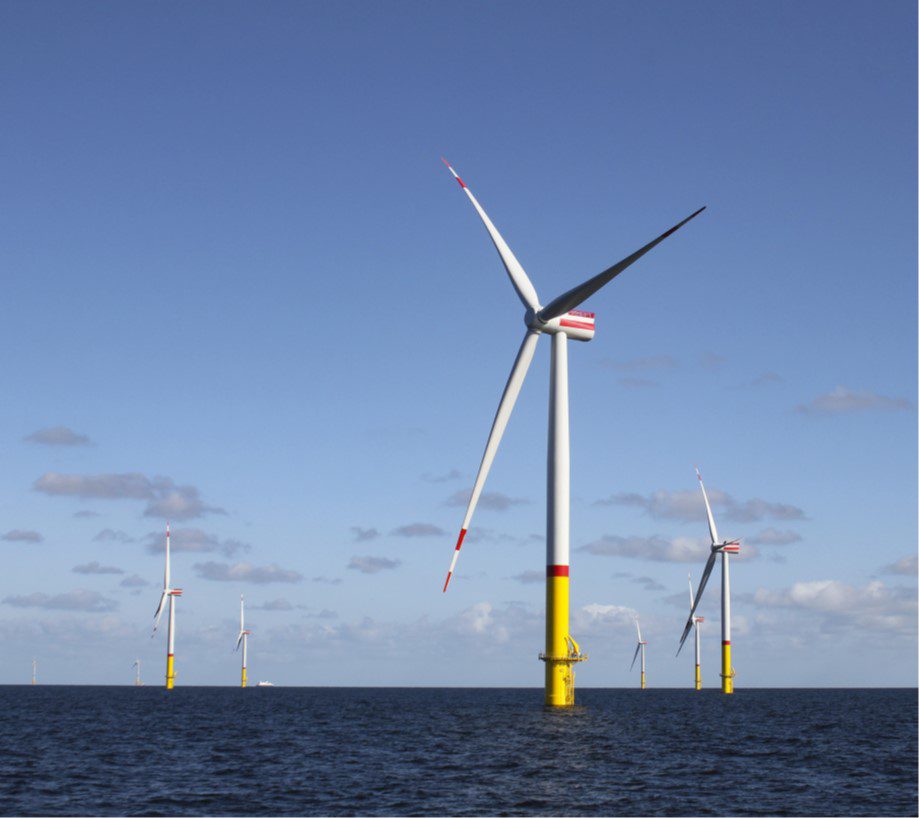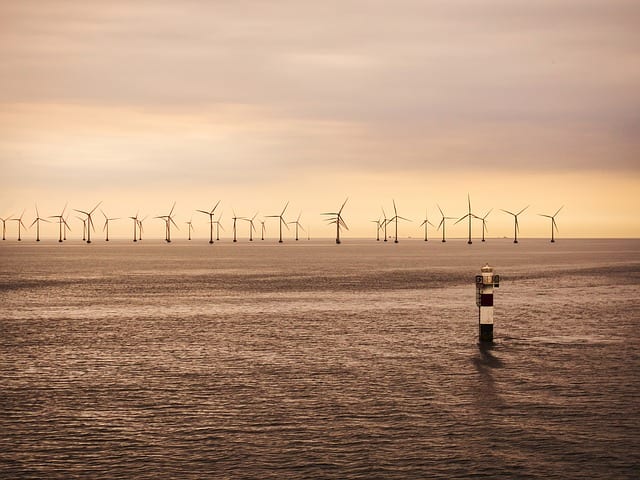
The Trump administration’s decision to unwind offshore wind leases through negotiated buybacks has predictably reignited the debate over renewable energy. Many welcome the move as a correction to policies that heavily favored offshore wind during the previous administration.
That debate is perfectly legitimate. However, the recent agreements involving TotalEnergies, Bluepoint Wind, Golden State Wind, Duke, Invenergy, and most recently Germany energy firm RWE, underscore that these transactions are about more than offshore wind. They raise a broader question about how the federal government treats commitments it has made to private investors.
When Washington begins unwinding leases that companies lawfully purchased from the U.S., it sets a dangerous precedent. Today, the target is offshore wind. Tomorrow, another administration could decide offshore oil and gas leases, liquefied natural gas (LNG) export terminals, pipelines, or critical mineral projects no longer align with its political priorities.
That should concern anyone who believes in free markets, the rule of law, and America’s long-term energy security.
The deeper problem is a permitting system increasingly driven by political change rather than durable rules. Companies acquire federal leases, spend years navigating environmental reviews, invest billions in engineering and development, and secure long-term financing with the expectation that the government will honor its commitments. Yet projects too often become casualties of elections rather than changes in law or fact.
That is no way to achieve energy dominance. Energy infrastructure is financed over decades, not presidential terms. Investors can account for commodity prices, construction costs, and market fluctuations. What they cannot efficiently price is a regulatory system where approvals granted under one administration become politically untenable under the next. Capital flows toward certainty, and when government cannot provide it, investment becomes more expensive or moves elsewhere.
The uncertainty does not end when projects are canceled or settled. Companies increasingly find themselves squeezed from both directions. A developer that reaches an agreement with the federal government may then face criticism from state regulators, public pension funds, or institutional investors for making the very business decision federal policy encouraged. Businesses are left navigating competing political expectations with no durable rules of the road.
This is not fundamentally a wind problem or a fossil fuel problem. It is an American competitiveness problem.
The same regulatory volatility affecting offshore wind today could just as easily affect Gulf of America oil leases tomorrow. Anyone working in Louisiana or Texas should ask what happens if a future administration concludes offshore drilling no longer fits its climate agenda. The consequences would extend well beyond energy companies to ports, manufacturers, service firms, and workers whose livelihoods depend on those projects.
Government should not pick winners and losers after investments have already been made. Once a lease has been lawfully issued and a developer satisfies established legal and regulatory requirements, businesses should be able to rely on those commitments instead of wondering whether the rules will be rewritten every four years.
That is why permitting reform deserves renewed bipartisan attention. Reform is not about guaranteeing approval for every project or weakening legitimate environmental protections, it is about restoring confidence that once a project satisfies clearly established legal requirements, government will honor its commitments. Developers should either meet the rules or they should not. Endless administrative reconsideration should not become standard practice.
A modern permitting system should establish firm timelines, improve coordination among agencies, provide greater certainty during judicial review, and better align federal and state authorities. Most importantly, it should restore the principle that government keeps its word. Permitting reform has been debated in Washington for years, yet each new lease buyback or permit reversal reinforces that the system itself is failing.
The recent offshore wind agreements are a stopgap, not a solution. What they prove, however, is that when government engages in good faith, private capital doesn’t have to walk away. In the Bluepoint transaction, as with the other agreements, the money being returned is capital originally paid to the Treasury for federal leases. It comes with commitments to reinvest equivalent sums in new domestic energy infrastructure. Whether one supports offshore wind or LNG, the structure is designed to keep private capital invested in American energy rather than strand it.
The lesson from these lease buybacks is not that offshore wind deserves special protection. It is that the federal government should honor the commitments it makes regardless of which technology is politically fashionable. The U.S. cannot encourage massive private investment while signaling that federal approvals may become temporary political instruments. Whether the investment involves offshore drilling, LNG exports, pipelines, nuclear power, critical minerals, or offshore wind, businesses need confidence that the rules governing billion-dollar investments will outlast election cycles. Permitting reform is therefore not a concession to renewable energy. It is a prerequisite for American energy dominance.
If the U.S. is serious about strengthening its industrial base, competing with China, and maintaining global energy leadership, it cannot ask businesses to wager billions of dollars on whichever party happens to control Washington. Energy dominance requires more than abundant natural resources. It requires a government whose commitments can be trusted.
—Guy Caruso is a former administrator of the U.S. Energy Information Administration (EIA) at the Department of Energy (DOE).