Gas
-
 O&M
O&MThe U.S. Gas Rebound
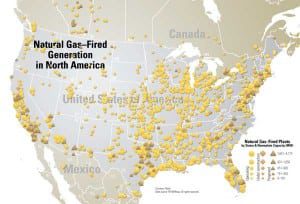
"It’s déjà vu all over again," said Yogi Berra. The Hall of Fame catcher could easily have been predicting the coming resurgence of natural gas – fired generation. Yes, a few more coal plants will be completed this year, but don’t expect any new plant announcements. A couple of nuclear plants may actually break ground, but don’t hold your breath. Many more wind turbines will dot the landscape as renewable portfolio standards dictate resource planning, but their peak generation contribution will be small. The dash for gas in the U.S. has begun, again.
-
 Coal
CoalThe Impact of Carbon Trading on Performance: What Europe’s Experience Can Teach North American Generators
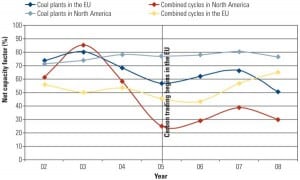
The European carbon trading system experience suggests that North American generators should expect severely altered coal-fired power plant operating profiles if cap-and-trade legislation becomes law. In a groundbreaking study, Solomon Associates predicts the reduction in mean run time that North American generators should expect. The trends outlined in this study provide an overview of some of the broad challenges facing generators in moving to a carbon-constrained market environment.
-
 Coal
CoalBrazil: Latin America’s Beacon
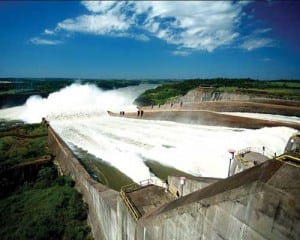
With the eighth-largest economy in the world, Brazil has a clear need for power, but balancing supply and demand has proven tricky in recent decades. Even in a country where over 80% of generation capacity comes from renewables, planning for future capacity additions isn’t straightforward or easy.
-
 Gas
GasNew-Generation Gas Turbines Steam Ahead
This September, as Siemens Energy wrapped up testing of its H-class SGT5-8000H gas turbine at E.ON’s Irsching 4 gas power plant in Bavaria, Germany, the company raved about what it is calling "the world’s most powerful gas turbine."
-
 O&M
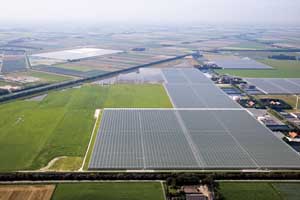
O&MTop Plants: Royal Pride Holland Commercial Greenhouse Cogeneration Plant, Middenmeer, North Holland Province, Netherlands
At Royal Pride Holland’s commercial tomato greenhouse, green thumbs and green energy go hand in hand. With a total energy utilization of 95% in this application, GE’s new Jenbacher J624 natural gas – fired engines offer the innovative greenhouse an economical supply of on-site electrical and thermal power, as well as CO2 fertilization, to support its operations.
-
 Coal
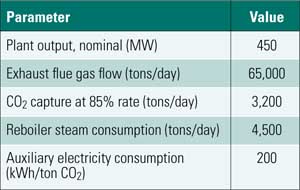
CoalCombined-Cycle Carbon Capture: Options and Costs, Part I
Uncertainty about CO2 emissions legislation is prompting power plant owners to consider the possibility of accommodating "add-on" CO2 capture and sequestration solutions for coal-fired plants in the future. Those same plant owners may be overlooking the possibility that future natural gas – fired combined cycles will also be subject to CO2 capture requirements. This month we examine the capture options. In a future issue, Part II will present the installation and operating costs of different carbon capture technologies.
-
 Gas
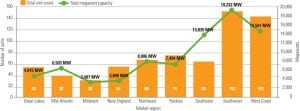
GasNew Natural Gas–Fired Projects on an Upswing
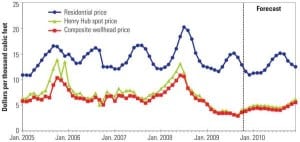
Over the past decade, the development of new natural gas – fired generating assets has been similar to an amusement park roller coaster ride — very high peaks and the lowest of lows, with fast and stomach-churning movement between. Expect the ride to continue into the near future.
-
 O&M
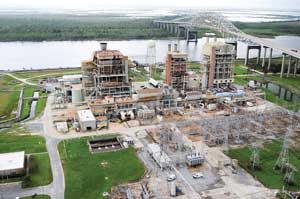
O&MAccurate Online Silica Analyzers Ensure Boiler Performance, Add Boiler Life
One key area at the 800-MW Michoud power station where O&M excellence is evident is in maintaining plant water quality.
-
 Gas
GasTop Plants: Edward W. Clark Generating Station, Clark County, Nevada
The Edward W. Clark Generating Station, which has supplied electricity to the Las Vegas Strip for more than half a century, has learned the secret of life in the desert: adaptability. The plant’s early years featured conventional steam plants operated around the clock. By mid-life, Clark had been upgraded with two combustion turbine combined-cycle power blocks operated as intermediate-load resource. Today, the old steam plants have been replaced with fast-start peaking gas turbines.
-
 Gas
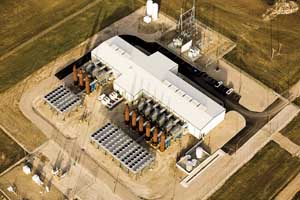
GasTop Plants: Goodman Energy Center, Hays, Kansas
Midwest Energy has a history of thinking and acting independently, especially since breaking away from the Rural Utilities Service almost 15 years ago. Two years ago, when its board of directors grappled with finding a balance between purchasing and generating electricity, it decided to construct its first power plant in 37 years. A matched set of nine 8.4-MW gas engines at Goodman Energy Center now provides efficient peaking electricity, improved overall system reliability, and backstop capacity for a 325-MW electrical system that features 16% wind power generation.
-
 Gas
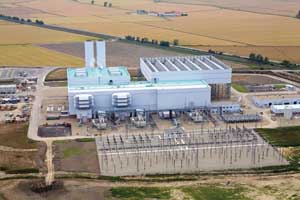
GasTop Plants: Livorno Ferraris Power Plant, Vercelli Province, Italy
Northern Italians are enjoying la dolce vita (the sweet life) even more today than they have historically, thanks to the additional electrical capacity provided by the new Livorno Ferraris power plant. Well-received by locals due to its environmentally progressive operations and low-profile appearance, the 800-MW plant is powered by combined-cycle units that burn natural gas. The plant, which generates more than 5 million kWh per year, is part of a comprehensive renewal of the Italian energy sector and will make an important contribution toward ensuring that the country’s power supply is more secure.
-
 O&M
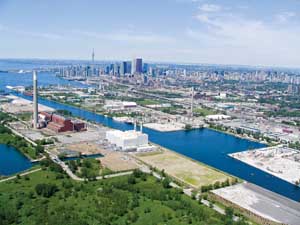
O&MTop Plants: Portlands Energy Centre, Ontario, Canada
Construction of the Portlands Energy Centre was a logistical dream: A mothballed power plant next door had an active switchyard, natural gas pipeline, and cooling water structure. The new facility put peak power into the Ontario Power Authority’s grid from its two combustion turbines only two years after collecting the necessary permits. The entire plant entered commercial service on April 23, 2009 — six weeks early.
-
 Coal
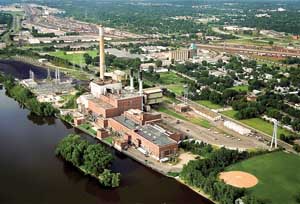
CoalTop Plants: Riverside Repowering Project, Minneapolis, Minnesota
Xcel Energy has completed the third and final project required by its 2003 Metropolitan Emissions Reduction Project agreement: repowering the Riverside Plant with a gas-fired 2 x 1 combined-cycle plant and tearing down the old coal-fired plant. Saved from demolition was the Unit 7 steam turbine system that now serves the new plant. Xcel staff expertly managed the project to an on-time start-up and accepted many important construction tasks, harkening back to the days when utilities took a more active role in the design and construction of projects.
-
 Gas
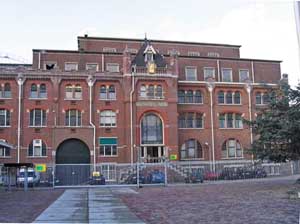
Gas2009 Marmaduke Award: The Hague Repowering Project Upgrades CHP System, Preserves Historic Building
The Hague’s century-old power plant, now owned by E.ON, provides electricity to the local grid and thermal energy for the city’s district heating system. Poor performance from the plant’s 25-year-old equipment and The Hague’s wish to become a carbon-neutral city by 2010 gave birth to the idea of repowering the existing plant. For protecting a historic building while investing in low-emissions electricity generation, achieving improved plant efficiency and reliability, and accelerating the project so the plant could be back online for the next heating season, The Hague Repowering Project is the winner of POWER’s 2009 Marmaduke Award for excellence in O&M. The award is named for Marmaduke Surfaceblow, the fictional marine engineer and plant troubleshooter par excellence.
-
 Coal
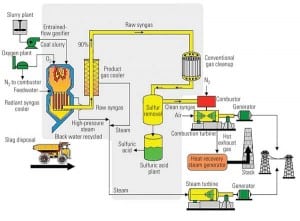
CoalIGCC Update: Are We There Yet?
If a number of technical, financial, and regulatory hurdles can be overcome, power generated by integrated gasification combined-cycle technology could become an important source for U.S. utilities. Our overview presents diverse perspectives from three industry experts about what it will take to move this technology off the design table and into the field.
-
 Gas
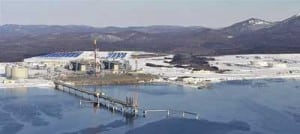
GasFlexible Fuel Combustor Design Accommodates LNG
To supplement domestic natural gas supplies, the U.S. is expected to increase its dependence on offshore liquefied natural gas suppliers in the coming years. However, the composition and hydrocarbon content of imported LNG may significantly vary from those of North American sources. Variation in fuel composition may lead to plants using fuel that violates their combustion turbine fuel specifications and may cause operational problems.
-
 Gas
GasMitsubishi Wraps Up Development of J-Class Mega Turbine
This March, Japan’s Mitsubishi Heavy Industries Ltd. (MHI) quietly completed development of the "J-series" gas turbine — a machine that has been extolled in the turbo-machinery world for its ability to produce one of the world’s largest power generation capacities and highest thermal efficiencies.
-
 Gas
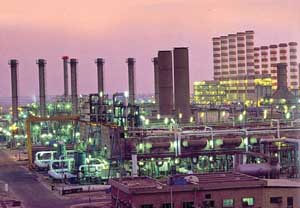
GasQatar Starts Construction on Middle East’s Largest Power and Water Plant
The gas-rich Persian Gulf state of Qatar in May commenced construction of the region’s largest power and water plant, a massive project comprising eight gas turbine generators, eight heat-recovery steam generators, four steam turbine generators, and 10 desalination units.
-
 O&M
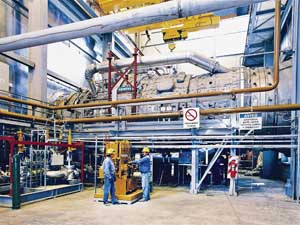
O&MOptimize Gas Turbine Performance Using Acoustic Simulation Software
Increasingly fierce competition driven by deregulation and privatization is putting downward pressure on power plant operations and maintenance (O&M) budgets. Recently, lower natural gas prices have pushed natural gas – fired combined-cycle plants higher up in many utilities’ dispatch order in some regions, a welcome change from the twice-a-day cycling experienced by some plants during the past few years. However, with more operating hours comes more interest in plant operating availability, and that means increased emphasis on reliable gas turbine operation.
-
 O&M
O&MTurkey Opens Electricity Markets as Demand Grows
Turkey’s growing power market has attracted investors and project developers for over a decade, yet their plans have been dashed by unexpected political or financial crises or, worse, obstructed by a lengthy bureaucratic approval process. Now, with a more transparent retail electricity market, government regulators and investors are bullish on Turkey. Is Turkey ready to turn the power on?
-
 Coal
CoalCHP: Helping to Promote Sustainable Energy
Because combined heat and power (CHP) plants optimize energy use, they cut fuel costs and pollution. Even though U.S. power plants have been using CHP for decades, today’s energy experts have a newfound appreciation for its ability to promote sustainable energy use.
-
 Coal
CoalRecession Reduces Demand for Electricity
When roving Contributing Editor Mark Axford attended several recent energy conferences, he found the same questions asked at each one about new U.S. generation sources and consumption patterns. Unfortunately, the experts had few good answers to those questions.
-
 Gas
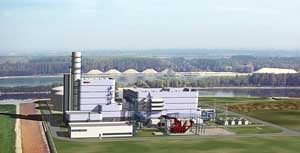
GasHungary Building High-Efficiency Gas-Fired Plant
Germany’s E.ON laid the foundation stone in late March for a 433-MW combined-cycle power plant in Gönyü (Figure 6), a power-stricken region in northwestern Hungary. The power plant, expected to begin operation in 2011, will operate with a net efficiency of more than 58% — making it one of the most efficient power plants in […]
-
-
 O&M
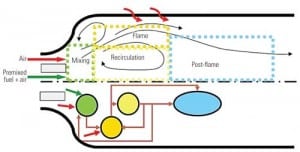
O&MAdvanced Modeling Tools Slash Combustor Analysis Chores
Combustor design simulation requires the resolution of complex geometry, turbulent flow patterns, heat transfer, and detailed chemistry. Although computational fluid dynamics (CFD) can simulate the reacting flow in realistic geometries, it requires the use of severely restricted chemistry models that are too simple to accurately simulate emissions and operational stability. A new simulation tool is now available that eliminates this CFD shortcoming while significantly reducing computing time.
-
 Coal
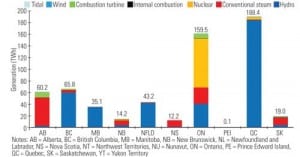
CoalCanada Moves to Rebalance Its Energy Portfolio
Though Canada is rich in fossil fuels, nuclear power may fuel a significant portion of the nation’s future electrical generation needs, especially in provinces that have traditionally relied on hydropower and fossil fuels.
-
 Coal
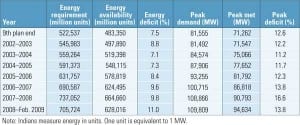
CoalPowering the People: India’s Capacity Expansion Plans
India has become a global business power even though hundreds of millions of its citizens still live in poverty. To sustain economic growth and lift its people out of poverty, India needs more — and more reliable — power. Details of government plans for achieving those goals demonstrate that pragmatism may be in shorter supply than ambition and political will.
-
 Gas
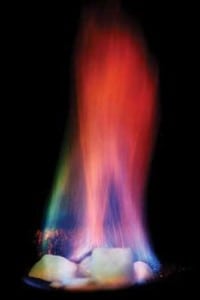
GasGas Hydrates: Fuel of the Future?
Gas hydrates, a form of natural gas that forms when methane from the decomposition of organic material comes into contact with water at low temperatures and high pressures, could play a role — even if a small one — in future fuel supplies, researchers attending a March meeting organized by the American Chemical Society suggested.
-
 Gas
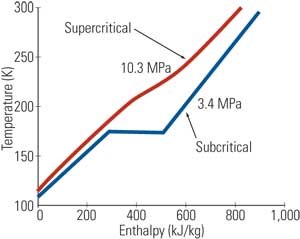
GasConsider CHP for LNG Vaporization
The conversion of liquefied natural gas (LNG) to pipeline-quality gas requires large quantities of low-grade thermal energy that may be available from industrial waste streams, steam power plants, or ocean water at the point of discharging LNG from the tanker. Alternatively, heat may be provided by the combustion of LNG or another fuel. In either case, the large temperature differences between these heat sources and the temperature of the LNG can be used to operate an engine that will offset or eliminate the pumping or fuel costs incurred.