
Articles By

-
 Coal
CoalGlobal Monitor (October 2006)
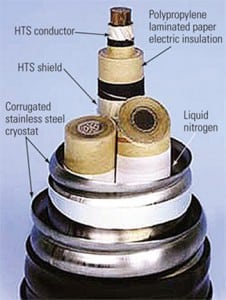
First live superconducting cable / Biggest CO2 storage project / Largest hydrogen-fueled plants / Record run for fuel cell cogen system / Largest PV plant still in Bavaria / Luz returns to U.S. / POWER digest
-
 Coal
CoalNova Scotia Power’s Point Aconi plant overcomes CFB design problems to become rock of reliability
Point Aconi’s circulating fluidized-bed boiler experienced erosion, corrosion, and fouling problems from the day it went on-line in 1993. After several frustrating years of unreliable operation, in late 1999, Nova Scotia Power discovered the right combination of engineering and fuel modifications. Today, after a switch to 80% petroleum coke and major boiler modifications, Point Aconi’s output exceeds its original nameplate rating. For having the vision and fortitude to plan and execute a multiyear, $20 million project to revitalize North America’s first in-service utility CFB boiler, Nova Scotia Power’s Point Aconi plant is the well-deserved winner of POWER magazine’s 2006 Marmaduke Award for excellence in O&M.
-
 Water
WaterOrganics in the boiler and steam: Good or bad?
Among utility chemists, opinions differ on the effect that organic compounds—both naturally occurring types and those added as treatment chemicals—have on the steam cycle. Some chemists raise the specter of corrosion of low-pressure turbines caused by organic acids created as the compounds degrade. Others defend and encourage the use of organic treatment chemicals, particularly neutralizing amines, by pointing to a long and positive history of their use in boiler and feedwater systems.
-
 O&M
O&MHow to conduct a plant performance test
Performance testing after initial start-up has value well beyond the short-term goal of validating equipment guarantees—it’s your only opportunity to establish the baseline performance of the overall plant and many of its major systems. Corporate bean counters may be interested in short-term results, but a good plant engineer understands that a thorough performance test will be useful for many years. Here’s your guide to each facet of a performance test—plus pitfalls to avoid.
-
 Coal
CoalHow accurate are your reported emissions measurements?
Complying with permitted emissions limits may be the most significant operations risk for a power plant. As limits are slowly ratcheted downward, understanding the accuracy and variation of measured pollutant levels becomes even more important. To avoid misunderstandings, regulators and plant owners should factor measurement uncertainty into air quality permit numbers both as the permit is formulated and preceding any subsequent modifications.
-
 Business
Mandatory reliability rules are coming. Are you ready to comply?
An extremely reliable North American bulk power system—one that consistently delivers uninterrupted power to every user—is not a dream that must be made reality. To a large extent, that is what we have today. With the exception of infrequent (and therefore, newsworthy) outages, the system has never been more dependable. Nevertheless, with the great northeast blackout of August 14, 2003, still fresh in memory, Congress saw fit to include electric reliability measures in the Energy Policy Act of 2005.
-
 Instrumentation & Controls
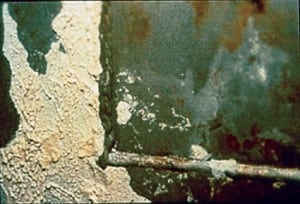
Cleaning and inspection of stainless steels and nickel alloys for FGD service
Stainless steels and nickel alloys of the C-family are major materials of construction for flue gas desulfurization systems. Both types of materials depend upon the presence of thin, passive, chromium-rich, surface-oxide films to provide the desired corrosion resistance. Corrosion resistance is optimized by proper cleaning before and after fabrication. Here are some guidelines for keeping those materials clean.
-
 Marmaduke
Marmy’s medicine show
Steve Elonka began chronicling the exploits of Marmaduke Surfaceblow—a six-foot-four marine engineer with a steel brush mustache and a foghorn voice—in POWER in 1948, when Marmy raised the wooden mast of the SS Asia Sun with the help of two cobras and a case of Sandpaper Gin. Marmy’s simple solutions to seemingly intractable plant problems remain timeless.
-
 Commentary
Combating climate change
The overriding environmental challenge of our time is climate change. The problem originates from the emission of greenhouse gases, primarily carbon dioxide, mainly from the transport and energy sectors. If humanity fails to come to terms with this problem, we will be forced to make dramatic changes in the way we live our lives, but […]
-
 News
NewsNational pastime
—Dr. Robert Peltier, PE Editor-in-Chief During every summer hot enough to break peak demand records, the rhetoric heats up as well, with calls to rid the U.S. bulk-power system of bottlenecks. As the eternal optimist, I see large transmission projects showing signs of life and grid reliability improving. But not everyone is happy about that. […]
-
 Coal
CoalGlobal Monitor (September 2006)
Demand records fall nationwide;
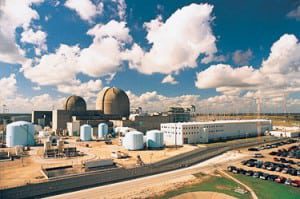
GE’s ABWR to be STP’s edge; Entergy buys Palisades plant; Dithering over desert disposal; Tourist trash-to-energy plant;
Brooklyn says "Yo!" to microturbines; POWER digest -
 O&M
O&MFocus on O&M (September 2006)
Level measurement in harsh environment;
Designing insulation for structures;
Shockingly clean boiler
-
 Legal & Regulatory
Renewable contracts merit longer terms
The length of term allowed for power sales contracts is a critical determinant of the ability of states to meet their increasingly ambitious renewable power targets. Many utilities advocate limiting terms to 10 or perhaps 15 years for renewable energy contracts, emphasizing the "flexibility" that shorter terms offer. In contrast, contract terms of 20 or […]
-
 Coal
CoalTri-State Generation and Transmission Association’s Springerville Unit 3 earns POWER’s highest honor
It’s said that pioneers take the arrows. In the case of Springerville Unit 3—a 418-MW (net) expansion of a Tucson Electric Power facility in Arizona and the first pulverized coal–fired unit built in the U.S. in more than a decade—the arrows were many. Although Tri-State (the developer), Tucson Electric (the host), and Bechtel Power (the EPC contractor) were wounded by delayed deliveries of major equipment, bankruptcy of a major supplier, and a labor shortage, the companies showed their pioneering spirit and completed the project ahead of schedule. For ushering in a new generation of clean and desperately needed baseload capacity, Springerville Unit 3 is POWER magazine’s 2006 Plant of the Year.
-
 Coal
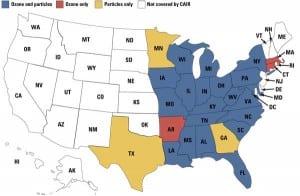
CoalEmissions: Clean Air Interstate and Clean Air Mercury Rules: An Overview
Utility customers depend on and expect reliable, affordable electricity for virtually every aspect of their lives. At the same time, electricity producers in the United States are faced with finding cost-effective methods to meet ever-increasing demand and more stringent environmental regulations. Though it’s not a new trend, the frequency with which new regulatory air quality […]
-
 O&M
O&MScrubbing: Optimizing Flue Gas Desulfurization Technologies Is Essential
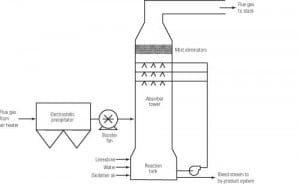
New flue gas desulfurization (FGD) units are being installed at utilities in many parts of the U.S. and a large percentage of the new scrubbers are of the wet limestone type. Although wet limestone scrubbing is a well-developed technology, it may be unfamiliar to employees at plants that have previously not required scrubbers. This article […]
-
 O&M
O&MBoiler Conversion: Converting a Boiler from Burning Bituminous Coals to PRB Coals Can Be a Challenge
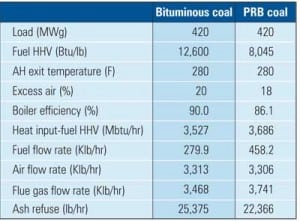
Design techniques and operating experience with Powder River Basin (PRB) coals have advanced significantly over the past 35 years for boilers that were originally designed for this fuel. Today, boiler installations looking to effectively utilize PRB coals fall into two primary categories: units that were initially designed for bituminous or other coals and units that […]
-
 O&M
O&MCase Histories: Co-Firing Coal and Oat Hulls Reduces Emissions at University Power Plant
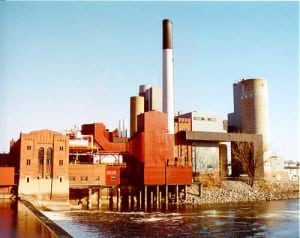
The University of Iowa (UI) Biomass Fuel Project has produced significant reductions in greenhouse gas emissions, regulated boiler stack emissions, and purchased energy costs. The project utilizes a renewable, biomass fuel source and provides an opportunity for UI to partner with a local industry. UI was approached by Quaker Oats Co., Cedar Rapids Facility in […]
-
O&M
Case Histories: Asheville Power Station’s Retrofit First to Meet North Carolina’s Clean Smokestacks Act
Asheville Power Station’s Unit 1 in Arden, North Carolina, was the first coal-fired unit to be modified with a flue gas desulphurization (FGD) system and placed in service to meet the clean air requirements of the state’s Clean Smokestacks Act. As of November 16, 2005, at least 97% of the sulfur dioxide that had been […]
-
 O&M
O&MCase Histories: Synthetic Oil and Enhanced Filtration Reduce Wear and Extend Gear Life
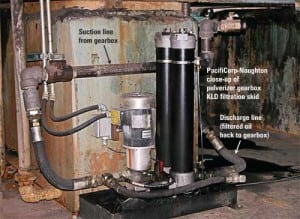
A coal-fired power plant operating in the western U.S. was experiencing short gearbox life in its coal-pulverizing operation. After an annual gearbox inspection, oil analysis results indicated that the AGMA 6EP (ISO 320) gear oil recommended by the original equipment manufacturer (OEM) had failed to provide adequate lubrication and protection. This conclusion was based on […]
-
Coal
Coal Users Community: Growth Is the Byword for Gasification
The Gasification Technologies Council (GTC, www.gasification.org) was created in 1995 with a straightforward mission: to promote the greater use of gasification as an environmentally and economically preferred alternative for the production of power, fuels, and chemicals from low-value energy sources. Those energy sources include high-sulfur coal, petroleum coke, and wastes. Since that time the GTC […]
-
O&M
Projects
Reliant Energy Commits $350 Million for Environmental Upgrades at Two Key Facilities Reliant Energy has announced plans to install state-of-the-art emission control systems at two Pennsylvania power plants, a major step in the company’s strategy for maximizing the long-term value of its power generation assets while reducing air emissions. The utility, Reliant Energy, estimated it […]
-
Coal
Editorial: Tax Credits Should Help Promote Coal-Based Power Generation Technologies
In order to promote coal-based technologies, the U.S. Department of Energy will be assisting the Internal Revenue Service (IRS) in the selection of projects to receive tax credits. According to the DOE’s Office of Fossil Energy, recent legislation has been designed to advance cleaner coal-based power generation and gasification technologies. The Energy Policy Act of […]
-
 Coal
CoalCover Story: FutureGen: Zero-Emission Power Plant of the Future
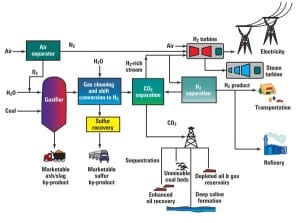
In early 2003 the United States announced its plans to build a zero-emission prototype of the fossil fuel power plant of the future called FutureGen. It is one of the boldest steps toward a pollution-free energy future ever taken by the U.S. It has the potential to be one of the most important advances in […]
-
 Coal
CoalCurrant Creek Power Plant, Mona, Utah
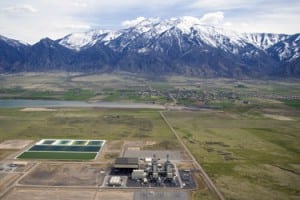
Commercial operation of PacifiCorp’s first new power plant in more than 20 years coincided with the company’s acquisition by MidAmerican Energy Holdings Company this past March. Currant Creek treads lightly on the environment, provides needed power to PacifiCorp’s eastern control area, and has demonstrated its commitment to be a good corporate citizen of the local community. By any account, Currant Creek is a model for how to develop a power project.
-
 Hydro
HydroKannagawa Hydropower Plant, Japan
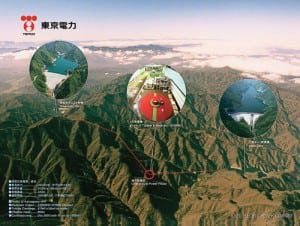
With the commercial debut of the first of six planned 470-MW turbines in December 2005, the time has come to pay homage to the sheer size (2,820 MW) and longevity (13 years and counting) of TEPCO’s Kannagawa Hydropower Plant. By the time Unit 2 is commissioned in 2010, and Units 3 through 6 go on-line "in and after 2016," two generations of engineers, technicians, and builders will have worked on the "pure" pumped-storage project since its inception. As if those stats weren’t impressive enough, Kannagawa marks the debut of "splitter runners" for pump-turbines. They increase the effective head of the plant to the highest in the world: 2,142 feet, at a flow of 135,000 gallons/second. That’s a very large pump-turbine, indeed.
-
 Gas
GasLinden Generating Station, Linden, New Jersey
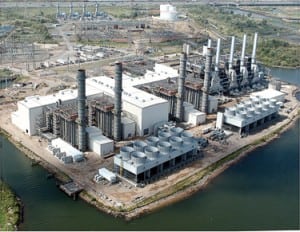
It would be easy to dismiss Linden—which is powered by now-ubiquitous GE 7FA gas turbines and D11 steam turbines—as just another cookie-cutter combined-cycle plant. But its size (1,240 MW), key location near New York City, and use of reclaimed water for all cooling water needs makes Linden deserving of recognition as one of POWER’s Top Plants of 2006. Perhaps its most interesting story is how the project survived more than five years from groundbreaking to commissioning.
-
 Coal
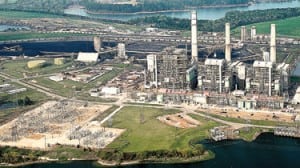
CoalMonticello Steam Electric Station, Mount Pleasant, Texas
Why does Monticello, a 30-year-old plant, deserve recognition as one of POWER’s Top Plants of 2006? Because TXU has been blending Powder River Basin (PRB) coal with local lignite at the plant for the past decade, and steady reductions in air-pollutant emission rates have been the result. That positive experience has made the company confident enough to propose building nearly 9,100 MW of new coal- or lignite-fired capacity in Texas by 2010 at a cost of $10 billion. Read on to share some of the lessons that TXU has learned about handling PRB coal safely.
-
 News
NewsBanana republic
Learning theorists tell us that one of the key reasons we don’t learn from our mistakes is that we don’t or won’t recognize them as such. We attribute good outcomes to our skill and intelligence and blame bad ones on others or on just plain bad luck. This unhealthy mind-set can be tolerated for […]
-
 Gas
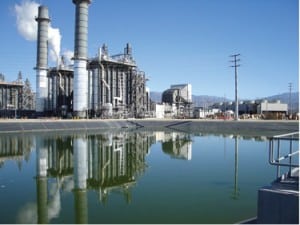
GasMountainview Power Plant, Redlands, California
Southern California Edison and Bechtel resurrected the 1,054-MW Mountainview power project after a two-year hiatus while meeting aggressive budget and schedule constraints. Edison exercised its option to purchase the project after regulatory approvals were received at light speed, and construction resumed the very day approval was granted. Residents of California’s Inland Empire will enjoy their air conditioners this summer because Mountainview was transformed from a wasteland into a productive plant.