
Articles By

-
Coal
Utility Business Customers to Feast on Free Allowances
An analysis by the Center on Budget and Policy Priorities concluded that two-thirds of the value of carbon emission allowances described by the recent H.R. 2545 will benefit utility business customers and households in the top quartile of personal income. The middle quintile will see increased cost for electricity.
-
Coal
MIT Report Urges Faster Action on Carbon-Capture Retrofits
MIT researchers push for faster commercialization of carbon capture technologies for coal-fired power plants by reducing system costs.
-
Commentary
Instead of Free Allowances, Opt for "Auction and Recycle"
By J. Wayne Leonard
A policy of allocating free allowances to hold down electric price increases, as some in our industry are advocating as part of climate change legislation, is well-intended but not the best choice for a cap-and-trade plan. An "auction and recycle" plan accomplishes the same goals yet is more consumer friendly. -
Commentary
Using Power Plant Waste to Solve Disposal Problems
By Dr. Richard W. Goodwin, PE
Of the 131 million tons of U.S. power plant waste or coal combustion by-products (CCBs), 36% are disposed of in landfills and 21% are disposed of in surface impoundments. Recent problems with surface impoundments and landfills have created a media furor and have prompted elected and appointed officials to demand more stringent regulatory control. -
General
Zito, Gretzky, and Renewables
Assertions by renewable energy advocates that renewables have now exceed nuclear in the overall U.S. energy mix are dead wrong, the equivalent of mixing apples and hand grenades.
-
 News
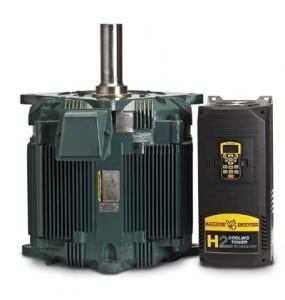
NewsAdjustable Speed Direct Drive Cooling Tower Motor
Arkansas-based Baldor Electric Co. launched a new direct drive technology for the cooling tower industry that improves reliability, reduces maintenance, runs quieter, and saves energy. The Adjustable Speed Direct Drive Cooling Tower Motor combines technologies of the field-proven laminated finned frame RPM AC motor with a high-performance permanent magnet salient pole rotor design, and it […]
-
 News
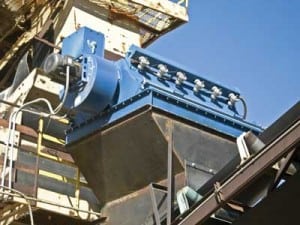
NewsImproved Coal Dust Collector
Martin Engineering has introduced an upgraded version of the MARTIN Insertable Dust Collector, which features improved filters and a smaller footprint to control airborne coal dust at belt conveyor loading points and other bulk material-handling operations. Insertable dust collectors are typically installed to reduce problems associated with central baghouse collection systems, including long runs of […]
-
News
Politics Trump Scientific Integrity
In their recent endangerment finding draft technical support document (TSD), scientists at the U.S. Environmental Protection Agency (EPA) conclude that carbon dioxide emissions are a public health hazard and should be regulated under the Clean Air Act. Federal law requires that regulations be based on scientific information that is "accurate, clear, complete, and unbiased"; the most recent available; and collected by the "best available methods." The EPA’s TSD on carbon emissions violates all of these requirements.
-
-
 O&M
O&MThe 7,000-Foot Challenge
The Springerville Generating Station in Springerville, Ariz. (Unit 3 was POWER’s 2006 Plant of the Year), uses two lined ponds to hold water collected from its cooling towers. With the construction of Unit 4, the plant’s owner, Salt River Project (SRP), one of Arizona’s largest utilities, wanted to increase the capacity of pumps used to move effluent from one pond to another to avoid the possibility of overflow. SRP engineers wondered if using a vertical turbine pump on a floating barge would improve managing the water levels in the two ponds.
-
Legal & Regulatory
Old Challenges Persist in Impeding Renewable Energy Goals
In June, California issued yet another report on renewable energy. This one, a joint effort of the California Public Utilities Commission (CPUC) and the California Energy Commission (CEC), analyzes implementation issues related to increasing the state’s renewables portfolio standard (RPS) to 33% by 2020. The report is the latest in an increasingly growing number of assessments, policy pronouncements, and administrative decisions examining renewable energy and climate change issues.
-
 Coal
CoalCity of Springfield’s CWLP Dallman 4 Earns POWER’s Highest Honor
City Water, Light & Power (CWLP), the municipal utilities agency of the City of Springfield, Ill., determined that coal-fired generation was its best alternative for providing long-term reliable and economic electricity to the city’s residents. For negotiating an unprecedented agreement with the Sierra Club that allowed the project to move forward, for choosing the latest in coal-fired technology and air quality control systems as the foundation for the city’s comprehensive energy policy, and for assembling a tightly integrated team that completed the project well before the contractual deadline and under budget, CWLP’s Dallman 4 is awarded POWER magazine’s 2009 Plant of the Year award.
-
 Environmental
Help Build the Global Energy Observatory
How would you like to be able to access data on all the power plants in the world and all of their performance metrics, analyze that data, and map it? Those abilities are part of the vision behind the Global Energy Observatory (GEO), an OpenModel website that serves as a wiki for global energy data.
-
 Gas
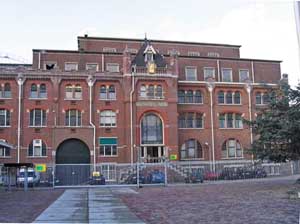
Gas2009 Marmaduke Award: The Hague Repowering Project Upgrades CHP System, Preserves Historic Building
The Hague’s century-old power plant, now owned by E.ON, provides electricity to the local grid and thermal energy for the city’s district heating system. Poor performance from the plant’s 25-year-old equipment and The Hague’s wish to become a carbon-neutral city by 2010 gave birth to the idea of repowering the existing plant. For protecting a historic building while investing in low-emissions electricity generation, achieving improved plant efficiency and reliability, and accelerating the project so the plant could be back online for the next heating season, The Hague Repowering Project is the winner of POWER’s 2009 Marmaduke Award for excellence in O&M. The award is named for Marmaduke Surfaceblow, the fictional marine engineer and plant troubleshooter par excellence.
-
 Coal
CoalRevived FutureGen Faces Renewed Funding Obstacles
A little more than a year after the Bush administration abruptly withdrew its support for the FutureGen project, the Department of Energy has again announced it will back the proposed Illinois gasified coal power plant and carbon capture initiative. Though the 275-MW project may be different in technical aspects — it will be initially designed for 60% carbon capture, not 90%, and gasify only Illinois Basin Coal (Figure 2) — it is still riddled with many of same funding problems. Making matters worse, it may have been revived too late: Since the DOE withdrew its support, several major carbon capture and storage (CCS) projects and alliances have sprouted in the U.S., and these could give FutureGen a run for its money.
-
 Water
WaterImproved FGD Dewatering Process Cuts Solid Waste
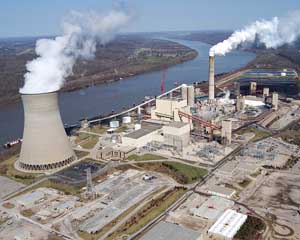
In 2007, Duke Energy’s W.H. Zimmer Station set out to advance the overall performance of its flue gas desulfurization (FGD) dewatering process. The plant implemented a variety of measures, including upgrading water-solids separation, improving polymer program effectiveness and reliability, optimizing treatment costs, reducing solid waste sent to the landfill, decreasing labor requirements, and maintaining septic-free conditions in clarifiers. The changes succeeded in greatly reducing solid waste generation and achieving total annual savings of over half a million dollars per year.
-
Coal
How Much Coal Does the U.S. Really Have?
The U.S. Geological Survey (USGS), a federal mapping agency, has of late been propounding the difference between "resources" and "reserves." It says that although the two terms are used interchangeably, the distinction is simple: Reserves are a subset of resources. Coal resources, as an example, include those in-place tonnage estimates determined by summing the volumes for identified and undiscovered deposits of coal, whereas coal reserves are those resources considered "economically producible" at the time of classification, even though extraction facilities are not in place and operative.
-
 Coal
CoalIGCC Update: Are We There Yet?
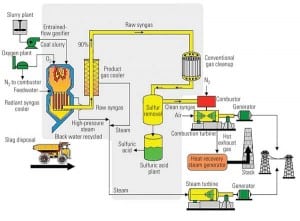
If a number of technical, financial, and regulatory hurdles can be overcome, power generated by integrated gasification combined-cycle technology could become an important source for U.S. utilities. Our overview presents diverse perspectives from three industry experts about what it will take to move this technology off the design table and into the field.
-
 Coal
CoalOf Fracking, Earthquakes, and Carbon Sequestration
Hydraulic fracturing — the process of drilling and then pumping fluid deep into a formation to generate fractures or cracks, typically for extracting natural gas from shale formations — has been under fire lately, owing to concerns that it contaminates drinking water. But while Congress debates proposed legislation that would impose new restrictions on the technology, an entirely different concern related to fracturing — or "fracking" — is emerging: It may trigger earthquakes.
-
 Coal
CoalCommercially Available CO2 Capture Technology
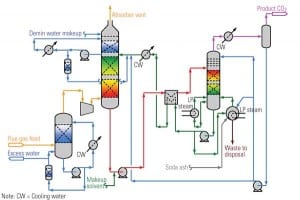
While many CO2 removal technologies are being researched through laboratory and pilot-scale testing, an existing technology has a significant operating history at commercial-scale facilities, where it is collecting CO2 from multiple sources, including low-CO2 concentration flue gas (<3.1% by volume) with high oxygen concentrations (>13% by volume).
-
 Wind
WindFloating and Flying Wind Turbines
After months of preparation, Norway’s StatoilHydro and Germany’s Siemens in June erected the world’s first large-scale floating deepwater wind turbine some 7 miles offshore Karmøy, southeast Norway, on the 720-feet-deep waters of the Amoy Fjord. The developers are now gearing up to connect the Hywind turbine to the local grid, and it could begin producing power as early as mid-July.
-
 O&M
O&MPreventing Turbine Water Damage: TDP-1 Updated
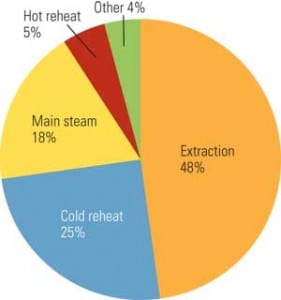
ASME’s latest revision of its Recommended Practices for the Prevention of Water Damage to Steam Turbines Used for Electric Power Generation: Fossil-Fuel Plants, ASME TDP-1-2006, contains much important design and operating advice that is proven to protect steam turbines. However, many in the industry are not as familiar with the update as they should be. This article provides a concise overview of this critical design standard.
-
 Coal
CoalMajor Scottish Coal Plant Starts CCS Pilot Program
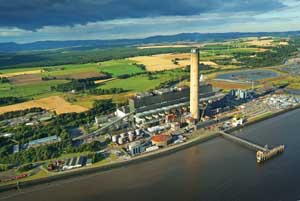
Energy provider ScottishPower on May 29 flicked on the switch of a carbon capture and storage (CCS) pilot program at its 2,304-MW coal-fired Longannet power plant, in Fife, Scotland, marking the beginning of a seven-month test — and the first time a UK coal-fired power plant has reportedly attempted to capture its carbon emissions.
-
 Gas
GasFlexible Fuel Combustor Design Accommodates LNG
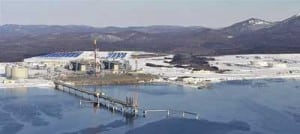
To supplement domestic natural gas supplies, the U.S. is expected to increase its dependence on offshore liquefied natural gas suppliers in the coming years. However, the composition and hydrocarbon content of imported LNG may significantly vary from those of North American sources. Variation in fuel composition may lead to plants using fuel that violates their combustion turbine fuel specifications and may cause operational problems.
-
 Solar
SolarEuropean Interest in Saharan Solar Project Heats Up
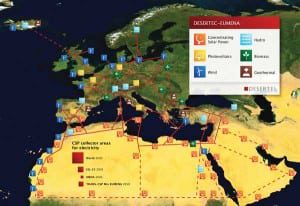
Plans to install a series of solar panel farms in the Sahara Desert to power Europe and North Africa are heating up. The idea was discussed in May as part of the newly formed Mediterranean Union, launched at a summit in Paris, and it now has the backing of both UK Prime Minister Gordon Brown and French President Nicolas Sarcozy.
-
 Marmaduke
Marmy’s Deep-Freeze Blackout
Steve Elonka began chronicling the exploits of Marmaduke Surfaceblow — a six-foot-four marine engineer with a steel brush mustache and a foghorn voice — in POWER in 1948, when he raised the wooden mast of the SS Asia Sun with the help of two cobras and a case of Sandpaper Gin. Marmy’s simple solutions to seemingly intractable plant problems remain timeless. This Classic Marmaduke story, published 50 years ago, takes place during the Cold War at an Air Force Base in northern Greenland, where under-ice tunnels were constructed to move nuclear rockets around the facility unobserved. The miniature nuclear reactor was operated for almost three years before it was shut down and returned to the U.S., ending the Army’s nuclear program. Greenland officially became a separate county within the Kingdom of Denmark in 1953, and home rule was introduced in 1979.
-
 Waste to Energy
Turning Sewage into Renewable Energy
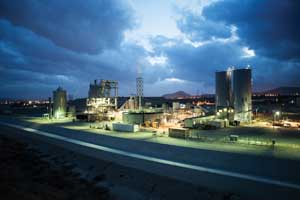
News has been emerging from around the world about several projects that seek to turn human sewage — arguably the dirtiest of manmade wastes — into clean energy.
-
 News
NewsIntelligent Cooling Tower System
Electro-Chemical Devices’ new plug-and-play Model 2122 Cooling Tower Control System (CTCS) is designed to apply the various chemicals used to prevent corrosion, scaling, and fouling in water-based wet cooling towers. The system also controls acid feed via pH monitoring, blowdown via conductivity, and the inhibitor via a user-selected time basis. Model 2122 CTCS features a […]
-
 O&M
O&MManaging Minimum Load
Reducing the minimum load at which a steam turbine can reliably operate is one way to increase revenue for marginal base-loaded units during periods of low electrical demand. For this reason, it is not unusual to see merchant plants operating at "super minimum" load levels that are well below the typical 25% rated full-load limits. However, such units are operating well outside the original equipment manufacturer (OEM) design basis, and owners may experience undesirable damage to their turbines for a number of reasons. That’s why it is important for owners to understand the trade-offs and risks that come with such operation.
-
Commentary
Carbon Offsets: Scam, Not Salvation
In the battle against climate change, most media attention has been paid to "cap-and-trade" schemes, under which countries set upper limits ("caps") on greenhouse gas (GHG) emissions and allow companies to sell ("trade") unused emissions rights to other firms. However, there is a second path to global warming salvation: Carbon offsets.