
Articles By

-
 Coal
CoalOf Fracking, Earthquakes, and Carbon Sequestration
Hydraulic fracturing — the process of drilling and then pumping fluid deep into a formation to generate fractures or cracks, typically for extracting natural gas from shale formations — has been under fire lately, owing to concerns that it contaminates drinking water. But while Congress debates proposed legislation that would impose new restrictions on the technology, an entirely different concern related to fracturing — or "fracking" — is emerging: It may trigger earthquakes.
-
 Coal
CoalCommercially Available CO2 Capture Technology
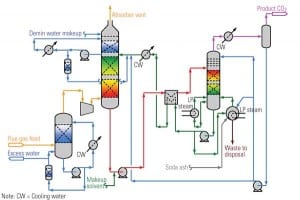
While many CO2 removal technologies are being researched through laboratory and pilot-scale testing, an existing technology has a significant operating history at commercial-scale facilities, where it is collecting CO2 from multiple sources, including low-CO2 concentration flue gas (<3.1% by volume) with high oxygen concentrations (>13% by volume).
-
 Wind
WindFloating and Flying Wind Turbines
After months of preparation, Norway’s StatoilHydro and Germany’s Siemens in June erected the world’s first large-scale floating deepwater wind turbine some 7 miles offshore Karmøy, southeast Norway, on the 720-feet-deep waters of the Amoy Fjord. The developers are now gearing up to connect the Hywind turbine to the local grid, and it could begin producing power as early as mid-July.
-
 O&M
O&MPreventing Turbine Water Damage: TDP-1 Updated
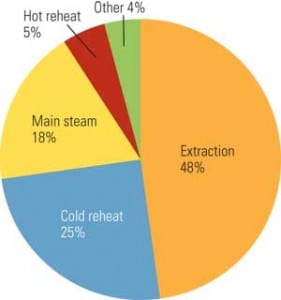
ASME’s latest revision of its Recommended Practices for the Prevention of Water Damage to Steam Turbines Used for Electric Power Generation: Fossil-Fuel Plants, ASME TDP-1-2006, contains much important design and operating advice that is proven to protect steam turbines. However, many in the industry are not as familiar with the update as they should be. This article provides a concise overview of this critical design standard.
-
 Coal
CoalMajor Scottish Coal Plant Starts CCS Pilot Program
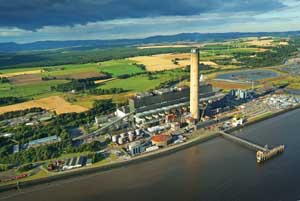
Energy provider ScottishPower on May 29 flicked on the switch of a carbon capture and storage (CCS) pilot program at its 2,304-MW coal-fired Longannet power plant, in Fife, Scotland, marking the beginning of a seven-month test — and the first time a UK coal-fired power plant has reportedly attempted to capture its carbon emissions.
-
 Gas
GasFlexible Fuel Combustor Design Accommodates LNG
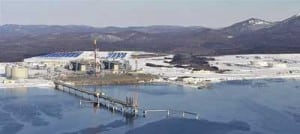
To supplement domestic natural gas supplies, the U.S. is expected to increase its dependence on offshore liquefied natural gas suppliers in the coming years. However, the composition and hydrocarbon content of imported LNG may significantly vary from those of North American sources. Variation in fuel composition may lead to plants using fuel that violates their combustion turbine fuel specifications and may cause operational problems.
-
 Solar
SolarEuropean Interest in Saharan Solar Project Heats Up
Plans to install a series of solar panel farms in the Sahara Desert to power Europe and North Africa are heating up. The idea was discussed in May as part of the newly formed Mediterranean Union, launched at a summit in Paris, and it now has the backing of both UK Prime Minister Gordon Brown and French President Nicolas Sarcozy.
-
 Marmaduke
Marmy’s Deep-Freeze Blackout
Steve Elonka began chronicling the exploits of Marmaduke Surfaceblow — a six-foot-four marine engineer with a steel brush mustache and a foghorn voice — in POWER in 1948, when he raised the wooden mast of the SS Asia Sun with the help of two cobras and a case of Sandpaper Gin. Marmy’s simple solutions to seemingly intractable plant problems remain timeless. This Classic Marmaduke story, published 50 years ago, takes place during the Cold War at an Air Force Base in northern Greenland, where under-ice tunnels were constructed to move nuclear rockets around the facility unobserved. The miniature nuclear reactor was operated for almost three years before it was shut down and returned to the U.S., ending the Army’s nuclear program. Greenland officially became a separate county within the Kingdom of Denmark in 1953, and home rule was introduced in 1979.
-
 Waste to Energy
Turning Sewage into Renewable Energy
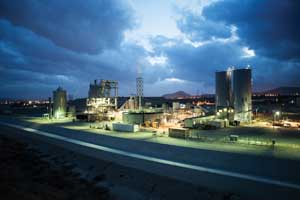
News has been emerging from around the world about several projects that seek to turn human sewage — arguably the dirtiest of manmade wastes — into clean energy.
-
 News
NewsIntelligent Cooling Tower System
Electro-Chemical Devices’ new plug-and-play Model 2122 Cooling Tower Control System (CTCS) is designed to apply the various chemicals used to prevent corrosion, scaling, and fouling in water-based wet cooling towers. The system also controls acid feed via pH monitoring, blowdown via conductivity, and the inhibitor via a user-selected time basis. Model 2122 CTCS features a […]
-
 O&M
O&MManaging Minimum Load
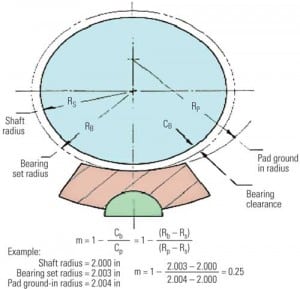
Reducing the minimum load at which a steam turbine can reliably operate is one way to increase revenue for marginal base-loaded units during periods of low electrical demand. For this reason, it is not unusual to see merchant plants operating at "super minimum" load levels that are well below the typical 25% rated full-load limits. However, such units are operating well outside the original equipment manufacturer (OEM) design basis, and owners may experience undesirable damage to their turbines for a number of reasons. That’s why it is important for owners to understand the trade-offs and risks that come with such operation.
-
Commentary
Carbon Offsets: Scam, Not Salvation
In the battle against climate change, most media attention has been paid to "cap-and-trade" schemes, under which countries set upper limits ("caps") on greenhouse gas (GHG) emissions and allow companies to sell ("trade") unused emissions rights to other firms. However, there is a second path to global warming salvation: Carbon offsets.
-
 O&M
O&MPolymeric Solution for Pump Cavitation
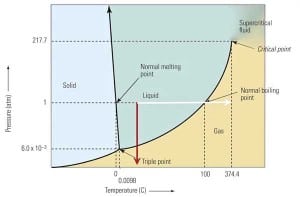
Cavitation is defined as the phenomenon of forming and imploding vapor bubbles in a region where the pressure of the liquid falls below its vapor pressure. Cavitation and the resultant damage can occur in any fluid-handling equipment, especially in pumps. Technological advances in industrial protective coatings and composite repair materials have made it possible to repair pumps operating in a cavitating environment rather than simply replacing them after damage occurs. Cavitation-resistant (CR) elastomers have the ability to retain adhesion under long-term immersion, dissipate energy created under high-intensity cavitation, and provide outstanding resistance to corrosion and other forms of erosion.
-
 News
NewsAdjustable Speed Direct Drive Cooling Tower Motor
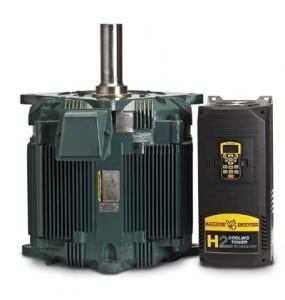
Arkansas-based Baldor Electric Co. launched a new direct drive technology for the cooling tower industry that improves reliability, reduces maintenance, runs quieter, and saves energy. The Adjustable Speed Direct Drive Cooling Tower Motor combines technologies of the field-proven laminated finned frame RPM AC motor with a high-performance permanent magnet salient pole rotor design, and it […]
-
 News
NewsImproved Coal Dust Collector
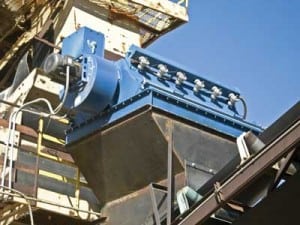
Martin Engineering has introduced an upgraded version of the MARTIN Insertable Dust Collector, which features improved filters and a smaller footprint to control airborne coal dust at belt conveyor loading points and other bulk material-handling operations. Insertable dust collectors are typically installed to reduce problems associated with central baghouse collection systems, including long runs of […]
-
News
Politics Trump Scientific Integrity
In their recent endangerment finding draft technical support document (TSD), scientists at the U.S. Environmental Protection Agency (EPA) conclude that carbon dioxide emissions are a public health hazard and should be regulated under the Clean Air Act. Federal law requires that regulations be based on scientific information that is "accurate, clear, complete, and unbiased"; the most recent available; and collected by the "best available methods." The EPA’s TSD on carbon emissions violates all of these requirements.
-
-
General
USEC: Is the Enrichment Company Done?
By Kennedy Maize USEC, the Bethesda, Md., uranium enrichment company that took over the Department of Energy’s enrichment program in 1992 is claiming that the Obama administration is reneging on promises to provide $2 billion in loan guarantees for the company’s “advanced” centrifuge enrichment plan, made during the 2008 presidential campaign. DOE’s decision to withhold […]
-
News
Bruce Power Scraps Plans for Two New Ontario Nuke Plants
Canada’s only private nuclear generating company, Bruce Power, plans to withdraw its application to build two new nuclear power plants in Ontario, opting instead to refurbish existing reactors. The decisions reflect the “realities of the market” and are unique to Ontario, the company said last week.
-
News
AWEA: U.S. Wind Energy Growth Slows Amid Economic Concerns
New wind energy installations in the U.S. plunged to just 1,210 MW in the second quarter of 2009—falling to less than half of the 2,790 MW of new installations reported for the first quarter of this year—according to the American Wind Energy Association (AWEA).
-
News
TVA OIG Report: Kingston Coal Spill Caused by Bad Management Practices
A report released on Tuesday by the Tennessee Valley Authority’s (TVA’s) Office of the Inspector General (OIG) lambasts the publically owned company’s management practices. It says that the breach of a 50-year-old coal ash storage pond and subsequent ash spill at its Kingston Fossil Plant in Roane County, Tenn., last December could have been prevented if TVA had heeded 20 years of warnings and taken recommended corrective actions.
-
News
UK Switches on "World’s Largest" Oxyfuel CCS Pilot Plant
Doosan Babcock Energy on Friday switched on what it is calling the “world’s largest” oxyfuel combustion carbon capture and storage (CCS) facility in Renfrew, Scotland. The facility will demonstrate that company’s OxyCoal Clean Combustion system for the first time on a full-size 40-MW burner.
-
News
DOE’s Denial of Loan Guarantee Forces USEC to Demobilize Enrichment Plant
The Department of Energy (DOE) on Tuesday said it had encouraged USEC to withdraw its application for $2 billion in loan guarantee funding for the American Centrifuge Plant in Piketon, Ohio. The decision has forced the nation’s only domestic uranium enrichment firm to begin demobilizing the project.
-
News
Bill to Manage CCS Risk Introduced in U.S. Senate
U.S. Senators Bob Casey (D-Penn.) and Mike Enzi (R-Wyo.) last week introduced a bill to encourage the commercial deployment of carbon capture and storage (CCS) technology by setting up a program for managing financial risk or liability of the long-term storage of the greenhouse gas.
-
 Legal & Regulatory
Uranium: A Strange and Fascinating Story
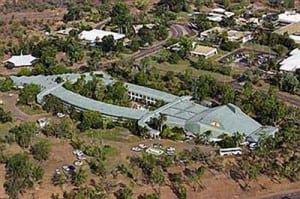
Everything you want to, or should, know about uranium mining and processing is in a new book by Tom Zoellner, not including the terrifying threat of crocodiles in northern Australia.
-
Legal & Regulatory
TREND: The Realities of the Nuclear Renaissance Emerge
Even as hype about the U.S. nuclear renaissance is quieting down—a result of economic woes and unrealistic expectations about political and regulatory developments—some developments remain. As these stories from the nation’s media suggest, the building of new nuclear plants in the U.S. may move ahead at a slower, more measured pace.
-
Supply Chains
Looking for Cash? Look at Inventory
Inventory is expensive. It sucks up, and locks up, cash. How can utility managers save inventory money? Here are some possibilities from experts in inventory management.
-
Commentary
What Do Americans Think About Energy and the Environment?
Most Americans simply don’t have clue about energy and environmental issues, according to a Zogby poll commissioned by the conservative Manhattan Institute.
-
Commentary
Global Warming: It’s a Regional Zero-Sum Game
Why Americans have tuned out global-warming hype, and why they are right to do so.
-
HR
Power to Your People, Right On
Educating a workforce about the concept of business acumen—going beyond financial literacy and developing a true understanding of what it takes for an organization to make money—is the key to producing real, bottom-line results.