
Articles By

-
News
TVA Stands by Bellefonte COLA; Progress Energy Delays Levy County Nuke Units
The Tennessee Valley Authority (TVA) last week said it would continue pushing for regulatory approval of its proposed Bellefonte nuclear plant, though the NuStart consortium had shifted priority to another project, while Progress Energy Florida delayed the commercial start of its proposed Levy County plant by almost two years while it awaits a combined construction and operation license (COL) from the Nuclear Regulatory Commission (NRC).
-
News
Deal in Kansas Means Sunflower Will Get Coal Plant
Kansas’ new governor, Mark Parkinson, and Sunflower Electric Power Corp. have reached a compromise that would allow that company to build an 895-MW coal plant in the western part of the state in exchange for Republican support for a state bill that encourages production of more renewable energy.
-
News
Bills to Spur Marine Energy Development Introduced in Congress
Legislation introduced last week by members of the House of Representatives and the Senate could spur development of U.S. marine and hydrokinetic energy resources—a sector in which the U.S. has lagged behind other countries.
-
News
New Bill Could Tighten Grid Cybersecurity
Ramped-up concerns about the security of the U.S. power grid and media reports that said cyberspies had infiltrated it have prompted the introduction of a congressional bill that would increase the authority of the Department of Homeland Security (DHS) and the Federal Energy Regulatory Commission (FERC) to help reduce the grid’s vulnerability.
-
News
NRC Grants First Ever 40-Year Nuclear Facility License Renewal
The Nuclear Regulatory Commission (NRC) has renewed the first ever 40-year-operating license of a nuclear facility in the U.S., granting it to AREVA NP’s nuclear fabrication facility in Richland, Wash.
-
News
DOE Pours Recovery Act Funding into Wind, Laboratory Improvements
The Department of Energy (DOE) last week said it would provide $93 million from the American Recovery and Reinvestment Act to support further development of wind energy in the U.S., as well $100 million from the act for facility and infrastructure improvements at the National Renewable Energy Laboratory (NREL).
-
Legal & Regulatory
Will Stars Align for Transmission Policy in 2009?
In the 1990s, alarm bells were sounded because the construction of electric transmission infrastructure was not keeping pace with the United States’ rapidly increasing electric demand. More than 10 years later, despite considerable debate and the passage of new legislation, we continue to search for ways to get transmission built. However, it now looks as if 2009 may the year in which the stars finally align to fix the transmission system.
-
 Water
WaterReconsider Start-up Controls to Avoid Boiler Deposits and Underdeposit Corrosion
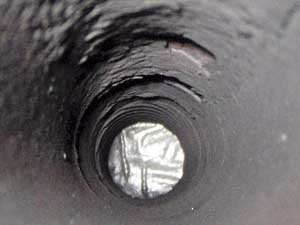
Water treatment programs for boilers and heat-recovery steam generator (HRSG) units appropriately focus on chemistry controls during normal operation. However, rates of corrosion product transport and deposition can be much greater in boilers and HRSG units during start-up than during routine operation. For that reason, in addition to standard programs for monitoring and control of corrosion product transport, deposition, and underdeposit corrosion, consider adding contingency plans for boiler water chemistry holds in the start-up process.
-
 Water
WaterHow to Measure Corrosion Processes Faster and More Accurately
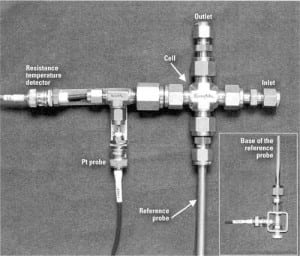
Maintaining reliable and efficient plant operations requires good control of corrosion and corrosion product transport in power plant water systems. The Electric Power Research Institute recommends oxidation-reduction potential for passivator control in feedwater systems, as do many industry experts. Here’s how to turn that recommendation into a robust feedwater monitoring program.
-
 Business
Fabulous Wealth and Fabulous Poverty
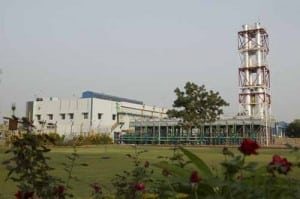
Mark Twain summed it up best when he described India more than a century ago as a place of “fabulous wealth and fabulous poverty.” Today, for all its surging economic growth, 300 million Indians still live below the poverty line.
-
 O&M
O&MLessons Learned from a Hydrogen Explosion
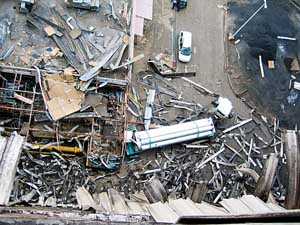
On January 8, 2007, a hydrogen explosion at the Muskingum River Power Plant’s 585-MW coal-fired supercritical Unit 5 caused one fatality, injuries to 10 other people, and significant damage to several buildings. The explosion occurred during a routine delivery of hydrogen when a hydrogen relief device failed, which allowed the contents of the hydrogen tank to escape and be ignited by an unknown source. This article covers the findings of the incident investigation and the actions the plant has taken to prevent a reoccurrence.
-
 Coal
CoalFirstenergy to Convert Coal-Fired Burger Plant to Biomass
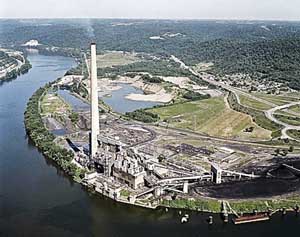
Confronted with a district court ultimatum that would have forced it to install expensive pollution controls or close two coal-fired units at its R.E. Burger Plant in Shadyside, Ohio, Akron-based FirstEnergy Corp. announced in April that it would convert them to biomass. When the $200 million retrofit is complete, as is expected by 2013, the Burger Plant will likely be one of the largest biomass facilities in the U.S.
-
 Coal
CoalPowering the People: India’s Capacity Expansion Plans
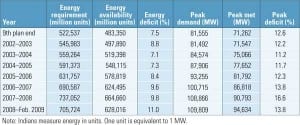
India has become a global business power even though hundreds of millions of its citizens still live in poverty. To sustain economic growth and lift its people out of poverty, India needs more — and more reliable — power. Details of government plans for achieving those goals demonstrate that pragmatism may be in shorter supply than ambition and political will.
-
 Solar
SolarInterest in Solar Tower Technology Rising
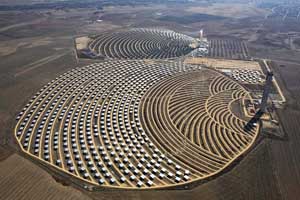
Though solar thermal tower technology has been around since the 1970s, to date, only one plant in the world commercially generates electricity: Abengoa Solar’s 11-MW PS10 tower just outside Seville, in Spain’s Andalucía desert has been grid-connected since early 2007. Because the technology relies on heat from solar energy that is reflected by mirror arrays (heliostats) onto a tower-mounted receiver, installations tend to be site-specific, expensive, and high-maintenance.
-
Business
The Foreign Investment Factor (supplement to Powering the People: India’s Capacity Expansion Plans)
Recognizing that the long-term sunk cost, long project planning and construction timeframe, and high-risk portfolio make it difficult for private investors to raise funds whose maturity matches project completion dates, the Indian government has since 1991 allowed 100% foreign direct investment in the power sector.
-
 O&M
O&MBoiler-Tuning Basics, Part II
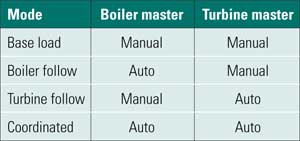
Boilers have enormous thermal mass and are relatively slow to react. Turbines are nimble and quickly answer an operator’s command. Coordinating an entire plant requires an intimate knowledge of both systems and selecting the right logic tools to bring them together.
-
 Hydro
HydroTidal Barrages Could Power 5% of UK
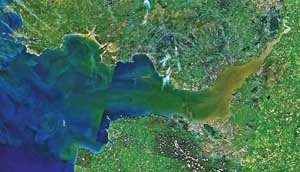
Barrages across the Solway Firth, Morecambe Bay, and the Mersey and Dee estuaries in the northwest UK could provide more than 5% of the nation’s electricity and meet half the region’s electricity, a study by engineers at the University of Liverpool has found.
-
 Nuclear
Nuclear Uprates Add Critical Capacity
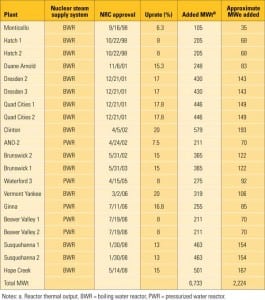
New-generation nuclear plants may be having trouble getting out of the gate, but that doesn’t mean that nuclear capacity additions are at a standstill. In fact, the 104 operating nuclear units in the U.S. have added substantial new capacity in the form of reactor and plant uprates over the past 20 years. Power uprates alone have added more than 5,600 MW since 1998 — the equivalent of five new nuclear plants.
-
 Coal
CoalGeologists Map Carbon-Trapping Rock Formations
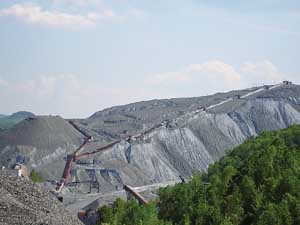
U.S. scientists concerned about carbon dioxide (CO2) leaks from sequestration attempts have been pursuing the option of natural chemical reactions within the earth to turn the carbon back into a solid, and they have identified an abundant supply of large rock formations around the world that could be used a vast sink for the heat-trapping gas.
-
 Nuclear
Birth Pangs of the Nuclear Renaissance
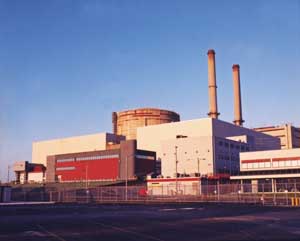
The much-ballyhooed U.S. nuclear renaissance, with a few exceptions, is running late, thanks to the usual Washington bureaucratic quagmire plus the added risk resulting from crumbling financial markets. The future doesn’t look much brighter. The poor outlook for Yucca Mountain and the new administration’s general indifference to nuclear power have made a rebirth of the nuclear industry an even higher-risk proposition than before.
-
 Geothermal
Tapping Geothermal Energy with a Comprehensive Strategy
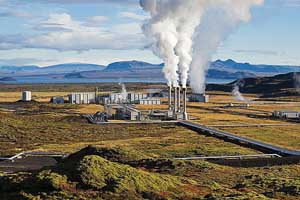
Geothermal energy in Europe may have been used for centuries — it was popularized by the Romans and adopted by the Turks — but geothermal-generated electricity was first produced at Larderello, Italy, in 1904. Since then, its growth on the continent has shot up to 820 MW. But, according to the European Renewable Energy Council, the resource’s full potential has barely been harnessed.
-
Hydro
Renewable Project Finance Options: ITC, PTC, or Cash Grant?
Dozens of institutional investors in U.S. renewable energy projects pulled out of the market when the nation’s liquidity reserves dried up late last year. Some left the renewable market sector in search of more lucrative investment opportunities. Others found themselves unable to take advantage of the attractive tax credits because they themselves lacked profits against which to use the credits. The American Recovery and Reinvestment Act of 2009, approved February 13, changed the investor ground rules — again.
-
 News
NewsSwitchgear Technology Surpasses 1 Million Volts
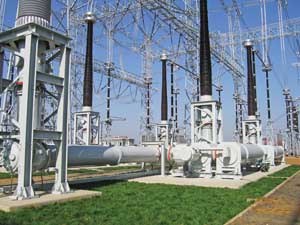
Swiss power technology group ABB, which pioneered gas-insulated switchgear 50 years ago, in April announced it had commissioned switchgear rated to handle 1,100 kV. The development marks the biggest leap in capacity and efficiency of AC power transmission in more than two decades.
-
 News
NewsTwo-Pump Fuel Recirculating System
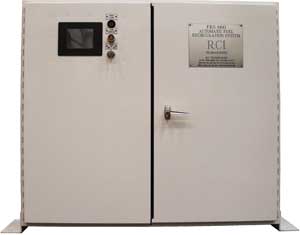
The Duplex Pump Unit (FRS 660-11-DPU-UL) from RCI Technologies is the newest addition to that company’s line of diesel fuel purifiers and fuel recirculating systems (FRSs). Designed to automatically circulate and clean the fuel in customers’ fuel storage tanks on a preprogrammed schedule, the DPU features two fuel pumps, which operate alternately to circulate fuel through the system. Whereas RCI’s other FRS units utilize a single pump, the duplex pump offers backup in the event of a primary system failure. All FRS units employ filter-less technology. The control system is housed in a weatherproof, NEMA 4, key-lockable cabinet, and the system is equipped with alarms to alert the user in the event of pump failure, purifier high water level, system high pressure, or fuel catch basin leak. (www.rcitechnologies.com)
-
 Gas
GasGas Hydrates: Fuel of the Future?
Gas hydrates, a form of natural gas that forms when methane from the decomposition of organic material comes into contact with water at low temperatures and high pressures, could play a role — even if a small one — in future fuel supplies, researchers attending a March meeting organized by the American Chemical Society suggested.
-
Commentary
Energy Bubble, Anyone?
When the housing bubble burst, it exposed an unseemly alliance between special interests and the financial sector. Activists wanted homes for all at any cost, and lenders were happy to oblige despite the inherent risk.
-
 News
NewsExtreme Temperature Vibrating Fork
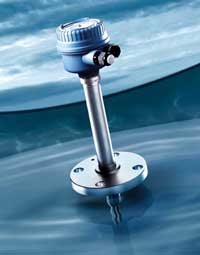
Emerson Process Management launched a new extreme temperature version of its Rosemount 2130 vibrating fork liquid level switch that is designed for use in extreme temperatures — from – 94F to 500F (–70C to 260C). The new version includes a low-density option suitable for liquids with specific gravity down to 0.5 (500 kg/m 3). In addition to built-in fault-monitoring/self-checking diagnostics to detect corrosion of the forks or any internal or external damage or breaks in the internal electrical wiring, it features a "heartbeat" LED, which provides instant visual indication that the unit is operational. The unit requires no onsite calibration and is available in 316L stainless steel, corrosion-resistant alloy C wet side, or a range of other stainless steel and aluminum options. (www2.emersonprocess.com)
-
 News
NewsAdvanced Vibration-Monitoring Technology
Sweden’s SKF Reliability Systems introduced the SKF Microlog Analyzer AX, an advanced vibration-monitoring technology. With simultaneous triaxial or four-channel vibration measurement capability, the unit speeds up data collection and saves time in monitoring rounds. The 806 MHz Xscale processor also means faster real-time rate and display updates. An available range of application modules allows users to create a custom device to perform several advanced tasks, such as impact tests, digital recording, modal analysis, transient phenomena analysis, and quality inspections.
-
 News
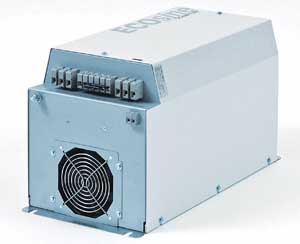
NewsDigital Harmonics Filters
Schaffner’s filter series now includes ECOsine active harmonics filters — compact, digital units that continuously measure and analyze disturbances in the power network and provide an exactly opposite compensation current. In doing so, the filters actively adapt to changing network topologies and respond in less than half a millisecond, before damage from the disturbances can occur. The improved power quality of the new filters minimizes the risk of downtime and process interruptions.
-
News
Spain Is Tilting at Windmills
President Barack Obama has praised Spain as a global leader in renewable electricity generation and has lauded its success at creating so-called "green jobs." However, a recent Spanish university study concluded that Spain’s mad rush to meet overly aggressive renewable standards has destroyed jobs and driven up the real cost of electricity, without cutting carbon emissions.