
Articles By

-
News
FPL Prepares to Power Major PV Solar Plant as Ariz. CSP Plant Is Shelved
Florida Power & Light Co. (FPL) last week said that it will likely open its 90,000-panel photovoltaic (PV) solar facility later this month. The DeSoto Next Generation Solar Energy Center in Arcadia, Fla., project, which will overtake Nevada’s Nellis Solar Power Plant for the title of largest solar photovoltaic (PV) facility in the nation and in North America, will begin operation as several other large U.S. solar projects are being shelved.
-
News
Exelon Head: Cap and Trade Most Cost-Effective Way to Reduce Carbon Emissions
The cap-and-trade approach will best tackle global warming and sustain economic recovery because, though reducing carbon emissions will cost money, alternatives to cap and trade will cost more, Exelon Chair and CEO John W. Rowe reiterated on Tuesday in a keynote address at the PennFuture Southeast Global Warming Conference in Penn Valley, Pa.
-
General
How to Cherry-Pick Recent Climate Data
By Kennedy Maize For those of us who follow the ever-contentious global warming debate, one of the key areas of conflict is the recent climate record. Is the globe warming, cooling, or just puttering along. It’s a game that depends on where you start and how you aggregate the data. Each side accuses the other […]
-
General
Ohio Repeats Maryland’s ‘Take this Bulb and Shove It’ Fiasco
By Kennedy Maize In the words of shade-tree philosopher and New York Yankee Hall-of-Fame catcher Yogi Berra, “It’s deja vu all over again.” The Public Utilities Commission of Ohio has put on hold a plan by Akron-based FirstEnergy Corp. to send out compact fluorescent light bulbs to its customers, unbidden, and bill them for the […]
-
Commentary
“There Is a New Sheriff in Town”—Get Ready for a More Aggressive OSHA
The Obama administration’s “new OSHA” has a simple message for U.S. industry. This message has been delivered loudly and clearly by both Secretary of Labor Hilda Solis and Acting Assistant Secretary for Occupational Safety and Health Jordan Barab. Their message: “There is a new sheriff in town.” And we all know what sheriffs do. They aggressively enforce the law. That is exactly what the new Occupational Safety and Health Administration intends to do.
-
 O&M
O&MZonal Combustion-Tuning Systems Improve Coal-Fired Boiler Performance
Coal-fired power plants that fire low-cost coals or that are equipped with combustion modifications for NOx controls are challenged with maintaining good combustion conditions while maximizing generation and minimizing emissions. In many cases, significant unit derates, availability losses, and an increase in unburned carbon levels can be attributed to poor combustion conditions that occur as a result of poorly controlled local air/fuel distribution within the boiler furnace. Fortunately, a new generation of combustion optimization technologies is available that uses burner air and fuel controls and spatially distributed combustion monitors to detect and correct local furnace air/fuel distribution imbalances.
-
Commentary
Cracks in the Ivory Tower
Environmental researchers from Harvard and Tsinghua Universities released a new study, published as the cover story in the September 11 issue of Science, suggesting that China could meet its entire future electricity needs through wind power alone. Studies that focus on a single technology as the silver bullet that solves all of our energy problems often ignore the practical side of their solutions, leaving mistaken impressions in the public mind.
-
 O&M
O&MCondenser Tube Life-Cycle Economics
The decision to retube a heat exchanger or condenser begins with understanding why tubes are failing. Only when the “why” is understood can the economic replacement tube material be selected. We explore the most common tube material failure mechanisms and then illustrate how to perform a proper life-cycle analysis for that new set of condenser tubes your plant so desperately needs. In sum, there are many reasons to consider getting the copper out of your condenser.
-
Coal
Court Revives CO2 “Nuisance” Suit Against Utilities
In another major legal victory for states pressing for controls on industry emissions of carbon dioxide, a federal appeals court has reversed a lower court decision and ruled that eight states and the city of New York City could bring “nuisance” suits against five coal-burning utilities to curb greenhouse gas discharges that the states claim are causing damage to their natural resources.
-
Coal
EPA to Clamp Down on Coal Plant Wastewater
The Environmental Protection Agency announced it plans to “revise” existing, decades-old guidelines for water discharges of toxic metals from fossil fuel-fired power plants, saying a recently concluded EPA study focused mostly on wastewater discharges from coal-fired power plants uncovered elevated levels of toxic pollutants.
-
Coal
EPA Finalizes Greenhouse Gas Reporting Rules
In a major climate change rulemaking, the Environmental Protection Agency has issued final regulations that will require most large emitters of greenhouse gases in the U.S. to report their emissions beginning in 2010.
-
O&M
Texas Wind Boom Cutting into Fossil Generator Profits
Can wind turbines actually reduce the amount of fossil fuels consumed? A Wall Street Journal analysis concludes that ERCOT utilities will begin to feel the squeeze in their profits this year and to expect the amount of fossil fuels used to generate electricity to be reduced.
-
Commentary
Paving the Way for More Renewable Energy
President Obama has set an ambitious goal of doubling renewable energy production in the U.S. within three years, which would spur the development of a clean-tech economy and address the challenge of climate change. There is just one problem: even if we achieve the president’s goal of producing more renewable energy, we have no way of actually delivering that energy to where it’s needed.
-
General
Nuke Waste Confidence: A Confluence of Ironies
By Kennedy Maize Here’s an interesting set of ironies. The Republican majority on the U.S. Nuclear Regulatory Commission has taken a position that, at least formally, blocks new nuclear reactors in the U.S., while the sole Democrat on the commission, Chairman Greg Jaczko, widely viewed as opposed to the agenda of the nuclear industry, has […]
-
General
Don’t Let the Dim Bulbs Prevail in the Lighting Market
By Kennedy Maize In journalism, we call it “burying the lead.” That’s what the New York Times did in a Sept. 25 story headlined “Build a Better Bulb for a $10 Million Prize.” The story said that the U.S. Department of Energy is prepared to pay $10 million for development of an efficient, cost-effective replacement […]
-
News
EPA Pushes Regulations on GHGs from Stationary Sources
The Environmental Protection Agency (EPA) last week proposed a rule that would limit future regulation of greenhouse gas (GHG) emissions under the Clean Air Act to industrial facilities that emit 25,000 tons or more of carbon dioxide annually. The announcement was made on the same day as Senate Democrats unveiled the “Clean Energy Jobs and American Power Act,” indicating increased pressure on Congress to pass comprehensive climate legislation.
-
News
Proposed 4,440-MW Offshore Wind Farm in Lake Erie Is Awaiting Govt. Approval
Canadian Hydro Developers last week agreed to buy the rights to a proposed 4,440-MW offshore wind project—what could possibly be the largest offshore wind facility in the world—in Lake Erie from Utah-based Wasatch Wind, but the company later acknowledged that the Ontario government had not yet granted it the rights to build the farm.
-
News
Alcoa Fights North Carolina’s Push to Control Yadkin Hydroelectric Dams
Alcoa Power Generating (APGI) has countered North Carolina’s alleged efforts to seize its privately owned hydropower business along the Yadkin River by filing a formal response with the Federal Energy Regulatory Commission (FERC), the company said on Tuesday.
-
News
NRG Tests Growing Biomass for Use at Major Louisiana Coal Plant
A pilot project begun at NRG Energy’s 1,700-MW Big Cajun II power plant will evaluate local conditions for growing switchgrass and high-biomass sorghum and determine if they could replace a portion of the plant’s combusted coal to reduce its carbon intensity. The project could lead to commercial-scale projects that would substitute biomass for some of the coal burned at NRG’s other carbon-intensive plants, the company said last week.
-
News
DOE Announces First Awards for CCS Projects from $1.4 Billion Recovery Act Funding
Twelve U.S. carbon capture and storage (CCS) projects will be the first to receive grants from the $1.4 billion allocated by the American Recovery and Reinvestment Act, the Energy Department said on Friday.
-
News
Russian Report Finds Hydroelectric Plant Catastrophe Resulted from Negligence, Laxity
The catastrophe at the 6,400-MW Sayano-Shushenskaya hydroelectric plant that killed 75 workers in southern Siberia on Aug. 17 had a number of contributing causes, including design, operation, and repair drawbacks, an investigative report released last week by the Russian industrial safety regulator Rostekhnadzor said. But the agency also pointed fingers at six high-ranking officials, saying that the accident resulted from their “negligence, laxity, and a lack of engineering thinking.”
-
General
Climate Policy High Road and Low Road
By Kennedy Maize Oh! ye’ll take the high road and I’ll take the low road, And I’ll be in Scotland afore ye– Old Scottish folk ballad When it comes to climate legislation, the Obama administration has chosen the low road – administrative action by the Environmental Protection Agency. At the same time, the administration is […]
-
 Environmental
Techniques for Determining Limestone Composition and Reactivity
Limestone composition and reactivity are critical factors that determine the performance of limestone-based wet flue gas desulfurization systems. Limestone quality affects sulfur dioxide (SO2) removal, reaction tank sizing, limestone consumption rate, and composition of the gypsum product and waste streams. Reactivity is a direct measure of how readily a limestone will provide alkalinity to neutralize the acid resulting from SO2 dissolution in water. In this article we review your limestone analytic measurement options and discuss their relative accuracy and limitations.
-
 Nuclear
Africa Looks to Nuclear for Future Generation
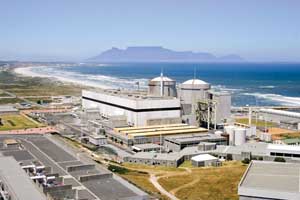
Africa is emerging as a prominent voice in calling for a global nuclear renaissance. Driven by chronic shortages from population explosions, decades of drought, and dependence on hydropower — and spurred by discoveries of significant uranium reserves on the continent — several countries are considering nuclear power as a viable option.
-
 O&M
O&MUpdate: Benchmarking Boiler Tube Failures
Boiler tube failures continue to be the leading cause of downtime for steam power plants. Is your boiler tube failure reduction program showing improvement when compared to programs at peer plants? The EUCG’s recent update of its boiler tube failure study can help you answer that question. The full study is available only to members, but this POWER exclusive presents many of the key results, which could help you improve the operation of your plant.
-
 Solar
SolarDLR to Commercialize Technology from Solar Tower Demonstration
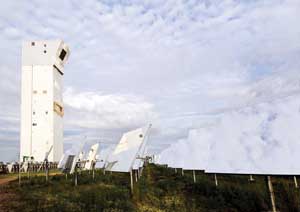
A solar thermal demonstration power plant in Jülich, Germany, that was developed by the German Aerospace Center (Deutsches Zentrum für Luft- und Raumfahrt; DLR), was formally handed over to its future operator, the Jülich Department of Works this August.
-
 Coal
CoalCoal-Fired Generators Worried About Getting Burned
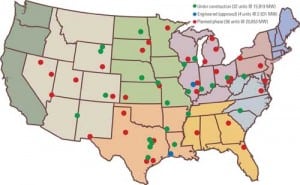
The expected renaissance for U.S. coal-fired generation has been more evolutionary than revolutionary: Less than half of the announced plants will likely progress to construction. However, the percentages for coal-fired plants aren’t significantly different from those for combined-cycle plants a decade ago, when dozens were ultimately canceled, leaving developers with warehouses full of unused gas turbines. The difference this time: The threat of carbon control legislation has moved many projects to the “wait and see” category.
-
 O&M
O&MProper Valve Selection Reduces Downtime, Increases Process Efficiency
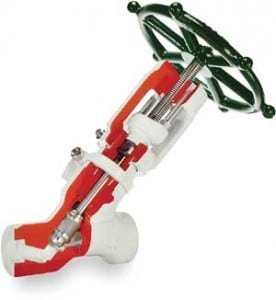
Many customer quotation requests provide only the line size, pressure class rating, and valve type. A typical request might read: size 4, Class 900 globe valve. Though this may be enough information to produce a valve quote, it rarely is enough information to size the best valve from both a performance and cost perspective.
-
 O&M
O&MMeasuring Coal Pipe Flow
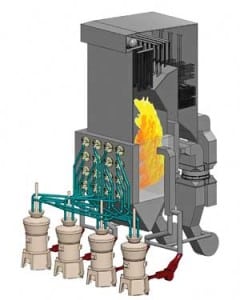
Once pulverized coal flows have been measured, they can be balanced and optimized. Until then, tuning is simply guesswork. The right way to balance furnace fuel flows is to establish solid baseline performance by proper measurement of fuel flow, fineness, and velocity. Only then can all the coal pipes be accurately balanced and followed by a tune-up of the boiler controls.
-
 News
NewsPower Source for Quality Gas Welds
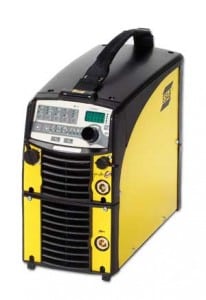
ESAB Welding & Cutting Products’ newly introduced CaddyTig 2200i AC/DC power source is designed to produce quality gas tungsten arc (TIG) and shielded metal arc (stick) welds in a variety of materials. With a light, compact design, the CaddyTig 2200i offers control panels that present all welding parameters in an easy-to-understand layout. ESAB’s two-program function […]