
Articles By

-
News
Interagency CCS Task Force Issues Recommendations
An interagency task force on Carbon Capture and Storage (CCS) established by President Obama this February delivered a series of recommendations on overcoming barriers to the widespread, cost-effective deployment of CCS within 10 years.
-
News
FirstEnergy, Xcel to Cut Back Coal-Fired Capacity
FirstEnergy Corp. last week said it would cut back operations or idle 1,620-MW of coal-fired capacity in Ohio for up to a year to reduce operating costs, while Xcel Energy announced plans to shut down nearly 900-MW of coal-fired capacity to generate a savings of nearly $225 million. Reasons for the cutbacks included the continued slow economy, lower demand in electricity, and uncertainty related to proposed new federal environmental regulations.
-
News
Shaw Group to Support Two More Chinese AP1000s
The Shaw Group on Monday announced it has signed an initial contract for two new AP1000 units at the Xianning nuclear power plant project in Hubei province with a subsidiary of China’s State Nuclear Power Technology Corp. (SNPTC).
-
News
GDF Suez-International Power Merger to Create World’s Largest IPP
French company GDF Suez formally announced last week it will merge its international business with UK company International Power. The new firm, New International Power, is expected to have over 66 GW in gross operation capacity and 22 GW in the pipeline.
-
News
Blackstone to Acquire Dynegy for $4.8 Billion
Houston-based Dynegy is to be acquired by an affiliate of private equity firm Blackstone Group in a $542 million deal that includes billions in debt assumption. Under a separate agreement between Blackstone and NRG Energy, NRG Energy could acquire four natural gas-fired assets owned by Dynegy for about $1.36 billion.
-
News
OSHA Issues $16.6 M in Fines After Fatal Kleen Energy Explosion
The U.S. Occupational Safety and Health Administration (OSHA) on Thursday cited three construction companies and 14 site contractors for 371 alleged workplace safety violations, and issued a total of $16.6 million in penalties. The fines follow an investigation into the causes of February’s deadly natural gas explosion at the Kleen Energy power plant construction site in Middletown, Conn. The explosion killed six workers and injured 50 others.
-
News
Concern Mounts About Edwardsport IGCC Project Cost Overruns
An Indiana state agency representing utility ratepayer interests in cases before regulatory commissions said it has “serious concerns” regarding cost overruns at Duke Energy’s 618-MW integrated gasification combined cycle (IGCC) facility at Edwardsport.
-
News
Xcel Energy: Wind-to-Battery Project Tests Show Technology Works
Xcel Energy claims that preliminary tests of a 1-MW battery-storage technology system shows the technology works. The company announced on August 3 that its wind-to-battery project showed it was possible to reduce the need to compensate for the variability of wind generation.
-
News
EPA Sues DTE Energy for Alleged Clean Air Violations
The U.S. Environmental Protection Agency filed suit against Michigan’s largest energy company, DTE Energy, for alleged violations of the federal Clean Air Act at that company’s coal-fired Monroe Power Plant in Michigan.
-
News
BrightSource’s Ivanpah CSP Project Garners Key Approvals
California-based BrightSource Energy in the past week received two key approvals for its 392-MW Ivanpah concentrating solar power (CSP) plant in the Mojave Desert. The California Energy Commission’s (CEC’s) siting committee issued a proposed decision recommending approval, and on Friday, the U.S. Bureau of Land Management (BLM) issued its Final Environmental Impact Statement (FEIS) for the project.
-
News
UK Sees Increased Attacks on Distribution Network
A massive increase in organized “attacks” on the distribution power network in central England has resulted in more than a dozen downed wooden poles and thousands of customers without power in a week, E.ON UK said last week.
-
News
Constellation Energy Eyes 3,000-MW New England Fleet
Constellation Energy on Monday said it had signed an asset purchase agreement to acquire Boston Generating’s 2,950-MW fleet, consisting of mainly natural gas–fired plants, for about $1.1 billion, or roughly $372/kW.
-
News
DOE to Support Revamped FutureGen Plans
The U.S. Department of Energy (DOE) on Thursday announced it would award $1 billion in Recovery Act funds to a revamped FutureGen proposal. The so-called “FutureGen 2.0” project contemplates repowering of an existing Ameren 200-MW coal unit in Meredosia, Ill., using oxyfuel technology—not construction of an integrated gasification combined-cycle facility at Mattoon, Ill., as originally envisioned. The new project still calls for use of the original Mattoon geologic storage site
to sequester carbon dioxide—however, the city of Mattoon has declined participation
in the project.
-
General
Quacks like a duck; Poops like a duck; Limps like a duck
By Kennedy Maize Washington, D.C., Aug. 9, 2010 – Washington is abuzz with talk of a lame-duck session of Congress after the November mid-term elections. Many pundits seem to assume that the Democratic leadership will call the solons into session after the elections (with the Democrats having done very poorly, possibly losing their control of […]
-
Commentary
For Grid Expansion, Think “Subregionally”
When—not if—we pass climate legislation, we will put the U.S. on a path toward a low-carbon electric generation sector. As part of this shift, we’ll need more transmission, including lines to wind and solar power plants that are sometimes located far from today’s power grid. The question is: How do we plan for these new lines and how should we pay for them?
-
Commentary
Bill Gates and the Energy Research Dilemma
There is an idea that has been around for a long time, at least since the fall of 1973: All that stands between the U.S. and an abundant energy future is a lack of spending on research and development. It is as though the Knights Templar could find the Holy Grail, if only the Pope would commit just a few more resources to the hunt.
-
Coal
Fourth Circuit Scuttles NC Air “Nuisance” Suit
Scuttling a high-profile “public nuisance” lawsuit, a federal appeals court has reversed a lower court ruling that required the Tennessee Valley Authority to accelerate plans to install pollution controls at four TVA coal-fired power plants to reduce the amount of pollution blowing into western North Carolina, saying the lower court decision could lead to other public nuisance suits that would wreak havoc on federal and state regulatory regimes for combating air pollution.
-
Coal
House Members Warn EPA on Coal Ash
Saying they have “grave concerns” about the agency’s two-option proposal to regulate coal combustion ash, 31 members of the House Energy and Commerce Committee have urged the Environmental Protection Agency to continue to regulate coal ash as a non-hazardous waste, saying an EPA proposal to designate it as a “special” hazardous waste eligible for reuse would lead to costly and unnecessary management and disposal requirements.
-
Coal
AEP Blasts EPA Transport Rule; PSEG Supports It
An Environmental Protection Agency proposal to tighten sulfur dioxide and nitrogen oxides limits in 31 states and the District of Columbia to address transported air pollution fails to give utilities and state air regulators sufficient time to develop rules and install controls, according to American Electric Power Co. Officials from the EPA and New Jersey-based Public Service Enterprise Group said utilities already had begun making investments to cut emissions and they believed the agency’s compliance schedule could be met.
-
 O&M
O&MWind Integration: Does It Reduce Pollution and Greenhouse Gas Emissions?
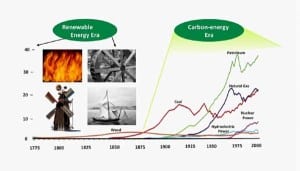
Many claim that wind generation is beneficial because it reduces pollution emissions and does not emit carbon dioxide. This isn’t necessarily the case. When wind is introduced into a generation system that uses carbon technologies to back up the wind, it actually reduces the energy efficiency of the carbon technologies.
-
O&M
Power 101: Flue Gas Heat Recovery in Power Plants, Part III
Every power engineer must have a firm grasp of the rudiments of how fuel is processed to produce electricity in a power generation facility. With this article, we conclude our three-part series on the essentials of recovering heat from flue gas to dry and process coal, with the goal of improving overall plant operating efficiency.
-
 O&M
O&MImprove Furnace Reducing Atmosphere Using Fuel/Air Ratio Control
Progress Energy has incorporated online combustion optimization/tuning to eliminate furnace reducing atmospheres at its Asheville Plant. The optimization project utilized individual burner airflow measurement and continuous burner coal flow measurement to adjust burner air/fuel ratios. The result: significantly improved boiler combustion.
-
Commentary
Texas to EPA: Follow the Law
The EPA, determined to regulate U.S. carbon dioxide emissions under the Clean Air Act, found that the low limits set by the Act for any “regulated pollutant” led to, in the EPA’s words, “absurd” results. Undeterred, the EPA developed the “Tailoring Rule,” which reinterprets the Act to apply to only larger emissions sources. Texas eloquently rejected the EPA’s legal gymnastics.
-
News
WCI Releases Comprehensive Plan for Regional Cap-and-Trade Program
California, New Mexico, and three Canadian provinces—partners of the Western Climate Initiative (WCI)—last week released a detailed plan for a regional cap-and-trade program to curb greenhouse gases (GHG) starting in January 2012. If the plan reaches fruition, it would be three times larger than a program under way in 10 eastern states.
-
Smart Grid
Hawaii PUC Rejects Smart Grid Proposal
Hawaii’s Public Utilities Commission (PUC) last week denied a request by Hawaiian Electric Co. (HECO) to extend pilot testing for its advanced metering infrastructure (AMI) project to 5,000 more smart meter because of cost concerns. The move poses a major hurdle for the utility’s overall smart grid initiative.
-
News
AWEA: New Wind Capacity Additions Plunge in 2010, Outlook Dismal
Only 700 MW of wind power were added in the U.S. during the second quarter of 2010—a drop of 57% and 71% when compared to second quarter numbers from 2008 and 2009, respectively, the American Wind Energy Association (AWEA) reported last week.
-
News
N.Y. and Penn. to Sue Coal Power Plant for Drifting Air Pollution
New York state and Pennsylvania’s Department of Environmental Protection (PADEP) plan to sue Homer City Station, a 1,884-MW coal-fired power plant in Pennsylvania, for its alleged contributions of the region’s sulfur dioxide emissions.
-
News
DOE Finalizes Hawaii Wind Guarantee, Offers $17 M to N.Y. Energy Storage Project
The Department of Energy last week finalized a $117 million loan guarantee for a 30-MW Hawaiian wind power plant, and this week it said it would offer a $17.1 million loan guarantee to support construction of a 20-MW energy storage system using lithium-ion batteries.
-
 Coal
CoalCleco’s Madison Unit 3 Uses CFB Technology to Burn Petcoke and Balance the Fleet’s Fuel Portfolio
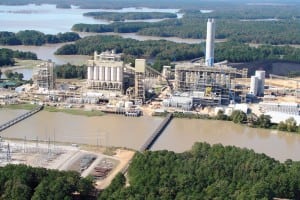
With commercial operation of Madison Unit 3, Cleco Power now claims bragging rights for owning the largest 100% petroleum coke–fired circulating fluidized bed power plant in North America. For using readily available fuel in an environmentally attractive manner, adopting fuel-flexible combustion technology, balancing the utility’s generation portfolio, and adopting an innovative fuel-handling system design, Madison Unit 3 is the winner of POWER’s 2010 Marmaduke Award for excellence in operation and maintenance. The award is named for Marmaduke Surfaceblow, the fictional marine engineer and plant troubleshooter par excellence.
-
News
Evaluating Materials Technology for Advanced Ultrasupercritical Coal-Fired Plants
A national R&D program has been under way to develop materials technology for constructing boilers and turbines capable of operating at advanced ultrasupercritical steam conditions in pulverized coal plants. The large-scale, multiyear, joint government/industry project seeks to increase the efficiency of power plants by increasing their steam conditions up to 1,400F (760C) at 5,000 psi (35 MPa). The ongoing project has already identified the materials and processes for successful operation at these higher steam conditions.