
Articles By

-
 Legal & Regulatory
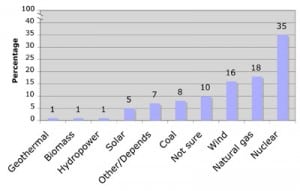
Regulators Embrace Nuclear—Awkwardly
A recent survey finds utility regulators contradicting themselves on the touchy subject of nuclear power. They say they like new nukes, but their actions belie their stated beliefs.
-
 O&M
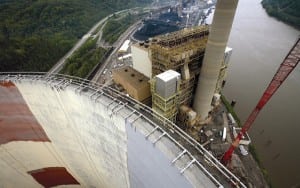
O&MNew Coating System Extends Life of Cooling Tower
American Electric Power’s (AEP’s) Cardinal Power Plant Unit 3 cooling tower in Brilliant, Ohio, was coated and lined in the spring of 2008 by a team of coatings professionals that included the plant’s project and coatings engineering staff, Sherwin-Williams (coatings supplier), Cannon Sline Industrial (contractor), and OTB Technologies (third-party inspector). The team completed the project in just 11 weeks through damp springtime conditions in the Ohio River Valley.
-
 Coal
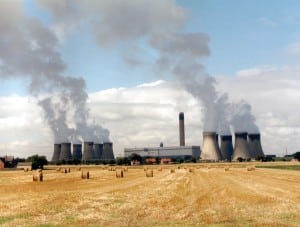
CoalDrax Offers Model for Cofiring Biomass
When it is completed, later this summer, the UK’s Drax Power Station biomass facility will become the largest dedicated cofiring project of its kind in the world. As U.S. coal-fired generators come under increasing pressure to cut emissions and take advantage of incentives to promote power generation from renewables, Drax offers an example of what is possible.
-
Supply Chains
DOE Helium Shortage Hits Nuke Security, Oil And Gas Industry
The Energy Department’s failure to recognize an impending supply squeeze for helium-3—a nonradioactive gas produced in the agency’s nuclear weapons complex—has created a national crisis requiring White House intervention and threatening key U.S. nuclear and homeland security programs, a wide range of medical and scientific research activities and development of U.S. oil and natural gas resources, according to testimony before a House subcommittee.
-
 O&M
O&MNew Process Transforms Waste into Product for Controlling Emissions
In April, Solvay Chemicals Inc. commissioned a new facility that uses an innovative process to recover and transform sodium carbonate waste streams into a market-grade sodium bicarbonate used in air emissions control.
-
 O&M
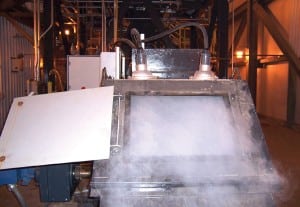
O&MUse Dry Fog to Control Coal Dust Hazards
Fogging systems have been successfully used in the material-handling industry for more than 30 years to control explosive dust at transfer points. Today, fogging systems are an EPA Best Demonstrated Technology for subbituminous coal preparation plants.
-
 HR
HRWasting Time and Hating the Job
Does wasted work time equal job dissatisfaction? Two studies point in that direction.
-
 News
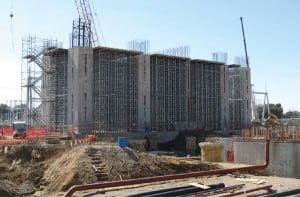
NewsShoring System Uses First Built-In Ladder Supports
Safety is the imperative for any construction project, and Duke Energy’s 630-MW Edwardsport integrated gasification combined-cycle station in Knox Country, Ind., is no exception.
-
Environmental
Regulations and Economics Drive Wet FGD Upgrades
Today’s coal-fired power plants face the twin challenges of improving their wet flue gas desulfurization (FGD) systems’ emission control capabilities in order to comply with environmental regulations while at the same time cutting their operational and maintenance costs. Smart strategies for retrofitting existing FGD systems can help plant personnel meet both of these objectives.
-
 HR
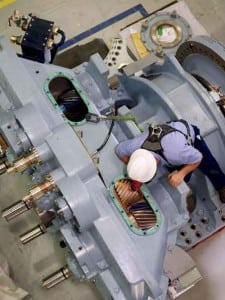
HRHow Clipper Windpower Jump-Started Itself . . . Big Time
Clipper Windpower didn’t have the luxury of a decade or more of product development. Instead, it started big—with a 2.5-MW wind turbine. Here’s the story of how they did it.
-
 Solar
SolarAbengoa Solar Begins Operation of 50-MW Parabolic Trough Plant
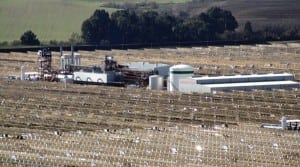
Abengoa Solar in early May began commercial operation of Solnova 1, the company’s first 50-MW parabolic trough plant. Covering 980,000 square feet with mirrors requiring an area totaling 280 acres (Figure 2), it is one of five planned concentrating solar power (CSP) plants to be built at the Solúcar Platform in Spain. All will use a technology developed by Abengoa with experience gained from a trough pilot built in 2007. Solnova 1 will also be equipped to burn natural gas if sunlight is weak.
-
 Coal
CoalIndustry Pivots on Natural Gas, Hails Cap and Trade
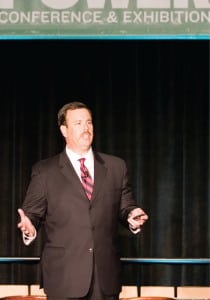
At the opening ELECTRIC POWER 2010 plenary session, both the keynote speaker’s address and discussion among the Power Industry Executive Roundtable participants pointed to the renewed appeal of natural gas and proposed cap-and-trade legislation as being potential game-changers for the U.S. power industry.
-
Finance
Bid Smartly . . . or Walk Away
With some industries reeling in today’s economy, future revenue growth is still uncertain in certain markets. The bright exception is the "new energy" arena of renewables and sustainables. But that’s a tough market, with lots of competitors for the business and lots of opportunities to misfire and miss the boat. A key to success is bidding smartly on contract opportunities. Otherwise, don’t bid at all.
-
 Hydro
HydroAustralia Gets Hydropower from Wastewater
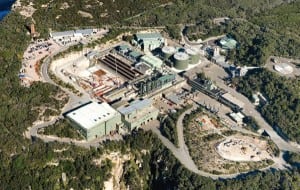
An Australian sewage plant this April began using treated wastewater falling down a 60-meter (m) shaft to produce its own power.
-
 Nuclear
A Slow Slog Ahead for U.S. Nukes
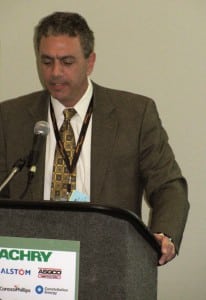
There is a certain tentativeness about new nuclear power in the U.S. these days, a low-grade anxiety, as demonstrated by the comments made by electric utility representatives at May’s ELECTRIC POWER Conference in Baltimore.
-
 Commentary
Kerry-Lieberman Trade in the Trivial
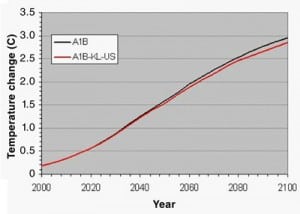
The recently unveiled Kerry-Lieberman global climate warming bill is an exercise in triviality. By century’s end, reducing U.S. greenhouse gas emissions by 83% will only result in global temperatures being one-fifth of one degree Fahrenheit less than they would otherwise be. That is a scientifically meaningless reduction.
-
Gas
Qatar Opens 2,000-MW Gas Plant
The gas-rich emirate of Qatar, holder the world’s third-largest gas reserves, inaugurated another massive 2,000-MW gas power plant in the industrial city of Mesaieed, south of the capital Doha this May.
-
 Coal
CoalPRB Coal Users’ Group Celebrates a Decade of Achievement
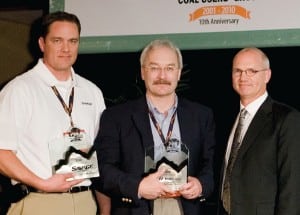
The 2010 Powder River Basin Users’ Group (PRBCUG) commemorated its 10th anniversary with 354 registered members (210 of whom were from operating companies) for its three-and-a-half-day annual meeting in Baltimore this May. The meeting’s Grand Sponsor was Benetech and its Plant Professionals group.
-
Commentary
Cape Wind: Never Again
Cape Wind was a momentous clean energy victory, but if climate change advocates truly take the immense scale of the energy and climate challenge seriously, we must ensure that this is the last time that a new zero-carbon energy source faces such prolonged NIMBY opposition
-
 Hydro
HydroIntegrating Wave and Wind Power
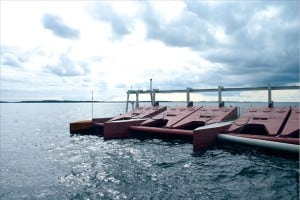
While Europe’s offshore wind sector has taken off, interest is resurging in marine energy. The UK’s Crown Estate took the major step this March, for example, of awarding leasing rights to 10 wave power projects to develop generation in Scotland’s Pentland Firth and Orkney waters of the North Sea.
-
 Hydro
HydroUtility Perspectives on Using Renewable Power
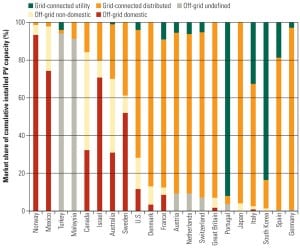
As U.S. utilities increase the percentage of renewable energy in their generation portfolio, they must deal with a number of key issues related to selecting specific technologies. Additionally, they must figure out what it will take to make renewables emerge as a mainstream generating option in the future.
-
Commentary
Econ Boffins: Scrap CO2 Emissions Reductions
A group of 14 international academics from a variety of fields, under the auspices of the London School of Economics and Politics, have produced a paper calling for a new approach to the failed Kyoto Protocol model for dealing with global warming, scrapping the notion of emissions reductions.
-
News
Letter to the Editor (July 2010): Natural Gas Piping
Re: “Natural Gas Piping: It’s Time for Better Risk Control,” by John Puskar, PE (May 2010) Mr. Puskar’s recommendations to address the hazards associated with purging and blowing natural gas from large industrial piping systems are a significant contribution to the dialogue that is taking place on this important subject. Mr. Puskar correctly identifies two […]
-
 News
NewsMulti-Channel Controller
The sturdy design of CONSPEC Controls’ new Allen Bradley PLC-Equipped Multi-Channel controller makes it ideal for coal-fired power plants needing to detect carbon dioxide and combustible gases through a variety of sensor types. Preprogrammed and calibrated at the CONSPEC factory, the controller is capable of multipoint detection on a single power and communication line. This […]
-
 Business
Is Eskom Ready for the World Cup?
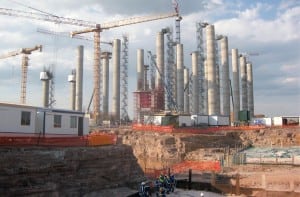
The FIFA World Cup, the biggest sports event on the planet, is under way in South Africa through July 11. More than 300,000 fans are expected to attend the global soccer tournament, and hundreds of millions more will be watching on television. But a focus will also be on South Africa itself, which 20 years ago ended apartheid and has spent the following decades in a recovery process. And the pressure is on for Eskom, South Africa’s state-owned utility, which generates nearly 95% of the nation’s power (and 45% of Africa’s total).
-
 News
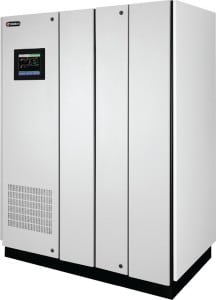
NewsDigitally Controlled UPS
Cyberex CyberWave from Thomas & Betts Power Solutions incorporates the Cyberex patented digital static transfer switch design, which increases redundancy and reliability. Additional benefits include a full-color VGA touch screen, which allows for easy operation and monitoring with minimal engagement, as well as Modbus communications and advanced battery management capabilities to ensure accurate system analysis. […]
-
 Geothermal
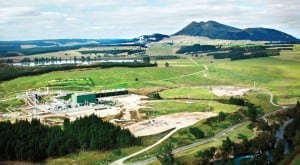
140-MW Geothermal Plant Starts Up in New Zealand
One of the world’s largest geothermal power stations was officially opened this May on New Zealand’s North Island. A joint venture between Mighty River Power and Tauhara North No. 2 Trust, the new 140-MW Nga Awa Purua Geothermal Power Station increases geothermal’s share of power in New Zealand to around 14%—a proportion that has more than doubled since 2005.
-
 News
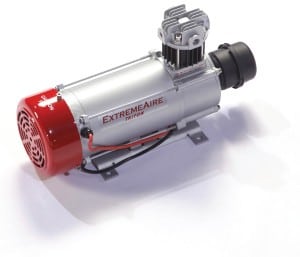
NewsSubmersible Continuous-Duty Electric Compressor
Extreme Outback Products introduced the ExtremeAire Triton, which it says could be the world’s first submersible continuous-duty electric compressor. For uses that include air-suspension inflation, powering pneumatic tools, and actuating air lockers and train horns, the fully sealed Triton has a 100% duty cycle. Crucial components include a 1.5-horsepower fan-cooled motor and other parts shared […]
-
Gas
Qatar Opens 2,000-MW Gas Plant
The gas-rich emirate of Qatar, holder the world’s third-largest gas reserves, inaugurated another massive 2,000-MW gas power plant in the industrial city of Mesaieed, south of the capital Doha this May.
-
 News
NewsGround-Penetrating Radar
Instrumentation specialist Ashtead Technology has launched the Handy Search, a ground-penetrating radar (GPR) that the company says provides a fast, easy way to examine reinforced concrete, bridges, roadways, tunnels, and buildings for inspection. The Handy Search is also useful for maintenance and quality assurance because it allows users to search for steel reinforcement bars, gas […]