
Articles By

-
Legal & Regulatory
Defining the Elephant: Smart Grid Status Check
There is no doubt that the year-plus since passage of the American Recovery and Reinvestment Act of 2009 (Recovery Act) has borne witness to a great deal of activity among the diverse groups of smart grid stakeholders.
-
 News
NewsMeasure Methane Flow
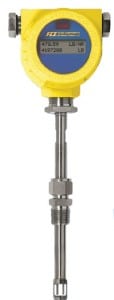
The Fluid Components International ST51 flow meter is designed to measure the flow of biogases, methane, and other greenhouse gas mixtures. The flow meter comes in an explosion-proof instrument and features a no-moving-parts design that’s nonclogging and operates over a wide flow range with low-flow sensitivity. A big plus is that the meter calibration is […]
-
HR
The Challenges of Employee Communications
Employee communications is one of the hardest management jobs. It puts the burden of truthfulness on both management and its employees.
-
 O&M
O&MNatural Gas Piping: It’s Time for Better Risk Control
At least 10 workers have died from natural gas piping explosions in the past 12 months. The most recent disaster, which occurred during gas system purging at the Kleen Energy Systems plant, claimed five lives and injured 27 workers. It’s time the industry understood the unique design and safety requirements for working with and purging natural gas piping.
-
 News
NewsInfrared Camera Measures Through Flames
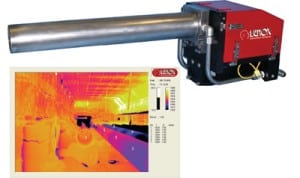
Lenox Instrument Co. announced its new FireSight Thermal Imaging Camera System designed specifically to provide clear, real-time monitoring and accurate, noncontact temperature measurement through combustion flames. Temperature data are transmitted from 110,000 individual temperature points via a high-speed digital connection. Designed to be installed through a small opening in the combustion chamber wall, the high-resolution […]
-
HR
The Case for Transparency: Keep No Secrets from Employees
Do your employees really know what’s going on with your company? Don’t be worried that they can’t handle the truth. Here’s why it works to create a culture of corporate transparency—starting now.
-
 O&M
O&MForensic Engineering: A Valuable Tool in Incident Investigations
Much like the crime scene investigators on the CSI TV shows, power plant investigation teams are increasingly employing forensic engineering methods to gather evidence and determine the causes of malfunctions of equipment, materials, or products that result in personal injuries or property damage. Case studies show how different investigation teams used their forensic engineering expertise to examine a dust collector explosion, a coal terminal fire, and the failure of a forced draft fan.
-
 News
NewsNew and Improved Loctite Formula
Henkel Corp. has introduced two new Loctite threadlockers formulated to withstand consistent operating temperatures up to 360F. Curing consistently and thoroughly without cleaning, these new products tolerate the oils and lubricants typically found on "as received" threaded fasteners. These products will also cure on plated, aluminum, stainless, and chromated fasteners without primers. Loctite 243 and […]
-
Supply Chains
Kazakhstan and Uranium: It’s About Transparency
Kazakhstan is a leading supplier of uranium fuel to the former Soviet Union and has global ambitions. A transparent uranium market and honest leaders must come first.
-
 O&M
O&MA Burning Concern: Combustible Dust
If not properly controlled, coal and coal dust can cause fires, explosions, and implosions at power plants. Strategies for promoting safer management of these combustibles include actions such as training personnel exposed to the hazards of coal and coal dust about safe handling methods.
-
Legal & Regulatory
Rethinking Revenue Assurance for Utilities
Should utilities take a new look at their approaches to maximizing profit margins?
-
 Business
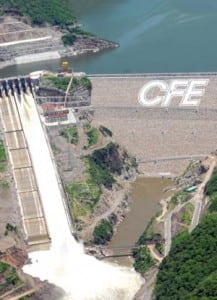
Power in Mexico: A Brief History of Mexico’s Power Sector
Mexico, one of the few countries in Latin America that has resisted the tide of liberalization, retains a monopolistic state player in the electricity market. In treading its own path by maintaining the government’s predominance in the sector, Mexico has an important question to answer: Is this path sustainable?
-
HR
Knowledge Management Protects Against Mission-Critical Knowledge Loss
The cost of poor company knowledge management is high and getting higher. Managing knowledge in an era of compartmentalization and specialization is more difficult when organizations face layoffs, looming retirements, and the scarcity of trained, qualified workers.
-
 Business
Power in Mexico: Mexico’s Generation Mix
Mexico enjoys considerable fuel diversity for powering its generating plants, and its goal is to become even more diversified.
-
 Hydro
HydroPower in Mexico: Renewables Remain More Desired than Real
Mexico has already developed substantial large hydro and geothermal resources. However, without policy changes and government-sponsored financial incentives, unconventional renewable sources are taking the equivalent of baby steps.
-
 Coal
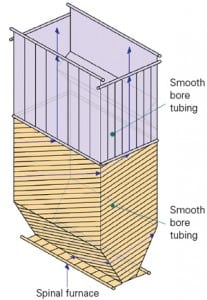
CoalFirst Posiflow Benson Boiler Completes Seven Years of Service
Seven years have passed since the world’s first low mass flux vertical tube once-through furnace was put into operation by Doosan Babcock at the Yaomeng Thermal Power Plant Unit 1 in China. That boiler replaced a boiler of another design that had become unreliable. The operating experience with the Posiflow design has been so positive that the owner has since ordered and commissioned a replacement for Unit 2’s boiler. Here’s what makes this furnace design unique.
-
 Coal
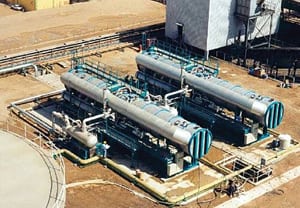
CoalAdding Desalination to Solar Hybrid and Fossil Plants
Shrinking water supplies will unquestionably constrain the development of future power plants. A hybrid system consisting of concentrated solar thermal power and desalination to produce water for a plant, integrated with a combined cycle or conventional steam plant, may be the simple solution.
-
 Environmental
Dry Injection of Trona for SO3 Control
In 2006 and 2007, POWER ran a three-part series on the formation of SO3, O&M issues caused by SO3, and sorbent injection control for SO3 control. Three years later, many plants still struggle with their SO 3 mitigation systems or remain undecided on which mitigation path to follow. This article explores the advantages of dry sorbent injection technology.
-
 Nuclear
Resurrecting Nuclear: "We Have to Get It Right"
Offers of nuclear loan guarantees are pending, construction permit applications are at an industry high, and the political stars seem to be properly aligned. However, there remains one obstacle in the development path of the next-generation of nuclear plants: How will these plants be financed?
-
 Business
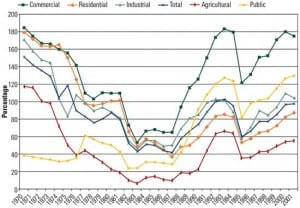
Power in Mexico: A Regulatory Framework with Little Flexibility
Mexico’s federal government retains almost total control over who builds and owns what electricity infrastructure. But if you know how to work within the strict constraints, it is possible to engage in profitable projects.
-
 News
NewsCombo Temp and Humidity Sensor
E Instruments has just released its TH300 humidity and temperature sensor, which is ideal for applications that require a single, high-accuracy instrument. The sensor measures relative and absolute humidity, dew point, wet and dry temperatures, and enthalpy. The range of measurement is from 0% to 100% relative humidity and – 40F to 356F. Accuracy is […]
-
 Business
Power in Mexico: Three Keys to Success for the Service and Manufacturing Sector
NAFTA was both good and bad for Mexico. In both cases, it required a different approach to doing business, and the effects of that shift are still playing out.
-
News
Bridge to a Dead End
The Brattle Group released a provocative study paper in March in which the authors postulate that using more natural gas for generating electricity could reduce our dependence on coal-fired generation and reduce carbon emissions. Also discussed is an unexpected side effect: Renewables could push natural gas plants down in the dispatch mix in the future. […]
-
Supply Chains
Trend: Natural Gas Is Hot, Hot, Hot
Despite the political kerfuffle over Obama administration loan guarantees for new nuclear generating plants, the ubiquitous hand-wringing about fossil fuels and climate change, and the hype about wind and solar renewable power generation, the new reality of natural gas may be a game-changer.
-
Commentary
How Green Is Green Power?
The demand for "green" electricity — electricity produced from renewable sources like wind, solar, hydropower, geothermal, and biofuels — is at an all-time high in the U.S. Over the past decade, solar and wind capacity have increased dramatically due largely to mandatory renewable portfolio standards (RPS), which have now been adopted by 27 states.
-
 Business
Power in Mexico: Risks and Rewards
State control of the electricity sector may mean fewer customers, but it also can mean clearer expectations.
-
Commentary
In Praise of Electric Power
The fear of losing electric power inspires thoughts about how vital electricity is to our lives. It is fundamental to modern living, and that’s entirely a good thing.
-
News
Bridge to a Dead End
The Brattle Group released a provocative study paper in March in which the authors postulate that using more natural gas for generating electricity could reduce our dependence on coal-fired generation and reduce carbon emissions. Also discussed is an unexpected side effect: Renewables could push natural gas plants down in the dispatch mix in the future. Just because natural gas reserves are at a record high and the price is at historic lows doesn’t mean that gas demand will increase.
-
 O&M
O&MLaser Hole-Shaping Improves Combustion Turbine Efficiency
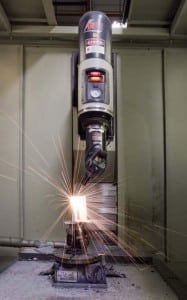
Laser shaping technology has evolved from a two-step process into a single process that drills and shapes holes through a TBC, bond coat, and airfoil base metal to create a finished product.
-
Commentary
Wind’s Cost Is Underestimated; Its Value Overestimated
Wind power’s cost is hidden in subsidies; its value is overstated and based on false metrics that don’t account for reliability and dispatchability.