
Articles By

-
News
DOE, BOEMRE, NOAA to Fund Offshore Wind, Marine Power Siting, Permitting
The Department of Energy (DOE) teamed with the Bureau of Ocean Energy Management, Regulation and Enforcement (BOEMRE), and the Department of Commerce’s National Oceanic and Atmospheric Administration (NOAA) on Tuesday to announce eight joint research awards totaling nearly $5 million to support siting and permitting of offshore energy facilities. The awards include projects harvesting power generated from offshore wind and waves, tides, currents, and ocean thermal gradients.
-
News
NERC: EPA Regulations Could Impact System Reliability
Regulations being proposed by the U.S. Environmental Protection Agency (EPA) could significantly affect the bulk power system’s reliability, a new report from the North American Electric Reliability Corp. (NERC) shows. The quasi-public agency recommends that the proposed rules provide sufficient time to procure replacement resources that would offset capacity reductions expected as a result of unit retirements and deratings from environmental control retrofits.
-
News
E.ON Pulls Plug on Kingsnorth CCS Project in the UK
E.ON last week shelved plans to build its controversial Kingsnorth coal-fired plant in Kent, and it withdrew from the UK’s government competition to build the first of four planned large-scale pilot power plants to demonstrate carbon capture and storage (CCS). The company said the project could not meet “competition timescales.”
-
News
DOI Approves 1,000-MW Rated Parabolic Trough Project
The Department of the Interior (DOI) on Monday approved the Blythe Solar Power Project—the largest solar energy project ever proposed to be built on public lands in the U.S.
-
News
China Starts Commercial Operation of 650-MW Nuclear Unit
Qinshan Phase II Unit 3—the first power station built during China’s 11th five-year plan period and the country’s 13th nuclear unit—started commercial operation last week. The unit is the second Chinese reactor to start up this year, following Ling Ao II, which began commercial operation this September.
-
General
At DOE, Leaders Are Irrelevant
By Kennedy Maize Washington, D.C., Oct. 25, 2010 – Over the years, presidents have appointed energy secretaries with a variety of backgrounds: policy wonk, business person, political apparatchik, former elected official, military officer, even dentist. None have exactly worked out. Scratch that. None have worked out at all. The latest incarnation at the fortress-like Forrestal […]
-
News
Constellation to Sell UniStar Stake to EDF at Bargain Price
Constellation Energy last week offered to sell its 50% stake in the UniStar joint venture to partner Électricité de France (EDF) for $1, plus $117 million in reimbursement costs—a price well below market value—in order to further the project and ensure future energy supplies for Maryland.
-
News
Japanese Companies to Buy Stakes in Five Tenaska Natural Gas Plants
Nebraska-based Tenaska on Monday said it would sell a portion of interests in five power plants to Japanese energy firms Tyr Energy and Chubu Electric.
-
News
NERC Issues AURORA Vulnerability Guidelines
The North American Electric Reliability Corporation (NERC) on Thursday issued a recommendation to the electric power industry providing sensitive information about the so-called “AURORA vulnerability”—gaps in critical infrastructure protection concerning large motors and generators connected to the bulk power system.
-
News
Yucca Directive Prompts Calls for Justification, Investigation
The fight to keep the Yucca Mountain alive intensified last week as members of Congress demanded justification for an order by Nuclear Regulatory Commission (NRC) Chair Gregory Jaczko that seeks to halt review of the Department of Energy’s (DOE’s) application to build the long-term nuclear waste repository in Nevada.
-
News
Ethics Scandal Prompts Indiana Regulators to Investigate Edwardsport IGCC Cases
The Indiana Utility Regulatory Commission (IURC) on Friday said it would conduct a legal and technical audit of cases concerning Duke Energy Indiana’s $3 billion Edwardsport gasification facility in which a former administrative law judge had presided.
-
News
DOE Offers 500-kV Nev. Line First Transmission Project Loan Guarantee
The Department of Energy (DOE) on Tuesday offered a $350 million conditional loan guarantee to develop the One Nevada Transmission Line (ON Line), a proposed 500-kV link that will run 235 miles and transmit 600 MW of mostly renewable energy. The project is the first transmission line to receive a federal loan guarantee.
-
News
$5B Transmission Project Could Spur Offshore Wind Growth in U.S., Companies Say
A new $5 billion transmission project proposed by Trans-Elect and sponsored by Google, Good Energies, and Marubeni Corp. seeks to connect 6,000 MW from wind farms installed up to 20 miles off the Mid-Atlantic coast to the national grid.
-
News
Constellation Shuns DOE Nuclear Loan Guarantee, Calling Terms “Unworkable”
Constellation Energy last week rejected a $7.5 billion conditional loan guarantee offer from the U.S. Department of Energy to build a new reactor at its Calvert Cliffs nuclear plant in Maryland with partner Électricité de France (EDF), saying the government’s proposed terms and conditions were “unworkable.”
-
News
Possible Amine-Related Health Risks Stall Large-Scale CCS Project
Norway’s Ministry of Petroleum and Energy last week called for an evaluation of “alternative solutions” to execute a large-scale carbon capture plant whose construction is under way at the Mongstad refinery on the country’s western coast, after “theoretical studies” indicated health and environmental risks related to amine technology.
-
News
Appeals Court Reverses NSR Violation Verdict for Duke Energy Indiana Units
A federal appeals court on Tuesday reversed a May 2008 jury verdict finding that Cinergy Corp.—which merged with Duke Energy in 2006—violated New Source Review provisions of the Clean Air Act when it performed certain work on its coal-fired boiler units at several of its Indiana facilities without first obtaining a permit. The ruling allows Duke Energy to restart three Indiana coal-fired units that it had been ordered to shut down.
-
News
SEIA: Installed Solar in U.S. to Surpass 1 GW by 2011
Solar installations in the U.S.—both photovoltaic and concentrating solar power (CSP) installations—grew 114% in 2009, and by the year’s end, they could surpass 1 GW, a new report from the Solar Energy Industries Association (SEIA) says.
-
News
EPA Proposes SCR Controls for NOx, PM Reduction at Four Corners Coal Plant
The Environmental Protection Agency (EPA) last week proposed requiring the Four Corners Power Plant near Farmington, N.M., to install and operate selective catalytic reduction (SCR) controls on all five of the 2,040-MW coal-fired facility’s units. The measure would cut the plant’s nitrogen oxide (NOx) and particulate matter emissions by nearly 80%, the agency said.
-
News
EPA: 585-MW Ore. Coal Plant Violated Clean Air Act
The Environmental Protection Agency (EPA) has issued a notice of violation to Portland Gas and Electric (PGE), alleging that the company’s coal-fired Boardman facility in Oregon violated the Clean Air Act, including New Source Performance Standards and operating permit requirements.
-
News
DOE Offers Loan Guarantee to 845-MW Ore. Wind Farm
The Department of Energy (DOE) last week announced a conditional commitment to provide a partial guarantee for a $1.3 billion loan to the Caithness Shepherds Flat wind project, an 845-MW wind farm planned for eastern Oregon that it is calling “the world’s largest wind farm.”
-
News
NIST: Five “Foundational” Sets of Smart Grid Standards Ready
The National Institute of Standards and Technology (NIST), an arm of the Commerce Department designated by Congress to coordinate development of communication protocols, last week told the Federal Energy Regulatory Commission (FERC) it had identified five “foundational” sets of standards for smart grid interoperability and cybersecurity.
-
Commentary
Ash Me No Questions
The Environmental Protection Agency is expected to select its approach for future regulations regarding coal ash storage later this year. One option would be to continue classifying the waste as nonhazardous and leave enforcement with the states. Another option—the worst case for the power industry—would be a determination that coal ash is a hazardous waste, which would result in increased federal oversight and lawsuits.
-
Commentary
U.S. Power Sector Must Embrace Low-Carbon Future
The U.S. electric utility sector is undergoing a transformation unparalleled in its history. Extraordinary challenges, driven by the urgency of climate change and other market forces, are compelling the industry to abandon its century-old business model of building large, fossil fuel plants to sell increasing amounts of electricity.
-
Commentary
Biomass: Short-Term Drawbacks, But Long-Term Climate Benefits
In recent months, two noteworthy letters have been sent to Congress by eminent scientists examining the merits—or demerits—of biofuels in the climate debate.
-
 O&M
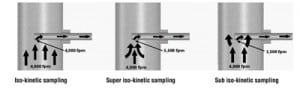
O&MPulverized Coal Pipe Testing and Balancing
If you want the most accurate test results, it’s worth the extra effort to take isokinetic coal samples from coal pipes when collecting fuel and air measurements. Together, the data collected will allow more accurate balancing of coal pipes, measure fuel fineness, and improve the combustion efficiency of your steam generator.
-
Coal
EPA Air Regulations Shrinking Power Glut
Pending Environmental Protection Agency regulations to slash U.S. power plant emissions likely will lead to the closure of nearly 18% of the nation’s coal-fired generation capacity, trim demand for steam coal by 15% to 31% and boost demand for natural gas by 8% to 16%, a new Credit Suisse analysis concludes.
-
Coal
TVA Eyes Cleaner "Vision" with More Nukes, Less Coal
Responding to looming federal regulations to reduce power plant pollution, the Tennessee Valley Authority’s board signed off on a proposal to shut down 1,000 MW of older coal-fired generation and replace it with an equal amount of natural gas capacity while also pursuing 1,900 MW of demand response and energy efficiency programs and adding 1,140 MW of new nuclear generation by 2015.
-
Coal
EPA Boiler Regulations Will Strangle Construction of New Power Plants
An Environmental Protection Agency plan to tighten emission limits for new and existing industrial boilers has sparked alarmed protests from the biomass generation industry and electric utilities, who say the proposed regulations are so onerous they threaten to shut down existing biomass power plants and already are chilling deployment of new facilities.
-
 Coal
CoalOverblown: Wind Power on the Firing Line, Part I
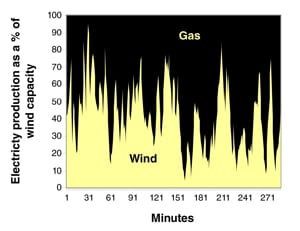
The conventional and oft-repeated truth is that wind generation directly reduces carbon emissions. Challenging the conventional wisdom has drawn much criticism from wind proponents, but the latest research has shown that wind has had, and will continue to have, negligible impact on the nation’s carbon emissions. The data are convincing and can no longer be ignored.
-
Coal
Overblown: Wind Power on the Firing Line, Part II
Wind electricity production must displace some existing generation. However, its relentless variability imposes daunting challenges for wind integration. Clever engineering schemes can mask the problem, but the data show that wind generation has and will continue to reduce carbon by negligible amounts, but at great expense.