
Articles By
-
HR
Social Media: Watch Your Words and Fingers
Letting loose on Facebook, Twitter, and email, no matter how tempting and satisfying, can be a prescription for big trouble for you and your organization. Watch out for the dangers of social media on the job.
-
News
Follow the Leader
Another year has passed and the promised U.S. nuclear renaissance is still in the Dark Ages. Blame for slow progress is usually cast on the pedestrian pace of finalizing loan guarantees, the economy and slow load growth, or the rising cost of construction. The excuses end when competition increases. Two years have elapsed since the […]
-
 Nuclear
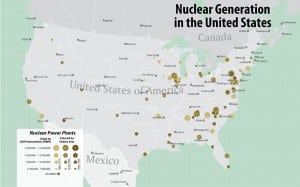
Map of Nuclear Generation in the United States
Courtesy: Platts Data source: POWERmap All rights reserved. No reproduction allowed. For full-sized maps, contact Platts.
-
 News
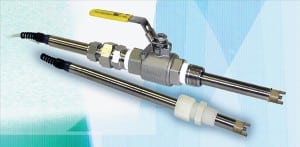
NewsNo-Glass ORP Sensors
Engineers and technicians searching for a high-performance oxidation-reduction potential (ORP) sensing solution will find that the S10 and S17 ORP Sensors from Electro-Chemical Devices (ECD) feature a no-glass design with platinum or gold sensor tips to operate safely in a wide range of applications. ECD’s ORP S10 and S17 Sensors come with easily replaceable ORP […]
-
HR
The Five Most Common Workforce Strategy Mistakes
Business planning that doesn’t carefully consider workforce issues can result in economic and management headaches.
-
 Nuclear
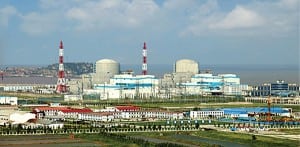
Russia Powers On, Boosting Nuclear Reactor Sales
Atomstroyexport, the Russian Federation’s nuclear power equipment and services export monopoly, in September signed a US$1.8 billion contract with the Chinese government for development of the second stage of the Tianwan nuclear power plant in Lianyungang City. Under the agreement, Units 3 and 4 are to be built in a way similar to construction of the first stage of Tianwan—two Russian-designed VVER-1000 reactors that came online in 2007, each with a rated capacity of 1,060 MW.
-
 Gas
GasSmart Power Generation at UCSD
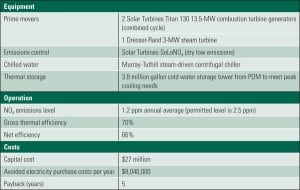
The University of California, San Diego has been accumulating awards for its savvy use of a constellation of power generation and energy-saving technologies. The campus already controls a fully functioning microgrid—including a cogeneration plant—and, as befits a research institution, is constantly looking for new ways to make its energy system smarter. This “living laboratory,” as campus leaders like to call it, demonstrates what it takes to build a smarter grid and why the effort is worth it.
-
 News
NewsPre-Cleaner for Vulcanized Conveyor Belts
The new QC#1 MT Pre-Cleaner from Martin Engineering is a high-quality cleaning blade for use on vulcanized conveyor belts. It features a special polyurethane blend and tungsten carbide tip to deliver service life two to three times longer than conventional urethane blades, the company claims. Designed to provide excellent cleaning performance without any break-in period, […]
-
Commentary
Regulating Smart Power: The Next Generation of Energy Regulation
The smart grid, a truly disruptive business force, will require a new regulatory paradigm and new approaches to the electric utility business model.
-
 Nuclear
China Begins Operation of First CPR-1000
The first unit of Ling Ao phase II (Unit 3) in Guangdong Province, China, entered commercial operation in late September. The 1,080-MW reactor is the first CPR-1000—a Chinese design—to be built, and its start-up marks a major milestone in the country’s concerted nuclear power expansion.
-
 Gas
GasMicroturbine Technology Matures
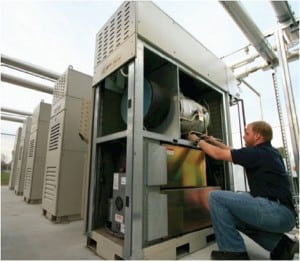
Microturbine technology has evolved from early systems of 30 kW to 70 kW to today’s systems, which can have individual ratings of 200 kW to 250 kW. Packages up to 1 MW are now available that can be assembled into multipac units for projects of 5 MW to 10 MW. These modern units are packaged with integrated digital protection, synchronization, and controls; they produce high combined heat and power efficiencies; and they are capable of using multiple fuels.
-
News
Correction (November 2010)
Correction In the September issue’s “Taming Condenser Tube Leaks, Part I,” the first full paragraph in the main text on page 57 should say, “If chloride and sulfate in the steam cannot be maintained below 8 ppb….” POWER regrets the error.
-
Commentary
Who Do They Think You Are?
The Scottish poet Robert Burns had it right. Using the power to see ourselves as we really are, and as others see us, is a key to leadership in business.
-
 Wind
WindWorld’s Largest Offshore Wind Farm Opens in the UK
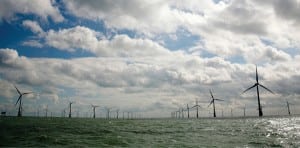
Swedish company Vattenfall in late September officially opened the 300-MW Thanet Offshore Wind Farm in southeast England. Covering an area of 35 square kilometers, the installation comprising 100 Vestas V90 turbines, each 115 meters (m) high, is the largest offshore wind farm in the world to date.
-
Solar
The Global Smart Grid Scene
Presenters at the inaugural GridWise Global Forum in Washington, D.C., September 21 to 23 had a lot to say about the prospects for smarter grids. This synopsis of facts and opinions shared at the event, which attracted several smart grid A-listers, looks at the major challenges ahead, especially for the U.S.
-
Commentary
Good Habit—Questionable Motive
Sometimes we do things for the wrong reason . . . that turns out to be exactly right.
-
 Coal
CoalSouthern Co. Captures Carbon Dioxide at Plant Yates Pilot
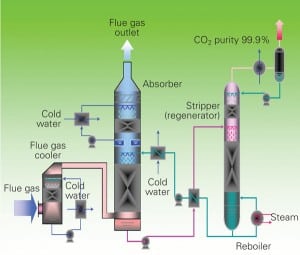
The pilot-scale project at Georgia Power’s Plant Yates near Newnan, Ga.—the first step in one of the industry’s largest demonstrations of a start-to-finish coal-fired power plant carbon capture and storage system—reached a significant milestone this September, capturing the greenhouse gas for the first time.
-
Business
Turkey Joins European Grid
Turkey, a country that has long vied to become part of the European Union, is finally part of its grid, at least. The nation’s power system was synchronized with Continental Europe’s interconnected grid this September, marking the beginning of a year-long trial period in which security and performance will be monitored.
-
 Coal
CoalFrog-Inspired Artificial Foam Could Help Trap CO2
In August, researchers from the University of Cincinnati who are working on creating an artificial foam that could absorb carbon dioxide (CO2) from the flue gas at power plants and convert it into biofuel won the grand prize at the 2010 Earth Awards in London.
-
Business
POWER Digest (November 2010)
TVA’s 550-MW Combined-Cycle Plant Starts Operations. The Tennessee Valley Authority (TVA) on Sept. 30 officially began operating the Lagoon Creek Combined Cycle Plant, a 550-MW natural gas–fired plant, near Brownsville, Tenn. The federal utility said that the new plant, the first new power generation source built by TVA since 2002, would provide power during days […]
-
 Nuclear
NRC Confident in Long-Term Dry Cask Storage
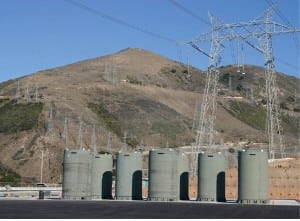
The U.S. Nuclear Regulatory Commission (NRC) approved an updated “waste confidence” rule in mid-September that reflects the agency’s confidence that spent nuclear fuel (SNF) can be safely stored for at least 60 years beyond the closing date of any U.S. nuclear plant. Approval of this rule was required before the NRC can license any new reactors that will be required to store SNF on site indefinitely.
-
Nuclear
EPRI Updates Spent Nuclear Fuel Storage Handbook
EPRI recently issued a handbook on nuclear spent fuel storage that examines regulatory trends affecting used fuel storage, describes available dry storage technologies, reviews planning considerations for spent fuel storage installations, and discusses technical issues affecting dry storage.
-
 O&M
O&MCSB Releases Hot Work Safety Notice
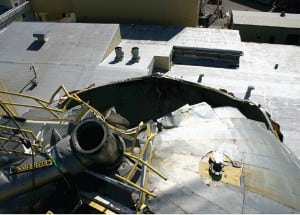
The Chemical Safety Board (CSB)—an independent federal agency charged with investigating serious chemical accidents such as equipment failure, as well as inadequacies in regulations, industry standards, and safety management systems—recently released multiple reports that should be made part of every power plant’s safety training program.
-
 Nuclear
Are Smaller Reactors Better?
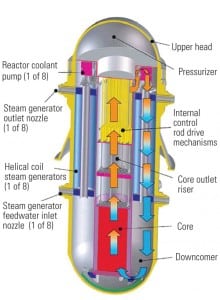
Is a paradigm shift—an economic and engineering earthquake—in nuclear power plant design on the horizon? For most of the past 50 years, the mantra in planning new nuclear plants has been “bigger is better.” But a growing number of nuclear power engineers and designers are contemplating a world where small is beautiful.
-
Commentary
Elner Shimfissle and Old Tom: In Praise of Electricity
Fannie Flagg’s fictional Aunt Elner Shimfissle reminds us of the power and the glory of electricity, a lesson we shall not forget.
-
O&M
NFPA Gas Purging Rules Updated
The CSB has made urgent recommendations to the NFPA and the International Code Council to prohibit indoor purging and require companies and installers to purge flammable fuel gases to safe locations outdoors, away from workers and ignition sources.
-
 Nuclear
Benchmarking Nuclear Plant Capital Requirements
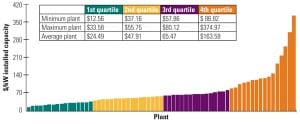
The EUCG Nuclear Committee’s primary goal is to optimize the costs and reliability performance of participating plants by publishing for its members a comprehensive database of performance metrics and best practices derived through surveys of its membership. Earlier reports examined staffing and performance data. In this exclusive EUCG report, we examine nuclear plant capital requirements.
-
 Distributed Energy
Matching Load and Generation at UCSD
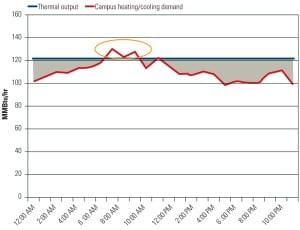
“Smart Power Generation at UCSD” explains how the University of California, San Diego (UCSD) is maximizing the value of combined heat and power. However, like any other grid-controlling entity large or small, the campus has to match generation and load. Its two Solar Turbines gas turbines operate in baseload mode 24/7 while the cogeneration side of the plant maximizes the value of “waste” heat and electricity that isn’t needed to serve immediate load by generating steam and chilled water for campus heating and cooling.
-
News
NERC: EPA Regulations Could Impact System Reliability
Regulations being proposed by the U.S. Environmental Protection Agency (EPA) could significantly affect the bulk power system’s reliability, a new report from the North American Electric Reliability Corp. (NERC) shows. The quasi-public agency recommends that the proposed rules provide sufficient time to procure replacement resources that would offset capacity reductions expected as a result of unit retirements and deratings from environmental control retrofits.
-
News
E.ON Pulls Plug on Kingsnorth CCS Project in the UK
E.ON last week shelved plans to build its controversial Kingsnorth coal-fired plant in Kent, and it withdrew from the UK’s government competition to build the first of four planned large-scale pilot power plants to demonstrate carbon capture and storage (CCS). The company said the project could not meet “competition timescales.”