
Articles By

-
News
Bangladesh, Zimbabwe, Venezuela, and UK Brace for World Cup Power Demand
The FIFA World Cup 2010—a month-long soccer tournament that is arguably the biggest sports event on the planet—officially kicked off on Friday in South Africa. As grid operators and utilities all over the globe braced for power consumption surges, some governments went to lengths to enable fans to enjoy uninterrupted coverage of the matches.
-
General
Energy R&D is No Panacea
[Editor’s note: This commentary first appeared in The Energy Daily, our sister publication on June 14. Llewellyn King was the founder and, for many years, publisher, of The Energy Daily and I worked for him for a decade as a reporter. We often disagreed on policy and politics, but I completely agree with this take […]
-
General
Murkowski Vote Dooms Senate Legislation
By Kennedy Maize Washington, D.C., June 11. 2010 — Their lips say “yes”, but their eyes say “no”. That’s my take on the offer of “practical” energy legislation this week by Senate Republicans. Yes, I’m cynical about the strategy and tactics of the GOP embodied in this legislative proposal (as far as I know, it […]
-
News
EPA Sets New SO2 Standards
A new rule for sulfur dioxide (SO2) set by the Environmental Protection Agency (EPA) on Thursday sets a new one-hour health standard, changes monitoring requirements, and modifies the Air Quality Index. Full implementation of revised primary National Ambient Air Quality Standard (NAAQS) for SO2 by 2020 could cost the electric power industry nearly $700 million a year, the agency said.
-
News
NERC Report: Cyber Attacks Among Top High-Impact Risks for Grid Disruption
A report released last week by the North American Electric Reliability Corporation (NERC) and the U.S. Department of Energy (DOE) identifies cyber attacks, pandemics, and electromagnetic disturbances as “high-impact, low-frequency” (HILF) risks that could significantly affect the reliability of the North American bulk power system.
-
News
Tracer Technology Allows DOE to Track CO2 in Geologic Reservoirs
The ability to detect and track the movement of carbon dioxide (CO2) in underground geologic storage reservoirs—an important component of carbon capture and storage (CCS) technology—has been successfully demonstrated at a U.S. Department of Energy (DOE) New Mexico test site.
-
News
AltaRock, Davenport Newberry to Demonstrate EGS in Oregon
Geothermal developer AltaRock Energy and Davenport Newberry, a company specializing in the development and management of geothermal opportunities, announced plans this week to conduct a demonstration of enhanced geothermal systems (EGS) technology at a site located near Bend, Ore.
-
News
AWEA: Small Wind U.S. Market Expanded 15% in 2009
The U.S. market for small wind turbines expanded by 15% in 2009 and accounted for about half of the units sold globally, according to the American Wind Energy Association (AWEA).
-
News
NRC: PPL’s Susquehanna 1 Is Now Nation’s Largest BWR
PPL Corp.’s Susquehanna nuclear power plant in Luzerne County, Pa., is the nation’s largest boiling water reactor (BWR) in terms of thermal power and generating capacity, according to the Nuclear Regulatory Commission (NRC). The plant’s Unit 1, which recently completed equipment and system upgrades during a recent scheduled refueling and maintenance outage, boasts 3,952 MWth and 1,300 MWe when operating at full capacity.
-
General
A Challenge to Climate True Believers
By Kennedy Maize Washington, D.C., 6 June 2010 — I’m offering a challenge and opportunity to those of you who believe that the science of global warming is settled: take a look at an informed contrary view. Last month, I wrote in this blog about noted physicist Will Happer, and his proposal to create a […]
-
News
Mississippi Power to Proceed with Kemper IGCC Project
Mississippi Power Co. on Thursday said it would proceed with plans to build a 582-MW integrated gasification combined cycle (IGCC) plant as proposed in Kemper County after the Mississippi Public Service Commission (MPSC) relaxed restrictions it had placed on the project.
-
News
Appeals Court Dismisses Pivotal Climate Change Public Nuisance Case
The U.S. Court of Appeals for the Fifth Circuit on Friday dismissed without rehearing, on procedural grounds, a controversial climate change “public nuisance” case in which 14 individuals had filed a class-action lawsuit against insurance, coal, and chemical companies, seeking relief for property damages resulting from Hurricane Katrina.
-
News
NERC: Power Supplies Ample for Summer Reliability
Depressed power demand due to a slow economic recovery will continue to be a major driver affecting bulk power system reliability during the summer months, the North American Reliability Corp. (NERC) said last week in its annual summer reliability assessment report.
-
News
SWEPCO Seeks Ark. Supreme Court Rehearing for Ultrasupercritical Plant
Southwestern Electric Power Co. (SWEPCO) and the Arkansas Public Service Commission (APSC) on Tuesday asked the Arkansas Supreme Court for a rehearing, after the high court last month overturned a 2007 permit awarded by the PSC to the utility’s 600-MW John W. Turk, Jr. power plant. SWEPCO said that it plans to continue construction of the $1.7 billion project—the nation’s first ultrasupercritical coal plant—to meet its commitments to serve the company’s customers in three states.
-
News
Mich. Coal Plant Shelved on Weak Demand, Gas Recovery Tech. Developments
CMS Energy subsidiary Consumers Energy last week announced that it is deferring the development of an 830-MW coal-fired power plant planned for Hampton Township. State regulators had last year approved an air permit for the $2 billion-plus project on the condition that it use stringent emission controls and that it was ready for carbon capture and sequestration when the technology was feasible.
-
 News
NewsDesign of Experiments Reduces Time to Market
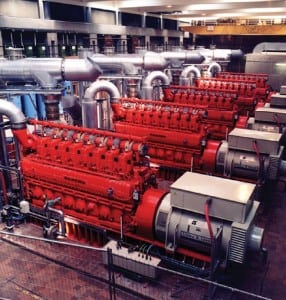
Dresser Waukesha is a familiar name associated with large, gas-fueled stationary engines for power generation and gas compression applications around the world. Each new project location presents a unique set of site variables that must be taken into consideration—such as fuel quality, air/fuel ratio, temperature, humidity, altitude, load, and exhaust after-treatment—when providing the customer a meaningful performance guarantee. To fully characterize every engine option with such a wide range of fuel types and quality and in widely varying environmental conditions across the global is an impossible chore.
-
 News
NewsKeep Oil Leaks Under Control
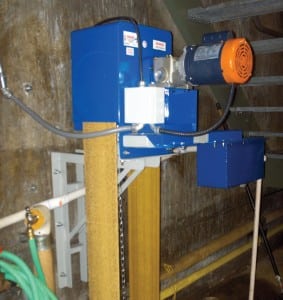
An oil skimmer could simplify your plant water maintenance activiites.
-
Legal & Regulatory
Energy Storage: Renewables’ Necessary Partner
Timing is everything in the world of electric power generation. The timing of the delivery of electricity is affected by both the users’ demand and the speed with which a variety of energy sources supply power to the transmission system. Modern grids require reliable energy sources to instantly meet the needs of their users.
-
 Gas
GasEconomic Operation of Fast-Starting HRSGs
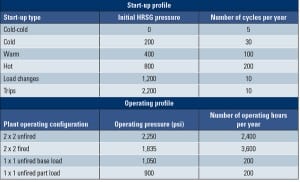
Fast-starting combined-cycle plants are designed for a certain operating life based on a customer-specified set of operating scenarios. During that design phase, periodic inspection and maintenance procedures to benchmark equipment actual wear and tear should be developed, but seldom are. Without an accurate assessment of remaining equipment life for components subjected to fast and frequent […]
-
 Gas
GasKawasaki Plant Claims Efficiency Record
Tokyo Electric Power Co.’s new Kawasaki Thermal Power Plant claims the title of having the highest combined-cycle efficiency in the world: 59.1%. The new gas-fired facility is equipped with three 500-MW single-shaft combined-cycle blocks. Each block is based on the MHI M701G2 gas turbine, which is the largest gas turbine currently in commercial operation.
-
 Commentary
The Second Wave of the Smart Grid
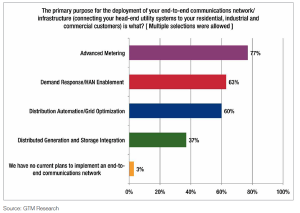
Now that U.S. utilities have taken federal stimulus funds and seamlessly built out two-way advanced metering infrastructure (AMI) connecting utility control centers and end users (ok, not completely, but let’s assume that the “stall-ulus” becomes a true stimulus), the question becomes, what’s next? At the moment, this new “comm layer” or “platform” has utilities planning in two directions: upstream and downstream from the smart meters.
-
Commentary
"Cap and Innovate" for Electric Utilities
The Kerry-Graham-Lieberman bill is a very important step forward in the climate debate. We need federal action on climate legislation now. And we need to get it right.
-
News
Scientific Calculator
Carol Browner, director of the White House Office of Energy and Climate Change Policy, trusts the latest Intergovernmental Panel on Climate Change (IPCC) report’s conclusions that anthropogenic carbon emissions are the primary cause of climate change. When pressed, the customary response of Browner and other proponents has been to rely on that oft-cited list of 2,500 scientists said to have given their full support of the report’s conclusions. Browner should check her facts.
-
 Water
WaterAppraising Our Future Cooling Water Options
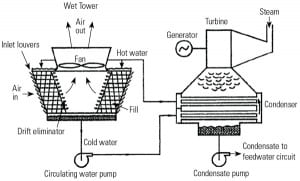
Ensuring the availability of water for power plants is a matter of both water quantity and quality. As freshwater becomes less available for power plant use, new supplies from marginal or impaired sources will require new cooling technologies. We look at cooling equipment options and how water availability and quality affect cooling system design and cost.
-
Commentary
New Breed of Hacker Targeting the Smart Grid
In recent months, U.S. utilities, manufacturers, and technology firms received $3.4 billion as part of the economic stimulus package. These funds have been allocated to help modernize the country’s electric power system and increase energy efficiency. However, as these "smart-grid" grants continue to be awarded, questions are being raised about how to safeguard smart meters and other critical infrastructure from cyber attacks.
-
Coal
CORRECTED: New York Coal Plant to Get 20-MW Energy Storage System
New York regulators in April approved construction of a 20-MW energy storage system at the site of an operating coal-fired power station near Union, Broome County. When operational, the $22.3 million project, owned by AES ES Westover LLC—an AES Corp. subsidiary—will use the technology to participate in New York’s growing day-ahead market for ancillary services and regulation.
-
 O&M
O&MImproving SCR Performance on Simple-Cycle Combustion Turbines
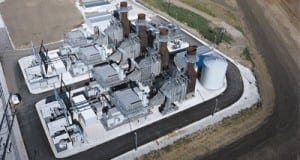
Austin Energy replaced the selective catalytic reduction (SCR) catalyst twice over five years for its four peaker turbines. The duct modifications and injection grid redesign, combined with new catalyst, are producing high NOx reduction and low ammonia slip, and the catalyst is now expected to last at least five years.
-
Coal
EPA Proposes Two Options to Regulate Coal Ash
In an unusual two-option proposal that drew clashing views from green groups and power plant operators, the Environmental Protection Agency has proposed regulating coal combustion ash either as a nonhazardous waste subject to tougher management and disposal requirements or as a "special" hazardous waste that would have similar controls but still be eligible for recycling and reuse in products such as Portland cement.
-
 Wind
WindOffshore Wind Takes Off Around the World
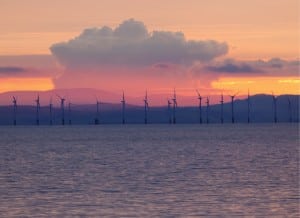
After more than a decade of debate, in April, U.S. Interior Secretary Ken Salazar approved Cape Wind, a proposed 130-turbine offshore wind farm for Nantucket Sound in Massachusetts. It would be the first wind facility in U.S. waters. Despite remaining hurdles, the approval marks a shift in political winds for the nation’s fledgling industry, and it could spur further development of projects proposed for relatively shallow waters along the East Coast and in the Great Lakes.
-
 O&M
O&MReal-Time Monitoring of Natural Gas Fuel Cleanliness
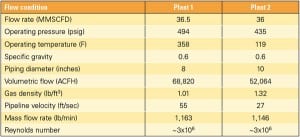
Gas turbines require clean gas to operate efficiently. Particulate contamination fouls fuel nozzles, causes increases in flue stack emissions, and occasionally causes unplanned plant outages. Now a new real-time natural gas cleanliness monitoring and web-based alarm system is providing valuable protection for natural gas–fired power plants. The adaptation of laser light–scattering technology for the purpose of contaminant measurement in high-pressure gaseous pipelines provides a method of monitoring liquid and solid contamination levels.