
Articles By

-
 Wind
Offshore Wind Takes Off Around the World
After more than a decade of debate, in April, U.S. Interior Secretary Ken Salazar approved Cape Wind, a proposed 130-turbine offshore wind farm for Nantucket Sound in Massachusetts. It would be the first wind facility in U.S. waters. Despite remaining hurdles, the approval marks a shift in political winds for the nation’s fledgling industry, and it could spur further development of projects proposed for relatively shallow waters along the East Coast and in the Great Lakes.
-
 O&M
Real-Time Monitoring of Natural Gas Fuel Cleanliness
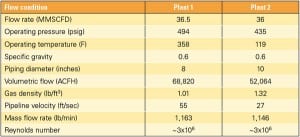
Gas turbines require clean gas to operate efficiently. Particulate contamination fouls fuel nozzles, causes increases in flue stack emissions, and occasionally causes unplanned plant outages. Now a new real-time natural gas cleanliness monitoring and web-based alarm system is providing valuable protection for natural gas–fired power plants. The adaptation of laser light–scattering technology for the purpose of contaminant measurement in high-pressure gaseous pipelines provides a method of monitoring liquid and solid contamination levels.
-
Coal
EPA Issues Final Greenhouse Gas Tailoring Rule
Less than 24 hours after the unveiling of sweeping Senate legislation to reduce U.S. greenhouse gas emissions, the Environmental Protection Agency released a final Clean Air Act rule that defines emission thresholds for greenhouse gas permitting requirements for power plants and other large stationary sources.
-
 Wind
Competition for Offshore Turbine Market Heats Up
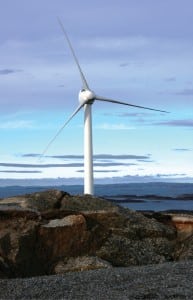
One indication that the world’s offshore wind sector is poised to soar is the escalating competition between turbine makers. This April, General Electric (GE)—the world’s second-largest manufacturer of wind turbines—announced it would introduce a 4-MW gearless wind turbine (a design requiring no gearbox between turbine and generator) in 2012. The move directly challenges market leader Siemens Energy, of Germany, and its head-to-head competitor, Denmark’s Vestas Wind Systems.
-
 Business
A Proposed Definition of CHP Efficiency
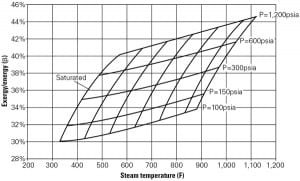
Many alternative approaches for determining a useful definition of combined heat and power fossil power plant efficiency have been proposed, although most fail to produce a universal definition. This follow-up report to our February story on plant efficiency shows how an exergy analysis supplies the elusive solution.
-
Coal
American Power Act Dangles Carrots for Nukes, Coal, Gas
Facing a difficult uphill slog in a sharply polarized Senate, Sens. John Kerry and Joseph Lieberman have unveiled long-awaited draft climate change and energy legislation that includes billions of dollars in incentives for the nuclear, natural gas, and coal industries aimed at attracting enough bipartisan support to overcome an all-but-certain filibuster led by the Senate Republican leadership.
-
 Nuclear
Finnish Government OKs Two Nuclear Plant Proposals
Finland’s government in April approved two of three proposals for the construction of new nuclear reactors in an effort to rid the country of its dependency on electricity imports from other countries—especially Russia—as well as to decrease carbon emissions.
-
 News
In-Line Vibration Transmitter
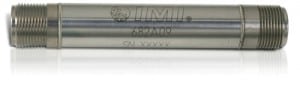
IMI Sensors released model 682A09 ICP In-Line 4-20 mA Vibration Transmitter, a device that installs with any industrial accelerometer and converts the vibration signal to a 4-20 mA velocity output that can be trended with today’s PLC, DCS, or SCADA control room systems. Its sleek design installs right into the cable run. No DIN rails, […]
-
 Coal
Comparing the Value of Single- and Double-Layer Insulation on Boiler Walls
Boiler insulation practices have moved from using a single layer to a double layer of the same total thickness in recent years. However, this dual-layer trend has a downside: higher installation costs and the opportunity for contractors to cut corners when installing insulation. It’s time to return to using single-layer insulation on power boilers.
-
 Hydro
Hoover Dam Contracts for Low-Water Hydroelectric Turbine
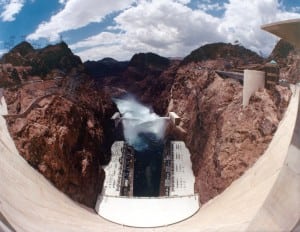
Growing water demand and reduced runoff due to drought has depleted waters feeding many hydroelectric power plants around the world—sometimes causing severe power shortages, such as in Brazil and New Zealand. The 2,080-MW Hoover Dam (Figure 4), a facility that generates power for more than a million people in Arizona, Nevada, and Southern California, is not immune to this phenomenon. According to a recent study by the Scripps Institution of Oceanography, the Colorado River system, which includes Lake Powell and Lake Mead (both manmade reservoirs), is suffering a net deficit of nearly one million acre-feet of water per year.
-
 News
Caustic Media–Shielding Seals
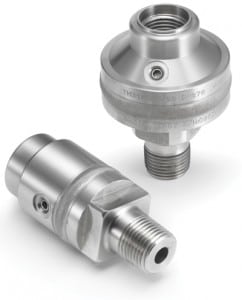
Types 510 and 511 diaphragm seals are the newest addition to Ashcroft’s line of instrument media isolators. These economical, all-welded seals protect pressure gauges, transmitters, switches, and other instruments against the potentially harmful effects of caustic media. The seals are available for use with ranges from vacuum through 5,000 psi, and they can be threaded […]
-
 O&M
The Role of Fireside Corrosion on Boiler Tube Failures, Part II
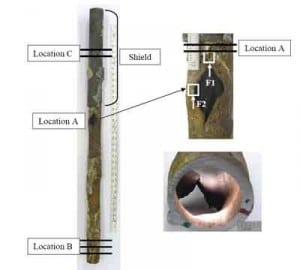
One of the primary challenges of reliably burning coal is managing the corrosion experienced by the furnace heat transfer surfaces. Fireside corrosion remains a leading cause of failure in superheater and reheater tubes. In Part I, we examined three case studies of different failure modes experienced by tubes located throughout the furnace. In Part II, we conclude with two additional boiler tube failure case studies.
-
 Gas
DOE Expedition Confirms Resource- Quality Gas Hydrate in the Gulf of Mexico
Gas hydrate, a potentially immense energy resource, occurs at high saturations within reservoir-quality sands in the Gulf of Mexico, an expedition by the U.S. Department of Energy has discovered.
-
 News
Vacuum Pump and Compressor Series Upgrade
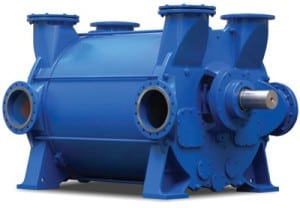
GD Nash introduced the new 2BE4 series vacuum pumps and compressors, a redesign and upgrade of the existing 2BE3 series. The 2BE4 series includes optimized inlet and discharge porting for enhanced performance, and cylindrical roller bearings for improved load ratings and increased reliability (bearing upgrade is possible in existing 2BE3s). The series also includes optional […]
-
 O&M
Power 101: Flue Gas Heat Recovery in Power Plants, Part II
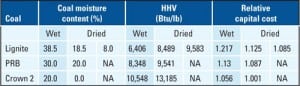
Every power engineer must have a firm grasp of the rudiments of how fuel is processed to produce electricity in a power generation facility. With this article, we continue our three-part series on the essentials of recovering heat from flue gas to dry and process coal, with the goal of improving overall plant operating efficiency.
-
 Hydro
The Backpack Power Plant
Soldiers could one day carry 600-W power plants on their backs, or set up arrays of up to 20 kW in streams deeper than 4 feet, if a prototype being developed by California-based Bourne Energy comes to fruition.
-
 News
Mobile Water Desalination Technology for Rent
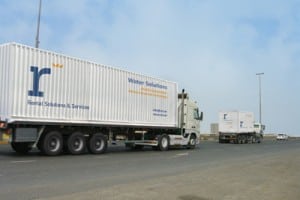
Rental Solutions & Services (RSS), a global provider of rental power and cooling, recently launched its latest product offering, temporary desalination, or mobile water. The company, which recently opened a new office in Cyprus to serve the Mediterranean market, says its rental desalination, or mobile water technology has various applications, especially where freshwater is scarce […]
-
Commentary
Power Industry Flip-Flops on Support of Carbon Controls
I recently had the privilege of moderating the Power Industry Executive Roundtable, part of the annual ELECTRIC POWER Conference & Exhibition opening ceremonies. Usually, the power industry executives have predictable views of important issues, but not this year.
-
Business
POWER Digest (June 2010)
AES Secures PPA with Electricity Vietnam for 1,200-MW Coal Plant. AES Corp. subsidiary AES VCM Mong Duong Power Co. Ltd. in April signed a power purchase agreement (PPA) with state power company Electricity Vietnam (EVN) for Mong Duong II, a proposed 1,200-MW coal-fired power plant. In support of this agreement, AES VCM has also entered […]
-
 News
Advanced Generator Set for Distributed, CHP Generation
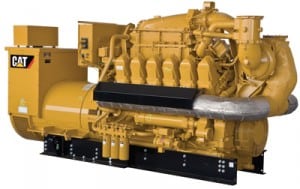
Caterpillar introduced the G3512E, an advanced natural gas–fueled generator set that was designed for maximum efficiency in extended-duty distributed generation and combined heat and power (CHP) applications. Driven by a Caterpillar electronically controlled, lean-burn gaseous-fueled reciprocating engine, the G3512E generator set offers high power density and fuel efficiency while maintaining tight NOx control. It provides […]
-
 O&M
Variable-Frequency Drives Upgrade Reactor Circulating Pumps
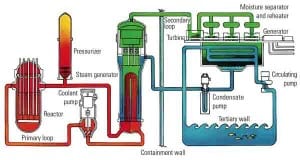
A recent trend in nuclear power plant upgrades has been the replacement of the motor-generator (MG) sets that drive the reactor circulating pumps with variable-frequency drives (VFD). Siemens’ first application of VFDs in this industry began in 2000 with an installation of six VFDs at the Browns Ferry Nuclear Plant. The use of the VFD continues to expand, and upgrades were recently completed at several U.S. plants, including the Hatch Nuclear Plant in Georgia.
-
 News
Small Gantry Cutting Machine
ESAB Cutting Systems launched the Falcon FXA, a small gantry-cutting machine that is designed for improved cutting performance. The machine features heavy-duty gantry, rack-and-pinion drives, digital AC drive amplifiers, and AC brushless motors. It comes with three tools—two oxy-fuel torches and one plasma—and covers a 6-inch by 12-inch working area. These process tools allow the […]
-
 Business
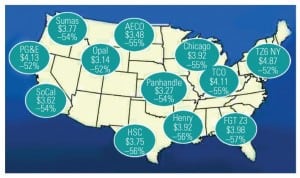
KEMA Conference Report: Competition Strengthens as Wholesale Power Prices Fall
Since the collapse of Enron and the wholesale power markets, the vitality of competition in retail markets for electricity has waned in most regions of the U.S., with the exception of Texas. At KEMA’s 21st annual Executive Forum in late March, 300 attendees converged on Dallas to discuss and debate the dynamics and changes now facing residential and commercial customers in most regions of the U.S. and Canada. Founded in 1927, KEMA is a global provider of business and technical consulting, operational support, measurement and inspection, and testing and certification for the energy and utility industry. A summary of the many presentations follows.
-
 News
Design of Experiments Reduces Time to Market
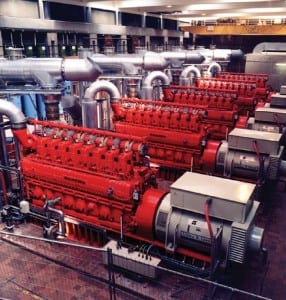
Dresser Waukesha is a familiar name associated with large, gas-fueled stationary engines for power generation and gas compression applications around the world. Each new project location presents a unique set of site variables that must be taken into consideration—such as fuel quality, air/fuel ratio, temperature, humidity, altitude, load, and exhaust after-treatment—when providing the customer a meaningful performance guarantee. To fully characterize every engine option with such a wide range of fuel types and quality and in widely varying environmental conditions across the global is an impossible chore.
-
 News
Keep Oil Leaks Under Control
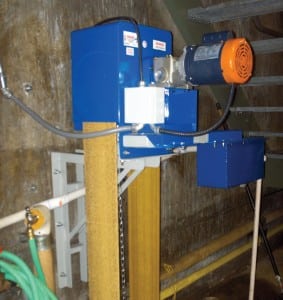
An oil skimmer could simplify your plant water maintenance activiites.
-
Legal & Regulatory
Energy Storage: Renewables’ Necessary Partner
Timing is everything in the world of electric power generation. The timing of the delivery of electricity is affected by both the users’ demand and the speed with which a variety of energy sources supply power to the transmission system. Modern grids require reliable energy sources to instantly meet the needs of their users.
-
 Gas
Economic Operation of Fast-Starting HRSGs
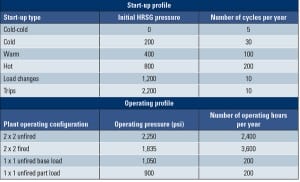
Fast-starting combined-cycle plants are designed for a certain operating life based on a customer-specified set of operating scenarios. During that design phase, periodic inspection and maintenance procedures to benchmark equipment actual wear and tear should be developed, but seldom are. Without an accurate assessment of remaining equipment life for components subjected to fast and frequent […]
-
General
Times Wields Silent Hatchet on DOE’s Chu
By Kennedy Maize Washington, D.C., May 26, 2010 — A breathless article in today’s New York Times outlines ties between U.S. Energy Secretary Steven Chu and, today’s chief villain, British Petroleum. Turns out that BP dropped half-a-billion dollars on Lawrence Berkeley Laboratory for work on alternative fuels when Chu ran the lab. When he got […]
-
News
Va. Appeals Court Affirms Dominion Coal Plant Air Permit
The Virginia Court of Appeals on Tuesday unanimously approved an air emissions permit granted to Dominion Virginia Power’s 585-MW Virginia City Hybrid Energy Center, a coal-fired plant that is 63% complete.
-
News
Mich. Denies Air Quality Permit for 600-MW Wolverine Coal Plant
Michigan regulators on Friday denied Wolverine Power Supply Cooperative’s air quality permit for a new 600-MW power plant, fueled primarily by petroleum coke and coal, in Rogers City. The state’s Department of Natural Resources and Environment (DNRE) decision was based on findings of the Michigan Public Service Commission (MPSC), which said the company failed to demonstrate the plant was needed to meet future supply.