
Articles By

-
News
TCEQ Approves Air Permit for White Stallion Coal-Fired Facility
The Texas Commission on Environmental Quality (TCEQ) last week issued an air quality permit to the White Stallion Energy Center, a 1,320-MW coal- and petroleum coke–fired power plant proposed for construction in Bay City, Texas.
-
News
Graham Floats “Clean Energy Standard” to Include Nuclear, Coal
Sen. Lindsey Graham (R-S.C.) has introduced the Clean Energy Standard Act of 2010 (S. 20), which would require utilities to obtain 20% of their energy from “clean energy” sources by 2020, with the requirement rising by 5% every five years through 2050.
-
News
Bingaman, Snowe Release Comprehensive Energy Tax Incentive Package
U.S. Senate Energy and Natural Resources Committee Chairman Jeff Bingaman (D-N.M.) and Small Business & Entrepreneurship Committee Ranking Member Olympia J. Snowe (R-Maine) on Monday introduced a comprehensive package of advanced energy tax incentives for clean renewable energy, energy efficiency, and carbon mitigation.
-
News
Salazar OKs First Solar Power Projects on Public Lands, Signs Cape Wind Lease
U.S. Department of the Interior (DOI) Secretary Ken Salazar on Tuesday approved the first large-scale solar energy plants ever to be built on U.S. public lands, and today he signed the nation’s first lease for commercial wind energy development on the Outer Continental Shelf (OCS).
-
News
Electricity Regulator: Rewiring UK for New Generation Could Cost £200B
UK energy regulator Ofgem on Monday warned that the country would need to rewire in a smarter way to secure access to renewable plants, but that an investment of £32 billion ($50.8 billion) would be needed to overhaul the aging grid, including replacing old “pipes and wires.”
-
News
AREVA Wins TVA Contract for Bellefonte Engineering and Development
The Tennessee Valley Authority (TVA) has awarded French company AREVA an engineering and development contract to work on potential completion of the 1,200-MW Unit 1 at the Bellefonte nuclear power plant in northern Alabama.
-
 Wind
WindOffshore Devices Get Bigger and Lighter
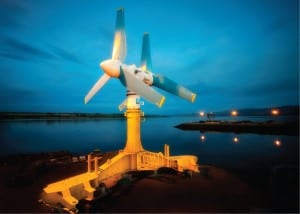
UK firms unveiled two innovative offshore turbines in July and August—one to reap the wind’s energy and the other, tidal power. Wind Power Ltd. made public the latest embodiment of its Aerogenerator project, a lighter 10-MW design, while Atlantis Resources Corp. unveiled and then deployed its mammoth AK1000 tidal turbine, which it says is the […]
-
 O&M
O&MTaming Condenser Tube Leaks, Part II
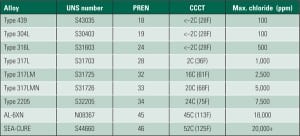
In Part I of this two-part report we examined the various chemical forces at work in condenser tube leaks, the steam plant components placed at risk, and the suite of instrumentation most capable of providing early warning of a leak. Assuming you were able to repair the leak and quickly resume operation, the next step is to identify the damage mechanisms that caused the problem so you can minimize future leaks.
-
Nuclear
India Kicks Off Construction of Indigenous Nuclear Fleet
India in August began building two 700-MW indigenous nuclear power reactors at Rawatbhatta, in the desert state of Rajasthan. The two pressurized heavy water reactors (PHWRs), which will use uranium as fuel and heavy water as both moderator and coolant, are the largest to be built by the central government–run Nuclear Power Corp. of India […]
-
 O&M
O&MFBC Control Strategies for Burning Biomass
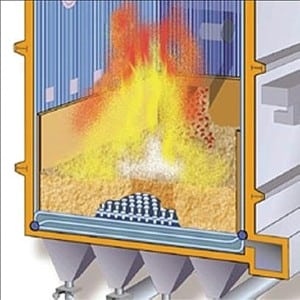
As a boiler fuel, biomass has shown great promise while suffering from a slow development history. One factor limiting its use has been the combustion system. For the most part, conventional grate-fired boilers have been the only option. Today, the most efficient approach to burning biomass to produce electricity and steam is fluidized bed combustion (FBC). Whether you choose FBC or grate, biomass presents unique challenges to control system designers.
-
-
 News
NewsDeep Excavation Support Systems Speed Plant Construction
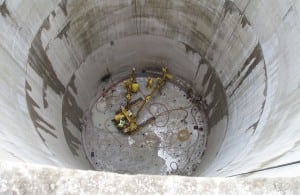
As part of constructing the recently commissioned We Energies’ Oak Creek Power Plant Elm Road units, four remarkable below-ground structures were built. Each unique structure required creative designs and meticulous construction techniques to meet the project’s distinctive requirements.
-
Business
Lessons Learned in Reliability Standards Compliance
It has been three years and a few months since the North American Electric Reliability Council (NERC) Reliability Standards (Standards) became mandatory and noncompliance became subject to sanctions by the Federal Energy Regulatory Commission (FERC). You might assume that because we have had no further instances of widespread cascading outages that the Standards are working. You may also assume that—considering the database of documented noncompliance with the Standards—the industry as a whole is puzzled, unprepared, or negligent in carrying out its responsibility to keep the high-voltage electric grids reliable and secure. The truth likely lies somewhere in the middle.
-
 Coal
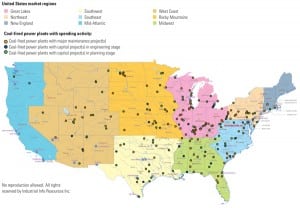
CoalU.S. Coal-Fired Power Development: Down but Not Out
Environmentalists renewed their attacks on coal-fired power development in 2010. At the same time, Congress dithered on cap-and-trade legislation while the Environmental Protection Agency marched forward rules to reduce carbon emissions from coal-fired power plants. Couple the regulatory uncertainty with lean economic times that have flatlined electricity demand growth plus low natural gas prices, and the result is predictable: New coal-fired plant construction is in the doldrums.
-
Smart Grid
Smart Grid Cyber Security Guidelines Released
The National Institute of Standards and Technology (NIST) has finalized its initial set of smart grid cyber security guidelines. NIST’s Guidelines for Smart Grid Cyber Security (NISTIR 7628) includes high-level security requirements, a framework for assessing risks, an evaluation of privacy issues in personal residences, and other information for organizations to use as they craft strategies to protect the modernizing power grid from attacks, malicious code, cascading errors, and other threats, according to NIST’s press release.
-
Commentary
The Nexus of Energy and Water
The age-old adage “water and electricity don’t mix” does not apply to 21st-century infrastructure planning. The two entities can no longer be viewed as separate commodities. The demands on both are intertwined, so solutions for meeting new and growing challenges associated with water scarcity and carbon regulations must also be integrated. Water is essential to […]
-
O&M
Innovative Cleaning of Air Preheater Coils with Pressurized Liquid Nitrogen
Cleaning air heaters in power plants or recovery boilers has traditionally involved using high-pressure water, chemicals, or steam. These techniques, though effective on moderate airside fouling of heat exchange surfaces, are usually ineffective on the more tenacious deposits that can develop in coal-fired plants. If these deposits are not removed by periodic cleaning, heat transfer in the heaters is reduced, which in turn reduces boiler efficiency and increases a unit’s heat rate. Severe fouling on air preheaters (APHs) can even reduce a unit’s power output.
-
 News
NewsMass Vortex Flow Meter for Cryogenic Fluids
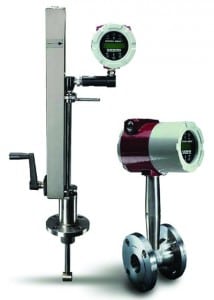
Sierra Instruments has introduced a new cryogenic version of its Innova-Mass multivariable mass vortex flow meter for measuring mass flow rates of cryogenic fluids down to –328F (–200C). Using a special cryogenic temperature RTD, mass calculations are done with the latest density equations of state for liquid oxygen, nitrogen, argon, and carbon dioxide. The multivariable […]
-
Legal & Regulatory
QF Contracts and 21st-Century Economics
Many power purchase agreements entered into between qualifying facilities (QF) and electric utilities during the 1980s and 1990s have several years remaining on their terms. These contracts typically require the generator to comply with the Federal Energy Regulatory Commission (FERC) regulations promulgated pursuant to the Public Utility Regulatory Policies Act (PURPA). The foremost FERC requirement […]
-
 News
NewsDust Collector Pulse Timer Saves Energy
The new IntelliPULSE pulse jet timer for baghouses and dust collectors from FilterSense reduces energy costs and offers direct connection to programmable logic controllers with user-specified fieldbus communications such as Devicenet, Ethernet, Modbus, and Profibus. The intelligent pulse-cleaning control technology is said to minimize compressed air use during filter cleaning, significantly reducing energy consumption. No […]
-
 Coal
CoalTop Plant: ADM Clinton Cogeneration Plant, Clinton, Iowa
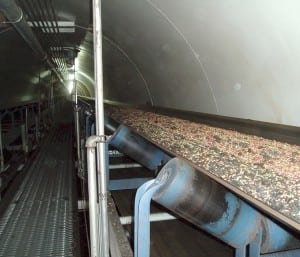
In the heart of corn country, Archer Daniels Midland is using seed corn that is no longer suitable for planting, along with coal, to power its 180-MW Clinton cogeneration plant. The cogeneration plant, which began operations in 2008, supports ADM’s Clinton corn processing plant, one of the largest corn wet mills in the world. It also supports ADM’s facility that produces renewable plastic from corn sugar. Firing up to 20% biomass along with coal, the new cogeneration plant is capable of providing 100% of the steam and electrical power needs of both facilities.
-
 News
NewsPersonal Cooling Water Analytics
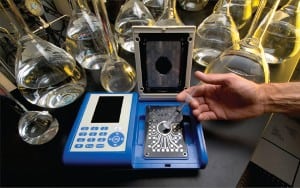
Power plant operators must keep the corrosion, deposition, and microbiological fouling affecting cooling water systems at bay to avoid damage to equipment and system inefficiencies. One possible solution is GE’s newly released TrueSense, a technology platform that enables users to monitor and control cooling water systems. TrueSense integrates three functionalities into one platform: online monitoring […]
-
 Coal
CoalTop Plant: Brandon Shores Generating Station, Pasadena, Maryland
Constellation Energy Constellation Energy recently completed a series of air quality upgrades on both units at its Brandon Shores Generating Station that included flue gas desulfurization (FGD), baghouse, SO3 control, and mercury reduction by activated carbon injection. The plant’s unique arrangement required long duct runs to the air quality system and a mile-long conveyor for moving barge-delivered limestone to the plant. Treated municipal wastewater was used as wet FGD supply water, and effluent treatment included first-of-its-kind nitrogen removal before discharge to the Chesapeake Bay watershed.
-
 News
NewsEnd Prep Machine Tool
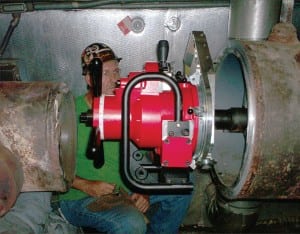
E.H. Wachs introduced the EP424 Speed Prep Autofeed System, an inside diameter–mount end prep machine tool designed to bevel, compound bevel, J-prep, face, and counterbore pipe, fittings, and valves. With the Speed Prep, the user sets the bevel angle and land thickness that works best. The machine feeds simultaneously in the axial and radial planes […]
-
 Coal
CoalTop Plant: Brunner Island Power Plant, York Haven, York County, Pennsylvania
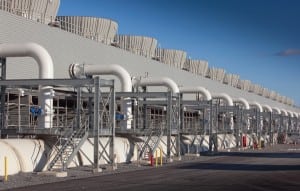
The 1,456-MW Brunner Island coal-fired plant has implemented advanced environmental improvements in order to be a good neighbor to the residents of south central Pennsylvania. For example, between 2006 and 2010, PPL invested more than $860 million in pollution control upgrades for air, water, and solid waste treatment at the facility.
-
 News
NewsSafety Bolt Bag
Ergodyne’s new Arsenal 5725 Safety Bolt Bag is designed to safely store tools, fasteners, and equipment at any vertigo-inducing job site. Featuring a loop design and wide-body, one-handed cinch top, this safety bolt bag increases aerial job safety and productivity by keeping loose gear securely stored in a durable canvas pouch. The bag has a […]
-
 Coal
CoalTop Plant: Dickerson Generating Station, Dickerson, Maryland
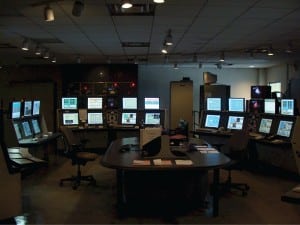
Owner/operator: Mirant Corp. Dickerson Generating Station, a 50-year-old facility servicing Maryland and Washington, D.C., was recently upgraded with a flue gas desulfurization system and a unique draft system that allows an electrostatic precipitator and a baghouse to share flue gas cleanup chores on each unit. In addition, state-of-the-art equipment monitoring and diagnostics keep plant reliability high for this baseload unit.
-
 News
NewsMachine Positional Change–Measuring Application
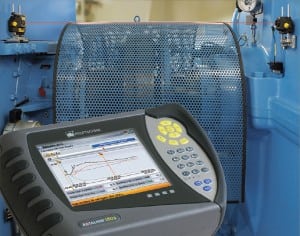
LUDECA launched the ROTALIGN Ultra Live Trend, a short-term continuous-monitoring application that helps to accurately determine the relative positional changes between coupled machines during run-up or shutdown. It utilizes the unique ROTALIGN five-axis sensor to monitor continuously, in real time and simultaneously, both the vertical and horizontal parallel and angular displacement of rotating machinery, from cold […]
-
News
Solving the Coal Conundrum
A recent U.S. Government Accountability Office (GAO) report examines two key options for reducing carbon dioxide (CO2) emissions from coal-fired power plants. The first is horribly expensive and will be years in the making. The second is blocked by current regulations in the U.S. The GAO report “Opportunities Exist for DOE to Provide Better Information […]
-
 Coal
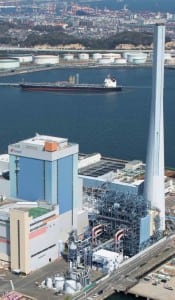
CoalTop Plant: Isogo Thermal Power Station Unit 2, Yokohama, Japan
Unit 2 at J-POWER’s Isogo Thermal Power Station entered commercial service in July 2009. The 600-MW ultrasupercritical unit joins an earlier, similar plant built in 2002. Together, these two new plants replaced 1960s-vintage coal-fired plants and doubled power generation from the small project site. In addition, the new unit improves the plant’s gross thermal efficiency to about 45% while reducing air emissions to those of a gas-fired combined-cycle plant.