
Articles By

-
News
FirstEnergy Shelves Biomass Plans, Plans to Shutter Burger Units
FirstEnergy Corp. today announced it would permanently shut down units 4 and 5 at its R.E. Burger Plant in Shadyside, Ohio, by Dec. 31, abandoning plans to repower the coal units with biomass. The Akron-based company cited a significant plunge in market prices of electricity, saying that they “no longer support a repowered Burger Plant.”
-
News
UK Green Lights Construction of 900-MW CCGT Plant, Cites Energy Security
The UK’s Department of Energy and Climate Change (DECC) on Thursday approved a 900-MW combined cycle gas turbine (CCGT) power station in Spalding, Lincolnshire, in an effort to boost the nation’s energy security. The consent was given on the condition that the plant reserves enough space to allow for a future retrofit of carbon capture technology.
-
General
GOP Won’t Cut Federal Spending
By Kennedy Maize Washington, D.C., Nov. 11, 2010 — Pardon my cynicism, but I don’t for a minute believe that the Republican electoral sweep earlier this month will result in significant cuts in federal spending anytime soon. Am I charging that Republican electoral doctrine is a tissue of hypocrisy? Yes, I am, and we will […]
-
News
APS to Buy SCE’s Stake in Four Corners and Shutter 27% of Plant’s Capacity
Arizona Public Service Co. (APS) is to buy Southern California Edison’s (SCE’s) 48% stake in Units 4 and 5 of the coal-fired Four Corners Power Plant near Farmington, N.M, if state and federal regulators agree. Arizona’s largest utility said on Monday that if the deal goes through, it would also shut down the plant’s “older, less efficient” Units 1, 2, and 3, and install more emission controls on the remaining units at the 2,040-MW five-unit power plant.
-
News
Feds Invite Bids for Wind Farms Offshore of Maryland’s Coast
The Bureau of Ocean Energy Management, Regulation and Enforcement (BOEMRE), a body that controls the Outer Continental Shelf, on Monday invited bids to put up wind turbines off Maryland’s coast.
-
News
Entergy Seeks Interested Buyers for Vermont Yankee as Leak Shuts Reactor Down
Days after Entergy Corp. announced it was considering selling its 605-MW Vermont Yankee nuclear power plant in Vernon, Vt., the New Orleans–based company on Sunday temporarily shut down the plant after discovering a leak of radioactive water.
-
News
CCS News from Alberta, The Netherlands, and North Dakota
This week brought some important news about carbon capture and storage (CCS) technology from around the world. Canada’s province of Alberta is considering a bill that would allow it to accept long-term liability for injected carbon dioxide; a key project to capture the greenhouse gas in Barendrecht, the Netherlands was shelved mostly due to public opposition; and a U.S. Department of Energy (DOE) field test shows it is possible to store carbon dioxide in unmineable lignite seams.
Alberta Proposes to Take Up CCS Liability | Key CCS Project Shelved in The Netherlands | Field Tests Suggest Carbon Storage Possible in Lignite Seams
-
News
AWEA: Midterm Election Results Seen as Favorable for Wind Industry
The results of the 2010 midterm elections bode well for the struggling U.S. wind sector, according to the American Wind Energy Association (AWEA). The industry group’s president, Denise Bode, made the statement during a live webcast on Friday.
-
News
DTE to Convert California Coal/Petcoke Plant to Biomass
DTE Energy on Monday said it would buy a significant interest in the 49.5-MW Mt. Poso Cogeneration Co. power plant near Bakersfield, Calif., and convert it entirely to biomass. After the conversion, the plant will operate on wood fuel, primarily derived from urban wood waste, tree trimmings, and agricultural residues.
-
General
Does EPA Departure Signal Climate Change?
By Kennedy Maize Washington, D.C., Nov. 5, 2010 – It could be a sign of the times, or merely a temporal coincidence. Liza Heinzerling this week announced she is leaving the Environmental Protection Agency, where she has been a hard-charging policy chief, to return to teaching at the Georgetown University law school. The departure came […]
-
General
EPR: Reactor in Crisis
By Kennedy Maize Washington, D.C., Nov. 4, 2010 — Here’s another major blow to the increasingly problematic nuclear renaissance: France’s “European Pressurized Water” (EPR) reactor design is “in crisis,” according to a new analysis by a British economist and nuclear energy policy analyst. The problems with the “Generation III+” reactor are so serious that they […]
-
News
New Mexico Regulators Approve Cap-and-Trade Plan
On Tuesday, while voters rejected many politicians who supported cap-and-trade legislation, the New Mexico Environmental Improvement Board (EIB) adopted what it said are the most comprehensive greenhouse gas regulations in the U.S.
-
News
California’s ARB Releases Proposed Cap-and-Trade Rules as AB 32 Stands with Voters
Days after California’s Air Resources Board (ARB) released its proposed greenhouse gas cap-and-trade regulation, voters on Tuesday rejected a controversial proposition to suspend the state’s landmark greenhouse gas reduction law.
-
News
EU Proposal Calls for Binding Rules on Nuclear Waste
A set of common standards proposed by European Union (EU) Energy Commissioner Guenther Oettinger today could force utilities in the 27-nation bloc to abide by binding rules for the long-term storage of nuclear waste. The proposal chiefly calls for construction of long-term deep geologic storage repositories.
-
News
Judge Orders SWEPCO to Halt Some Construction at Turk Site
A U.S. district court judge last week ordered Southwestern Electric Power Co. (SWEPCO) to cease work on a small tract of land designated as jurisdictional wetlands where the utility is building the $1.7 billion John W. Turk., Jr. power plant—the nation’s first ultrasupercritical pulverized coal power plant.
-
News
USEC: DOE Moving to Next Stage in Loan Guarantee Process for Centrifuge Plant
Nuclear plant enriched uranium supplier USEC on Tuesday said it was in discussions with the Department of Energy’s (DOE’s) Loan Guarantee Program office to proceed to the next step toward obtaining a $2 billion conditional loan guarantee commitment for its American Centrifuge Plant (ACP).
-
News
STP Unit 2 Offline Following Circuit Breaker Malfunction
The STP Nuclear Operating Co. declared an "Unusual Event" at 10:38 a.m. this morning when a circuit breaker malfunctioned, which caused Unit 2 to go offline.
-
 O&M
O&MAbrasion-Resistant Pipe Handles Ash Slurry
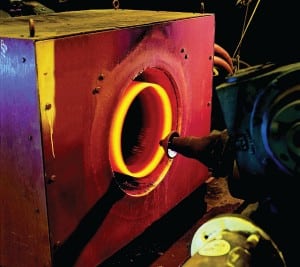
Steel piping systems are widely used at coal-fired power plants for a variety of purposes, including the conveying of coal ash slurry to nearby settling ponds, the transfer of limestone slurry to absorber spray towers for removal of SO2 and dilute hydrochloric acid from flue gases, and for transporting away the calcium sulfate by-product of the flue gas desulfurization process.
-
 Nuclear
The Best of U.S. Nuclear Developments 2010: Uprates and Loan Guarantees
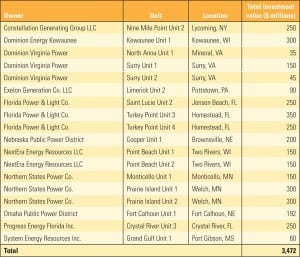
Utilities are spending billions of dollars on nuclear plant uprate projects, and Southern Company has been offered $8.3 billion in federal loan guarantees to build Vogtle Units 3 and 4 (although the final deal has yet to be signed). Meanwhile, other nuclear developers have slashed preconstruction spending as the cost of the “nuclear renaissance” becomes evident.
-
Smart Grid
Combined Heat and Power Across the U.S.
The University of California, San Diego (see “Smart Power Generation at UCSD”) is just one of many combined heat and power (CHP), or cogeneration, systems in the U.S. A 2008 report by Oak Ridge National Laboratory (ORNL), “Combined Heat and Power: Effective Energy Solutions for a Sustainable Future,” notes that Texas has the most CHP capacity—much of it used by the petrochemical and petroleum refining industries. California ranks second, largely a result of “industrial demands, stringent air quality requirements, and effective policies that encourage adoption of CHP.”
-
Legal & Regulatory
TREND: Smart Grid Complications
Despite a trendy moniker and lots of hype and interest, the smart grid has been facing some major setbacks of late, as regulators and customers begin challenging some of the claims for what interconnected smart meters will deliver in the way of tangible benefits.
-
 O&M
O&MAir Casters Speed Equipment Moves
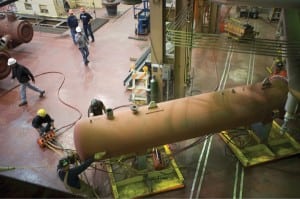
When it comes to moving megaton items like feedwater heaters or recirculating pumps, conventional moving tools such as wheel rollers, cranes, hoists, and come-alongs may be virtually useless. In some cases, moving large components is dangerous in a space-constrained location surrounded by delicate process control equipment. Feedwater heater and recirculating pump removal and replacement are […]
-
 O&M
O&MRetrofitting BWR Recirculation Pumps with Adjustable-Speed Drives
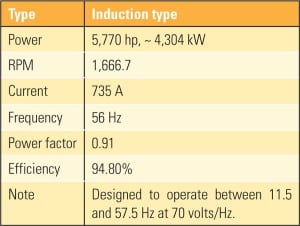
Exelon Nuclear recently replaced the original motor-generator sets for its boiling water reactor (BWR) recirculation pumps at its Quad Cities Generating Station Unit 1 with adjustable-speed drives. We examine the actual energy savings, motor-starting characteristics, control accuracy and stability, and motor and cable thermal behavior of this retrofit project.
-
Legal & Regulatory
Uranium Enrichment: Boom or Bust?
The prospects of a worldwide nuclear power renaissance have spawned many plans for increasing uranium enrichment capacity. Could those plans swamp the world in SWUs?
-
Legal & Regulatory
EPA’s Mercury Rule: Another Incarnation Coming
Much like the shape-shifting substance it regulates, the mercurial enforcement rule that governs mercury emissions from coal-fired power plants has changed unpredictably several times in recent years.
-
Commentary
Biomass Power Under Attack
Biomass energy has been an up-and-down industry for decades. As public awareness grows, it inevitably influences new tax legislation and environmental regulations. Two recent events have made the climate for development of this renewable resource even more volatile.
-
Legal & Regulatory
NRC Chairman Floats Plan for Long-Term Spent Fuel Storage
A sea change in thinking about how to deal with spent nuclear fuel in the U.S. appears to be on the policy and political horizon, rekindling battles last fought in the 1980s about how to pay for the disposal of nuclear waste and where to put it. Holes in the ground look increasingly unlikely.
-
 Nuclear
Collaborative Team Investigates Long-Term Nuclear Operations
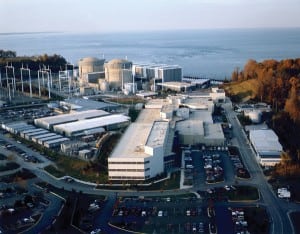
The Atomic Energy Act originally established the length of a U.S. commercial nuclear reactor license as 40 years and made it renewable for another 20 years. The U.S. Nuclear Regulatory Commission has stated that it bases the length of these licenses (and the 50+ renewed licenses granted to date) not on any particular technical limitation but on whether the plant meets current safety requirements. Does this mean there could be reactor life after 60?
-
 News
NewsSemi-Automated Tube Bundle Cleaner
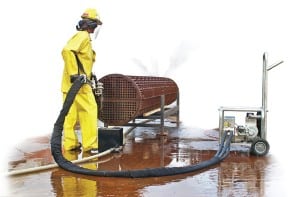
Part of a family of automated and semi-automated tube-cleaning accessories, the new Saflex 2000 makes tube bundle cleaning more productive because it can clean four times as many tubes in a given period as manual water jetting, says NLB Corp. Operating at pressures up to 40,000 psi, the semi-automated accessory cleans two tubes (ranging from […]
-
Legal & Regulatory
Dodd-Frank: Legislation and Magical Misdirection
Here’s how, with almost no attention, recent financial reform legislation changes how business must deal with whistleblower employees and affects other seemingly nongermane issues.