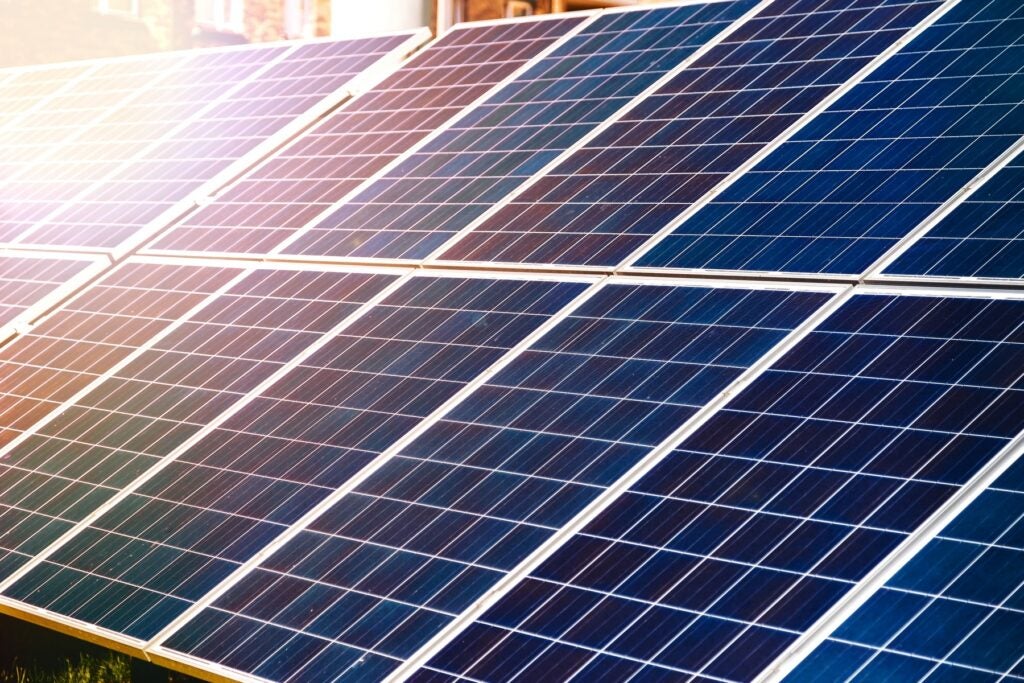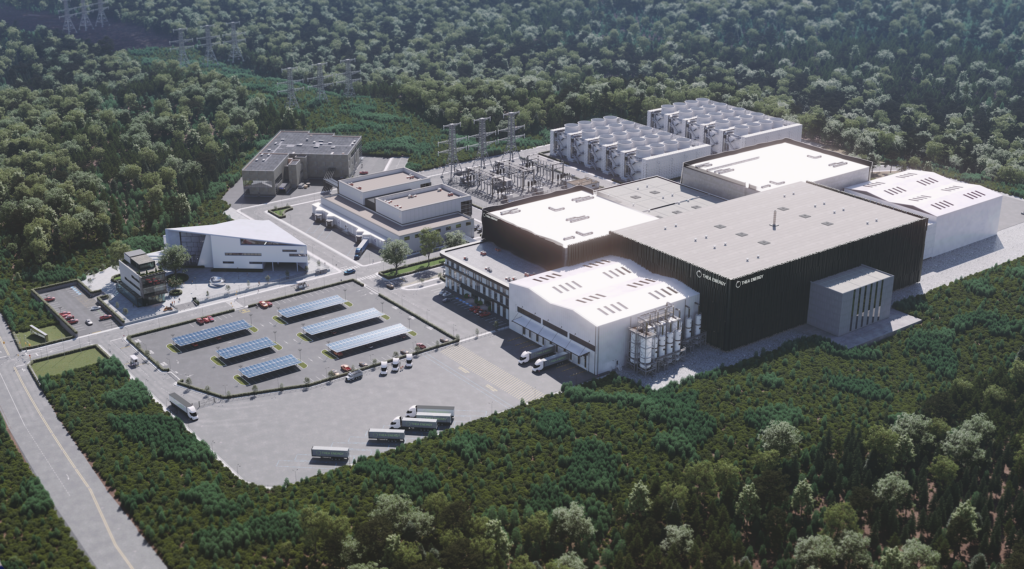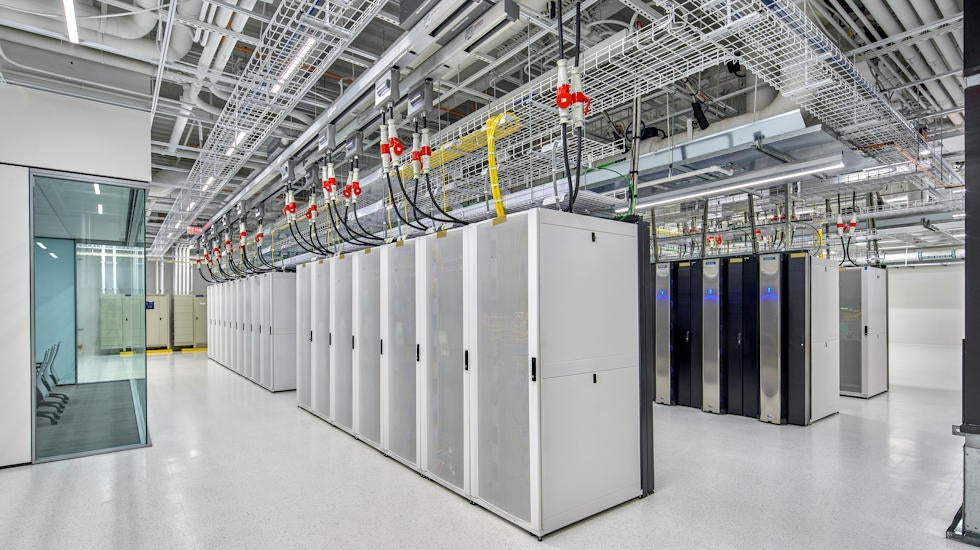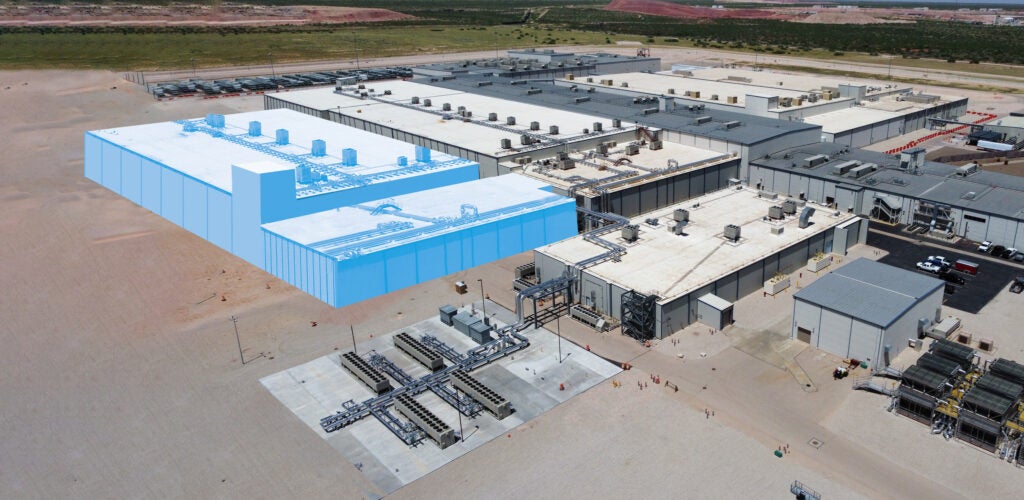
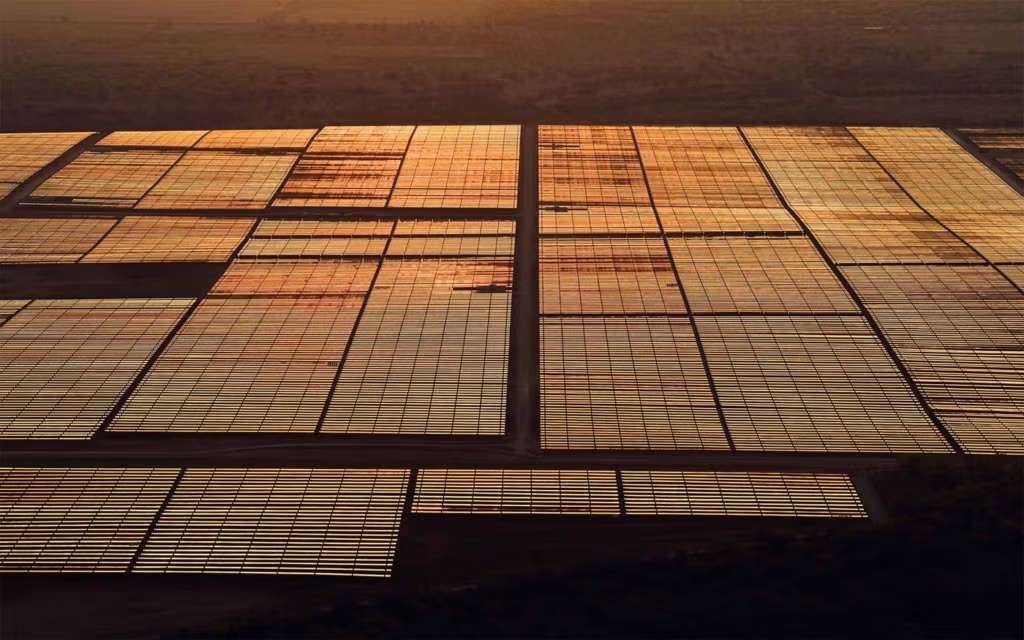
Google and Intersect, a clean energy developer Google acquired in March 2026, have launched construction on the Meitner Energy Center, a co-located data center and generation complex in the Texas Panhandle that will integrate more than 1 GW of wind, solar, and battery storage with on-site gas-fired generation for reliability firming.
The project is located in Gray and Roberts Counties, Texas, Google said on June 4. “Co-location means the Google data center will come online alongside dedicated power that will help meet its demand while reducing the need for new power supply on the local grid,” the company said. “The majority of the site’s power will come from clean energy starting on Day One, with a minority share of the site’s demand met by firming on-site gas to ensure reliable operations.”
Intersect: From Solar Developer to Google Subsidiary
Intersect was founded by CEO Sheldon Kimber in 2016 as a conventional solar and storage developer, building a base portfolio of 2.2 GW of operating solar and 2.4 GWh of battery storage representing roughly $4 billion in capital investment. The company’s strategic direction pivoted in December 2024, when it announced a partnership with Google and TPG Rise Climate, the climate-focused investing platform of TPG’s $25 billion global impact investing operation, to co-locate generation directly with data center load.
That partnership was backed by a more than $800 million funding round led by TPG Rise Climate and Google, with participation from Climate Adaptive Infrastructure and Greenbelt Capital Partners, and was designed to catalyze a targeted $20 billion in renewable power infrastructure investment by the end of the decade. Under the terms, Intersect set out to build new clean energy assets, and Google would provide offtake through newly constructed data center campuses as an anchor tenant in co-located industrial parks.
But a year later, Alphabet, Google’s Mountain View, California-based parent company, moved to take on full ownership, announcing a definitive agreement to acquire Intersect for $4.75 billion in cash plus the assumption of debt. The transaction closed in March 2026, and under the deal, Alphabet acquired a development pipeline of multiple gigawatts of projects in construction or under development, along with Intersect’s full team. Intersect, however, continues to operate separately under its own brand, given that the acquisition excluded Intersect’s existing operating assets in Texas and its California portfolio. Those assets continue as an independent company backed by TPG Rise Climate, Climate Adaptive Infrastructure, and Greenbelt Capital Partners.
The Meitner project is the second co-located facility Google and Intersect have jointly developed. The first project, the Quantum Clean Energy Project in Haskell County, Texas, comprises two solar and battery storage facilities—Quantum I and II—which represent a combined 640 MW of solar PV and 1.3 GWh of battery energy storage. Google announced the Haskell County data center campus in November 2025 as part of a $40 billion Texas investment commitment through 2027. While the Quantum generation project is scheduled to start operations this month, the co-located Google data center broke ground recently, Google said.
Meitner: Air Cooling, Workforce Hub, and Site Design
According to Google, the Meitner data center will use air-cooling technology in place of evaporative cooling to eliminate the water withdrawals typically associated with large-scale cooling towers. Water consumption at the Gray County facility will be limited to domestic uses such as restrooms, the company said. “Google also recently announced the $10 million Texas Water Impact Fund to support community water infrastructure and access,” a spokesperson noted.
However, Google did not disclose the data center’s total compute load capacity, power usage effectiveness targets, peak demand draw, or projected commercial operation date.
To support construction, Google is establishing the Caprock Workforce Hub, an 800-acre managed residential facility in Wheeler County designed to house up to 3,500 workers. The hub is designed to be self-sufficient in utilities and will route workers via dedicated transportation to reduce traffic load on county roads. Google said it is coordinating with Wheeler County leadership on siting and design; the hub’s development cost and operating structure were not disclosed.
“Our newest investment in Gray County deepens our partnership with Texas—a state that continues to lead with innovation and vision,” Andrew Hart, Regional Head of Data Center Public Affairs at Google, said June 4. “We are excited to become a part of the community. More than just building a data center, our goal is to be a good neighbor, which starts on day one by investing in local priorities, protecting water and energy resources, and working with residents to build a strong future together.”
A Growing Texas Footprint
The Meitner project is the latest addition to a Texas infrastructure buildout that Google has accelerated sharply over the past two years. The company has operated data center campuses in Midlothian and Red Oak in Ellis County—about 25 miles southwest of Dallas—for more than 15 years. It also has data centers under construction in Armstrong County in the Texas Panhandle, in Haskell County about 55 miles north of Abilene, and in Wilbarger County near Vernon, roughly 60 miles southeast of Amarillo.
In November 2025, notably, Google announced a $40 billion Texas investment commitment through 2027—described at the time as a new build-out of cloud and AI infrastructure, including data center campuses in Armstrong and Haskell Counties. It also disclosed it had contracted more than 6,200 MW of new energy generation and capacity through power purchase agreements (PPAs) with Texas developers as of that date.
However, since then, Google has signed additional agreements that suggest the contracted volume has grown. Clearway Energy Group announced a portfolio of PPAs totaling 1.17 GW in January 2026, spanning ERCOT, PJM, and SPP markets. In February 2026, TotalEnergies signed two 15-year PPAs for 1 GW of solar capacity from its Wichita (805 MW) and Mustang Creek (195 MW) projects in Texas, which TotalEnergies described as the largest volume of renewable PPAs it had ever signed. Sunraycer Renewables followed in March 2026 with two agreements covering approximately 400 MW from its Lupinus solar facility in Franklin County, Texas. Linea Energy signed a 15-year, 500-MW PPA in May 2026 for its Duffy Solar Project in Matagorda County, Texas.
Google’s November 2025 announcement also included a commitment to fund training for more than 1,700 electrical apprentices in Texas by 2030 through the electrical training ALLIANCE, which Google said would more than double the projected pipeline of new electricians in the state. In addition, it announced a Google-led $30 million Texas Energy Impact Fund. The fund unveiled its first recipients in May 2026. They include Energy Management Alliance for rural energy efficiency upgrades in Armstrong, Ellis, Haskell, and Wilbarger Counties; the Texas Energy Poverty Research Institute for resilience and affordability programs targeting multifamily buildings and electric cooperatives; Solar United Neighbors for solar, battery, and heat pump deployments in low-income Ellis County households; and the Houston Advanced Research Center for pre-weatherization work in the Houston area.
Google’s Procurement Toolkit
The Meitner project represents another distinct approach within Google’s diverse energy procurement strategy across multiple states. As POWER has reported, Google has developed state-specific contractual instruments to manage infrastructure costs in regulated utility markets. These include:
- A Capacity Commitment Framework (CCF) embedded in Missouri Public Service Commission (PSC)-approved tariffs through partnerships with Ameren and Evergy
- A Clean Transition Tariff (CTT) in Nevada supporting 115 MW of enhanced geothermal capacity from Fervo Energy, approved by the Nevada Public Utilities Commission (PUCN) in May 2025
- A Clean Energy Accelerator Charge (CEAC) in Minnesota supporting 1,400 MW of wind, 200 MW of solar, and a 300 MW/30 GWh iron-air battery storage system from Form Energy
- A demand response (DR) settlement in Indiana with Indiana Michigan Power (I&M), Amazon Web Services (AWS), and Microsoft, approved by the Indiana Utility Regulatory Commission (IURC) in February 2025
In March 2026, Google signed the White House Ratepayer Protection Pledge, committing to pay for 100% of its power and cover infrastructure costs directly driven by its growth.
On the supply side, Google has reached 1 GW of DR capacity under long-term contracts with I&M, the Tennessee Valley Authority (TVA), Entergy Arkansas, Minnesota Power, and DTE Energy, enabling it to curtail or shift compute workloads during peak periods of grid stress. The company is a founding member of the EPRI DCFlex initiative, which is developing flexibility frameworks for large loads.
Separately, to alleviate interconnection planning backlogs, PJM Interconnection tapped Google and Tapestry to deploy AI tools to accelerate grid interconnection queue processing. The tool was used for PJM’s first reformed queue cycle, which drew 811 projects totaling 220 GW of proposed capacity. Google has also partnered with CTC Global to scale advanced conductors that can double existing transmission line capacity without new right-of-way.
Google has also signed a hydropower framework agreement with Brookfield to upgrade and relicense two Susquehanna River dams in Pennsylvania—the first contracts under a broader framework contemplating up to 3 GW of hydropower nationally—and struck a nuclear power agreement with Kairos Power for advanced reactor capacity. Recently, Google has also announced support for restarting the Duane Arnold nuclear plant in Iowa. Across all instruments, Google has contracted more than 22 GW of clean energy since 2010.
—Sonal C. Patel is a senior editor at POWER magazine (@sonalcpatel, @POWERmagazine).