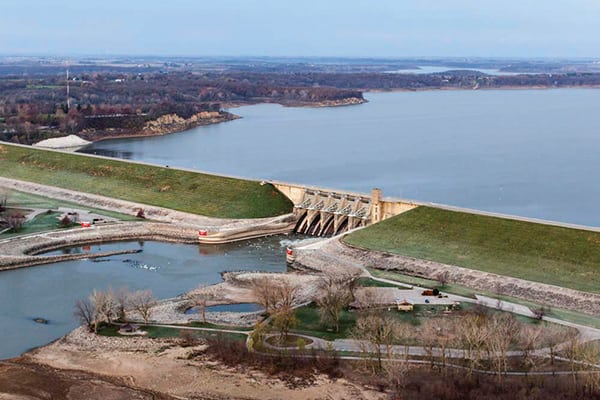
Owner and operator: Edison Sault Electric Co.
Located on the border with Canada and operational since 1902, the Edison Sault Hydroelectric Plant is one of the oldest continuously operating power plants in North America. This pioneer plant continues to generate between 25 to 30 MW when operating at full capacity. Modern wind and solar projects have captured the public’s interest, but this century-old hydroelectric project shows that time is the ultimate arbiter of a technology’s value to society.
U.S. hydroelectric plants have been using renewable energy for over a century — long before clean energy was considered cool. Will a following generation view century-old wind turbines or photovoltaic panels still in service and producing valuable electricity? Probably not. Hydroelectric projects are unique in that as long as the water is flowing and the mechanicals are periodically upgraded, there are few reasons their turbines won’t continue making electricity into the next century. The energy source may be renewable, but so is the plant itself. An exceptional example is Michigan’s 107-year-old Edison Sault Hydroelectric Plant, which combines historic architecture with modern technology to successfully generate 25 to 30 MW of electricity when operating at full load (Figure 1).
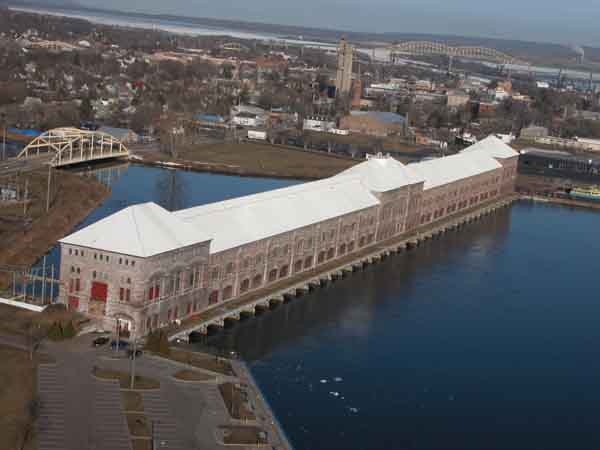
1. Age is just a number. The 107-year-old Edison Sault Hydroelectric Plant is still going strong. This photo shows the plant in spring (April) just after the last of the ice was disappearing from the St. Marys River. The Great Lakes and river freeze over between December and March. Courtesy: Edison Sault Electric Co.
Recognized as a historic landmark in Sault Ste. Marie, the beautiful sandstone building was crafted more than a century ago by Italian masons who used the stone they began excavating in 1885 from the building of a canal. The canal was created to take water from the St. Marys River for a hydroelectric milling facility. Construction of the plant began in 1887 (Figure 2). However, the plant is not stuck in the past as far as its technology and operations. In 1992, its owner, Edison Sault Electric Co., completed an $8 million modernization and automation project that enhanced the plant’s safety and efficiency for years to come.
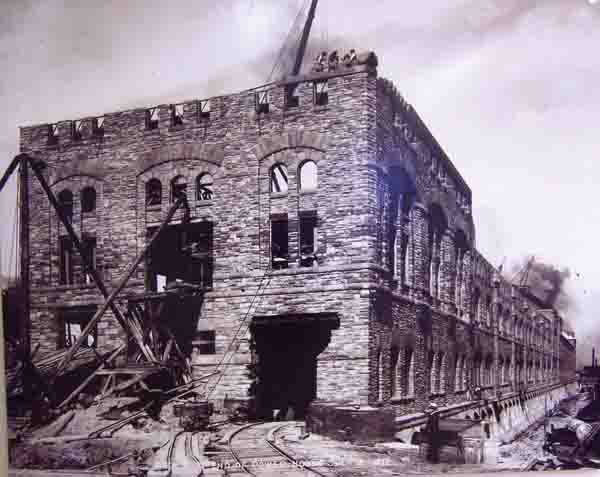
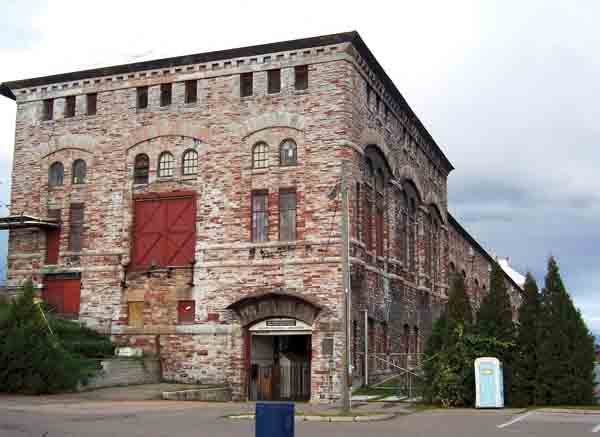
2. Italian mastery of stone. Italian stone masons are shown fitting the chiseled sandstone on the top row of the wall on the east end of the powerhouse in July 1902 (top); their work remains intact today (bottom). Courtesy: Edison Sault Electric Co.
The Facility’s History
Excavation of the hydropower plant’s canal began in September 1898 and was completed in 1902. Concurrently, construction of the Edison Sault Electric Hydroelectric Plant began in March 1900 and was completed in 1902. Official opening of the facility was held on October 25, 1902. At the time of completion, the plant was second only to Niagara Falls in terms of hydro development.
The facility is constructed of stone and steel. Much of the stone that was used was excavated from the power canal during its construction. Additional stone was used on other local landmarks throughout the City of Sault Ste. Marie.
Edison Sault Electric Co. purchased the hydroelectric plant and canal in 1963 from the Union Carbide Co. for $1.5 million. An additional $1.0 million was spent to convert the plant from 25-cycle electricity to 60-cycle electricity. Later, in 1998, Wisconsin Energy Corp. acquired the Edison Sault Electric Co. with the purchase of its parent company, ESELCO.
Plant Modernization Project
In 1987, Edison Sault Electric Co. began a review process to determine what was needed to keep the hydroelectric plant operating into the 21st century. The study determined that much work was needed to upgrade and replace the aged equipment and electrical wiring. Studies were also made to see if the plant could be made more efficient and productive through the use of modem automatic controls.
The modernization project was conceived in the fall of 1987 and broken down into five phases. The first four phases, which began in 1988, involved the installation of automatic controls on each electrical bus and all 74 generators. The final phase was implementation of a computer that managed operations to maximize plant efficiency. The modernization project cost approximately $8 million.
As part of the plant modernization, studies were completed to rate the generating efficiencies of each individual turbine unit given the peculiarities of their location in the powerhouse and in the river. The final phase of the project was to bring together the unique operating and efficiency characteristics of all the turbines and determine what combination is the most efficient to operate at any particular time. This "most economic distpatch" project was completed in 1993. After this upgrade, the central plant computer now allows the system controller access to each generator unit from the control room. This executive interface enables information to be directly monitored through a computer terminal.
The plant modernization also included installation of the METRA automated control system. It not only monitors the generation of electricity but also controls all processes at the plant: from identifying problems with each of the plant’s 74 turbine generators to automatically shutting units down to automatically restarting the entire plant.
Current Plant Overview
The powerhouse is 1,340 feet long (¼ mile) and 80 feet wide. It contains 74 three-phase horizontal turbine generators, with each generator operating at 4,400 V, 180 rpm, and producing between 600 and 850 kVA. Each turbine has four runners, or blades, which drive the 60-cycle generators that produce the electricity. The turbine units are rated at 772 to 935 hp at 20 feet of headwaters falling from the upper St. Marys River to the lower river.
Of the 74 turbines, 41 were installed in 1902 and the other 33 were installed in 1915 and 1916. Three turbine manufacturers — Jolly McCormick; S. Morgan Smith; and Wellman, Seaver & Morgan — built the turbines, but none of these companies is in still in business. As a result of the absence of original turbine manufacturers, plant personnel have to machine many replacement parts in-house.
The length of the canal from the headgates (intake) to the powerhouse is approximately 11,850 feet (2¼ miles). The canal varies in width from 200 to 220 feet at water level and is approximately 24 feet in depth. Water velocity, which is 7 to 10 feet per second, varies for assorted reasons. At times the water moves at speeds up to 7 mph.
The entrance to the canal, which is located at the eastern end of Ashmun Bay, is controlled by four steel headgates. The upper quarter of the canal was excavated out of rock, with the balance of the canal dug into the earth and lined with timber. The canal is designed to handle 30,000 cubic feet per second (cfs) of water.
In an October interview, POWER asked Ernie Maas, vice president of engineering and operations at Edison Sault Hydroelectric Plant, to describe the plant’s current maintenance/mechanical staff. He explained that it consists of one hydro superintendent, one foreman, one electrician, one machinist, one welder, and four maintenance workers who work 8 to 4:30, Monday through Friday.
Water Is Power
The plant ramps up electricity production during on-peak hours (8 a.m. to 10 p.m. weekdays) and reduces production at all other times. Its power output is dependent upon the volume of water that is available through the power canal and the plant operating head. The plant operating head is the difference in water levels at the plant’s forebay (south side) and the tailrace on the St. Marys River side of the facility.
"The difference in lake elevations between Lake Superior and Lakes Michigan and Lake Huron provides a natural 21-foot water elevation difference," Maas said. "The discharge from Lake Superior either goes over the falls of St. Marys or is passed through the three hydro plants in the rapids areas: one hydropower plant in Sault Canada (Great Lakes Power) and the two plants in the U.S.: the U.S. Corps of Engineers’ St Marys Hydropower Plant and our Edison Sault Electric Hydropower Plant."
Over the past five years, Edison Sault Electric has been allocated, on average, 17,400 cfs to operate its hydropower plant. This allowed it to operate at approximately 58% of its designed capacity. At peak operation, the plant discharges approximately 30,000 cfs of water, which is equivalent to about 13.5 million gallons per minute.
The International Joint Commission (IJC) allocates the plant water every month. The IJC controls the levels on Lake Superior and the lower Great Lakes by regulating the amount of water the generating plants on the St. Marys River can use.
Electricity Sales
Edison Sault Hydroelectric Plant is Edison Sault Electric Co.’s only hydro generating station, and the cost of its installation was paid off many years ago. With free fuel, the plant can produce electricity at well below market rates while suppling one-fifth of the power needs of the Eastern Upper Peninsula of Michigan.
"Our plant helps provide some of the lowest cost electrical rates in the U.S. Midwest," Maas said.
To supply the remainder of its customers’ electricity needs, Edison Sault is connected by four 138-kV interconnections with other utilities. Two are with International Transmission Co. in lower Michigan (Mackinaw-Straits #1 and Mackinaw-Straits #2). These two transmission lines are submerged under the Straits of Mackinac. The other two interconnections are with We Energies on Michigan’s Upper Peninsula: Perkins-Indian Lake #1 and Perkins-Indian Lake #2.
Edison Sault and Cloverland Electric serve the Eastern Upper Peninsula, from Sault Ste. Marie to St. Ignace, over to and including the Garden Peninsula, which includes a population in excess of 60,000 people. Edison Sault and Cloverland Electric systems require 860 million kWh annually. Total generation from the Edison Sault Hydropower Plant accounts for more than one-fifth of the total power requirements for their combined systems. The balance is supplied either by the U.S. Corps of Engineers’ St. Marys Hydro Plant or by the transmission ties.
Promoting Local Fish Populations
Some large U.S. hydropower plants use a number of innovative methods to avoid harming fish. Examples include fish ladders for adult salmon, flashing lights to alert night-migrating fish, screens to keep fish out of turbines, and surface collectors that guide juvenile fish through chutes that go around the hydropower plants. POWER asked Maas if any of these methods is used at his plant.
"Not at this time," he said. "It has been our experience that these methods are not needed for our facility." Currently, there is a university-run aquatic research laboratory located at the east end of the plant.
Operated by Lake Superior State University (LSSU), the LSSU Aquatic Research Laboratory is involved in many activities. In conjunction with the Michigan Department of Natural Resources, the aquatic lab performs freshwater research and places numerous species of game fish in the St. Marys River.
More than 50,000 Atlantic salmon are both raised and released annually by the lab into the St. Marys River. Future pans call for the aquatic lab to be involved in a major walleye rearing/release project. Since its inception, the lab has helped more than 50 LSSU graduates obtain jobs in fish and wildlife management. The lab’s goal is to expand research opportunities that support and enhance educational programs in limnology (the study of bodies of freshwater) and ecology, as well as provide scientific data to help protect and manage regional aquatic ecosystems.
More Images from This Long-Lived Plant

3. Moving into the 21st century. The central plant computer, installed during the plant modernization project that was completed in 1993, allows the system controller access to each generator unit from the control room. Courtesy: Edison Sault Electric Co.
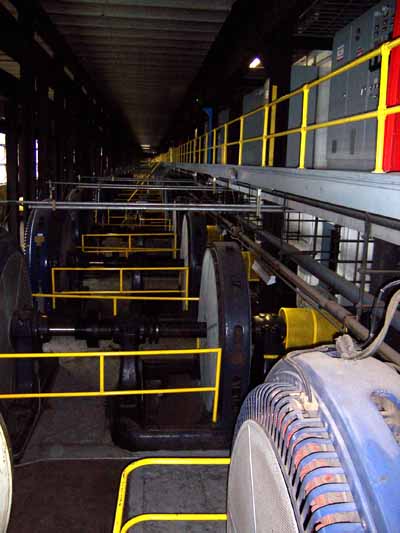
4. The generator room. The plant consists of 74 three-phase horizontal generators, with each generator operating at 4,400 V, 180 rpm and producing between 600 and 850 kVA. Courtesy: Edison Sault Electric Co.
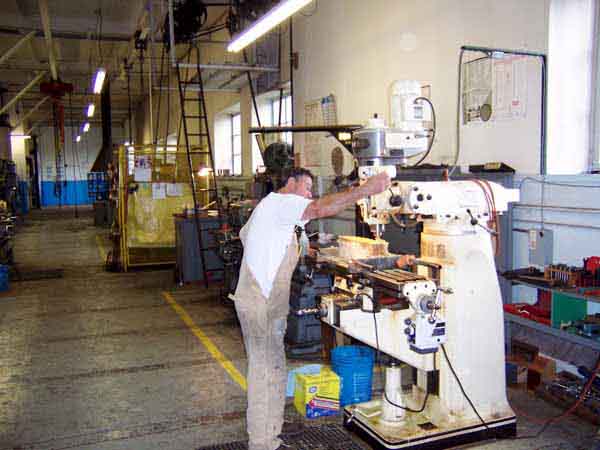
5. Making replacement parts. Because the original turbine manufacturers are no longer in business, the hydropower plant’s personnel have to machine many replacement parts for the turbines in-house. Here a machinist is milling a bearing. Courtesy: Edison Sault Electric Co.
Looking Ahead
According to research conducted in 2007 by the U.S. Department of Energy’s Energy Information Administration, hydroelectric power accounted for approximately 6% of the electricity generated in the U.S. that year. Maas commented on the future function that hydropower will probably serve. "New hydro generation will probably play a very limited role as the overall demand increases in the U.S. for electricity," he said. "Wind and solar will play bigger roles in the renewable arena. There will be upgrades to existing units/hydro sites, but that will have a minimal effect on overall hydro generation."
He also discussed the potential for additional installed hydropower capacity at the Edison Sault Hydroelectric Plant. "Yes there is potential for additional installed capacity," he said. "Current estimates project that an additional 8 to 10 megawatts of electricity could be generated with the same amount of water. However, there is no timeframe. A cost evaluation is performed every two to five years, depending on changes to the economic drivers."
Edison Sault Hydroelectric Plant has a contract in place with the Secretary of the U.S. Army that runs at least until 2025, and possibly until 2040, for the use of the water that runs through the plant. According to Edison Sault sources, the plant may very well be expected to be operational until then.
Maas gave his estimate of the long-term production potential of the Edison Sault hydropower plant: "Probably at least another 50 years. It has been producing commercial power for Edison Sault Electric Co. since 1963 and had an industrial power operation history prior to that since 1902."
The future looks bright for this centenarian facility. After a successful run of 107 years, another 50 years of operation should be no problem for this hardy hydropower plant.
—Angela Neville, JD, is POWER’s senior editor.