
POWER
-
 Nuclear
AREVA Installs Finnish EPR Reactor Vessel
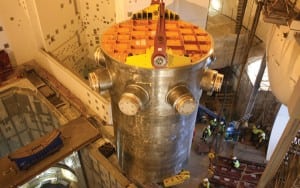
This June, AREVA installed the reactor pressure vessel (Figure 6)—the core of the unit—at the world’s first EPR project, which is under construction in Finland. Now the company will engage in a flurry of installation activities for heavy nuclear components, including lifting into the reactor the first of the four steam generators. Most of the work is expected to be completed by the end of 2012, with power production beginning in 2013.
-
 Coal
CoalLean Construction Principles Eliminate Waste
Eliminate waste in coal, gas, or nuclear power plant construction through a holistic application of lean principles.
-
 Hydro
HydroWave Energy Device to Tap Marine Energy in Gulf of Mexico
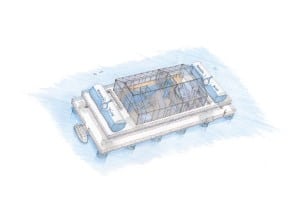
The U.S. Army Corps of Engineers earlier this year awarded its first Section 10 permit ever to a commercial wave-powered demonstration facility planned for installation in the Gulf of Mexico. The novel offshore platform, dubbed the SEADOG, will use a buoy and piston mechanism combined with a water wheel to generate electricity and desalinate water.
-
 News
NewsOptimized Pressure Transmitter
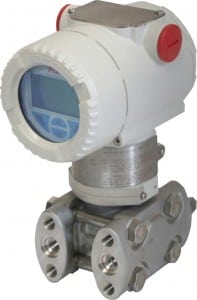
ABB’s new 266 series is an optimized pressure transmitter family that combines modern electronic pressure measurement with the company’s unique human machine interface (HMI) in one common product series, providing base accuracy from ±0.025% to ±0.06%. The series offers the industry’s best draft range, ABB claims. For combustion airflows, this means exceptional resolution with tighter […]
-
News
POWER Digest (August 2010)
Sweden Reverses Ban, Approves Nuclear Reactor Replacements Sweden’s parliament on June 18 reversed an earlier decision and passed the center-right coalition government’s landmark proposal, made last year, that allows for the replacement of the country’s nuclear reactors at the end of their life span. The country had voted in 1980 to phase out its 12 […]
-
 News
NewsPhase Rotation Meter
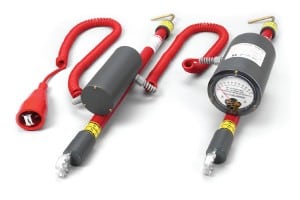
HD Electric Co.’s Phase Rotation Meter (PRM) is used to determine the leading phase of any two phases in a three-phase conductor system. The PRM is a dual-range 0 to 5 kV and 0 to 15 kV device that can be used as high as 45 kV when optional resistor sticks are added. It consists of two […]
-
 News
NewsPortable Power Quality Monitoring
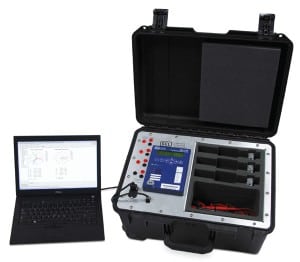
The SEL-734P Portable PQ Meter is a new metering solution from Schweitzer Engineering Laboratories (SEL) that addresses the need for complete and portable power quality monitoring. In addition to the meter, the kit includes three-phase voltage and current inputs, voltage leads, and split-core CTs, all secured in a ruggedized case. ACSELerator QuickSet SEL-5030 software, included […]
-
 Coal
CoalBreathing Added Life into Failing Heat Exchangers
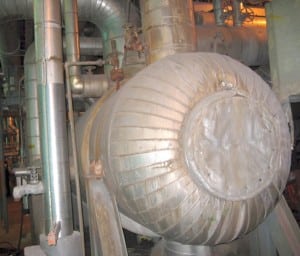
When heat exchanger tubes—sometimes numbering a thousand or more per unit—begin to crack or wear, the effects can lead to a cascade of subsequent failures in adjacent tubes. If too many tubes are plugged, heat exchanger effectiveness is compromised, and power generation may be curtailed. If conventional mechanical plugs are used, they can break loose, leak, and fail. At that point, the replacement of a very costly heat exchanger is imminent.
-
 News
NewsRotating Pipe Cleaners
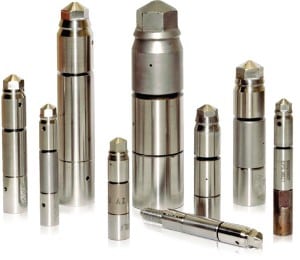
A new family of Rotating Line Moles (RLM) from NLB gives users more than 40 choices for cleaning pipes and tubes with high-pressure water. Designed for tubes with diameters from 0.5 inch to 1.5 inches (1.27 cm to 3.81 cm), the family features operating pressures of 10,000 psi or 20,000 psi (700 bar or 1,400 […]
-
 Gas
GasLocal Warming: Helsingin Energia Uses CHP to Heat a City
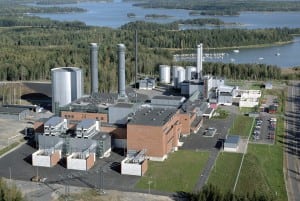
Power plant operators, especially those located in countries with enforceable carbon emissions standards, are concerned about their CO2 emissions. But for Helsingin Energia—which provides power, heating, and cooling for Helsinki, Finland’s 300,000 residents—the main concern is local warming, not global warming. In Helsinki, temperatures on midsummer afternoons only reach an average 21C, and for half the year daytime temperatures are below 10C.
-
 News
NewsPortable Vibration Analyzer
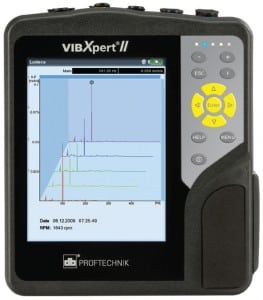
LUDECA has introduced VIBXPERT II, the latest addition to its PRUEFTECHNIK family of portable route-based vibration data collectors. VIBXPERT II is rugged and lightweight and combines the advantages of a rapid processor with an energy-efficient color VGA display. Enhanced with an Fmax of 51KHz and up to 102,400 lines of resolution, all machinery problems can […]
-
 Coal
CoalProtect Your Stack Linings from Corrosion
Stacks at power generating stations may be low maintenance, but they are not no maintenance. The cost of preventing corrosion may be as little as $10,000, but the cost of repair or replacement could be many times that or even put your plant out of commission until the stack problem is corrected.
-
 News
NewsHigh-Accuracy Pressure Instrumentation
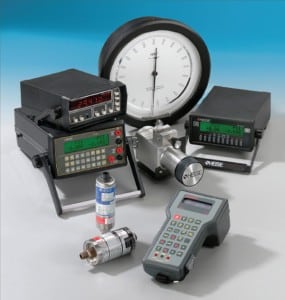
Heise precision pressure instruments provide the high-accuracy measurements required for critical test, calibration, and process applications. The unique blend of product configurations includes the Heise 0.1% precision dial pressure gauge, the modular PTE-1 handheld calibrator, and high-accuracy digital pressure indicators and transducers. With ranges from 0.25 inches of water to 100,000 psi and accuracies to […]
-
Legal & Regulatory
FERC Proposes an Improved Path for New Transmission
In October of last year, the North American Electric Reliability Corp. (NERC) issued a study finding that maintaining electric reliability will require significant acceleration in the siting and construction of new transmission lines. The NERC study is indicative of growing concerns that changes to the current transmission planning process are necessary to maintain reliability and accommodate interconnection of the massive amounts of renewable resources expected to come online over the next 10 to 20 years.
-
Commentary
Nuclear Investment Means Jobs and Energy Security
A proven solution for immediate and long-term job creation came from President Barack Obama and his administration earlier this year: investment in U.S. nuclear energy. Bulldozers in Georgia are already on the move and making preparations for expansion of a nuclear plant that has achieved several approvals, and long-awaited jobs in the skilled labor sector could materialize there within months.
-
 Coal
CoalLuminant’s Oak Grove Power Plant Earns POWER’s Highest Honor
Luminant used remnants of the ill-fated Twin Oaks and Forest Grove plants (which were mothballed more than 30 years ago) to build the new two-unit 1,600-MW Oak Grove Plant. Though outfitted with equipment from those old plants, Oak Grove also sports an array of modern air quality control equipment and is the nation’s first 100% lignite-fired plant to adopt selective catalytic reduction for NOx control and activated carbon sorbent injection technology to remove mercury. For melding two different steam generators into a single project, adopting a unique and efficient “push-pull” fuel delivery system, assembling a tightly integrated team that completed the project on time and within budget, and for completing what was started almost four decades ago, Oak Grove Power Plant is awarded POWER magazine’s 2010 Plant of the Year award.
-
News
Corrections (August 2010)
In “Dry Injection of Trona for SO3 Control” (May 2010), NH4HSO4 is ammonium bisulfite. In the June “Focus on O&M,” the engines shown in Figure 6 each have eight cylinders. June’s “Competition for Offshore Turbine Market Heats Up” stated that drive or gearless turbines accounted for 14% of the world’s installed offshore capacity in 2009. […]
-
 History
China: A World Powerhouse
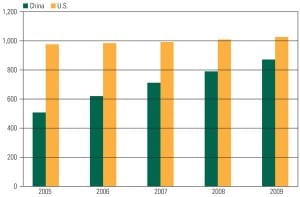
It’s no surprise that China leads the world in recent power capacity additions. What may surprise you is the precise mix of options this vast country is relying upon to meet its ever-growing demand for electricity. As a result, this ancient civilization is fast becoming the test bed and factory for the newest generation and transmission technologies.
-
 News
NewsAir Velocity Sensors
Degree Controls has introduced AccuSense F333 air velocity sensors, a series of low-cost airflow sensors designed for field systems. The AccuSense F333 provides air velocity measurements within the range of 0.2 m/s to 10 m/s (40–2,000 fpm) while maintaining a ±10% accuracy across a temperature range of 15C to 60C with a 2% or better […]
-
 Water
WaterReACT Reduces Emissions and Water Use
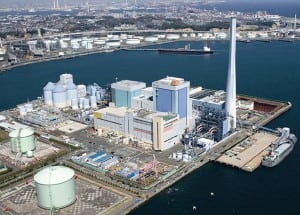
Regenerative activated coke technology (ReACT) is an integrated multipollutant control approach that removes SOx, NOx, and Hg from coal-fired plants by adsorption with activated coke to attain emissions levels found at natural gas–fired plants. One big advantage of this technology is that it uses only a fraction of the water used by conventional wet flue gas desulfurization. A recent license agreement brings this technology to the U.S.
-
Commentary
WTE: Next-Generation Sustainable Energy
It is clear that energy use will expand in the future as our population and society’s standard of living increase. Meanwhile, the push toward a sustainable lifestyle requires that all resources be utilized efficiently and sparingly. The National Academy of Sciences has identified paradigm shifts from current processes to an ideal vision centered on renewable energy and an atom economy—defined as maximum incorporation of starting materials into final products. These seemingly disparate paths converge if one considers energy production from municipal solid waste (MSW).
-
News
Carbon Controls Fail Business Case Study
Cap-and-trade programs are featured in at least two U.S. legislative proposals to reduce carbon emissions, usually by around 80% by 2050 using a 2005 baseline. The benefits that accrue from the immense investment required to reach these goals are nebulous and don’t occur until decades after the investment. Based on my back-of-the-envelope analysis, the cost-benefit ratio of these proposals does not pass a cursory cost-benefit analysis.
-
 Water
WaterCirculating Fluid Bed Scrubbers Bridge the Gap Between Dry and Wet Scrubbers
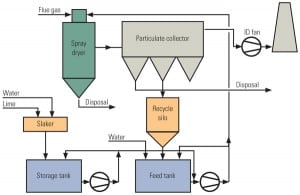
Circulating fluid bed (CFB) dry scrubbing technologies provide distinct advantages over conventional spray dryer absorber scrubbers for removing SO2 from flue gases. The CFB also competes well against wet limestone flue gas desulfurization processes typically favored for large boilers firing high-sulfur coals. With high SO2 removal rates in a dry treatment process, the CFB scrubber appears to be the best of both technologies: a water-stingy scrubber with high SO2 removal rates.
-
 Environmental
Determining AQCS Mercury Removal Co-Benefits
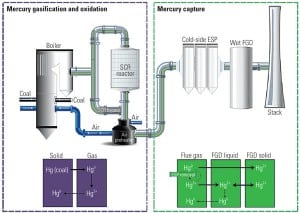
The U.S. Environmental Protection Agency is expected to propose an emissions standard for mercury and other hazardous air pollutants emitted by coal- and oil-fired electric generating units in March of 2011. The anticipated rule would require emission control to meet the various standards using maximum achievable control technology, as determined by the prescriptive requirements of the Clean Air Act. In response to the expected rule-making, utilities will be required to make technology decisions in order to ensure compliance. One cost-effective approach to compliance may be the use of “co-benefits” from air quality control systems (AQCSs) already in service that are designed to remove other pollutants.
-
 O&M
O&MNew Coating System Extends Life of Cooling Tower
American Electric Power’s (AEP’s) Cardinal Power Plant Unit 3 cooling tower in Brilliant, Ohio, was coated and lined in the spring of 2008 by a team of coatings professionals that included the plant’s project and coatings engineering staff, Sherwin-Williams (coatings supplier), Cannon Sline Industrial (contractor), and OTB Technologies (third-party inspector). The team completed the project in just 11 weeks through damp springtime conditions in the Ohio River Valley.
-
 Coal
CoalDrax Offers Model for Cofiring Biomass
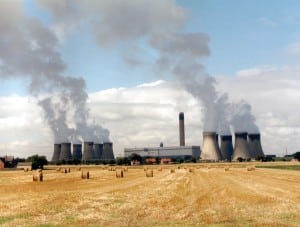
When it is completed, later this summer, the UK’s Drax Power Station biomass facility will become the largest dedicated cofiring project of its kind in the world. As U.S. coal-fired generators come under increasing pressure to cut emissions and take advantage of incentives to promote power generation from renewables, Drax offers an example of what is possible.
-
 O&M
O&MNew Process Transforms Waste into Product for Controlling Emissions
In April, Solvay Chemicals Inc. commissioned a new facility that uses an innovative process to recover and transform sodium carbonate waste streams into a market-grade sodium bicarbonate used in air emissions control.
-
 O&M
O&MUse Dry Fog to Control Coal Dust Hazards
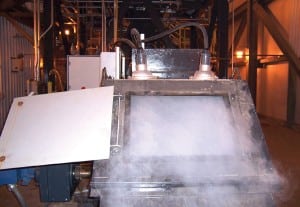
Fogging systems have been successfully used in the material-handling industry for more than 30 years to control explosive dust at transfer points. Today, fogging systems are an EPA Best Demonstrated Technology for subbituminous coal preparation plants.
-
 News
NewsShoring System Uses First Built-In Ladder Supports
Safety is the imperative for any construction project, and Duke Energy’s 630-MW Edwardsport integrated gasification combined-cycle station in Knox Country, Ind., is no exception.
-
Environmental
Regulations and Economics Drive Wet FGD Upgrades
Today’s coal-fired power plants face the twin challenges of improving their wet flue gas desulfurization (FGD) systems’ emission control capabilities in order to comply with environmental regulations while at the same time cutting their operational and maintenance costs. Smart strategies for retrofitting existing FGD systems can help plant personnel meet both of these objectives.