Last year—whether you attended the ISA/EPRI Power Industry Symposium in June, the American Nuclear Society (ANS) Utility Working Conference in August, the EPRI/Nuclear Energy Institute (NEI) Digital I&C and Control Room Licensing Issues Workshop in the spring, or the Fifth International Topical Meeting on Nuclear Plant Instrumentation, Controls, and Human-Machine Interface Technology embedded in the ANS Winter Annual Meeting—one thing was clear: The application of digital I&C technology at U.S. nuclear plants is not going well.
EPRI’s Ray Torok calls the differences between modern digital and traditional analog controls the "digital delta." One thing Torok notes is a tendency of plant owner/operators to "recycle analog specs" when articulating requirements for new systems. In a surprisingly candid presentation at ANS in Albuquerque, Tricia Bolian of AREVA NP Inc. conceded that most modernization programs in the U.S. are on hold. Initial project scopes were too ambitious and performance across vendors and projects has been poor. AREVA NP, a joint venture of AREVA’s Framatome subsidiary and Siemens AG, was involved in at least three of the high-profile digital instrumentation and controls (I&C) upgrades.
When you consider that the issue also potentially affects new reactors seeking licenses, Torok’s "delta" starts to feel more like a "ditch." In "DOE NP2010 Nuclear Power Plant Construction Infrastructure Assessment," a report prepared by MPR Associates Inc. and issued in October 2005, the lead conclusion in the executive summary reads as follows: "A significant threat to the successful construction of GEN III+ units [the next generation of reactors now seeking license for new projects] is the design and approval of the digital plant control systems."
And yet, all around the world, digital I&C retrofits and new plant applications seem to be progressing with greater expediency:
- John Stevens of Doosan/HF Controls observed in his presentation at ANS in Albuquerque that by 2010, the Republic of Korea will have 8,000 MW of nuclear capacity operating with various forms of nonsafety and safety-related digital I&C systems. For the most part, Korean plants apply U.S. standards from beginning to the end of the project.
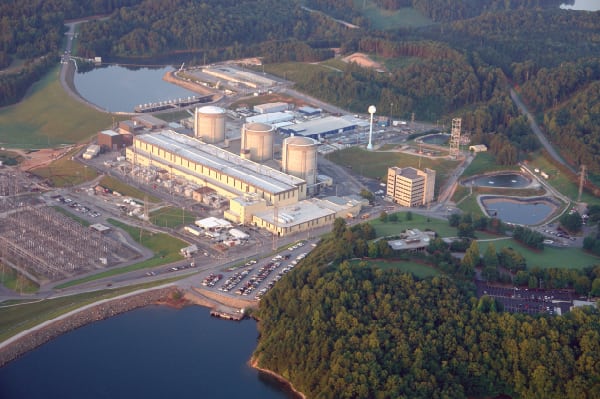
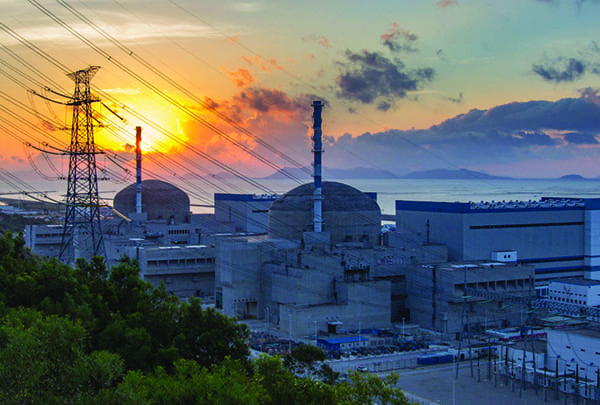
- In Finland, the Loviisa plant (Figure 1), with two 1970s-vintage pressurized water reactors (PWRs), is getting a complete digital makeover of its I&C systems and human/machine interface that will take 10 years to complete. The new Olkiluoto European pressurized water reactor (EPWR) now under construction (Figure 2) also will feature fully integrated digital I&C systems.
- The Paks station in Hungary, with four VVER Soviet-designed reactors, underwent a four-year digital safety I&C upgrade.
- Switzerland is implementing, over a 14- to 16-year period, a program at the Leipstadt plant that includes replacing process computers, nonsafety I&C, safety-related I&C, and reactor protection systems, redesigning the main control room, and installing a new simulator.
- In Japan, the advanced boiler water reactor (ABWR) plants built over the past 10 years use highly integrated digital I&C systems to improve overall plant productivity, efficiency, and safety. Digital I&C systems are used for both safety-related and nonsafety-related control and protection functions. The systems have operated over the past decade with what is regarded as a high degree of success.

1. Cold storage. Finland’s two-unit Loviisa plant recently began a comprehensive program to upgrade its 1970s-era digital controls. Courtesy: Fortum
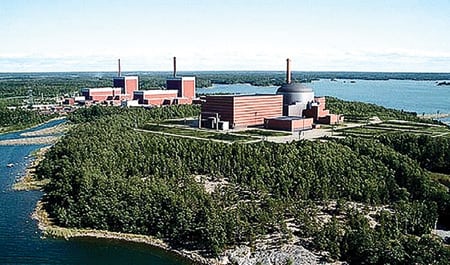
2. Latest and greatest. An artist’s rendering of the new Olkiluoto 3 reactor in 2009 (foreground) and the site’s existing two units. The new unit, now under construction, is based on AREVA’s European pressurized-water reactor design and will feature a full suite of digital controls. Courtesy: AREVA NP
Many experts at the aforementioned meetings concede that the U.S. industry has been "treading water" on digital I&C since the early 1990s, when the concepts began proliferating widely. Although important upgrade projects have been conducted, the lack of definitive success means little commercial progress can be claimed.
Not only is U.S. activity stalled, but the rest of the world is surging ahead, affecting the American nuclear power’s industry’s ability to compete. How long can operating staffs and their service providers maintain, replace, reverse-engineer, or otherwise make do with obsolescent equipment? What will it take for those involved in new plants to understand the gravity of this issue? A greater sense of urgency is needed to advance the industry beyond the conference sessions, task forces, and working groups of the last 15 years to developing real solutions and making tangible progress.
Issues: The bad, and the ugly
As a whole, the past performance of U.S. digital nuclear I&C projects has been checkered, at best. Many of the projects have missed their schedules and greatly exceeded their budgets. The net result is a lack of management’s confidence in digital I&C-related projects. When you analyze the projects in the aggregate, you realize that there’s plenty of blame to go around (Figure 3).
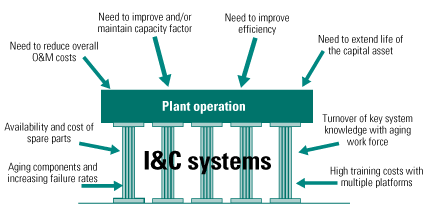
3. Integrated planning required. Plans to upgrade the control, protection, and information systems of a nuclear plant must be synchronized with the plant’s overall plans for O&M reductions, staffing, efficiency and reliability improvement, and life extension. Source: Hurst Technologies Corp.
First, there’s a general lack of fresh knowledge at U.S. nuclear plants. The American nuclear industry effectively stopped educating its staff beginning about 15 years ago. The only training that plant personnel receive is related to plant-specific equipment and programs. As a result, personnel are not keeping up with current technology, and it is fair to say that today’s digital generation of control systems is about as current as it gets.
Second, many nuclear utilities have lost their design engineering capabilities. With the consolidation of most plant staffs at operating units, the distinctions between design engineering and plant engineering have become blurred. The understanding of true functional requirements (design bases) versus current installed capabilities is being lost.
Third, project personnel underestimated the interfaces and impacts on the initial digital I&C system. Most digital I&C projects are implemented as simple replacements of existing systems—the so-called replacing-the-box concept. Although the functional aspects of the project are covered, many of the more basic requirements are not initially addressed. These include impacts on administrative functions such as the design control process (including the creation of true "electronic" design files), detailed configuration management programs for real-time digital systems, and training of maintenance and operating personnel.
Finally, vendors and owner/operators managed the projects poorly. The coordinated implementation of a digital-based project, especially its initial activities, requires a detailed project plan and schedule. They must include not only internal plans and schedules but also external ones for managing and working with the eventual digital system supplier(s). Although the ability to plan and execute projects over multiple years and unit outages is essential, it has been lacking at the few projects that have gone forward.
As a result of all of these factors, owner/operators essentially ended up outsourcing the work and the responsibility to the systems vendor(s) through "partnership agreements" and assumed that the vendors would "make things right." On three of the projects that went significantly over budget and way past the original schedule, the vendor was kicked off the job. Worse, perhaps, is that two of the projects received poor assessments from the Nuclear Regulatory Commission (NRC) for their safety-related digital projects.
Rebuilding I&C systems—the AutoZone strategy
Typically, the way U.S. nuclear plants take care of their I&C systems is akin to rebuilding a car several times over by buying parts at AutoZone. As a result, the costs are four to five times what they would be if you just shelled out for a new car. Instead of doing engineering, the core competency of plant I&C staff has become support for short-term emergent issues. This has led to mostly short-term decisions to repeatedly fix problems through spare-parts manufacturing, reengineering, rebuilding circuit boards, and the like. The overriding objective is to focus on operations and keep the plant running. At one plant we are familiar with, costs for spare parts have jumped 50% annually over a number of years.
With numbers like that, you would think management would at least take notice, if not action. The problem is, even a substantial increase in the I&C operating budget registers only as noise in the overall O&M budget. What’s more, the budgetary process usually does not drill down past "I&C system." Thus, it is impossible to identify, from a financial perspective, the highest-cost and most troublesome components. Owner/operators spend an increasing amount of money keeping old systems operating, but the expenditures aren’t adequately tracked or broken out.
Another core issue is that adverse performance—as reflected by substandard plant efficiency, forced outages, equipment malfunctions, and plant trips—has not been directly correlated with obsolescent I&C systems. This is like proving to a jury that a crime was committed. If all you have is circumstantial evidence, but no smoking gun, well, you know the rest. The sad truth is that the industry will likely wait for that smoking gun and then rush to ensure that the breakdown doesn’t happen again.
Finally, because the NRC oversees the analog-to-digital conversion largely as "changing out the box," there’s no perceived need to deploy corresponding digital infrastructure to support the new I&C systems. As a simple example, the NRC still favors paper over electronic documentation and thinks in terms of, "Does it meet our existing requirements?" without considering changing those requirements to adapt to digital systems. Unfortunately, the regulatory problem is only likely to get worse (see box).
With no performance-related justification for a digital upgrade or replacement, no financial visibility for the costs, and no regulatory impetus, management simply concludes that there are bigger problems to worry about.
Impact on new plants
It’s one thing to limp along with existing nuclear plants if it’s just a matter of cost, and lacking evidence that performance is uncompromised. But it’s easy to envision the day when the NRC rejects or delays a combined construction and operating license (COL) application for a new unit because the proposed plant’s control system does not conform to the agency’s requirements.
For example, the NRC requires that you "design the system for all ‘anticipated faults.’ " To the commission, that means that you must determine what the anticipated faults for your digital system are, instead of simply assuming that they are similar to the ones of your analog system. Such an exercise could greatly prolong the effort and time required to support a COL application.
Key recommendations
First, treat the issue of digital I&C at nuclear plants with the urgency it deserves. The impact of I&C on the safety, reliability, and performance of the plant is far greater than its relatively small portion of the maintenance and capital upgrade budget would suggest. This "tail," truly, can "wag the dog." The worldwide nuclear industry—which is effectively "all for one, and one for all" when it comes to suffering from an accident at any plant—can ill afford the consequences of waiting for the smoking gun to create urgency.
Second, utilities have to become better at specifying digital I&C systems and managing the projects. In the same vein, realistic schedules and time frames are required. As the unfolding experience overseas shows, these projects may need time frames of 10 to 15 years, not two to three years. Sharper pencils are needed for the business cases to support these projects as well. Owner/operators should be encouraged to drill down with the budgetary process to illuminate the real problems.
Third, let’s not assume we have to reinvent the wheel. It’s a global market out there. Nuclear plant designers and operators in other countries are applying digital control systems within regulatory frameworks at least as strict as ours, and without major incident. Instead of participating in insular task forces, U.S. nuclear utilities need to partner with their counterparts that have successfully applied digital controls. Appropriate NRC officials should meet with their counterparts overseas. Something analogous to a "sister city" partnership program could be implemented, facilitated by the United States Energy Association (which has a program like this for other purposes), the DOE, or NEI.
Fourth, U.S. utilities need to give I&C staffs the latitude to expand their horizons. Few I&C engineers and managers have the budget or time to participate in outreach and industry-level education and training activities associated with new technologies and projects overseas. Operating staffs have been pared to the bone. Today, designers and engineers at the plants are tackling emergent work on a day-to-day crash basis, with little regard for next week, much less next year. This has to change. Operating companies can consider partnering with outside firms that have the people and expertise to manage the longer-term direction for I&C systems.
Finally, the regulatory framework must shift from a cookbook approach to "learn and interpret," at least for I&C systems. The existing framework may have been effective for what we might call the post–Three Mile Island phase of the industry, to ensure that the large fleet of existing plants met the highest standards for safety and reliability. It may be time to acknowledge that the regulatory framework used to ensure excellence in operations may not be appropriate for guaranteeing that the best plant designs are being implemented for the new fleet.
The I&C industry has come a long way from the 1970s and 1980s, but the U.S. nuclear industry and regulatory community have not. Almost all other industries—including aviation, fossil power, and petrochemical—benefit from digital-based control and safety systems. It’s about time the nuclear industry got out of the ditch and on the road again.
—Tim Hurst is one of POWER’s new contributing editors and president of Hurst Technologies Corp. (www.hcinc.com), a consulting engineering firm specializing in I&C systems for nuclear and fossil-fueled power stations. He can be reached at 979-849-5068 or timh@hursttech.com.