In response to Ontario’s provincial regulatory mandates to phase out the use of coal by the end of 2014, Ontario Power Generation (OPG) is exploring its capability to employ biomass feedstocks to displace coal in some units within the OPG thermal fleet. The primary fuels employed during the respective trials at its Nanticoke and Atikokan Generating Stations have been agricultural by-products and commercial grade wood pellets. The Canadian utility has learned valuable lessons about fuel supply and logistics, and the technical challenges of safely handling and firing high levels of biomass.
As part of its strategy to reduce greenhouse gas emissions, the Ontario provincial government adopted a regulation in 2007 that will phase out the generation of electricity from coal in Ontario Power Generation’s (OPG) coal-fired generating stations by Dec. 31, 2014. The government has also identified interim targets that will limit carbon dioxide (CO2) emissions from OPG’s coal-fired fleet to two-thirds below 2003 levels by 2011.
OPG has an installed capacity of 21,748 MW, consisting of a diversified generation mix in 2008 of 45% nuclear, 34% hydro, and 21% fossil-fueled electricity. OPG operates five fossil-fueled stations (four coal-fired and one gas/oil) with an installed capacity of 8,177 MW and co-owns two other gas-fired stations.
In 2007, OPG installed a direct injection system for agro-biomass with a capacity of 50 MWe at its 3,640-MW Nanticoke Generating Station (GS). However, much of the success of the current program has entailed the use of the dedicated mill concept, in which wood pellets are processed through the existing coal pulverizers, without coal, and are subsequently conveyed to the furnace with the existing firing systems.
In 2008, proof-of-concept testing was conducted at OPG’s Atikokan GS to assess the feasibility of operating the 227-MW lignite boiler with various percentages of biomass, specifically pelletized wood. The Atikokan program also employed the dedicated milling concept. This article discusses the lessons learned from the projects at both plants and what OPG’s future aspirations are as far as converting from coal to biomass as its major fuel source.
Regulatory Environment
At the federal level, the Canadian government has indicated an intention to regulate greenhouse gases on an intensity basis. It has also indicated that it will align with the U.S. system, which is likely to be a cap-and-trade system.
In February 2009, the Ontario government also announced its Green Energy Act (Bill 150), aimed at expanding renewable energy generation and strengthening the province’s commitment to energy conservation. The new procurement mechanism for new renewable energy will be delivered through a feed-in tariff, modeled after the successful policies of Germany and France.
Since 2005, OPG and, in particular, the Nanticoke GS, have been investigating the use of biomass as a coal offset option. However, as a result of the recent regulatory directive to phase out coal, the replacement of coal with biomass in some of its coal units has become the focus of OPG’s biomass program at its coal-fired generating stations.
Compared to some renewable energies such as wind and solar, biomass has the added benefit of being dispatchable, which means that it is capable of responding to the changing load demand when needed. Other benefits related to a large-scale biomass industry in Ontario are the synergies with agriculture and forestry sectors and the favorable economics of using existing provincial assets (the coal plants).
The guiding principles for OPG’s biomass testing program are as follows:
-
OPG does not use food products fit for human consumption.
-
OPG only uses biomass extracted using sustainable practices (as defined by the United Nations Framework Convention on Climate Change).
-
OPG intends to maximize the use of existing assets.
Nanticoke’s Early Biomass Project
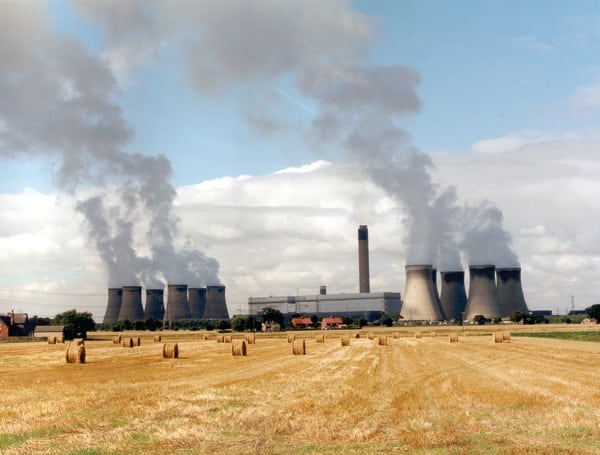
The Nanticoke Generating Station (Figure 1) is equipped with eight units, each with a nominal rating of 500 MW. The boilers are of the opposed-fired configuration, originally designed to fire a mid-sulfur bituminous coal. Currently, the Nanticoke boilers fire a furnace blend of 80% (by energy) Powder River Basin subbituminous coal with 20% low-sulfur eastern bituminous coal (see table). The units are equipped with five 10E10 ball-race pulverizers. All five mills are required for full load.

1. Leading the way. The Nanticoke Generating Station is located on the north shore of Lake Erie. Both it and its sister facility, the Atikokan Generating Station, are pioneering the use of biomass as a renewable energy source for their operations. Courtesy: Ontario Power Generation

A comparison of cofired fuels. Source: Ontario Power Generation
In 2005, Nanticoke was approached by the Ontario Ministry of Agriculture, Food and Rural Affairs and the Ontario Millers’ Association regarding the possibility of displacing some portion of its coal-fired generation with biomass. In 2006, Nanticoke conducted its first proof-of-concept biomass injection test using wheat shorts, a by-product of the milling of wheat to flour (see table). A single truckload of wheat shorts was brought to the site, and the integrated compressor on the truck was used to convey the biomass into the outlet pipes of a single pulverizer (mill 4E). This configuration was very rudimentary, but the results were encouraging enough to merit a series of follow-up tests in 2007, using a pair of blower trucks, each injecting wheat shorts into one of the two mill outlet lines of pulverizer 4E.
The initial test program provided the first results to OPG regarding the impact of biomass use on the firing systems and acid gas emissions. However, due to the nature of the truck unloading method (compartmentalized biomass, gravity fed to an onboard blower), it was difficult to control the biomass injection rate and avoid line pluggage. In addition, this mode of operation was limited in both capacity and duration. The need for a larger, engineered system was recognized in order to better demonstrate the potential of biomass at Nanticoke.
Nanticoke’s Direct Injection System
The direct injection system was placed into service in 2007. The facility consists of two dedicated injection systems, each with a storage silo, screw feeder, rotary air lock, injection blower, and transport lines (Figure 2). The biomass transport lines are 8-inch pipes that connect to the pulverizer outlet lines of mill 4E. As before, the use of biomass is intended to specifically displace bituminous coal. The capacity of each silo is 69 megagrams (Mg) and the maximum injection rate of each system is 16 Mg/hour. The total biomass input of 32 Mg/hour can produce up to 50 MW of electrical output. The installation includes fundamental safety systems — electrical grounding for truck unloading, dust collection, and explosion venting — and the operation of the injection is interlocked with the target mill and boiler protections.

2. Dedicated injection systems. The direct injection system, which uses granular agricultural biomass as a fuel source, was placed into service in 2007. The facility consists of two dedicated injection systems, each with a storage silo, screw feeder, rotary air lock, injection blower, and transport lines. Courtesy: Ontario Power Generation
The blower serving each injection line provides about 6 Mg/hour of transport air to convey up to 16 Mg/hour of granular biomass. During testing, the associated mill is operated in manual mode, at 50% of its normal coal feed rate. The primary air (PA) to this mill is also placed in manual to allow for additional primary airflow to properly transport the coal/biomass mixture downstream of the pulverizer. Relatively high airflows have been employed to provide a level of margin against saltation (dropout) when conveying the coal/biomass mixture in the burner lines.
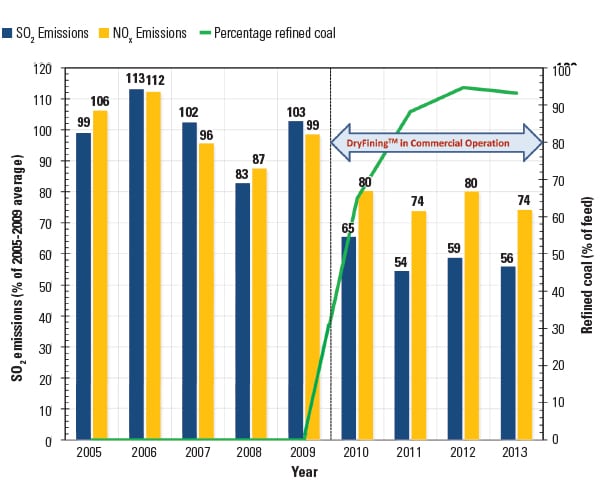
The blend of 50% bituminous coal (by energy) and 50% biomass input on this burner row produces stable burner flames without the need for auxiliary gas support. In addition to the net reductions in CO2 emissions, the largest impacts have been in the area of acid gas emissions. The reduction in the total fuel sulfur content — by displacing bituminous coal with biomass — resulted in the expected drop in SO2 emissions. For the Nanticoke case, with a 10% wheat shorts input, corrected SO2 emissions were seen to drop by approximately 10%. NOx production is a much more complex issue. Previous utility experience with biomass cofiring has produced both increases and reductions in NOx emissions.
A number of technical issues were encountered with the direct injection system. First, operational sustainability proved to be more difficult to achieve than anticipated. This was primarily due to the design reliance on blower trucks to provide a continuous supply of biomass. Availability of blower trucks and variability in the condition of the onboard blower proved to be significant impediments. Second, the system is not equipped with milling capability and can therefore not process pelletized fuel.
As the biomass program evolved, it became more apparent that developing the capability to handle pelletized fuel was essential. Fuel supply economics and flexibility as well as higher generation levels (vs. cofiring) required pelletized fuel.
Nanticoke’s Direct Milling Program
Direct injection biomass systems are among the most effective way to employ significant volumes of biomass via cofiring. However, it is expected that commercial operation will require that the biomass is densified in some form to facilitate long-distance transportation. The Nanticoke team examined ways that commercial grade wood pellets (see table) could be directly used within the existing systems. This review determined that several European utilities possessed experience with handling wood pellets in modified coal pulverizers. OPG refers to this technique as the dedicated milling concept to differentiate it from the more familiar co-milling of biomass and coal.
In the dedicated milling concept, pure wood pellets are handled with the existing coal-handling systems (conveyors, bunkers, and gravimetric feeders) and are introduced into the pulverizers on a pure basis — without coal. The trials to date at Nanticoke have been conducted on unmodified pulverizers. However, the method does require at least two significant operational changes. First, the PA employed for wood milling must be relatively cold, as biomass releases volatile matter at significantly lower temperatures than coal. The Nanticoke trials used a target mill inlet temperature of 65C to address this issue. The second change relates to the required minimum primary airflow that can both effectively fluidize the wood dust in the mill and provide stable pneumatic transport downstream in the burner lines.
This aspect of the Nanticoke program commenced with a proof-of-concept test on one pulverizer, using a single truckload (35 Mg) of commercial grade wood pellets. The initial unloading of the truck into an emergency reclaim hopper produced a significant quantity of dust, most of which appeared to have been generated during transportation to the site. Downstream of this point, the pellets were conveyed by the existing coal-handling systems without any major issues.
The mill required a longer time period (about 30 minutes) to stabilize, and the final mill differential pressure was higher (similar to full mill load on coal). The temperature differential across the pulverizer was about 20C, confirming that only a modest level of drying was necessary with the relatively dry pellets.
The test proceeded uneventfully until the delivered wood pellet supply was consumed. At this point, a standard pulverizer cleaning cycle was started. At Nanticoke, this mill-clearing cycle involves a full 20 minutes of operation with maximum cold primary airflow in order to blow the mill clear. In practice, this typically only requires between 5 to 10 minutes. However, following a wood pellet test, this clearing operation was seen to require more than 60 minutes. It is thought that there was insufficient lift velocity in the mill body to effectively remove the larger wood particles from the mill. This has obvious impacts on the flexibility of the unit and may also represent a potential safety concern if the recirculating wood dust in the mill begins to generate heat via friction.
The effective throughput of a mill handling wood pellets is limited by the available cold PA capacity. The Nanticoke PA system operates at 15 kPa, but the mills are equipped with relatively small tempering air ducts. Modifications to reduce the mill differential and to expeditiously transport the wood particles from the mill are currently under study.
Nanticoke’s Testing Shifts away from Cofiring with Coal
With the adoption of the coal phase-out regulation in 2007, OPG’s testing program changed from focusing on cofiring with coal to determining generation capability without the use of coal. A series of wood pellet tests had been conducted at the Nanticoke GS on different mill configurations and with various throughputs and test durations. In 2008 all of the Unit 4 mills were individually tested with pellets to confirm and address any anomalies with the equipment. In November 2008, Nanticoke conducted the first test of a full boiler operating on biomass fuel.
This larger trial was conducted at a load of 175 MW with initial operation on coal. A transition to wood firing was made over the course of the test as the coal in the bunkers was exhausted. As before, the gas igniters were maintained in service for wood firing. The low load point was chosen, as the team expected that PA capacity would be the first limit encountered, and this was indeed the case. With all five mills in service on wood pellets, the maximum total biomass furnace input was 104 Mg/hr. Note that the gas igniters provided a significant quantity of energy at their minimum (default) settings. In this case, wood energy represented some 82% of the total furnace input with the balance from natural gas. In simple terms, prorating these inputs yields electrical outputs of about 145 MW from wood and 30 MW from gas.
High hot reheat steam temperatures were observed, especially at lower loads. It was necessary to intentionally depress the main steam temperature setpoint in order to bring the reheat temperatures under control.
The impact on the air heaters was much more dramatic. The use of cold PA in all of the mills created a significant energy imbalance at the PA heater. This has an obvious negative impact on boiler fuel efficiency, but, more importantly, the elevated temperatures are approaching the limits of some downstream components in the electrostatic precipitator (ESP) and the stack.
NOx emissions were basically unchanged from the base case with coal (at lower excess air). The test data indicate that there is certainly room to lower excess air with wood firing, but the current controls configuration does not allow this due to a low windbox pressure limit.
Management of dust levels during pellet unloading and conveyance to the coal bunkers was a significant health and safety concern. Through the dedicated milling trials, we found that different wood pellets have very different dusting propensities, despite similar chemical properties. Consequently, a number of measures were implemented to mitigate the health and safety concerns from dust, including:
-
The application of a light steam to the pellets at transfer points. Management of the dust with typical coal dust suppression was a challenge due to the fact that the pellets needed to be kept dry to avoid pluggage.
-
The use of vacuum trucks at coal transfer chutes as a rudimentary dust extraction tool.
-
Limiting access to the coal conveyor gallery and the use of respirators and personal air quality monitors (O2, CO, and CH4) for required personnel.
-
The use of area dust monitoring throughout the pellet transfer process.
Atikokan Generating Station’s Test Program
Following the lead of the Nanticoke GS, the Atikokan GS began setting up its own test program related to using pelletized biomass as a fuel source.
The Atikokan GS is located in northwest Ontario and is equipped with a single Babcock & Wilcox natural circulation boiler of the opposed-fired design. Five MPS 75G roll-race pulverizers supply fuel to a total of 15 dual-register low-NOx burners. The boiler is equipped with a single regenerative secondary air heater and a dedicated PA heater. Two cold side ESPs provide particulate capture. The unit is rated at 227 MW with main steam and hot reheat temperatures of 538C. Low load steam temperature control is facilitated by flue gas recirculation. The Atikokan GS fires lignite coal from western Canada, delivered by rail and received at a rotary car dumper.
The Atikokan pulverizers are of the roll-race design, originally designated MPS 75G. These mills have a baseline coal capacity of 40.8 Mg/h when grinding coals with a Hardgrove Index of 50 to a bulk fineness level of 70% passing 200 mesh. All of the Atikokan mills are equipped with the original static classifiers. Over the course of this test program, some of the mills were retrofitted with rotating throats. These modifications from the original static throats were conducted as part of a maintenance upgrade but also resulted in additional valuable observations.
Atikokan’s Dedicated Milling Concept
A small team was organized to assess the ability of the Atikokan boiler to handle pelletized biomass via the dedicated milling concept. Coal pulverizers have been modified to handle wood pellets on a commercial basis in at least three cases: Hasselby (Sweden), Avedore 2 (Dong Energy, Denmark), and Amer 9 (Essent, Netherlands). The Atikokan team incorporated the observations from these projects as well as their own internal experience with this technique at the OPG Nanticoke GS.
When using roll-race or ball-race pulverizers to grind biomass pellets, the utility operator must consider three critical issues:
-
Limited size reduction. Coal pulverizers depend on fracture mechanics to grind coals to particle sizes in the 75-micron neighborhood. However, the fibrous nature of biomass materials does not lend itself to this mechanism. The grinding elements in a traditional coal mill can be expected to reduce the biomass pellet back into its constituent dust. It is critical that the dust used to form the biomass pellets is of a suitable particle size distribution to allow for stable pneumatic transport and efficient combustion.
-
Higher primary air requirements. It is reasonable to assume that the much larger wood particles — in the 1 to 3 mm range — will require higher line velocities than are employed for pulverized coal to avoid dropout in the burner lines. OPG has employed the Rizk correlation to determine the saltation velocity limits for a variety of fuel/air ratios and a range of particle sizes.
-
Cold primary air. Biomass has been shown to release significant quantities of volatile matter at temperatures as low as 200C. At Atikokan, it was decided to use cold PA to avoid the issue of early volatile matter release. Mill inlet temperatures are held in the 50C to 70C range for dedicated milling of wood pellets. This has been found to be more than adequate to perform the limited degree of drying necessary with processed wood pellets.
Atikokan’s First Proof-of-Concept Test
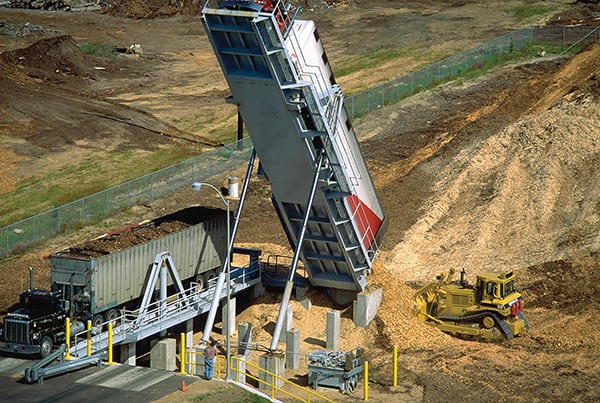
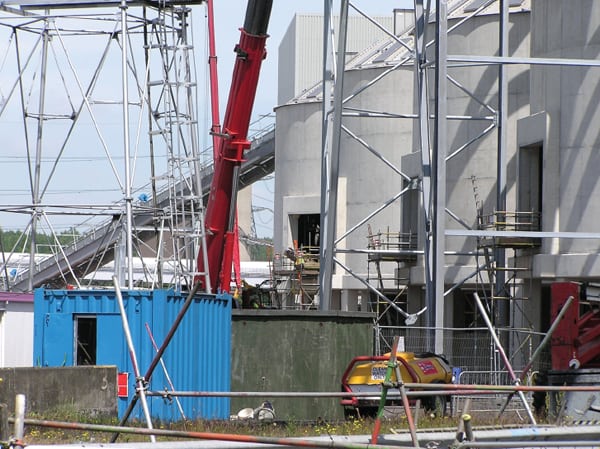
In January 2008 the first proof-of-concept test at Atikokan was conducted. This test employed only a single truckload of commercial grade wood pellets. Approximately 26 metric tons of pellets were delivered to the site in "super sacs." A simple cutting tool was used to empty the pellets into a reclaim hopper, where they were processed using the existing coal-handling system without any issues (Figures 3 and 4).

3. Pellet power. Wood pellets are shown being unloaded at the Atikokan Generating Station during the initial test, which occurred in January 2008. Courtesy: Ontario Power Generation
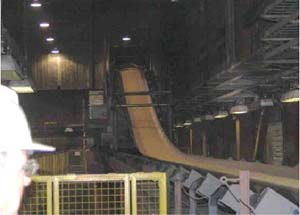
4. A long climb. The wood pellets are moved at the Atikokan facility on the tripper belt. Courtesy: Ontario Power Generation
This first test was conducted at a wood pellet flow of 5 kg/s (18 Mg/h) with a cold primary airflow of 20 kg/s. The pulverizer differential pressure while operating with wood was observed to be much higher than that for lignite, and the period for stabilization was also longer. The PA header pressure was increased from 10.5 kPa to 11.5 kPa to maintain the target airflow.
Given the very low sulfur content of wood, a significant reduction in SO2 emissions was observed, as expected. However, it is notable that the full benefit of the lower-sulfur fuel blend did not become apparent until the mill fully stabilized on wood.
The final key observation from this initial short test was the relatively long clean-out cycle required to clear the mill of wood dust at the conclusion of testing. This phenomenon had been previously observed during dedicated milling trials at the Nanticoke GS. This represents a potential safety concern over the long term if friction within this large recirculating bed were to generate enough heat to pose a fire hazard.
Atikokan’s Process Optimization
The next single mill test series in March 2008 had three main objectives:
-
Complete displacement of coal on a single burner row — such as a 20% furnace energy input level.
-
Operation without the need for natural gas support for flame stability.
-
Assess the sensitivity of NOx emissions to the higher burner nozzle velocities associated with the firing method.
The larger fuel demands of this test required that the wood pellets be delivered by rail. To protect the pellets from the elements, covered grain cars were used to deliver pellets to the site. As a result, the normal rotary dumper could not be used (Figure 5).

5. Baptism by fire. This photo shows the unloading of the wood pellets via the bottom hoppers of the grain cars. After being unloaded at the Atikokan Generating Station, the pellets underwent wood firing as part of a test program. Courtesy: Ontario Power Generation
This larger delivery of wood pellets allowed for a longer test at the target feed rate. Mill #3 was operated with a throughput of 6.8 kg/s (24.5 Mg/h) for this test — equivalent to 20% of the furnace energy input. Cold primary airflow was again maintained at a base value of 20 kg/s. Mill differential was very stable under these conditions.
In general, the flame conditions on the burners firing wood were observed to be bright but somewhat detached from the burner nozzle. With the mill stabilized, the operations staff began to make stepwise adjustments to the airflow and spin vane settings on these burners.
The final objective considered during this test involved NOx emissions. Previous cofiring trials in the U.S. and Europe tend to show a modest but repeatable reduction in NOx emissions when cofiring with wood. Furthermore, the level of the NOx reduction tends to increase with an increase in the wood energy input.
However, the observations with wood cofiring at the Atikokan GS are that for biomass input levels in the 20% range, NOx emissions are mostly unchanged when compared with the baseline lignite performance, with one exception. Corrected NOx emissions did drop approximately 10% with a 10% reduction in the primary airflow to the dedicated wood pulverizer in conjunction with operational adjustments to the associated burner row. A single burner row represents about 20% of the furnace energy input.
Atikokan’s Attempts at 100% Wood Firing
In July 2008, a series of tests were conducted at the Atikokan GS with the ultimate objective of assessing the unit’s potential to operate on 100% wood pellet fuel. A number of significant observations were made during this program and are discussed in the following sections.
Startup with Wood. During the previous single mill trials, boiler load was always carried with the remaining four mills operating with coal. The July 2008 test program included trials with all five mills firing wood pellets, making the transition from coal to wood firing rather challenging. The test team determined that starting the unit on wood fuel (following initial firing on natural gas) would solve these logistical difficulties and provide important information as well. The mill coordination curves were modified for future tests to allow for better control during both start-up and stable operation.
Air Heater Mass/Energy Balance. The use of cold PA on a single mill has a noticeable impact on the heat transfer performance of the primary air heater (PAH). With all five mills operating on essentially cold PA, system performance was seen to degrade dramatically. Operating at unit MCR on pure wood, the PAH gas outlet temperature was seen to increase by more than 40C, to approximately 200C, and then stabilize at this level following adjustment of the gas-balancing damper. The additional gas flow to the secondary air heater (SAH) caused the outlet gas temperature to increase to almost the same level. Long-term operation with such elevated temperatures might create issues for induced fan shaft growth and the integrity of the stack liner and associated components.
Wood Pulverizer Trip and Restart. Another key issue when considering a complete fuel conversion of this type regards the implications of a pulverizer trip on wood fuel. Mill #3 was tripped from very high load (8.6 kg/s) and subsequently restarted with a deep bed of wood dust around the grinding elements. Aside from a brief spike in the mill motor current (this also occurs during a restart with lignite) the restart proceeded smoothly and the mill returned to normal operation on wood without any further issues.
Steam Temperatures. The previous trials at relatively modest levels (<20%) of wood input did not result in significant impact on the boiler’s thermal performance. However, at wood energy input of 67% and 100%, both the main steam and hot reheat steam temperatures were observed to be well below their design values on coal. This is the expected trend for the fuels involved, but the magnitude of the temperature depression was rather surprising.
Primary Air System Limitations. The capacity of the existing PA system was found to be marginal at full unit load on 100% wood pellet firing. The cold primary airflow available to each mill was approximately 18 kg/s — some 10% below the target value.
Pulverizer Throats. As part of an existing maintenance upgrade program, Atikokan GS has been replacing the original equipment manufacturer static throats in the pulverizers with a third-party rotating throat design. In general terms, those mills with rotating throats operate with about half the pulverizer differential of a static throat. The rotating throat also appears to stabilize faster, and there is a small benefit in a reduced time for the clearing cycle.
NOx Emissions. As noted previously, the various cofiring trials at Atikokan yielded fairly flat results with respect to NOx reductions. NOx was shown to be sensitive to the high transport velocities used in the test program, but the final results were generally similar to those for the base lignite coal. However, operation with higher levels of cofiring and with 100% wood firing resulted in a definite change in NOx performance — from 0.79 kg/MWh to 0.53 kg/MWh. The baseline NOx rate for Atikokan firing lignite at MCR is 1.50 kg/MWh. The value of 0.53 kg/MWh is equivalent to other OPG units with selective catalytic reduction technology installed.
Heat Rate. Low final steam temperatures and elevated flue gas exit temperatures both have an obvious negative impact on the heat rate of the unit. The expected degradation in heat rate is on the order of ~4%.
Challenges Related to Complete Conversion from Coal to Wood
The Atikokan biomass test program has included operational trials with up to 633 MJ/s of wood input. This is a remarkable achievement for an unmodified pulverized coal (PC)-fired boiler, but a number of issues will require attention and investment to enable safe, commercial operation. Any fuel conversion might require physical equipment modifications in addition to changes in operation. The complete conversion from coal to wood for a utility PC-fired boiler is expected to result in a number of unique challenges, discussed below.
Safe Material Handling. Later in 2008 the Atikokan plant experienced a dust explosion while bunkering wood pellets in preparation for further tests. Review of this incident has lead OPG to conclude that major modifications to coal-handling systems must be made in order to ensure the safe handling of biomass fuels. Specific findings include these:
-
Receiving systems should include the capability to screen deliveries of pellets to remove dust and fines that might have been generated during transportation.
-
Fire and explosion detection and suppression systems are needed.
-
A thorough review of the design and limitations of existing bunkers, conveyors, and transfer points is necessary.
In addition to the dusting risks associated with use of coal conveyor systems, other techniques used for the bulk solids handling of a fuel like wood pellets are quite different from those traditionally used by utility sites with coal. Possible considerations include the following:
-
The need to protect the pellets from the elements during transportation to the site and during long-term storage.
-
Including provisions for significant covered storage in the site design.
Firing Systems. In addition to the mandatory retrofit of additional safety systems, several other areas of operation would require further attention to fully employ the dedicated milling concept on a commercial basis:
-
Modifications that promote the expeditious removal of wood from the mill and reduce the volume of recirculating product in the pulverizer.
-
Further study into the minimum safe velocity required for effective pneumatic transportation.
-
Modification or complete replacement of the burners.
Corrosion. Corrosion — via KCl formation — is a known concern for pure wood combustion. Much of the current research on this topic involves the lack of sufficient sulfur to promote formation of the less-aggressive K 2SO4. It may prove to be sufficient to merely "dope" the pellets with a sulfur-bearing compound.
Boiler Performance. Changes to the superheater/reheater tube banks may be necessary to improve steam temperature performance (possibly including a materials upgrade to address corrosion). The air heater mass imbalance will need to be addressed, but it may not be feasible to simply convert the existing PA heater into a second SAH.
Emissions Controls. The SO2 and heavy metal emissions related to wood firing are naturally very low. The NOx performance observed during the Atikokan trials is also very encouraging, possibly eliminating the need for additional NOx controls. The OPG experience at Atikokan regarding wood ash collection in a cold side ESP has been good.
Looking Forward
OPG’s biomass test program at the Nanticoke and Atikokan Generating Stations is part of the overall development of biomass as a fuel to replace coal in some of its coal-fired generating units.
To further develop the business case for the biomass option, OPG’s biomass program is focused on the following:
-
Determination of unit conversion modifications (including all safety measures) and unloading and storage facilities required for commercial scale operation.
-
Assessment of different biomass fuels (energy crops, agricultural by-products, wood), including analysis of balance-of-plant combustion-related issues through pilot scale experiments.
-
Fuel supply chain analysis, including biomass availability (both agricultural and wood-based) and transportation logistics.
-
Analysis of the complete economic model associated with the development of the biomass option (including capital costs and revenue structure).
-
Complete greenhouse gas life cycle analyses of biomass (both agricultural and wood-based) compared to coal.
-
Stakeholder involvement through continuing to work closely with the various government sectors (Ministry of Energy and Infrastructure; Ministry of Northern Development, Mines, and Forestry; Ministry of Agriculture, Food, and Rural Affairs; and Ministry of Environment) and an extensive stakeholder network.
The development of a biomass industry in Ontario represents an exciting opportunity for OPG’s coal fleet. The biomass program has the potential to contribute to the expansion of Ontario’s renewable energy portfolio by contributing dispatchable, renewable biomass energy.
—Les Marshall (les.marshall@opg.com) is the senior technical officer at Ontario Power Generation (OPG) in Nanticoke, Ontario, Canada. Daryl Gaudry (daryl.gaudry@opg.com) is the production supervisor of operations at OPG’s Atikokan Generating Station in Atikokan, Ontario. Chris Fralick (chris.fralick@opg.com) was formerly the manager of chemical and environmental services at the Nanticoke Generating Station and is currently production manager at OPG’s Thunder Bay Generating Station.