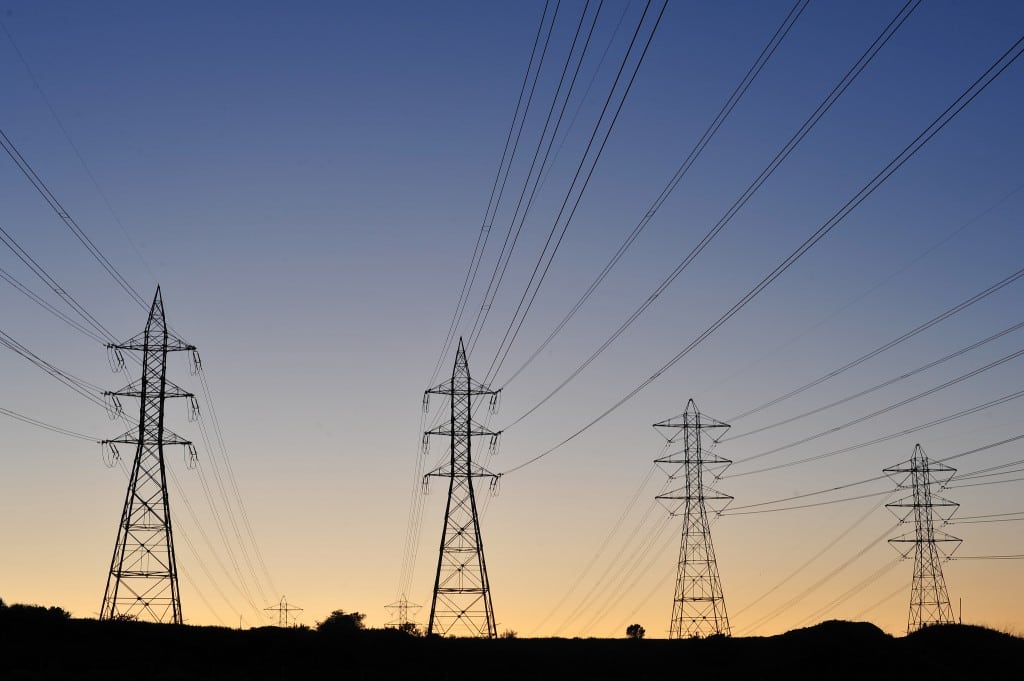
The U.S. needs new generating capacity in coming decades to meet growing electricity demand. The increasing scarcity of land within utility load centers, combined with environmental opposition to the siting of plants, often limits siting options to remote locations. Restricting power plants to distant sites necessitates additional transmission facilities, increases delivery costs and electric bills, and makes maintaining system reliability more difficult.
The common response to community opposition to a proposed power project is to castigate the concerned citizens for NIMBYism. This criticism is understandable, but somewhat unfair. Everything else being equal, few businesses or residents (there are exceptions, see "Please, in my backyard," November/December POWER, p. 4) welcome a power plant, however "clean," as a next-door neighbor. Generally, however, ratemaking practices fail to compensate citizens who sacrifice their quality of life for the benefit of their regional, human neighbors.
Potential benefits for all
A fairer and more sensible approach might be to use ratemaking rules to reward citizens who agree to bear an environmental burden for the greater good. For example, a community that willingly permits a plant adjacent to its other facilities, such as waste disposal or water pumping, could be offered a rate discount for commercial or residential usage. Similarly, an industrial facility that offers land for a 500-MW plant could be offered a discount on its 20-MW share of the plant’s capacity. Alternatively, an enterprise might be given the option to buy its power directly from the generator on a "direct access," or "behind-the-fence" basis, at a lower rate. In both cases, almost all of the incremental generation would benefit the utility’s other customers.
The economic, system reliability, and other advantages that accrue to a utility, and all ratepayers, when a community welcomes a new power plant are significant:
- If it’s better received by the public, a plant can be built sooner and likely at a lower cost. Greater scheduling certainty also facilitates planning of supply-demand balancing.
- If power plants are sited closer to load centers, transmission facilities to deliver the generator’s power will cost less to build, transmission line losses will be reduced, congestion constraints minimized, and regional and local reliability improved.
Flexibility needed
Long-standing ratemaking principles generally forbid utilities from charging large customers of the same rate classification different rates. Additionally, in most instances, generating plants are denied any opportunity to sell electricity directly to consumers—even to a consumer on the same property.
The intent of "anti-discrimination" rules is to ensure that "similarly situated" customers contribute proportionately to the costs of maintaining a delivery system that—in theory—similarly benefits all group members. The prohibitions of direct generator sales are predicated on another theory—that the greatest societal benefit is achieved by maximizing utility sales. In theory and in practice, a grid that carries more megawatt-hours better spreads its capital and O&M costs. These concepts retain vitality, but regulators err by assuming that slavish application of them generates optimal results in all cases.
Cost, reliability should trump identical rates
Some may feel that offering a "special" rate discount to a few customers, or allowing "direct" purchases to compensate a community for hosting a power plant, undermines the "spirit of fairness" of regulated rates. However, if maintaining absolute rate equality serves to raise the costs and lower the reliability of a delivery system, regulators should exercise their discretion to choose a lower-cost solution. Moreover, a rate discount for a community that accepts the burdens of coexisting with a power plant does not violate antidiscrimination rules, because the utility’s cost to serve customers physically proximate to a power plant is lower than its cost to serve customers over miles of the utility’s transmission and distribution system.
We do not suggest that communities "sell" their environmental values to the highest bidder. We do suggest, however, that blind adherence to anachronistic regulatory principles—such as nondiscriminatory ratemaking—produces suboptimal results. Some sites undeniably offer greater economic, land use, and reliability benefits than others for hosting new capacity. Siting decisions should reflect that reality. Some flexibility in the antidiscrimination and direct-sale prohibitions for purposes of reducing community opposition and potentially expanding the number of viable sites is warranted. Ultimately, this small step could produce large benefits, including improved grid reliability and lower electric bills.