
Winston Churchill once said, "Democracy is the worst form of government—except for all the others." The same could be said for competition policy in wholesale power markets. Competition policy has its flaws. It is not perfect, but it is better than the alternatives.
One alternative is to rely completely on vertical integration and rate regulation, to the exclusion of competition. This country tried the first approach for a long time—nearly 100 years. We abandoned it about a quarter-century ago, and for good reason: It failed. It produced high prices and put all risk on the backs of consumers.
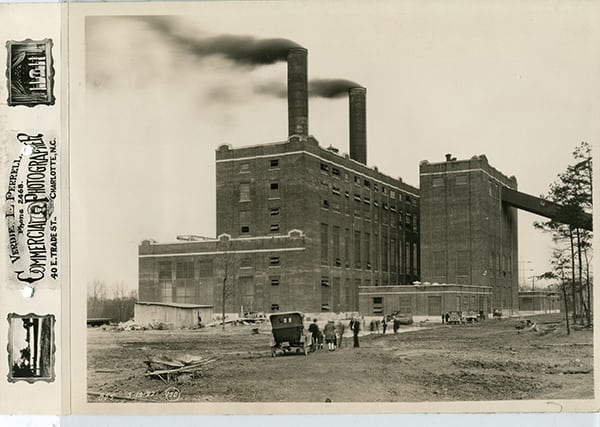
Traditional rate regulation has been around for a long time. It has some well-known weaknesses, including the tendency to create substantial excess capacity, whose costs are recovered in rates. And though it is an effective way to regulate profit levels, traditional rate regulation provides very few incentives to lower costs, to improve efficiency, to reduce environmental impact, or to deploy new technologies.
Balancing regulation and competition
Because of the failure of traditional regulation, the United States decided to introduce competition into wholesale power markets. This approach is manifestly not "deregulation" because it neither represents the absence of regulation nor relies solely on competition. Instead, the Federal Energy Regulatory Commission (FERC) uses both competition and regulation to police wholesale power markets. We seek to develop the best possible balance of competition and regulation.
The country did not adopt this policy by accident. It was a deliberate decision, a reaction to the failure of complete reliance on vertical integration, the complete reliance on rate regulation, and the complete absence of competition. Competition as national policy was established by three separate federal laws enacted over the past 25 years, most recently the Energy Policy Act of 2005. Competition is national policy in wholesale power markets. It is the law.
That said, wholesale power markets in the U.S. are regional in nature, and competition has taken different paths in the various regions. Some have established organized wholesale markets operated by regional transmission organizations. Some regions have gone further, separating generation from transmission and distribution. Elsewhere, vertical integration remains the norm, but the entry of independent power producers puts pressure on utilities to improve performance. All this goes to show is that competition is more disorderly than regulation, but it is also more effective.
Many of the differences in wholesale power markets are the result of decisions made by states. FERC has exclusive jurisdiction over wholesale power markets, while states are responsible for retail markets. Yet decisions by the states clearly affect wholesale power markets. As competition policy has developed in wholesale power markets, states have taken different approaches on retail markets. Some of these approaches have worked, others have failed. Those failures are sometimes attributed to federal competition policy, in my view unfairly.
Competition’s record
It is admittedly difficult to prove the success of competition policy. In my view, it has been a success, marked by some failures along the way. Stakeholders with a financial interest in the debate over competition policy have commissioned several studies purporting to objectively assess the success of competitive power markets. As Mark Twain said, "There are three kinds of lies: lies, damned lies, and statistics." Better just to say most of these reports are "statistics" and leave it at that.
Competitive wholesale power markets can be compared to the elements of "perfect competition" as outlined in a textbook. By that standard, wholesale power markets may not be perfect, but they are workably competitive.
We have seen significant new entry by competitive generators, and barriers to entry are relatively low. Old, inefficient power plants have been retired, replaced by more efficient units. Power plant performance has improved due to competitive pressures—just look at nuclear power plants.
Market access is good, yet there’s room for improvement. We have a robust power grid, albeit one with significant investment needs. But transmission investment trends are moving in the right direction. Open access to network facilities such as the grid has been established, and FERC recently adopted major reforms to provide for improved access.
Markets, especially organized markets, are improving their transparency, and we continue to make progress on market rules. FERC has established new rules to prevent market manipulation and the accumulation of market power, and we are policing the markets. Perhaps the greatest need for improvement is in demand response.
Competition policy is not an event. It is a long process that requires strong and sustained political commitment and continuous reform. And it is clearly the best path for U.S. wholesale power markets today.
—Joseph T. Kelliher is chairman of the Federal Energy Regulatory Commission.