Owner: The Harrisburg Authority
Operator: Covanta Harrisburg Inc.
After decades of struggling with serious air contamination issues and large financial losses, this Pennsylvania waste-to-energy facility, which was built in 1972, was in need of an extreme makeover. In the wake of an unsuccessful $84 million retrofit attempt in 2005, the faltering facility’s last hope lay with a Covanta project team that took over its operation in 2007. After almost two years of hard work, the facility is now producing up to 17 MW while achieving its environmental compliance goals and earning substantial revenues.
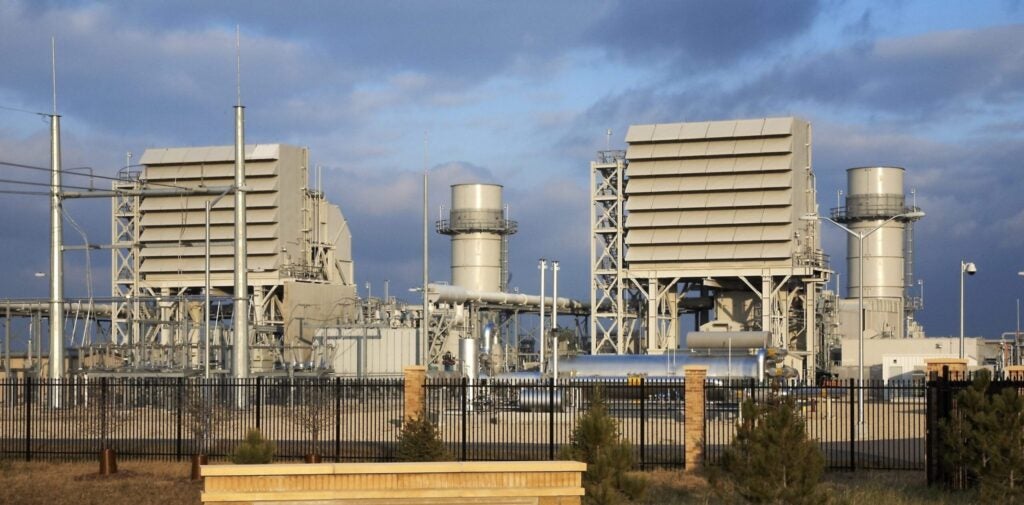
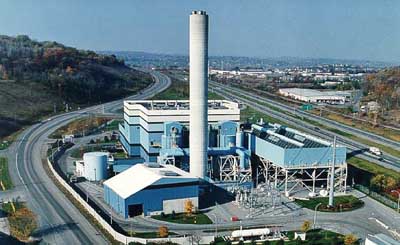
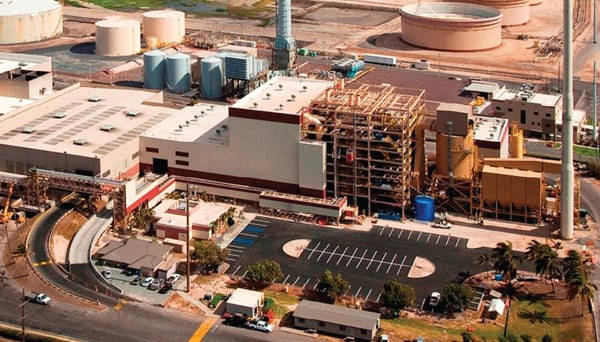
These days, the Harrisburg Resource Recovery Facility (HRRF), which is the oldest operating waste-to-energy (WTE) facility in the U.S., is a picture of success. It has three combustion units, each rated at 266.6 tons of municipal waste per day with the ability to generate 85,092 lb per hour of steam at 630 psig and 760F (Figure 1). Currently, the steam is used to generate electricity for plant load usage and for export.
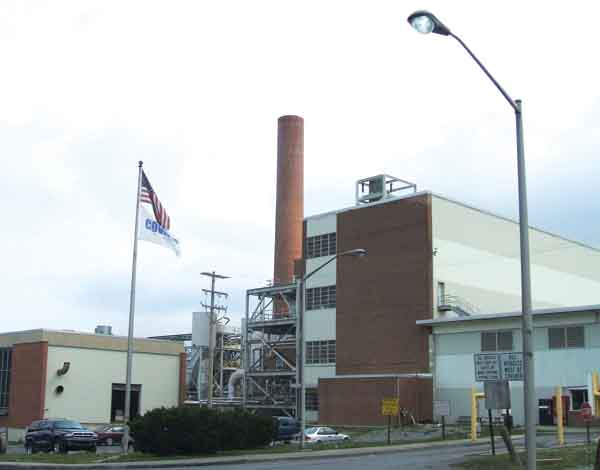
1. Renovation rescue. In 2006, The Harrisburg Authority signed an operation and maintenance agreement with Covanta Harrisburg Inc. that included a $28 million construction management agreement for the retrofit and upgrade of the Harrisburg Resource Recovery Facility, which began operation in 1972. Courtesy: The Harrisburg Authority
For many years, however, the facility was considered a polluting pariah by Harrisburg locals, who complained about the dark plumes laden with dioxin and other toxic substances emitted by the plant, which drifted over the nearby Susquehanna River and the entire city, according to published reports in the Sunday Patriot-News, the Harrisburg newspaper. The local newspaper also reported that many Harrisburg citizens objected to the heavy financial costs they had to bear through increased property taxes levied as a result of ineffective management of the municipally owned facility.
In late 2006, The Harrisburg Authority contracted with Covanta Harrisburg Inc. and teamed up to turn around the HRRF, which was severely distressed, underperforming, and on the verge of closing. Fortunately, since Covanta took over operations, the HRRF’s consistent operational performance has allowed the facility to generate revenue from the sale of electricity and the processing of waste reliably and predictably.
The U.S. Waste-to-Energy Industry
In October, POWER interviewed several Covanta personnel who work at the HRRF, including Paul Gilman, chief sustainability officer.
In the U.S., 87 WTE plants operating in 25 states safely dispose of approximately 30 million tons of municipal solid waste (MSW) per year and use it as a fuel source to generate enough renewable energy to power an estimated two million homes a year, Gilman explained. All together, these facilities generate approximately 17 million kWh of electricity per year.
According to Gilman, WTE facilities generated roughly 7% of nonhydro renewable energy in 2008; however as a percentage of total electricity production, it was only 0.4%. "Covanta generates approximately 68% of the total [WTE] electrical generation in the U.S., up from roughly 59% in 2007," he explained.
Turnaround Project
In 2005, The Harrisburg Authority, an agency that is responsible for several City of Harrisburg utilities, hired a Colorado-based company to perform an $84 million retrofit of the HRRF to meet stricter environmental regulations. City officials said the project was not handled successfully by that company.
Jim Klecko, Covanta vice president, Mid-Atlantic regional business manager, discussed the renovation project with POWER. "The City of Harrisburg and its management entities had been struggling with a facility that had undergone a troubled renovation that was incomplete and underdesigned in many respects," he said. "These factors presented significant challenges to the facility in its ability to comply with Pennsylvania Department of Environmental Protection permit obligations."
Air emission excursions (a key indicator of environmental performance) were recorded almost daily during pre-Covanta boiler operations. During the retrofit and reconstruction stage, the facility continuously operated outside the bounds of its air quality permit.
"In contrast, mission excursions at the Harrisburg [WTE] facility have declined dramatically under Covanta’s operation," he said. "This trend is indicative of the overall improvement in environmental performance at the facility."
In late 2006, Covanta established a relationship with the City of Harrisburg and The Harrisburg Authority to work together and salvage the embattled facility, according to Klecko. An interim operation agreement between the Authority and Covanta was executed in December 2006; Covanta assumed control of the facility’s operations on January 2, 2007, and begin the recovery project.
Covanta worked diligently on a month-to-month basis to rescue the faltering project. In February 2008, a 10-year service agreement was executed, which provided for operating and maintenance (O&M) services to be carried out by Covanta. In addition, Covanta and The Harrisburg Authority executed a construction completion agreement, which allocated a $25.5 million loan from Covanta to The Harrisburg Authority to allow for completion of a number of significant facility systems.
"To this day, the City of Harrisburg faces significant facility-related financial burdens from the time frame prior to Covanta’s arrival on the scene," Klecko said. "Covanta assumed responsibility for completing repairs of the facility after a poorly designed/executed retrofit. Completing repairs to the facility during the past two years has cost approximately $50 million."
Retrofit Challenges
Zenon Semanyshyn, vice president of operations engineering, told us that Covanta’s role in the Harrisburg project was completely different than the typical role it assumes in developing, designing, constructing, and then operating a facility. As part of its agreement with The Harrisburg Authority, Covanta was also tasked with providing a completion plan within 45 days of the agreement’s start. Covanta immediately assembled a multidisciplinary technical team consisting of in-house operations and engineering specialists to assess the facility design and the noted technical deficiencies as well as the quality of construction and degree of construction completion.
"Nevertheless, Covanta was successful in completing the assessment and assembling a Technical Upgrade and Construction Completion Plan," he said. "The plan outlined the necessary changes and associated costs for addressing numerous facility design deficiencies as well as the cost for completing construction of the retrofit and related punch-list items."
The technical upgrade and construction activities required for facility completion were categorized in 11 general scope areas, and all work was prioritized as either required upgrades, upgrades that would improve system reliability or environmental compliance, and upgrades that would improve plant operations and maintenance.
The total cost for addressing the technical deficiencies and completing construction was estimated at $25.5 million.
Two facility equipment components critical for reliable operation required immediate redesign: the fly ash conveying system and the tubular air heater. The fly ash system’s inability to transport material out of the baghouse and boiler hoppers resulted in facility shutdowns, excessive subcontracting costs for manual clean-out and removal of accumulated ash, and potential environmental compliance issues. A simpler and proven upgrade was designed to address this deficiency (Figures 2 and 3).
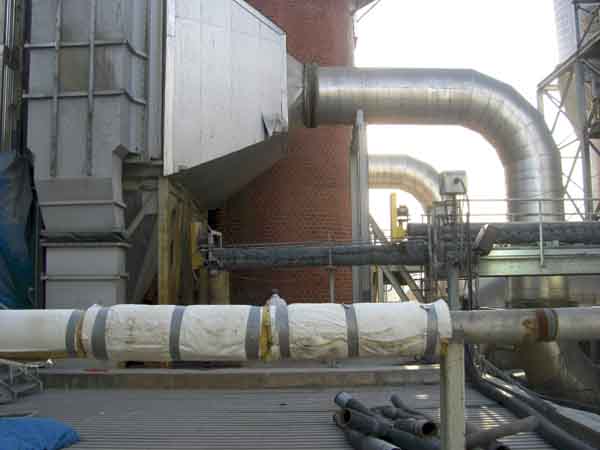
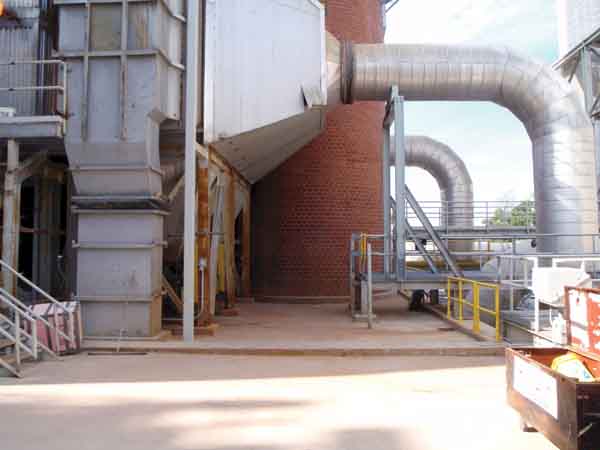
2. Antiquated air heater replaced. An air heater outlet on level 3, Unit 1 at the Harrisburg Resource Recovery Facility was replaced as part of the plant upgrades (top). Covanta poured a concrete deck and made modifications to the fly ash conveyor system, removing the pneumatic transfer line as part of the air heater upgrade project (bottom).
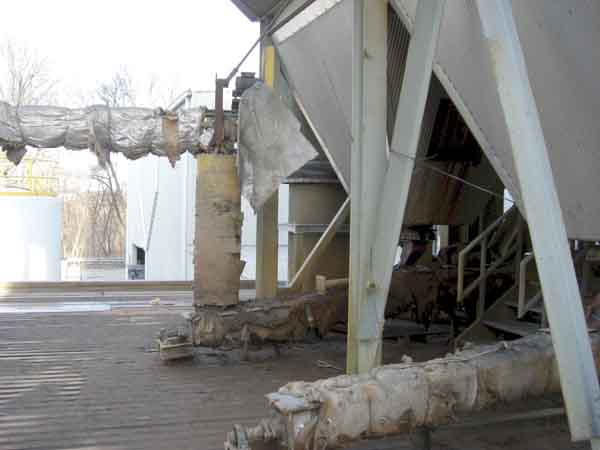
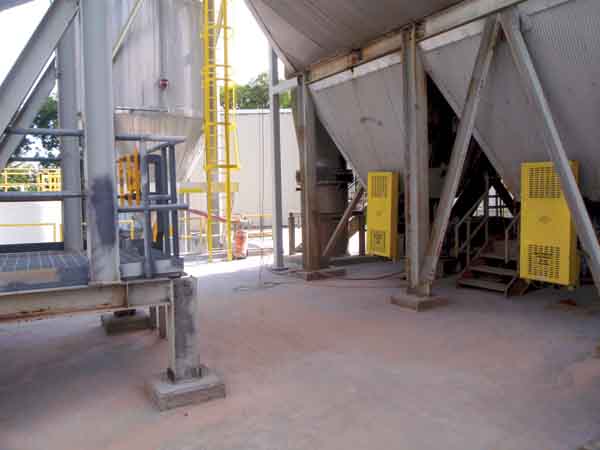
3. Outdated ash-handling system replaced. Problematic pneumatic ash transfer lines (top) were replaced with a new fly ash silo (bottom). Courtesy: The Harrisburg Authority
A tubular air heater was installed between the boiler and air pollution control system in the area that was susceptible to ash pluggage, condensation, and poor reliability due to the highly corrosive nature of the environment. The air heater was redesigned from a metallurgical and thermal performance standpoint to increase its reliability and performance.
In addition, numerous other equipment upgrades (not contemplated by the original contractor) needed to be pursued to enable all three units to become fully operational; examples include air compressors, electrical systems, combustion systems, air pollution control equipment, and instrumentation.
Current Plant Overview
Steam from the three units is used to generate electricity for plant load usage and for export. The Dresser Rand turbine and Ideal generator sets, as designed, are capable of a maximum output of 23.7 MW. Klecko explained that the HRRF location adjoining Harrisburg’s downtown area. is in optimal for local electricity and steam distribution and feeding excess power to the PJM grid. The facility’s electricity is sold to Pennsylvania Power and Light, Klecko said, and the Harrisburg Authority has a steam purchase agreement with NRG Energy Center Harrisburg Inc. The facility is also permitted to export live steam via interconnection piping to an NRG downtown loop steam distribution system. The ability to export steam into the loop already exists and is in the design stage for upgrades to improve system efficiency and safety.
"Covanta has historically concentrated its resources on environmental compliance and technological innovation," he said. "This unrelenting focus has resulted in energy-from-waste facilities that consistently meet or exceed U.S. Environmental Protection Agency [EPA] standards for federally regulated emissions."
The facility now is equipped with a Solios dry scrubbing process to control acid gases (SO2 and HCl), coupled with a fabric filter baghouse for control of particulate emissions. In addition, a Fuel Tech urea-based selective noncatalytic reduction (SNCR) system is used to control NOx emissions.
Covanta’s responsibilities include receiving and handling various wastes for transfer or combustion as well as handling the O&M of all essential and ancillary systems, including but not limited to: pollution control, residue handling and disposal, metals recovery, water treatment, and electrical distribution to the local utility. In addition, Covanta operates an on-site solid waste transfer station for MSW and construction and demolition material, as well as an on-site ash mono-fill that is operated by The Harrisburg Authority.
"These tasks are accomplished with a facility operation, maintenance, and administrative staff of 47," he said. "Local and national specialty contractors are utilized for scheduled maintenance outages. Covanta also has established a regional staff that works regularly with facility staff."
Processing Municipal Solid Waste
In 2007, the HRRF processed about 157,000 tons of refuse and had energy sales of approximately 38,000 MWh, Semanyshyn explained. "Covanta stepped into an operation that could not sustain reliable and predictable production, and even during the two-year construction completion period, Covanta has been able to achieve significant increases in the performance of the facility," he said.
In 2009 the facility is projected to process approximately 236,016 tons of refuse, net energy sales are projected to be approximately 75,000 MWh, and the total boiler availability is projected to be approximately 80%, according to Covanta’s data based on the HRRF’s current performance rates.
Klecko explained the kind of processing and preparation of the solid waste that is performed by HRRF staff prior to converting it into energy. "Municipal solid waste and some local residual waste streams are deposited on the facility tipping floor," he said. "Typical operational procedures have Covanta employees performing visual inspections for nonprocessable and prohibited waste."
In addition, Covanta operates a transfer station adjoining the tipping floor that handles construction and demolition debris (C&D) along with any waste that is ineligible for processing at the facility. Covanta employees sort the C&D to recover permitted combustibles for thermal energy recovery, providing environmentally sound waste disposal, while generating renewable energy.
Ferrous Recovery Operations
The facility also has a ferrous recovery system that was upgraded during initial facility construction modifications. Klecko explained that "The effective removal of over 2% of the total waste stream saves landfill space and improves the community’s recycling efforts."
In addition to ferrous recovery from the residue generated during the combustion process, Covanta has supported The Harrisburg Authority’s efforts to reduce the existing ash monofill volume by excavating and recovering previously buried metals. Prior to Covanta’s operation of the facility and upgrade of the ferrous removal system, metal extraction was inefficient, according to Klecko. Consequently, significant quantities of recyclable metals that had been buried in the ash monofill were unearthed during a year-long recovery project.
Additionally, unburned material removed during the metal recovery and screening project was reprocessed in the facility, recovering its thermal energy, reducing the volume of waste, and saving valuable landfill space. This operation effectively increased the capacity of the monofill and extended its lifespan.
Looking Ahead
In addition to improving its current operations, the Harrisburg Resource Recovery Facility has plans to tackle another project in the near future. Covanta is working on a sustainability project with the City of Harrisburg to reuse effluent from its wastewater treatment plant as facility cooling tower make-up. This wastewater reuse will displace the need for approximately 270,000 gallons per day of potable water from the City of Harrisburg, which will be available for other needs in the city.
Over the past two years, the HRRF has been transformed from being ostracized as a major industrial polluter to being viewed as a valued member of the Harrisburg community that is working hard to improve its environmental performance.
"The achievements we’ve already made — thanks to our dedicated crew of employees — have been remarkable," Semanyshyn said. "We are proud of the work they have done, but as a company dedicated to continuous improvement, we are always looking for ways to improve our operational efficiency and environmental performance."
Klecko also pointed to the facility’s new focus on improving its environmental accomplishments. "Our electrical rates are competitive with other power sources," Klecko said. "Those rates, combined with the numerous environmental benefits we offer, have made energy-from-waste an attractive renewable energy source for many new communities looking to reduce their environmental footprint."
—Angela Neville, JD, is POWER’s senior editor.