
POWER
-
Smart Grid
The Smart Grid Has a Growth Spurt
Which country has the smartest grid? Which U.S. state has the most smart meters? What’s Google got to do with the grid? Answers to these questions and more can be found in our web exclusives. Here’s a taste of what you’ll find online.
-
 Coal
CoalBrazil: Latin America’s Beacon
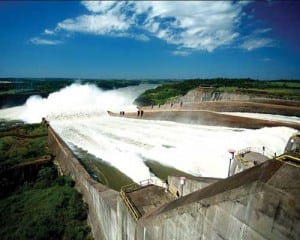
With the eighth-largest economy in the world, Brazil has a clear need for power, but balancing supply and demand has proven tricky in recent decades. Even in a country where over 80% of generation capacity comes from renewables, planning for future capacity additions isn’t straightforward or easy.
-
 Coal
CoalTuning Ammonia Flow to Optimize SCR Performance
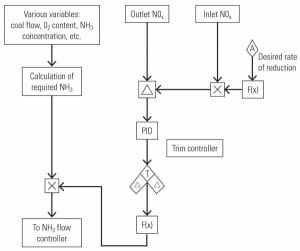
The selective catalytic reduction system has become ubiquitous throughout the world of power plants. Emission control requirements are ever-more stringent, and the cost of excursions is becoming increasingly high. The key to staying under the regulators’ radar is precisely controlling the ammonia injected into the boiler. A new control strategy does precisely that.
-
 News
NewsLow-Noise Remote Charge Converter
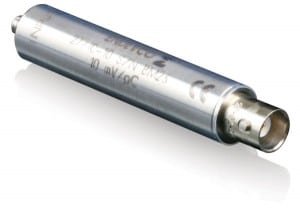
Endevco Corp. launched Model 2771C-XX, an ultra-low-noise remote charge converter (RCC) designed for use with charge output piezoelectric sensors within applications such as nuclear power plant/regenerative energy and environmental testing. The model offers a rugged two-wire (IEPE), single-ended design that operates from constant current power (4-20 mA). Both RCC signal output and current to the […]
-
Smart Grid
U.S. Smart Grid Forecast: Flurries of Activity
A number of factors are coalescing to create the most hospitable climate for smart grid development activities that has yet been seen in the U.S. Here’s a look at those elements and at the different models and motivations for smart grid project development across the country.
-
Commentary
Carbon-Cutting Solution: Dynamic Demand Technology
Once upon a time, climate change felt like a distant threat on the horizon. Now it is happening in front of our very eyes. Across the world, global warming is sparking more intense heat waves, more flooding, and more droughts. If climate change continues at its current pace, the social, environmental, and economic costs don’t […]
-
Smart Grid
What Do Customers Expect from the Smart Grid?
Xcel Energy’s SmartGridCity enterprise in Boulder, Colo., is one of the most talked-about smart grid projects. Here’s what some Boulder utility customers are saying about it.
-
 Nuclear
Japan Launches Commercial Operation of MOX-Fueled Reactor
Japan began operating a nuclear power reactor using plutonium-uranium mixed oxide (MOX) as fuel for the first time last October. About 16 MOX-containing fuel assemblies were loaded during a scheduled outage to replace a portion of the 193 fuel assemblies at the No. 3 reactor at Kyushu Electric Power Co.’s Genkai nuclear power plant. The utility eventually plans to triple the number of fuel assemblies at the 1,180-MW reactor in Saga Prefecture to 48. The Ministry of Economy, Trade and Industry conducted its final inspection of the reactor and issued its certification on Dec. 2.
-
 Solar
SolarWhich Country’s Grid Is the Smartest?
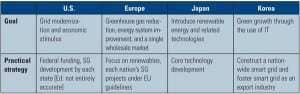
The U.S. isn’t the only country evaluating and implementing elements of smart grid technology. In fact, it could be argued that other nations are much farther along the path to a comprehensive, technically advanced system for integrating renewables, managing load, and creating a more flexible power grid.
-
 Solar
SolarChina’s Largest PV Maker to Set Up in Arizona
China’s largest solar panel maker, Suntech Power, in mid-November announced plans to open a photovoltaic (PV) manufacturing facility in Phoenix, Ariz., in the third quarter of 2010. Roger Efrid, Suntech’s managing director, was widely quoted as saying that the company — which holds 12% of U.S. market share and is looking to reach 20% by 2010 — chose to establish a plant nearer to customers. This was smart business, even though panels would be made from solar cells imported from China, because solar panels are heavy, he told The New York Times: "As the price of solar panels has reduced dramatically in the last 12 months, the shipping costs have become a larger and larger portion of the overall cost of getting these projects to market."
-
Smart Grid
My Top 10 Predictions for 2010
David Letterman has entertained us with his "Late Show" Top Ten list since 1985. In keeping with this issue’s theme of forecasting the future of the power industry, I’m going to step out with my top 10 list of what to expect in the next 12 months. 10. New Nuclear Will Progress Slowly. I don’t […]
-
 Coal
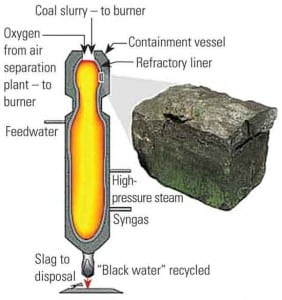
CoalAdvanced Refractory Lining Improves Gasifier Reliability
Successful testing of a new refractory lining material developed by the Office of Fossil Energy’s National Energy Technology Laboratory (NETL) could lead to higher reliability and improved economics of gasification technology.
-
 Coal
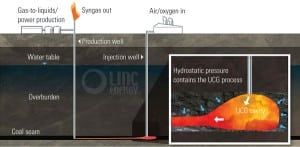
CoalThe Resurrection of Underground Coal Gasification
News this past November that Australian company Cougar Energy had begun developing a pilot project to generate power from coal still underground has reignited interest in the 100-year-old alternative energy technology. The company’s planned A$8 million program — expected to be started in the first quarter of 2010 — will be conducted 10 kilometers south of Kingaroy, in southern Queensland. If it is successful, it could lead to the establishment of a 400-MW baseload power station, Cougar Energy officials say.
-
 Nuclear
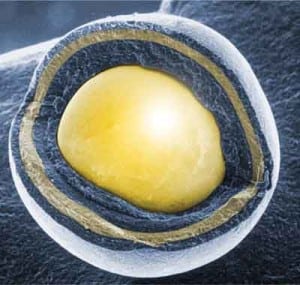
High-Temperature Gas-Cooled Reactor Concept Moves Forward
Researchers from the Idaho National Laboratory (INL) say they have developed a new type of nuclear fuel for use in next-generation high-temperature gas reactors that produces less waste — a major step forward for the Next Generation Nuclear Plant (NGNP).
-
O&M
Replacing an HP/IP Rotor
Today’s power plant owners face many challenges, including the aging and degradation of equipment. Steam turbines at times may be condemned due to operating inefficiency or rising vibration levels. In such cases the options may be few because the turbine may require a full or partial rotor section replacement. The good news is that a rotor section replacement can be performed in a relatively short time, depending upon the original rotor configuration. Here’s one example.
-
News
Predicting Hurricane-Related Outages
Researchers from John Hopkins and Texas A&M universities say that they have found a way to accurately predict power outages in advance of a hurricane. Computer models developed using data from Hurricane Katrina and four other destructive storms could save utilities substantial amounts of money and help facilitate rapid restoration of power after a storm, they say.
-
 News
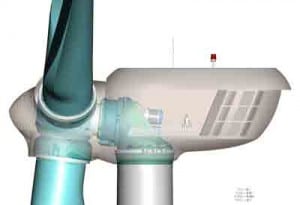
NewsLargest Wind Turbine to Be Built in the UK
A £4.4 million grant by the UK’s Department of Energy and Climate Change (DECC) this September to Clipper Windpower’s Britannia project kicked up a whirlwind of interest in the supersized wind turbine—and others being developed around the world.
-
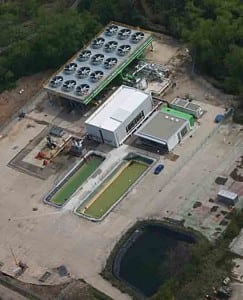 Geothermal
Assessing the Earthquake Risk of Enhanced Geothermal Systems
Enhanced geothermal systems (EGS) deliberately induce seismicity — earthquakes — in order to access hot, subsurface rocks for use in geothermal power generation. Recent quakes around the world have frightened those living near EGS sites and sparked controversy over the technique. We asked experts to provide EGS technical details and to evaluate the seismic risk the process poses.
-
News
Coal Seam Gas Poised to Explode in Australia
Anglo Coal, one of Australia’s coal mining companies this September opened a 45.6-MW power plant at its Moranbah North mine in northeast Queensland that captures methane-rich coal mine gas and uses it as a fuel to generate power instead of venting it into the air.
-
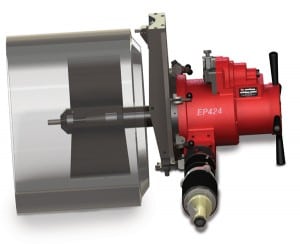 News
NewsEnd-Prep Machine Tool
The new Wachs EP 424 with the new Speed Prep feed system is a precision I.D.-mount end-prep machine tool designed to bevel, compound-bevel, J-prep, face, and counterbore pipe, fittings, and valves. The system uses a new Wachs mechanism that feeds simultaneously in the axial and radial planes. Wachs claims that the system is able to […]
-
 News
NewsOcean Power Prototypes Coast Ahead in the UK
Marine energy prototypes in the UK are sailing ahead of entries from the rest of the world, propelled by government backing and public support.
-
Commentary
Power Politics: Enron Lives!
As director of public policy analysis in my last seven years at Enron, I participated in many legislative and regulatory debates involving electricity, although the public policy thrust of the company was the opposite of what I believed. While I favored free markets, the business model of Ken Lay (a PhD economist with years of Washington regulatory experience) centered on special government favor. Enron, for example, had seven profit centers geared to government pricing/rationing of carbon dioxide (CO2) emissions. And in the 1990s, the company was squarely behind a Btu tax. Today, Enron would be pushing cap and trade.
-
Business
Despite Economic Downturn, Renewable Energy Development Expected to Move Forward
While the overall economy is down, the effort to add renewable energy resources in the U.S. continues to push project development forward.
-
 Gas
GasNew-Generation Gas Turbines Steam Ahead
This September, as Siemens Energy wrapped up testing of its H-class SGT5-8000H gas turbine at E.ON’s Irsching 4 gas power plant in Bavaria, Germany, the company raved about what it is calling "the world’s most powerful gas turbine."
-
Coal
What Is BACT for CO2?
Assume, for the moment, that the U.S. Congress is unable to agree on legislation aimed at reducing carbon emissions from industry, vehicles, and power plants (the carrot approach). Further, assume that the Environmental Protection Agency (EPA) eventually promulgates rules that require power plants to reduce carbon emissions (the stick approach). Have you given any thought to the range of possible best available control technologies (BACT) that the EPA might require under the Clean Air Act (CAA)?
-
-
 Nuclear
NRC Concerns About AP1000 Structural Strength Could Delay Projects
Concerns raised by the U.S. Nuclear Regulatory Commission (NRC) about the structural strength of Westinghouse Electric Co.’s AP1000 reactor could cause delays for several nuclear plants that planned to use the design in the U.S. — and it raises questions for new builds started or proposed in China and the UK.
-
O&M
Halar-Lined Chimney Remains Maintenance-Free
A fiberglass-reinforced plastic (FRP) Halar stack liner was installed at Vattenfall’s 300-MW Unit 2 at the Nordjylland Power Station in 1995. The 112-meter-high (367-ft) stack, protected from corrosion by the ECTFE liner, is still in excellent condition and has not required any repairs during more than 13 years of service. (ECTFE is short for ethylene chlorotrifluoroethlyene polymer, marketed under the brand name Halar ECTFE [Halar] by Solvay Solexis.)
-
O&M
Rebuilding Feedwater Heaters While a Plant Is Online
Rebuilding aged feedwater heaters can make better economic sense than buying new ones, because rebuilding reduces capital cost and plant outage expenses. At one Texas generating station, rebuilding saved one-third the cost of a new feedwater heater while improving the plant’s heat rate.
-
 News
NewsAutomated Tube Bundle Water Jet System
The ATL-5000 — a new, fully automated water jet system from NLB Corp. — cleans tube bundles three times faster than manual methods and features an adjustable lance stroke that allows the system to be configured for bundles of various lengths, up to 30 feet. The diesel-powered system has five rigid lances, each with a […]