As the first generation of wind turbines ages out of manufacturer service agreements, operators are discovering that the smarter path forward isn’t wholesale replacement—it’s re-engineering components to outlast their original design life.
For years, the wind energy sector has been defined by growth and obsessed by “new.” New larger rotors, new taller towers, and new record-breaking installation figures have driven the global conversation around renewable energy expansion. Yet, a quieter transformation is now taking place across the industry—one that may prove just as consequential as the installation boom that preceded it.
As I speak with operators today, the conversation is shifting. According to the International Energy Agency’s World Energy Outlook 2025, we have officially entered the “Age of Electricity” where the priority isn’t just building new capacity, but ensuring that the 1.3 TW of expected global wind assets (by the end of 2026) remain the backbone of the grid.
Across Europe, North America, and Asia, the first generation of turbines is entering a new phase of life. Many of these assets are moving beyond their original manufacturer service agreements, prompting operators to rethink how they manage reliability, cost, and long-term performance. In the UK alone, according to Renewable UK, we risk losing 5 GW of offshore capacity by 2035—one third of our total—if we don’t master the art of life extension. The question is no longer simply how to maintain these machines, but how to improve them before they hit their 20- to 25-year design limit.
From Maintenance to Engineering Opportunity
Once turbines transition out of original equipment manufacturer contracts, operators gain greater control over maintenance strategies—but they also assume the risk of obsolescence. At BGB, our repairs and upgrades team increasingly sees units coming in with parts that are no longer off-the-shelf manufactured.
At this stage, traditional “replace like-for-like” maintenance models can become limiting. Components that performed adequately in the turbine’s early years often reveal recurring failure patterns after a decade or more of operation. Slip rings, pitch systems, brakes, connectors, and other electromechanical assemblies begin to show where stress accumulates over time.

In This Issue
Full issue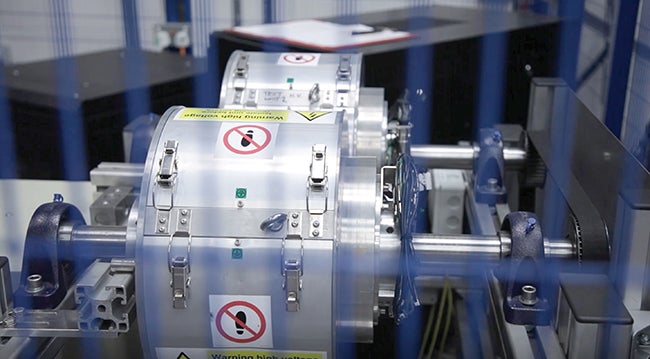 |
|
1. A pitch control slip ring being tested in BGB’s state-of-the-art, on-site testing facilities. Courtesy: BGB |
Yet, the weaknesses aren’t simply problems to be solved; they’re valuable data points. Years of operational experience provide engineers with detailed insight into how components behave under real conditions—from thermal cycling and vibrations to humidity exposure and fluctuating electrical loads. This knowledge creates an opportunity to redesign and upgrade systems so that they outperform the original specifications (Figure 1). Retrofitting, in this context, becomes far more than a maintenance exercise. It’s an engineering opportunity.
For us at BGB, this philosophy underpins a growing focus on advanced repair and retrofit solutions. Testing is central to our work; we don’t just repair, we perform an engineering root cause analysis, where our engineers evaluate and refine turbine components under simulated operational conditions. Our assemblies are subjected to rotational loads, vibration profiles, and electrical demands designed to mirror real-world turbine environments. The aim is not simply to restore a component’s original performance, but to extend its durability, reduce service intervals, and improve overall turbine availability.
For wind operators managing large fleets—often across multiple turbine platforms—these incremental engineering improvements can have significant operational impact. A component that lasts longer between service intervals does more than reduce maintenance costs; it changes the rhythm of an entire wind farm. Fewer technical call-outs, fewer crane mobilizations, and fewer unplanned outages translate directly into stronger operational performance. In a sector where availability is measured to fractions of a percentage point, small reliability gains can deliver meaningful commercial advantage.
The Economics of Extending the Fleet
Repowering will continue to play a role in the energy transition, particularly in locations where new turbine models can unlock significant gains in energy production. However, full repowering is capital-intensive, logistically complex, and material-demanding.
In many cases, core infrastructure—including towers, foundations, and major drivetrain components—remain structurally sound long after auxiliary systems begin to show signs of wear and tear. Extending the operational life of a turbine by five, 10, or even 15 years can therefore present a compelling economic alternative. It allows operators to defer major capital expenditure while continuing to extract value from existing infrastructure.
There’s also a broader supply chain dimension to consider. Recent years have highlighted the volatility of global manufacturing and logistics networks. Long lead times for components and fluctuating transport costs have sharpened the appeal of domestic repair and refurbishment capabilities. Restoring and upgrading assemblies rather than discarding them shortens turnaround time and preserves the value embedded in the original manufacturing process. What emerges is a more strategic approach to asset management—one that treats turbines not as equipment nearing obsolescence, but as long-term industrial assets capable of continuous improvement.
A Circular Future for Wind Energy
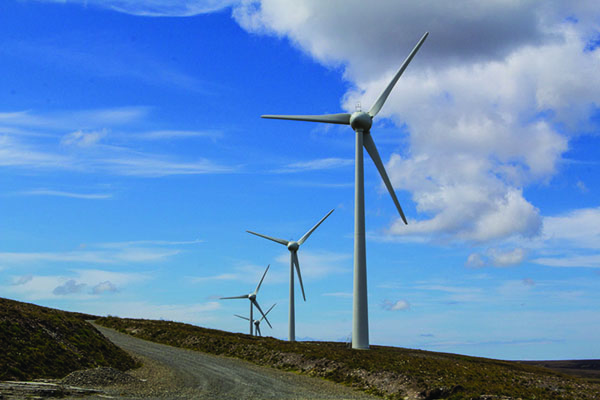
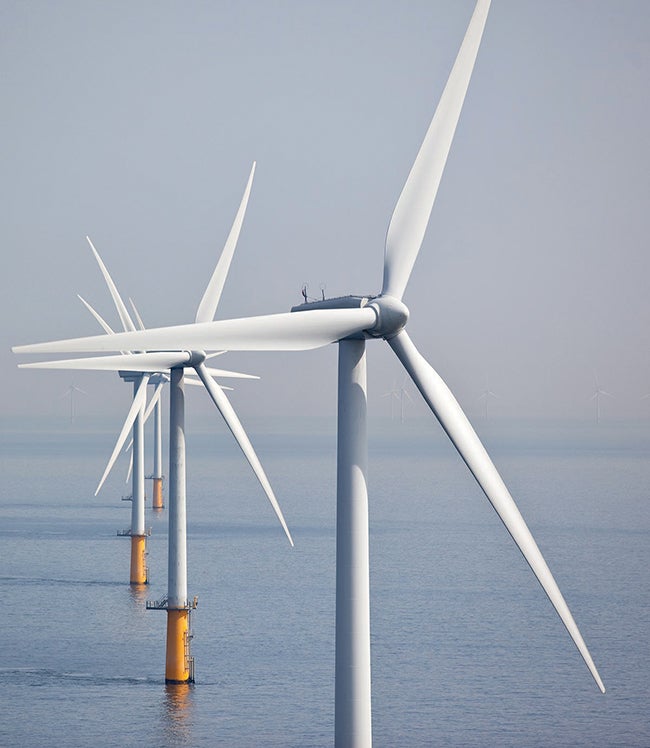
Wind power has always carried a powerful environmental promise (Figure 2). Yet, as the sector matures, it must increasingly address the sustainability of its own supply chain and material use. Manufacturing new turbine components requires significant raw materials and energy. At the same time, replacing entire assemblies can generate unnecessary waste if viable parts are discarded rather than repaired or refurbished.
 |
|
2. An active offshore wind farm. Courtesy: BGB |
Extending turbine lifespans through engineered upgrades offers a practical path toward a more circular model. By repairing, modifying, and requalifying components, operators can preserve the embedded value of existing materials while reducing demand for new resources. We can move toward a circular model, with each refurbished assembly representing both a cost savings and a reduction in environmental impact.
This approach aligns closely with the broader ambitions of the renewable energy sector. Generating clean electricity is only one part of the sustainable equation. Ensuring that equipment is used efficiently and responsibly throughout its lifecycle is equally important.
Viewed through this lens, the turbines already turning across the global landscape are far from outdated assets. They are sophisticated machines with decades of operational insight behind them and significant potential ahead. If the first era of wind energy was defined by rapid expansion, the next may be defined by something more subtle but just as important: engineering those turbines and their components to spin longer, perform better, and deliver value well beyond their original design life.
—Leigh Smith is a key account manager at BGB, a global leader in rotary solutions.