
Articles By

-
 Legal & Regulatory
Regulators should stop playing the greed card
In early February, Western GeoPower (WGP) announced its termination of a 20-year geothermal power purchase agreement (PPA) with Pacific Gas and Electric Co. (PG&E). A WGP press release explains that the company terminated the agreement because a regulatory approval condition had not been obtained within a 180-day time period stipulated in the PPA. WGP’s CEO, […]
-
 Nuclear
Super Tuesday, Super Bowl XLII, and the nukes
The nuclear renaissance is likely to slow next year with a new tenant in the White House and many key regulatory positions in flux. Nuclear industry leaders are especially concerned that rules for construction loan guarantees will fall victim to the “wait and see” disease that infects those inside the Beltway every four years. If those rules aren’t in place before this November’s election, the nuclear renaissance may revert to the Dark Ages.
-
 Coal
CoalNew coal plant technologies will demand more water
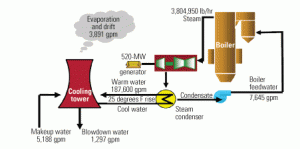
Population shifts, growing electricity demand, and greater competition for water resources have heightened interest in the link between energy and water. The U.S. Energy Information Administration projects a 22% increase in U.S. installed generating capacity by 2030. Of the 259 GW of new capacity expected to have come on-line by then, more than 192 GW will be thermoelectric and thus require some water for cooling. Our challenge will become balancing people’s needs for power and for water.
-
 Instrumentation & Controls
Turbine technology maturity: A shifting paradigm
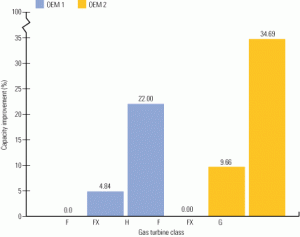
Selecting the right turbine(s) for a specific power project is a complex process that poses two challenges. One is understanding which field experience cited by suppliers represents proven technology; the other is evaluating whether a turbine upgrade represents an evolutionary change or a revolutionary transformation that warrants further study before deploying it in the field. Here‘s how a leading EPC contractor makes technology-neutral equipment selection decisions on behalf of its customers.
-
 Instrumentation & Controls
Time to get serious about security
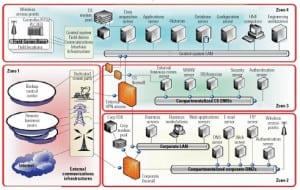
Managing ongoing threats to power plants’ digital, telecommunications, monitoring, control, and automation systems is no longer just a good idea. It’s an essential element of superior plant operations and now a regulatory requirement as well, thanks to new critical infrastructure protection standards recently approved by FERC.
-
 Gas
GasCastejon 2: Ready to reign in Spain
The new, 424-MW Castejon 2 combined-cycle plant designed and built by Alstom was recently given its provisional acceptance certificate. Alstom used its “Plant Integrator” approach to fast-track delivery of a plant just like Castejon 1, which averaged 98% availability during its first three years of operation. That kind of performance is crucial to generators operating in the Spanish merchant power market—or any market.
-
 O&M
O&MThe aging workforce: Panic is not a strategy
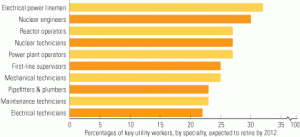
Leaders in the utilities sector talk a lot these days about talent. On one hand, they express concern about facing a shortage of knowledgeable staff as 76 million baby boomers exit the workforce. On the other, they worry about where they’ll find enough qualified people to remain competitive in light of the fierce battle for engineering talent that globalization has created. The antidote to these worries lies in reconfiguring HR practices.
-
 Commentary
Markets, not government, must set energy prices
By J. Bennett Johnston It is fashionable these days for policymakers, particularly those running for office, to somberly suggest that America needs an energy policy—thus implying that America has no energy policy. As one of the prime architects of an energy policy that has served America well, I could not disagree more. The fact that […]
-

Conservation and the law of the jungle
—Dr. Robert Peltier, PE Editor-in-Chief Ever wonder why many utilities receive so little respect from the public? In America, open competition requires every business to earn customers’ trust before making a sale. Unfortunately, many utilities exploit their monopoly position to avoid the hazards of competition, including losses. It’s no wonder that public utilities, as a […]
-
 Coal
CoalGlobal Monitor (March 2008)
DOE scraps FutureGen / U.S. nuclear plants have record year / Westinghouse wins TVA contract / UniStar Nuclear to file for COL / AEP ranks second in U.S. construction / China moving to the driver’s seat / New solar cycle poses risks / Dutch favor power from natural gas / POWER digest / Corrections
-
 O&M
O&MFocus on O&M (March 2008)
New CIP standards leave questions unanswered/Solving common analyzer problems/Qualifying rebuild shops
-
 Legal & Regulatory
Congress failed to deliver a green Christmas
Renewable power proponents exuded great confidence as the U.S. Congress approached its near-annual end-of-year task of extending the production tax credit (PTC) for wind, solar, biomass, and geothermal power beyond its current December 2008 expiration. The debate promised to bypass the threshold issue of simply extending the PTC. It was expected to focus on […]
-
 Gas
GasHow to make a power plant a welcome neighbor
Developing power projects has become less a technical challenge and more an exercise in developing good relationships among all the stakeholders. If a community understands the need for a new plant and is involved in its development process, the odds of a successful project increase.
-
 O&M
O&MMaintaining water sample panels improves plant availability
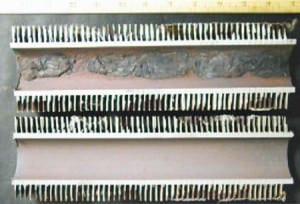
Even comedian Rodney Dangerfield got more respect than many plant water sample panels do. But power plants ignore sample panels at their peril. Those sample panels, and readings of the on-line analyzers they support, identify when multi-million-dollar systems have a problem that demands immediate attention.
-
 Instrumentation & Controls
Wireless technologies connect two LCRA plants
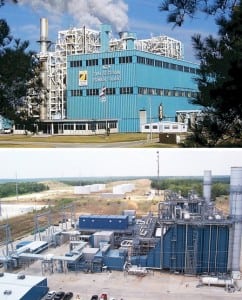
Lower Colorado River Authority recently put two separate plants at its Lost Pines Power Park under one functional management system. The project has already deployed a layered wireless infrastructure that allows the two plants to communicate at a fraction of the cost of a wired solution while providing a platform for optimizing work processes and reducing operating costs. What’s not to like?
-
 O&M
O&MDesuperheating valves take the heat
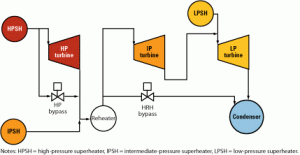
Hot reheat steam bypass actuators are some of the most critical, yet least understood components in a typical combined-cycle plant. If you’re using pneumatic actuators to stroke your main steam or hot reheat bypass valves in a cascading bypass system, you’re behind the times. Here’s a way to get better control of the bypass process, shorten unit start-up and train blending times, and decrease your plant’s heat rate—all at the same time.
-
 Water
WaterBenefits of evaporating FGD purge water
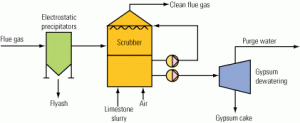
In the U.S. and the European Union, scrubbers are installed on all new coal-fired power plants because their technology is considered the best available for removing SO2. A zero-liquid-discharge system is the best technology for treating wet scrubber wastewater. With the future promising stricter limits on power plants’ water use, ZLD systems that concentrate scrubber purge streams are sure to become as common as ZLD cooling tower blowdown systems.
-
 O&M
O&MExtend EOH tracking to the entire plant
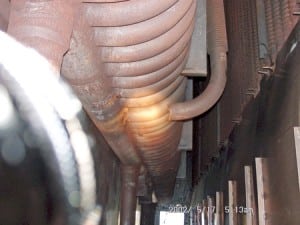
Predicting combined-cycle system longevity and determining optimal maintenance intervals at the same time is difficult: It requires balancing repair costs against the risk of trying to squeeze that last bit of life out of some component before it fails. One solution to the problem is to extend coverage of an equivalent operating hours (EOH) preventive management program for turbines to the entire plant.
-
 Business
ELECTRIC POWER celebrates 10th anniversary in Baltimore
At this juncture our industry is faced with greater uncertainty and opportunity than ever before. That’s why you won’t want to miss all the information, ideas, and networking available at the power generation industry’s premier event in May.
-
Coal
Speaking of Coal Power: The True Costs of Going Green
Three of the best-kept secrets in the U.S. today have nothing to do with national security in the traditional sense. They all involve costs: the cost of fulfilling campaign promises, a valid estimate of the cost of carbon control legislation (S. 2191) expected to reach the Senate floor in a few months, and the real […]
-
 Coal
CoalThe Coal Patrol: Ranking the CO2 Emissions of the World’s Power Plants
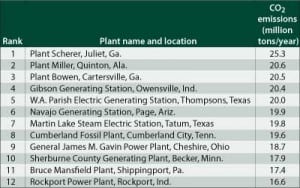
The Environmental Integrity Project, a Washington-based advocacy group, announced in March that CO 2 emissions from U.S. power plants increased 2.9% last year over 2006 levels. The group used 2006 and 2007 CO 2 emissions data from the U.S. EPA and the DOE’s Energy Information Administration. It’s hard to normalize CO 2 numbers — and […]
-
 Coal
CoalThe Future of Coal Power: Modeling Geological Sequestration of CO2
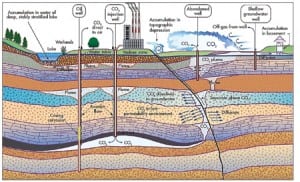
Everyone in the power generation business knows that coal will continue to be a necessary fuel source for the foreseeable future. Many of those same people are beginning to understand that, politics aside, coal plant operations in the foreseeable future won’t look like the operations of yesterday or today. But what exactly will the future […]
-
 Coal
CoalThe Future of Coal Power: Development and Siting Obstacles for New Coal Plants
In recent years, Sargent & Lundy has evaluated many potential sites for new coal-fueled generation. Some of the sites studied were lands adjacent to existing power plants (brownfield sites); others were undeveloped greenfield sites. The numerous technical, environmental, economic, and regulatory issues that bear on power plant siting generally apply to both brownfield and greenfield […]
-
Coal
Emissions: Unintended Consequences of Problem-Solving
Most folks probably don’t think that power plants burning coal and ethanol — the latter touted as a having a smaller carbon footprint — have much in common. But at least one ethanol plant — Blue Flint Ethanol in Underwood, N.D. — is co-located with a coal-fired power plant in order to use its excess […]
-
 Coal
CoalPlant Design: Trends in Coal Pile Design
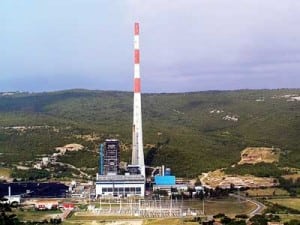
An optimal coal pile design takes into account the site-specific (and often conflicting) needs of a new power plant early in its design — rather than using whatever land is available after the plant layout has been finalized. Determining site requirements necessitates a detailed analysis of all potential coal-fueling options. A coal pile designer should […]
-
 Nuclear
U.S. a paper tiger in nuclear power
I was talking with a utility executive the other day about his recent vacation in India. It’s certainly not your usual holiday destination, but he’s the adventurous type, eager to mingle with different cultures and sample their cuisine. The exec did a lot more than tour the Taj Mahal and get a glimpse of endangered […]
-
 Coal
CoalGlobal Monitor (February 2008)
FutureGen picks Mattoon, Ill./Duke applies for first greenfield COL/PPL to work with UniStar on another COL
/Areva seeks NRC certification of its reactor/Mitsubishi also in line at the NRC/PV project shines in Nevada/SunEdison commissions Colorado PV plant/Big concentrating solar plant proposed/Super Boiler celebrates first anniversary/Small fuel cell uses JP-8 jet fuel/POWER digest -
 O&M
O&MFocus on O&M (February 2008)
Survey captures industry’s carbon concerns; Sequestering coal plant emissions; Comparing mercury measurement methods
-
 Legal & Regulatory
California constrains competition again
Given a chance to make a positive change in California’s wholesale generation market, the California Public Utilities Commission (CPUC) in December opted instead to maintain the state’s existing “hybrid” market model. That decision will further restrict meaningful opportunities for independent power producers (IPPs) and increase the likelihood that future generation will consist of utility ratebase […]
-
 O&M
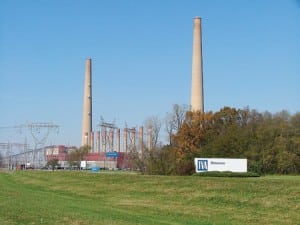
O&MTVA’s Shawnee Fossil Plant Unit 6 sets new record for continuous operation
Shawnee’s new 1,093-day long-run record is a testament to the plant’s highly qualified and trained staff, excellent operations and maintenance processes, and the quality leadership required to keep all the moving parts pointed in the right direction. If running a power plant is a team sport, then the staff of Shawnee are in a league of their own.